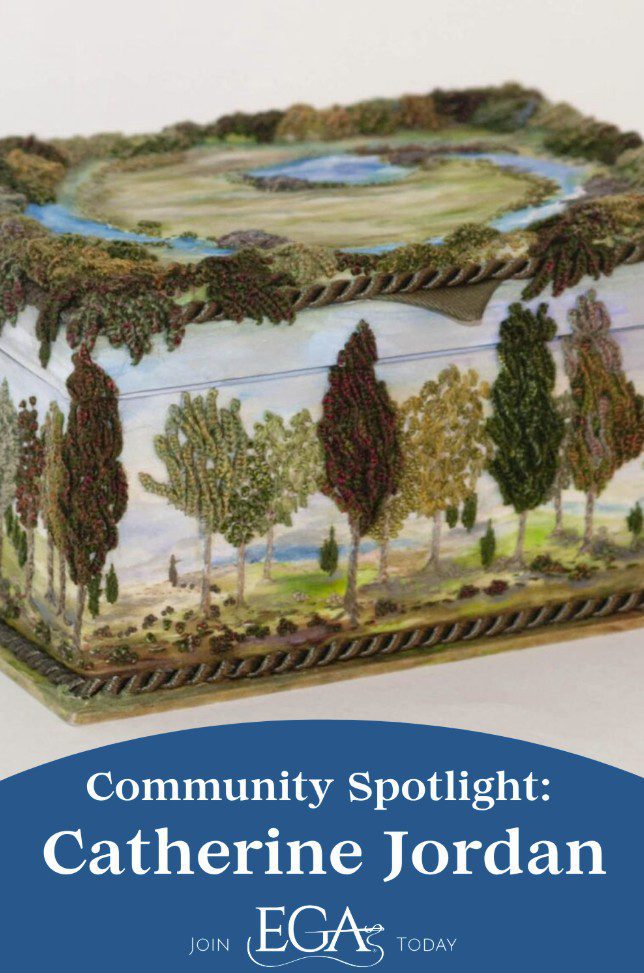
What is the EGA Master Craftsman Program all about? We sat down with Catherine Jordan, Master Craftsman Coordinator, Chair of the Master Craftsman Design Program, and participant in 4 EGA Master Craftsman Programs to learn more. Here, Catherine shares how needlework artists should prepare for the Master Craftsman program, what it offers to the needlework community, and why it’s an integral step in expanding your creative horizons as a needleworker. Curious about participating in a Master Craftsman program? Read our Master Craftsman guide!
How did you become involved with the Master Craftsman (MC) Programs? What does your work with the program entail?
Many years ago, my mother enrolled me in the Counted Thread program to help me advance my needlework skills. I had no idea of what was involved and was challenged by the program, receiving a Provisional Pass on Step 1. I was not an advanced stitcher at all, nor did I have an art or design background; the requirements throughout the program were challenging for me and required a lot of research; fortunately, each program supplies an extensive bibliography of highly recommended books. That was my introduction to MC.
I completed the Counted Thread program and immediately enrolled and completed the Crewel program. Following this, I enrolled and completed the Color program and then the Design program. I was asked to take the MC Coordinator and the Chair of the Design program positions, which I gladly did.
So each spring and fall, I meet with the judging committee and we judge submissions for the Design program. As Coordinator, I receive reports from the other chairs and keep records on all the programs, such as how many are currently enrolled, how many new registrations are received, and completions throughout the year. I act as an additional judge for some of the programs, respond to questions as needed, and work with the other chairs as programs are updated.
Why should a needleworker participate in the Master Craftsman Program? What is the value of being certified as a Master Craftsman?
Each Master Craftsman program will challenge the participant to demonstrate an understanding of the step requirements, some steps requiring a short essay in addition to a stitched piece. I found the challenge to result in some of the best work I have ever done. I don’t think I would have evolved in skill and technique, the use of color, and being able to create thoughtful designs without the support and challenge of the programs as well as the masterful feedback from the judges.
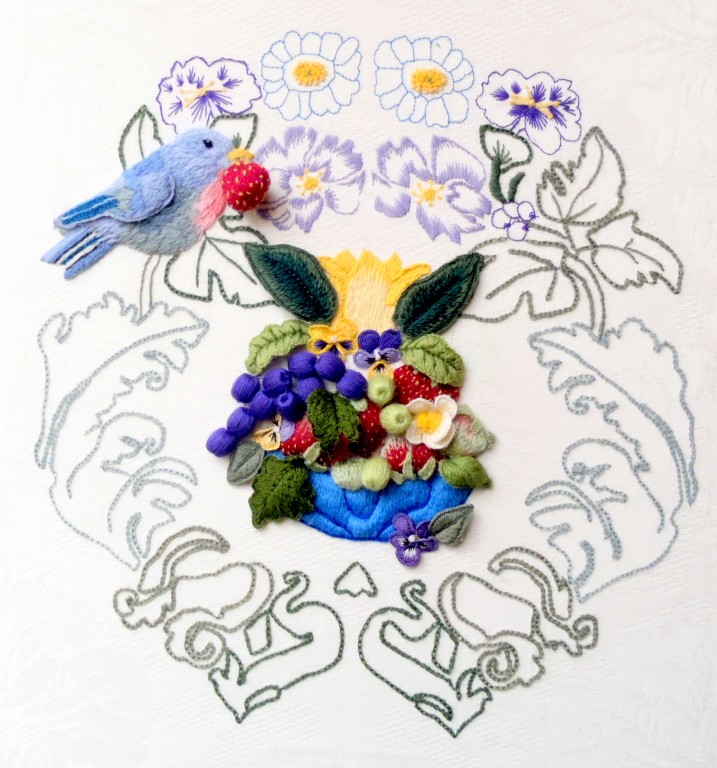
As to why someone might want to consider taking on the challenge of a Master Craftsman program; those who take on the challenge, whether finishing or not, will find their skills enhanced in the area they have passion for. They will find that skills attained at the MC level will result in current and future exceptional work that will carry them further in their continued embroidery pursuits. It is a very prestigious designation requiring a commitment of time that is sometimes frustrating, but challenging and rewarding.
Each Master Craftsman program involves 6 steps. What is typically involved in each step? Do the programs involve education as well as demonstrating abilities?
Each program requires 1-2 pieces of original or adapted needlework and some require a short essay on a specific topic. For example, in the Color program, Step 1 requires a written essay on color symbolism in different cultures as well as 2 identically stitched pieces using 2 different color harmonies; one piece will use a traditional color harmony (which can be found on most color wheels) and the second piece using a harmony made up by the candidate.
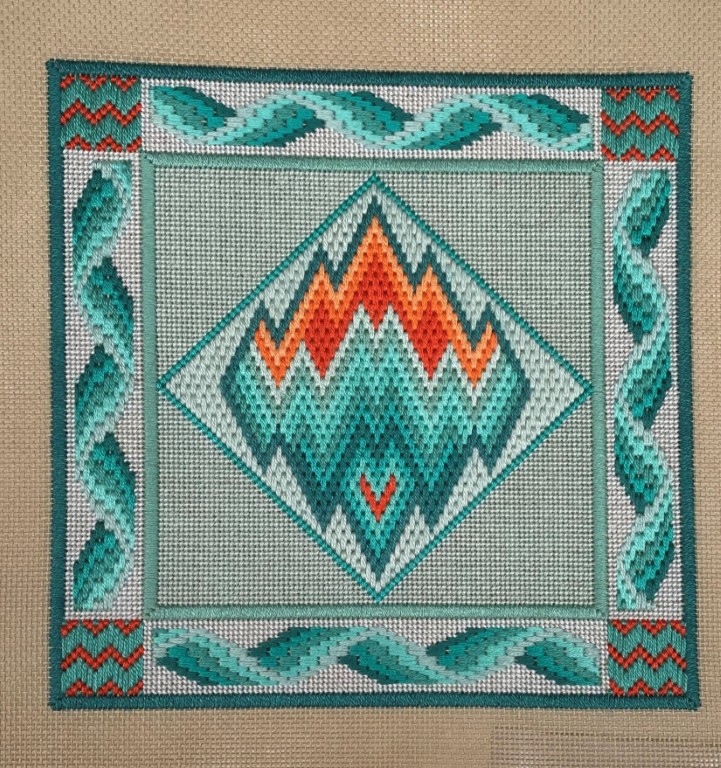
The Beading program does not require a research essay and Step1 allows creativity in the design of the project as long as it demonstrates mastery of Square Stitch and/or Loom Weaving; color choices are left to the candidate and there are several options for the project such as a
wall hanging, a bell pull or a bracelet with earrings or pendant.
All of the programs’ Step 1 requirements are on the EGA website along with each programs’ bibliography. In addition, there is a gallery of successfully completed pieces which is a great source of inspiration.
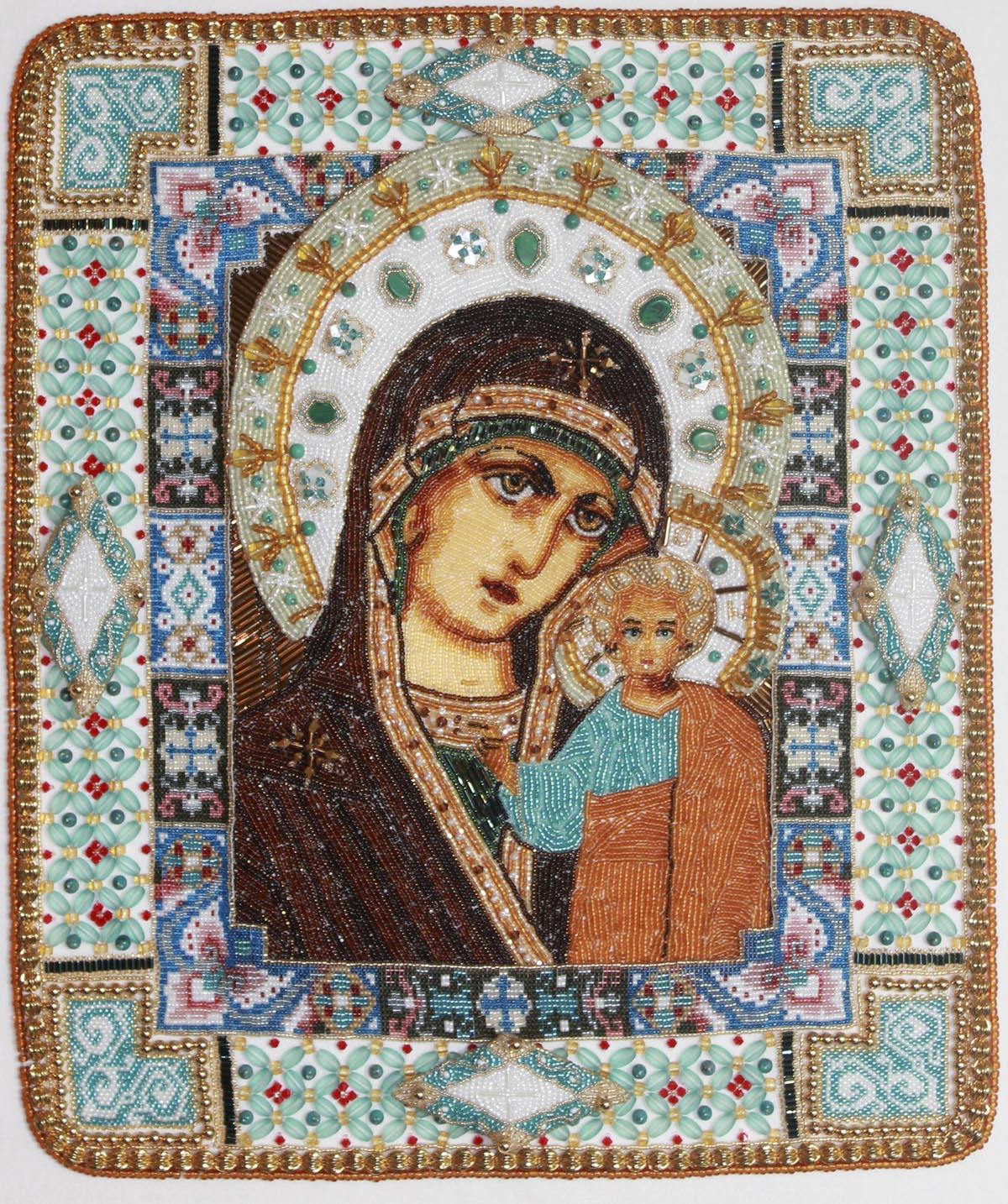
The Master Craftsman Programs are designed for intermediate to advanced stitchers interested in expanding their knowledge, skill, and creativity in specific needlework categories. How can a less experienced needleworker prepare for Master Craftsman Programs? Does EGA have resources to prepare needleworkers for the program?
EGA has an extensive multi-tiered, well-designed educational resource structure. From short programs at the chapter level, to regional and national seminar classes, online courses of study, a huge library that allows books to be checked out, individual and group correspondence courses, Technical Excellence Certification programs and so many more instructional resources. There are programs for those that can meet in-person and programs for those who want to access classes online. I have found EGA members to be very sharing and helpful, and programs such as EGA’s Stitch-a-Long Facebook Group bring stitchers together. There is really something for everyone. EGA is all about education and is always offering new classes, teachers, and programs. Members can choose to participate in any and all classes that interest them. All of these learning opportunities will prepare a member to enroll in a MC program and work through it successfully.
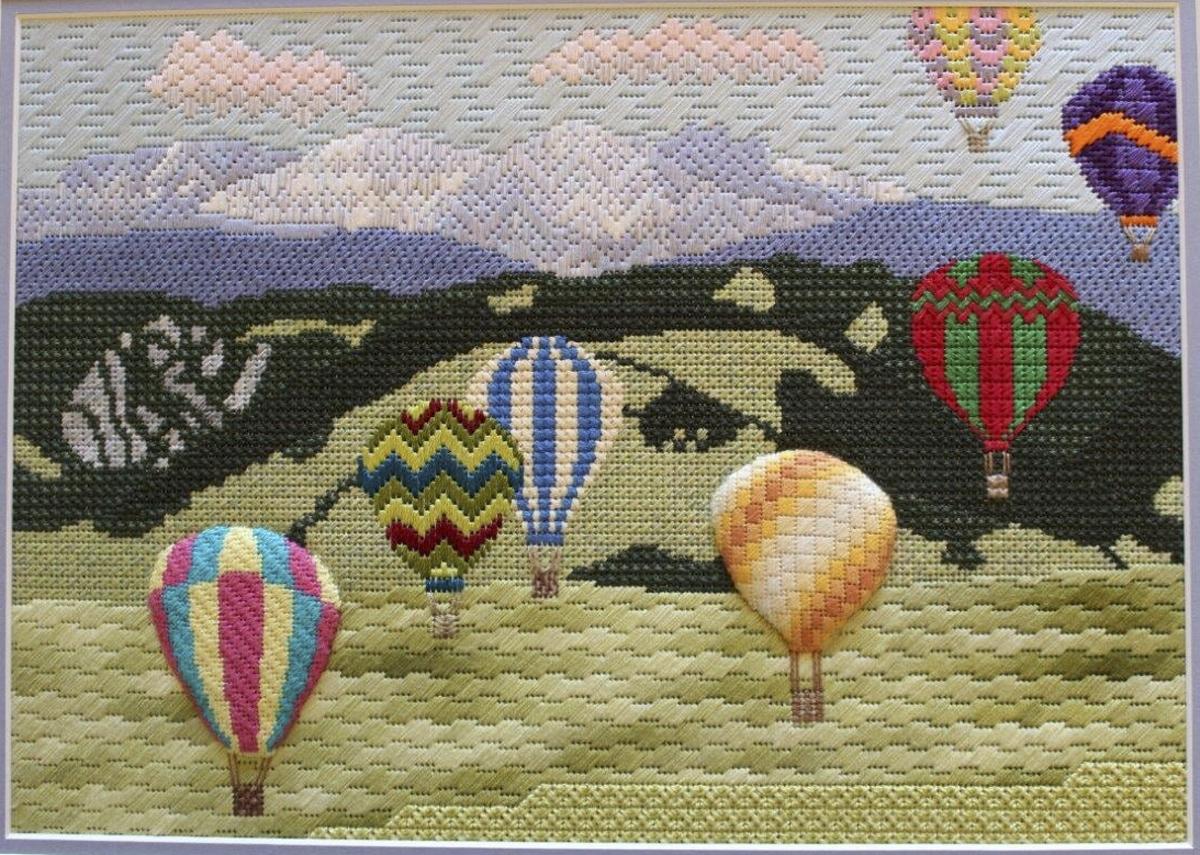
Judging for work created during the Master Craftsman program occurs in the spring and fall of each year. Who are the judges for the program, and what is the criteria for the adjudication process?
The judging for each program is coordinated by the Chair of each program with additional judges assisting. Most of the Chairs have completed their respective program, so they are aware of the challenges and requirements for the steps of their program; they may act as one of the judges. EGA and other organizations have Judge and Master Judge certification programs and those holding those certifications may sit on the judging panels. Any judge must have advanced knowledge of at least one aspect of the step they are helping to judge.
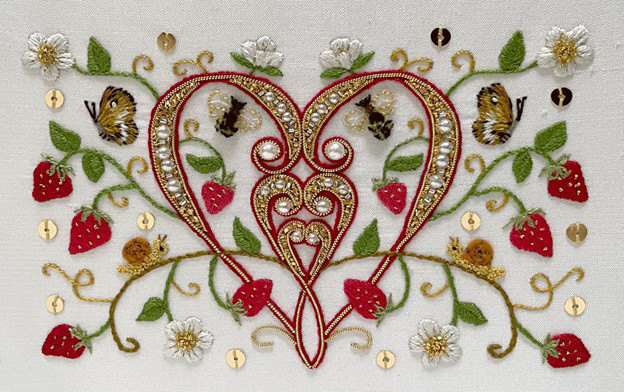
The judges meet in-person and/or virtually, review the criteria for the step and determine if the requirements have been met for the piece to Pass, Provisional Pass, or Not Pass. If a piece receives a Provisional Pass, only the areas that do not meet the requirements will need to be reworked and resubmitted for a second judging. If this happens, the candidate is given the requirements for the next step and may submit both pieces at the next judging.
Candidates receive a written review of their work to let them know what the judges determined and if there is anything that might possibly be improved or considered. This helps the candidate grow by expanding possibilities for future work.
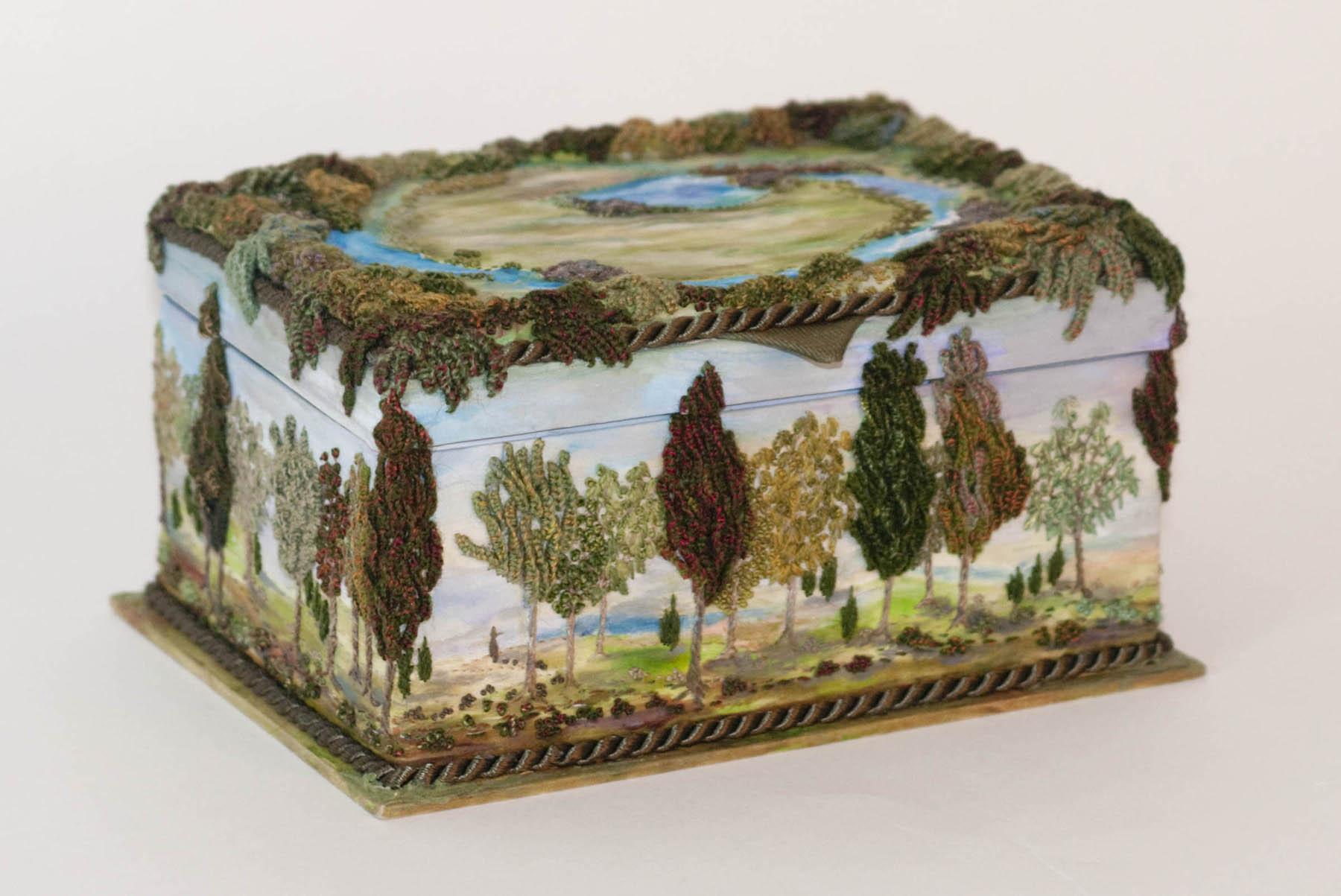
What advice do you have for needleworkers interested in engaging with the program?
I wholeheartedly encourage any EGA member to think about enrolling in a program that interests them! Read all the MC information on the EGA website, take a look at pictures of completed pieces, and ask questions. If any of the programs seem like something you would like to try, simply enroll. Remember: each program takes a minimum of 3 years to complete, but you will definitely learn a lot and take your work to a higher level by the time you complete the program. Our chairs and judges are here to provide direction and encouragement as you work through the steps.
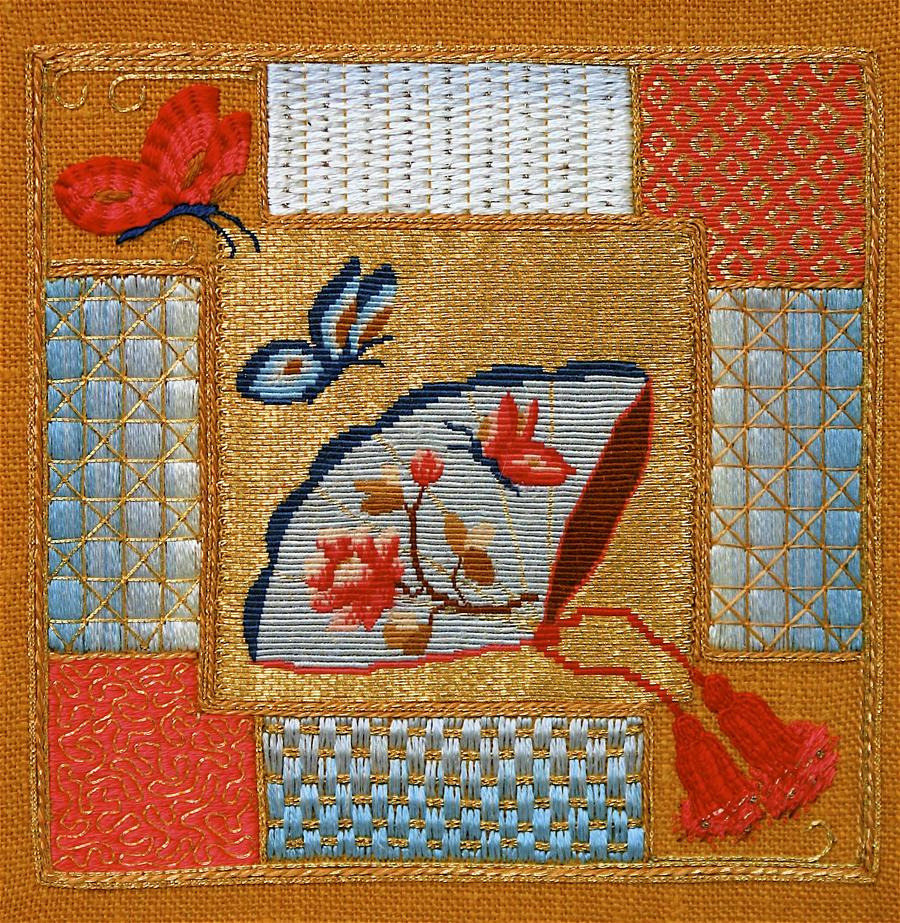
There are currently 8 Master Craftsman Programs: Beading, Canvas, Color, Counted Thread, Crewel, Design, Silk & Metal, and Surface Embroidery. Are there any plans to introduce additional programs?
We are very open to creating new programs, if there is interest. Any EGA member may contact me with ideas or suggestions.