Tricia Wilson Nguyen brings a fascinating perspective to the study of historical needlework techniques. She combines a background in engineering from the University of Michigan and MIT with a lifelong love for needlework, producing a passion for the specific technical complexities inherent in 17th century English needlework. Her upcoming virtual lecture, Patterns and Pieces: Whitework Samplers of the 17th Century, explores the hidden stories behind whitework samplers and the artisans who produced them. We talked with Tricia about her approach to historical needlework materials and patterns, how engineering helps her decode needlework structures, and why it is essential for embroiderers to invest in traditional, historical needlework materials to protect their viability.
When did you first start embroidering? How did you learn?
Like many embroiderers, I was taught by my mother and started around age four. But I really got going around nine, when I began picking up her cross-stitch and working on it whenever she left the room. Of course, she noticed and gave me my own larger Aida version of the projects. Soon, she was “claiming” she didn’t have a babysitter so I could attend EGA meetings to learn. I scooted up to the table and completed the projects, even though the guild wouldn’t let me join.
Around 12, she had me enter my Hardanger embroidery into a state youth competition (across all sciences and decorative arts), and I won awards. At that point, the local EGA, who provided the judges, couldn’t continue to refuse me membership. From there, she introduced me to Shay Pendray and Joanne Harvey, who were nearby in Michigan and both began to mentor me. Shay taught me Japanese embroidery, and Joanne taught me about conservation practices and the importance of understanding the history of—and the women behind—old pieces. They were both extremely foundational to how I approach my work. Many people may not know that Shay was a scientist before she became famous for embroidery. She recognized that in me and taught me differently than her other students, more like the real Japanese apprentices. It forced me to observe very, very carefully.
Do you have a favorite style of embroidery? Why is it your favorite? You went to undergraduate at MIT and have a PhD/MS in Engineering from Michigan, and a passion for history and textiles. Can you talk about these three intersecting interests, and how you’ve explored them in your work?
When I was a teenager, I went through what I now know is a predictable progression of styles of counted embroidery alongside my study of Japanese embroidery. All the while, I saw 17th-century counted work, needlelace, and especially stumpwork as unappealing. It just didn’t appeal to me at all—dirty and disorganized. But while I was at MIT, I used to spend time in the stacks at the Boston Public Library, which had an amazing collection of embroidery books. (Truly, they had books I’m shocked weren’t stolen, given their value.) As I read and studied the images, the work started to grow on me.
As I became an engineer, I began recognizing the technical complexity of the materials and stitches beneath the “dirt,” which I now understand to be corrosion of metal threads. I had to grow as an embroiderer to appreciate the skill involved, and fortunately Shay and Joanne had put me on a fast track to reach that understanding at a young age.
My scientific mindset led me to examine historical techniques across cultures, and I realized there was something singular about 17th-century England—it was a high point of unusual thread complexity and technical difficulty. This wasn’t mirrored in continental Europe at the same time, and I wanted to understand why. I was majoring in Materials Science and Engineering and minoring in a new field called Materials Archaeology and Anthropology, so choosing embroidery as my subject was a natural way to apply this emerging discipline to something I loved.
I completed projects examining the biological structure of silk, how silkworms process it into fiber, and how cultural practices interact with its properties. This work later influenced my research on high-performance fibers for aircraft structures and bulletproof vests.
For my minor, I had the opportunity to take a unique course led by staff scientists and conservators at the MFA Boston on analyzing how historical objects were made. As the only engineer in a class full of history majors, I was given additional projects because the analytical component came naturally to me. I was in seventh heaven, working in departments with boxes of study objects—from early Korean ceramics to French textiles—figuring out and documenting how they were made.
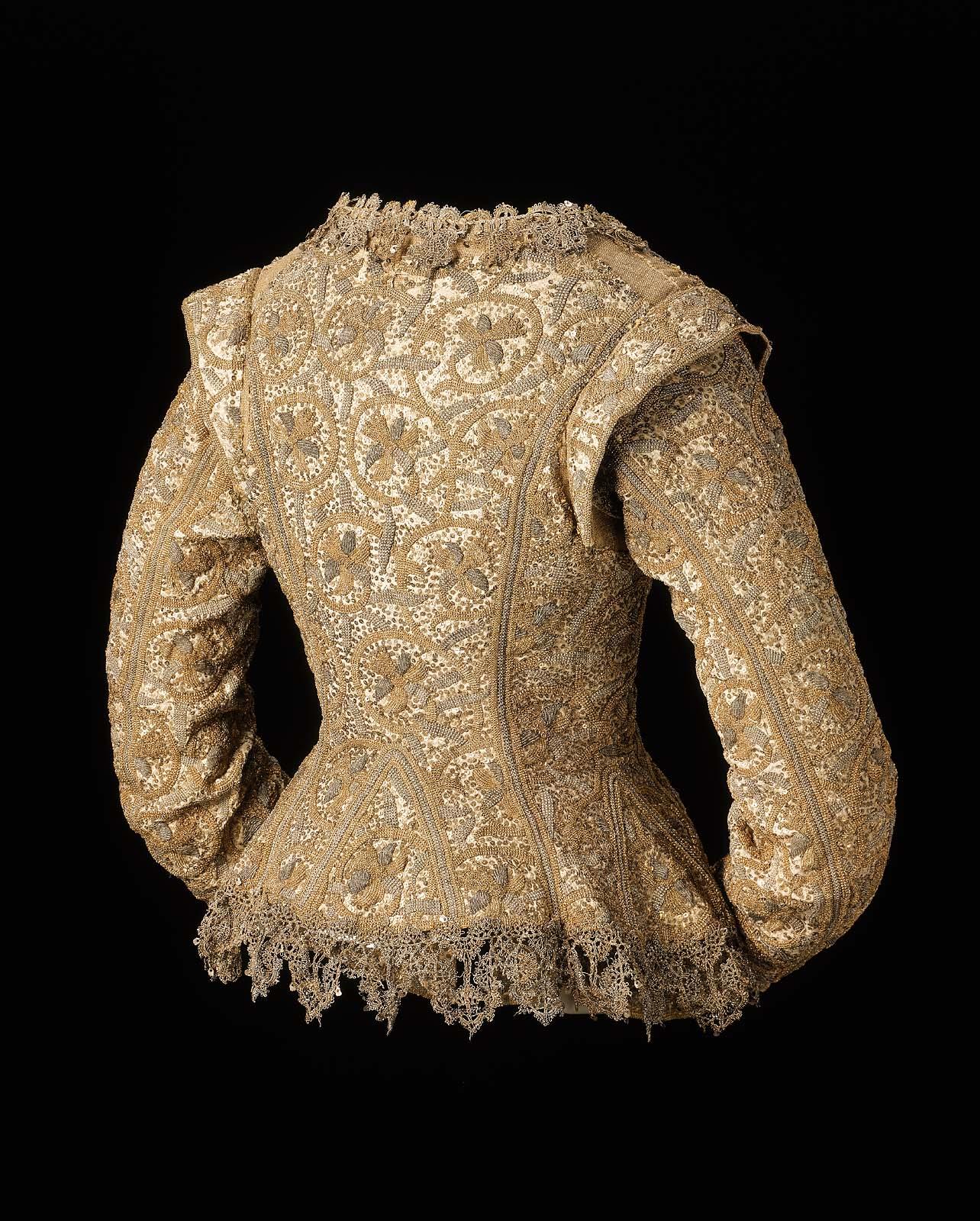
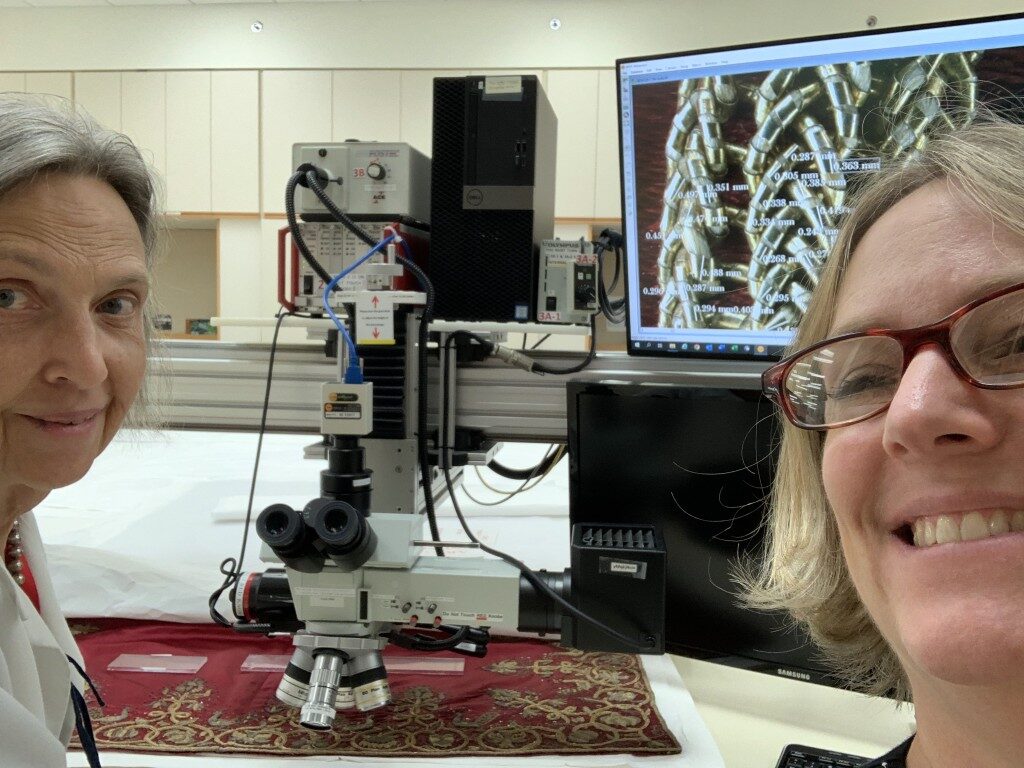
After returning to Boston following my PhD, I became deeply intrigued by stitches like plaited braid and by extraordinary objects such as the Daffodil Jacket at the MFA (seen below), which was worked entirely in needlelace stitches with silver-gilt and silver threads. I used my engineering skills to decode the structures of the metal threads used in England and to identify modern counterparts, as well as to design appropriate needles. Ultimately, nothing modern worked particularly well.
This marked the beginning of my deep interest in the minutiae of historical manufacturing techniques and their intersection with my engineering career. My study of how to design metal threads for complex textile techniques eventually led me to help found the field of electronic textiles, where I worked for a decade. My historical work has always informed my high-tech work, and vice versa.
When the Cooper Hewitt Museum mounted its exhibition Extreme Textiles in 2005, I was honored to have several of my engineering projects displayed. The curators placed a 17th-century coif at the beginning of the exhibit to demonstrate how my historical research had informed innovations in e-textiles. Its background was entirely worked in up-and-down buttonhole stitch in silver gilt threads, the same techniques as the Daffodil Jacket that had inspired me.
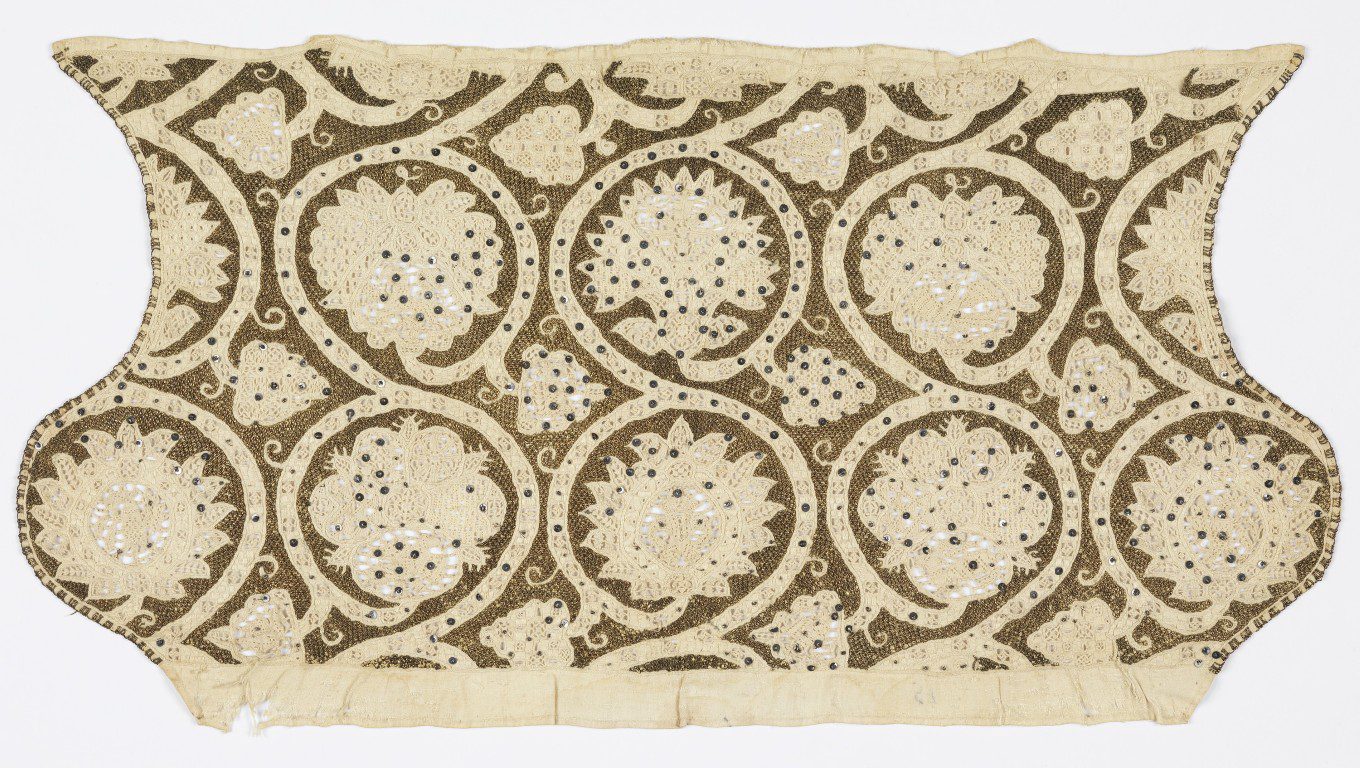
I find 17th-century English embroidery endlessly fascinating. For thirty-five years, I have studied it obsessively, trying to understand what created this perfect storm of complex threads and challenging techniques. In just the past two years, through experimental archaeological research—known to many as the Plimoth Jacket and The Cabinet of Curiosities—the breakthroughs have come rapidly, and the reasons are now becoming clear to me. I am incredibly lucky that the stitching public has reacted so positively to these projects, thread developments and historical research; they are the reason that this has happened as they support the classes and purchase the materials that allow me to move embroidery history forward.
You have a special interest in preserving and reviving historical materials and techniques. Can you talk a little bit about why these materials and techniques fall out of fashion?
For any material to survive over time in the marketplace so that it remains available to embroiderers, several conditions must be met:
- The market must be large enough to support the livelihoods of multiple people. A master manufacturer needs sufficient business to make a living, as well as the funds to train the next generation so that knowledge is not lost and equipment can be maintained and passed on.
- Users must value the manufacturer’s product over any substitutes that may arise.
- Raw materials must be available at a cost that keeps the product competitive in its market. When any one of these three factors fails or falls out of balance, the thread, fabric, or tool disappears.
The availability of embroidery materials was generally stable for hundreds of years, with increasing variety driven by technical innovation, until it reached a peak in the 17th century. This was a sweet spot, particularly after wire drawing of silver and silver-gilt became well established, enabling a wide range of “gold” threads to be made in combination with silk. Aside from the whims of fashion, things remained relatively stable until the advent of the two World Wars.
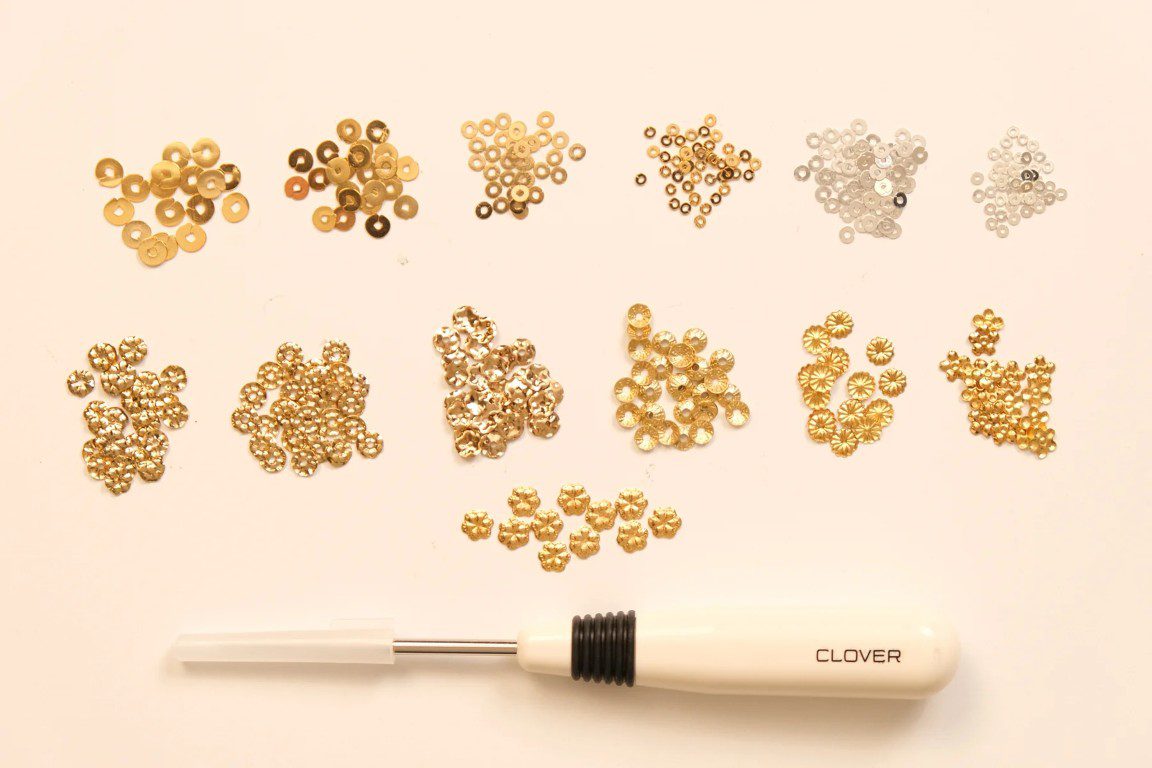
These events dramatically affected embroidery materials in several ways. One major impact was the removal of raw materials from manufacturing; steel was restricted, and findings makers were required to reduce their product lines to free up steel for the war effort. Because the largest needle-making centers in the world were in the UK and Germany, the variety of needles—which enabled the breadth of embroidery techniques—disappeared almost overnight and never returned.
The wars also placed incredible strain on natural fibers, from silk used in parachutes to wool for uniforms that needed to stay warm when wet, to flax fields that became battlefields, in some cases leading to the loss of plant varieties. To understand the race toward synthetic fibers during the first half of the twentieth century, one can look at Fleeced: Unraveling the History of Wool and War by Shaw and Fitzsimons. In essence, we were limited by the number of silkworms, mulberry trees, and sheep, as well as where they could be cultivated or grazed. These were strategic resources that enabled year-round warfare. Countries without control over these supplies needed alternatives, and scientists like myself worked to develop synthetic substitutes. I spent half of my career working on strategic synthetic fibers, always attempting to emulate the properties of natural materials—which, coincidentally, were also embroidery materials.
The technological changes of the twenty-first century, along with the rise of inexpensive manufacturing and synthetic fibers, have brought us to the brink of losing many craftsman-led processes for natural fibers—processes that have remained largely unchanged for hundreds of years. By reducing tool variety (such as needles), introducing synthetics, and attempting to make lesser materials like cotton resemble silk through chemical treatments, we have significantly reduced the market for the materials traditionally used in embroidery prior to the 20th century. As a result, the equipment and expertise required to produce and use these materials are in their final throes across many areas of textile manufacturing.
Today’s stitching generation has been inundated from the outset with synthetic substitutes—mercerized cotton, synthetic fibers, metallized plastics—as well as surplus yarns originally intended for other crafts, such as knitting yarns produced in volume and marketed as suitable for embroidery. As a result, many stitchers find the materials used for centuries difficult to understand and work with, effectively rendering them endangered. Having been trained in Japanese embroidery from a young age using exquisite, top-of-the-line materials and taught how to handle them properly, I find anything less than thread engineered specifically for embroidery unacceptable, given the amount of time I invest in my work.
If teachers and communicators do not step in to support these historic manufacturers, they will disappear. As an engineer working extensively with metal yarns and synthetic fibers for 21st-century applications, I often found myself in historic workshops, as their small-scale operations were ideal for prototyping new fibers and yarns for high-tech uses. I could immediately recognize how endangered they were, while others might be charmed by their quaintness without understanding what they were seeing.
In many places I visited, there were no apprentices to carry on the knowledge required to operate the old machines; once that knowledge is lost, it is gone. Thread and fabric production using natural materials is an art. Variations in climate, food sources, and species all affect material properties, meaning that to produce a high-quality thread, a master must continually adjust machine parameters by feel and experience. In contrast, synthetic production can often be calibrated and left to run.
I also observed that many companies were producing only to order, rather than maintaining stock for wholesalers or teachers. This was deeply concerning, as it meant there was no reliable supply of many materials. At the same time, I recognized it as an opportunity for a renaissance in historic materials. Because production was made to order, it made little difference to manufacturers what they produced; fulfilling these new thread type orders did not disrupt existing production lines.
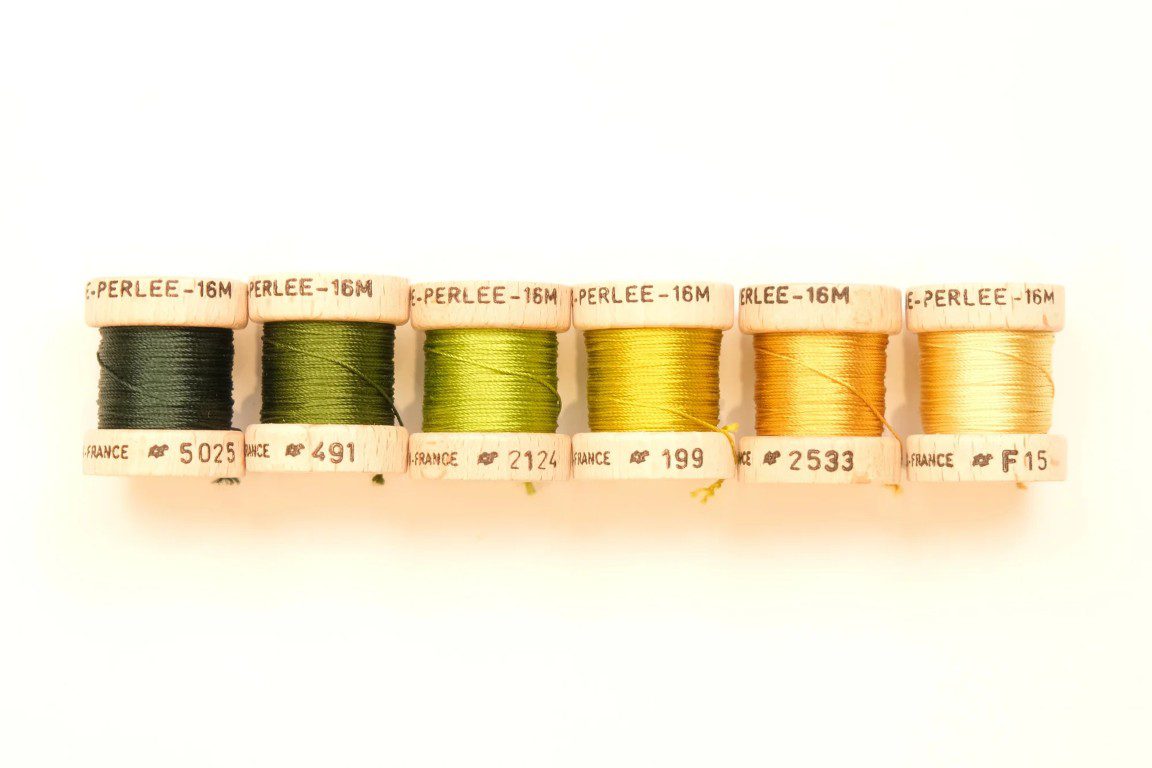
I had long wanted threads that were no longer available, and I realized I could design projects that required them, while using my communication skills to teach others why they were valuable and how they produced superior embroidered results. This, in turn, could generate business for these companies and potentially provide enough demand to support training the next generation. It became critically important to reintroduce as many thread types as possible, keeping manufacturers actively producing while also capturing the knowledge of experts who were already past retirement age before that knowledge disappeared.
Why is this important to you—are modern alternatives unavailable, or is there an intrinsic benefit to using historical pieces?
This question almost makes me jump out of my skin. The entire synthetic fiber industry of the 20th century has been developed to try to replicate the properties of silk or wool. We still haven’t achieved that as scientists and engineers; nature remains the best engineer. As more and more oil-based synthetics flood the market, consumers are so inundated with inexpensive options that most people no longer recognize high-quality woven silk or fine filament silk thread, simply because they so rarely encounter them. That is how questions about the “benefit” of historical materials or the viability of “modern alternatives” even arise. If you have never seen what once existed, you don’t know what you are missing.
We have been sold “noil silk” or “dupioni silk” as if it were high quality for clothing, when in reality it is woven from some of the lowest grades of silk—essentially waste from the reeling process. It is a marketing triumph to present the slubs in the weave as marks of authenticity rather than the defects they truly are. As a result, we have been conditioned to accept what was once discarded as stuffing as a luxury material.
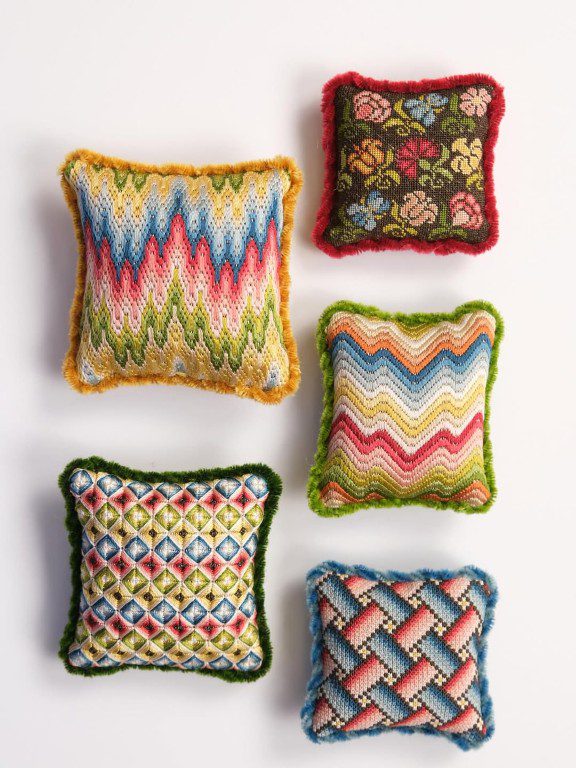
I find this question difficult to answer because the tactile and visual impact of historical materials is so dramatically different from what is commonplace today. That is why antique samplers can sell for tens of thousands of dollars—they simply have a presence. If you have ever seen true silk velvet, no other velvet compares. Real filament silk and silver-gilt threads resemble crown jewels rather than imitation stones. They are visually warm and come alive in candlelight. Pieces worked with them speak directly to our eyes, and our fingers instinctively reach out to touch them. There is something almost primal in the response they evoke. You simply do not get that effect from cotton that has been chemically treated to swell and shine in an attempt to imitate silk.
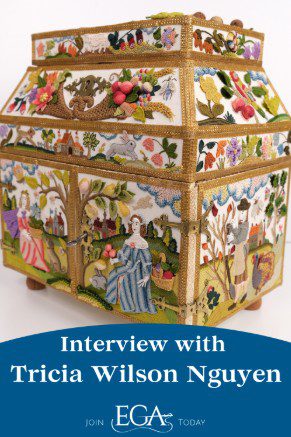
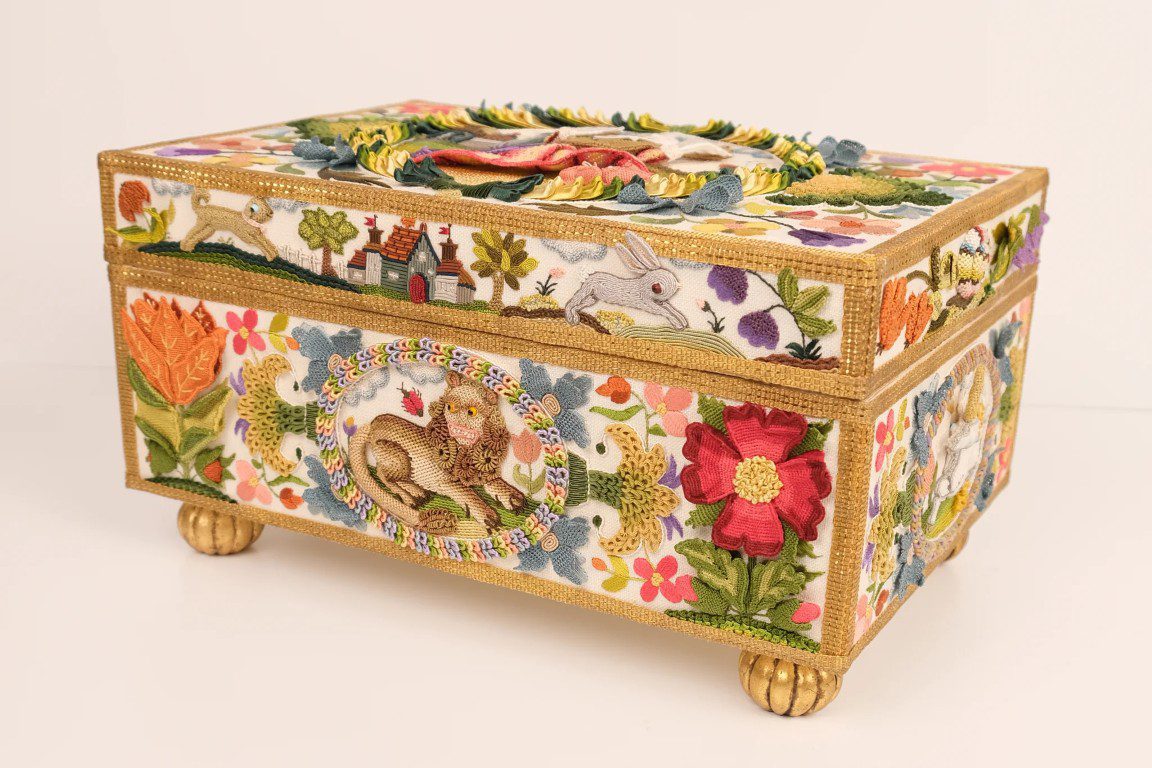
I have an embroidered casket that I created as part of a course called the Five Senses Casket, and I recently hosted a small group of overseas students. While there are more technically impressive embroidered works in my home, this piece sits near the front door, and they could not move past it. It is worked entirely in tent stitch—but in filament silk. They had all seen photographs of it, yet in person, the way the light interacted with the stitching left them mesmerized. One student captured it perfectly, saying the piece looked as though it had been entirely beaded with silver-cored glass beads. The light danced across the tiny tent stitches because of how filament silk bends and reflects light. There is no substitute for filament silk handled well.
It is also unfortunate that historic embroideries are rarely seen in person and are often reproduced in books at such a small scale that their impact is diminished. I grew up in the middle of the country and understand how limited the opportunities are to see 16th- through 19th-century pieces unless you are able to travel extensively and happen upon the right exhibition. As a result, we tend to imagine these works based on the modern materials available to us locally.
I remember my own shock as an “expert” in Hardanger embroidery when I saw original pieces for the first time in a small museum in Hardangerfjord, Norway. I realized that what we had been working in mercerized pearl cotton was at roughly three times the scale of the originals. The historical pieces were executed in extremely fine linen thread on high-count linen fabric and were almost unrecognizable by comparison. That moment made it clear to me how profoundly the availability—or lack—of appropriate materials shapes what we are able to do as embroiderers.
Can you talk about the process of reviving historical textiles and materials? What are some historical materials you’ve reintroduced?
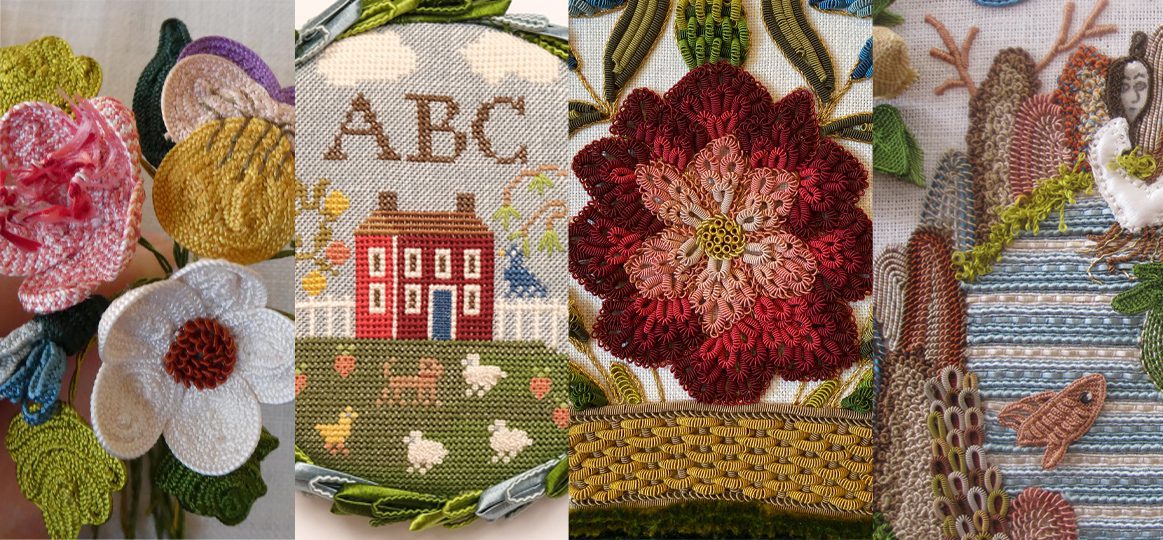
The Plimoth Jacket project gave me the first real opportunity to bring back several materials necessary to work the piece correctly. When I was asked to help lead the project, my requirement was that we make every effort to execute it as authentically as possible. My goal was to learn from that process and to help catalyze a renaissance, much like the quilt projects of 1976 helped spawn our modern quilt industry.
To achieve this, I began discussions with manufacturers and the primary U.S. distributor of silk and metal threads, Access Commodities, to identify the pain points that typically derail development so that I could engineer solutions around them—that is, after all, what an engineer does. One major challenge was the prototyping and research required to develop the threads; these small companies simply did not have the time or resources to undertake that work.
I took on that responsibility by working in museums alongside conservators to measure the parameters I needed. Using source materials provided by the companies, I built small experimental machines—often hand-cranked—to test different approaches. While the resulting threads were not perfect, they allowed us to identify critical machine settings, as well as the appropriate weights, diameters, thicknesses, and color combinations of the raw materials. In doing so, I removed a significant portion of the development burden from the manufacturers, reducing the level of investment required on their end.
As part of my museum work, I continually compile detailed records of threads and their parameters, always looking for what was typical and, at times, matching historical colors. This has become a symbiotic process. In exchange for access, I often contribute my expertise to museum projects—analyzing objects slated for display, delivering lectures on analytical techniques, donating funds, and supporting their work in other meaningful ways—while gathering the data needed to recreate historic threads.
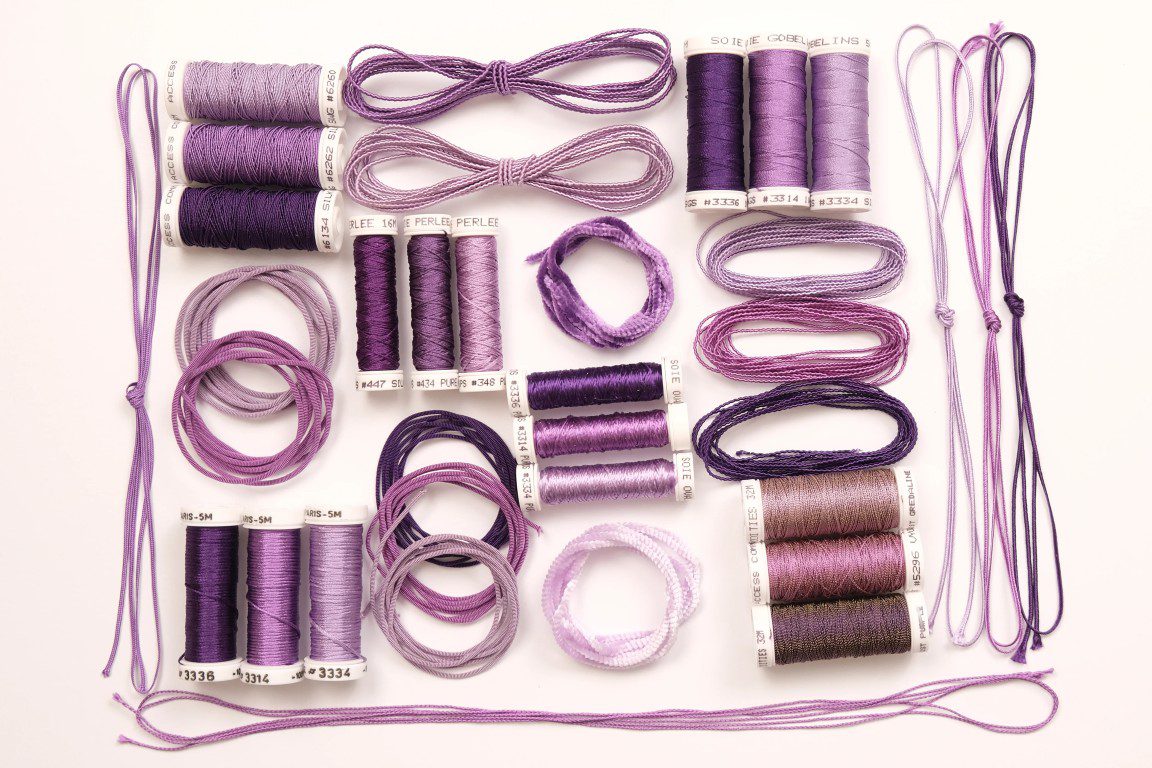
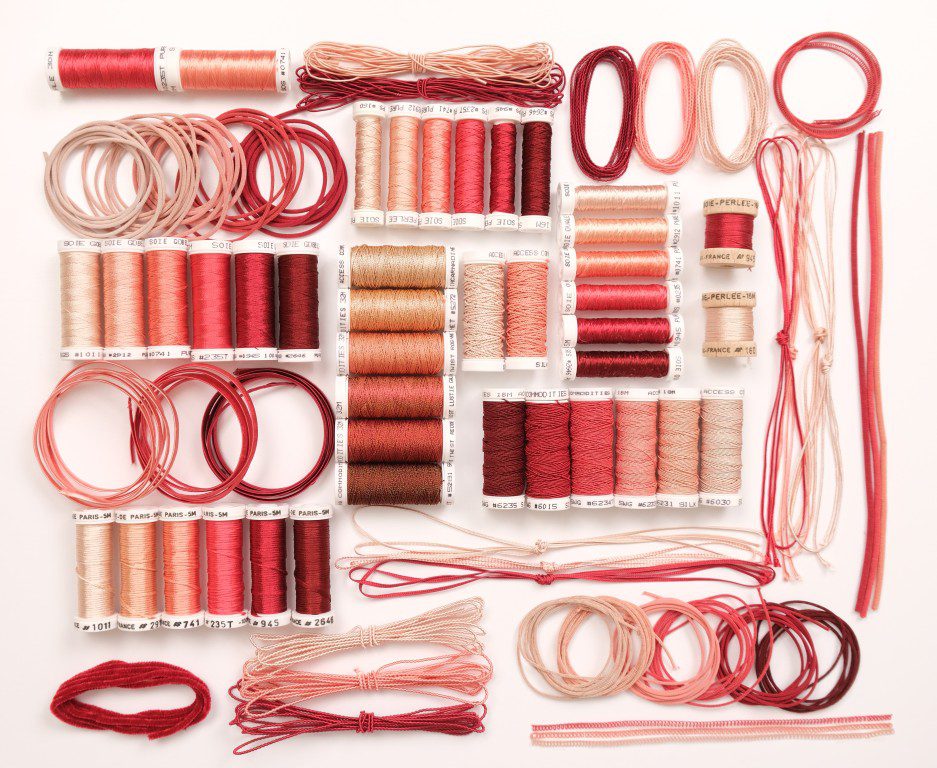
This process has resulted in a remarkable number of products. Over 90% of the threads on my website have emerged from this work. One notable example is a collaboration with Access Commodities and Au Ver à Soie to develop a color line of approximately 48 shades designed to emulate natural dye palettes. We extended this system across all of Au Ver à Soie’s filament silk thread types. This was a ten-year effort that we are all extremely proud of. The system allows for cohesive shade families, enabling stitchers to move seamlessly between thread types and thicknesses while maintaining color continuity.
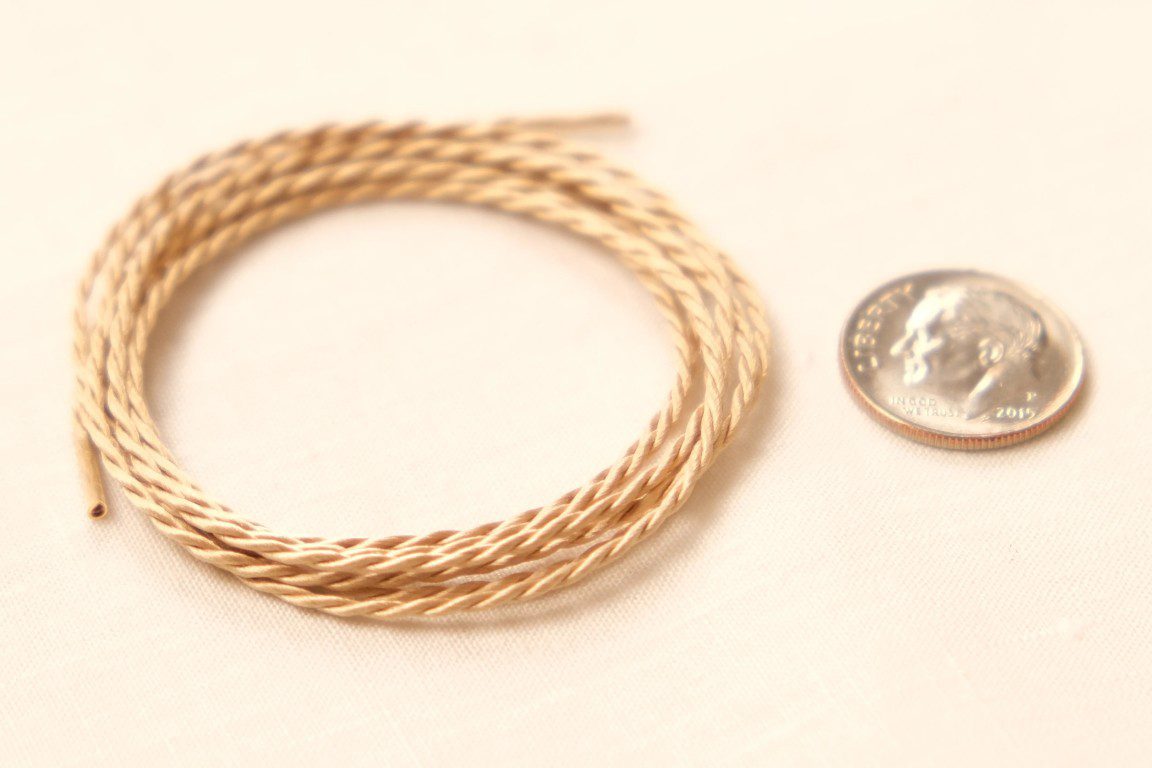
We then used this color system to dye base filament silk, which could be supplied to other textile thread makers and transformed through additional processes into a wide range of silk and silk-metal composite threads. These include silk-wrapped purls in four sizes, gilt sylke twist, silk gimp, double-twist gimp, silk facette gimp, serpentine gimp, striped gimp, silk satine gimp, silk chenille, silk lacet braids, silk soutache, and more. Many of these thread lines are produced in ranges of 10 to 42 colors. It has ended up being a dizzying array of fibers – all color matched. There is and will never be anything like it again.
New threads are introduced each year through something called the Frostings Box. To fund continued development, we sell more than half of each production batch through these boxes. Those familiar with the program tend to purchase them quickly, as many thread lines are produced only once—each batch often satisfies the current demand for what I call “extreme embroidery.” At this point, I have reintroduced forty-one types of threads and trims, in addition to designing their color ranges.
This work does not even include the development of the full system of materials required to recreate historic caskets, which is an extensive undertaking in its own right. I have given entire talks and produced videos dedicated to that process as well.
You talk about having “embodied knowledge” of embroidery techniques and materials. Can you talk a little bit about this concept—what does it mean to have embodied knowledge? What is the value of embodied knowledge as it relates to needlework?
For far too long, we as embroiderers have allowed others to write our narrative. This often results in incorrect information, comparisons, and conclusions being made and repeated until they begin to seem like fact. Embodied knowledge is what you learn by doing.
Most embroiderers have a strong intuitive sense of the difference in expertise required to work objects, say between a needlepoint fire screen, a satin-stitched floral, and a stumpworked picture. If you take a moment to think about it, you could likely estimate the relative labor involved and rank specific pieces in terms of time invested versus expertise required. The needlepoint piece would fall at the bottom of the list for most of us in terms of skill required. Yet, time and again, we read descriptions praising the “exquisite skill” of someone who produced a small piece of needlepoint—work we might recognize as amateur—because the writer lacks firsthand experience with the needle.
One of my papers examines a large embroidery from around 1600: a christening cloth the size of a small tablecloth, with a nearly foot-deep pattern worked in needlelace stitches using gold threads. This is not a piece that a single individual could complete quickly. However, someone experienced in this type of embroidery can walk around the piece slowly and begin to notice subtle differences in how the stitches were executed, suggesting that more than one person may have contributed to the work. My challenge is how to prove that to those who don’t have that specific experience so it isn’t a pronouncement without evidence. So I have thought a great deal about how differences in hand is expressed in embroidery.
Here is one example. As a teacher, I have had the opportunity to observe many people working with thread. Each person develops individual habits: how they form a knot, how long they secure a thread before cutting it, how they end a thread (doubling back, knotting, coming to the front, etc), whether they trail threads between motifs, and so on. These details might not be recognized as identifying characteristics unless you possess the kind of embodied knowledge that comes from both practicing and teaching the craft.
If we collect and apply this knowledge in the analysis of historical objects, we can draw more nuanced and meaningful conclusions—and document them with concrete, observable evidence. The challenge lies in explaining and demonstrating these insights: taking what are essentially the trade secrets of the craftsperson and transforming them into analytical tools that can be understood and accepted by those without practical experience, while also being useful for further study.
In the case of this particular object, my colleagues and I used these observations to develop a mathematical model for estimating the time required to complete a piece of embroidery. Through this approach, we determined that the cloth was worked by eight professional embroiderers and were even able to suggest where each individual may have been sat around the frame. All of this emerged from interpreting the physical evidence through the lens of our embodied knowledge as embroiderers.
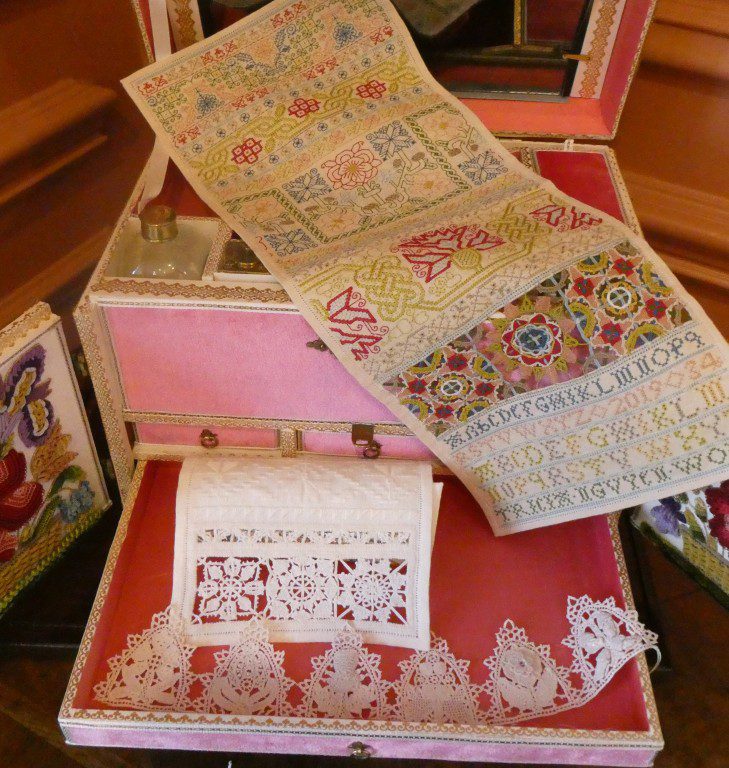
Your virtual lecture, Patterns and Pieces: Whitework Samplers of the 17th Century, explores whitework patterns and samplers from the 17th century. What do you look for when researching historical embroidery patterns and pieces? What do you hope attendees will take from the lecture?
I hope that attendees come away understanding that much of embroidery history was written in the late 19th century, then continually repeated, and that it needs to be seriously revisited with a clean slate. Initially, there were collectors—often not makers themselves—who sought to preserve these objects by assigning them imagined importance. From their perspective, everything was attributed to figures like Elizabeth I, Mary, Queen of Scots, or Shakespeare.
Then there were those who used embroidery as a trope to serve broader social purposes, particularly in keeping women confined to narrow roles centered on the home. Throughout history, we have seen cycles of progress and regression, often tied to periods of war and plague. When men were unavailable for the workforce, women were drawn into broader roles; when stability returned, they were pushed back out to make room again. Associating embroidery with women and domestic life served a specific purpose, and that framing still strongly reflects the influence of the Victorian era.
There are also historians and curators who suspect that the stories are more complex but have historically been limited by time, as well as by access to visual databases and primary sources.
By setting aside what has been conventionally written and repeated—often like a game of telephone—we can take a more objective look at when patterns, objects, and fashions actually appeared, and begin to identify contradictions. From there, a deeper understanding of techniques and levels of difficulty can open new avenues for research and guide us toward archival sources we might not otherwise consider.
During the COVID shutdown, when physical archives were inaccessible, a significant amount of indexing of historical documents took place. This has brought a wealth of original information out of obscurity and made it discoverable. Research that once might have taken a lifetime to assemble can now be conducted in a fraction of that time, greatly accelerating the reinterpretation of embroidery history—especially when combined with the practical knowledge of the embroiderer. There are also now greater efforts to photograph pieces and make them available in databases—how can we make conclusions when we don’t have all the data?
What resources do you recommend for needleworkers interested in deepening their understanding of historical embroidery techniques and materials?
I have a page on my website devoted to the academic papers I have published, along with information on how general readers can access them. I have worked very hard to ensure that these papers are accessible not only to historians but also to embroidery enthusiasts. They represent significant contributions to the discourse on embroidery, bringing forward insights that only an embroiderer can perceive and translating that knowledge—gained through hands-on practice—into terms the historical community can engage with.
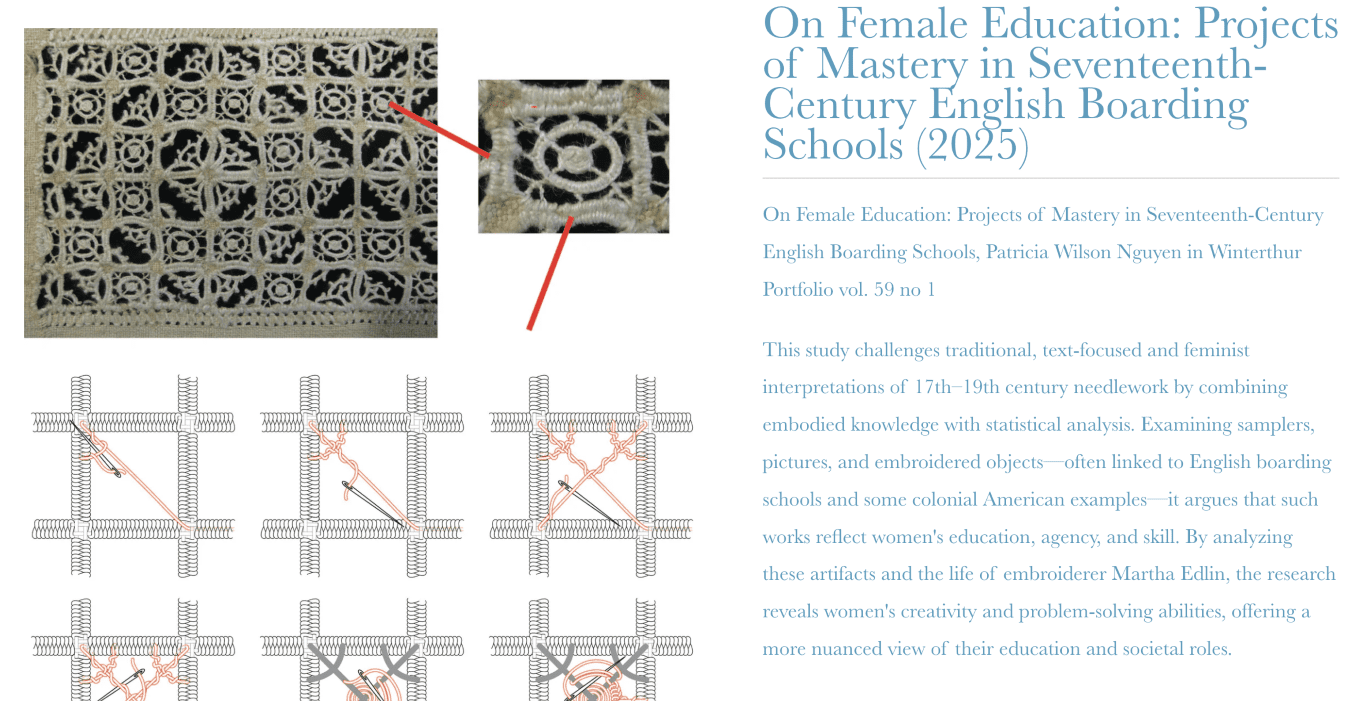
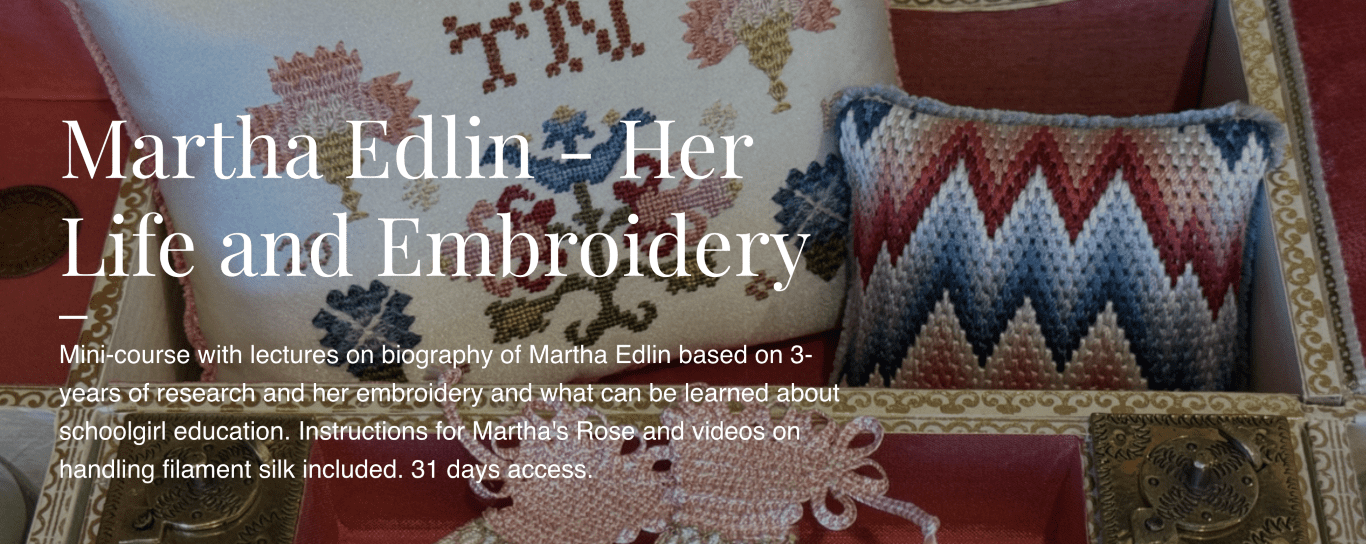
In addition to the papers, I offer a mini-class on my teaching site called Martha Edlin: Her Life and Embroidery. It is an exceptional value, as it includes three presentations and a project. The first presentation explores the life of Martha Edlin, based on my research into original documents preserved in legal records. The second is a video focused on her embroideries, examining in depth the clues that reveal both her ingenuity and the nature of her training—not just in stitches, but in how her thinking was shaped through them. Embroidery has long been used as a tool to teach skills beyond stitching itself, something that most historians have not fully recognized.
The third presentation focuses on filament silk—what it is, how it compares to other fibers, and how to use it effectively. I also include historical portraits of women embroidering to demonstrate proper hand positions, which are rarely taught today. Finally, the class includes a set of project instructions.
The course is offered for a small fee, as I needed to pay licensing costs for the images; five dollars from each purchase is donated to the Victoria and Albert Museum to support a digitization project.
Do you have a favorite piece of embroidery?
That is the hardest question ever. I have so many favorites, for so many different reasons. There are two pieces I would grab in a fire.
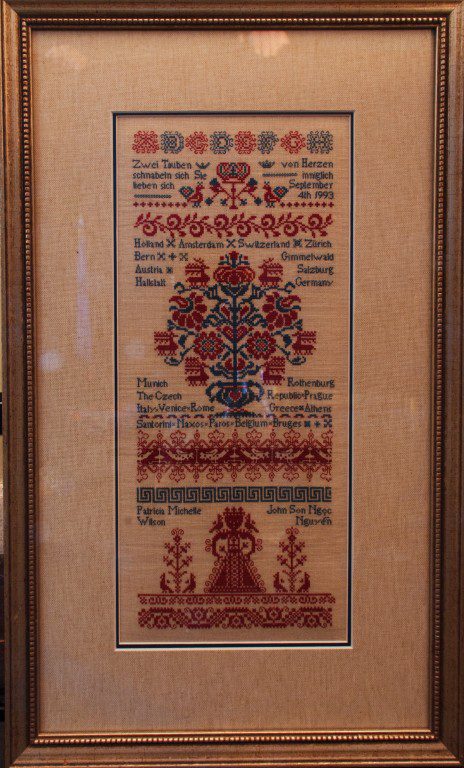
The first is a sampler I designed on the go during my honeymoon, when we were backpacking across Europe. About halfway through the trip, we were the victims of a theft in Eastern Europe and lost everything except the clothes on our backs and our small day pouches. By chance, I had my partially completed sampler with me that day, as I had been using it to communicate in a thread store—so it survived. I sat in Alpine restaurants charting motifs from folk curtains, collecting patterns off pieces in museums we visited, and continued adding to the sampler as we traveled by train. It is more than just a sampler; it is a record of our resilience as a newly married couple.
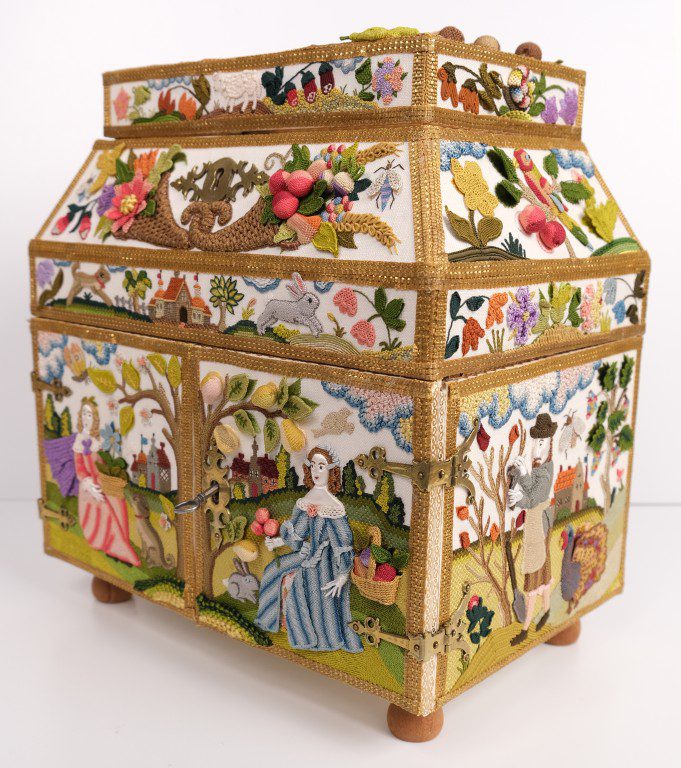
The second is my Four Seasons Casket, which took me three years to embroider and which I consider my most significant piece of work at this moment. It incorporates all of the threads I have designed and revived, and it also represents the extensive effort required to re-engineer every component—the box, papers, bottles, inkwells, locks, hardware, and more. Standing in front of it, I can trace a long history of how girls were educated across Europe and why. It is emblematic of the beginnings of modern education for women and reflects the people and ideas that made that shift possible.
If you asked me to name my favorite historical pieces of embroidery, I couldn’t do it. I would need to select at least half a dozen and tell you long, detailed stories about each one—about the people who stitched them, who designed them, who created the pattern books, who taught the techniques, and who made the threads. Each piece is saturated with history and reflects the politics, scientific understanding, religious context, industrial developments, educational philosophies, and the lived experiences of women at the time it was made.
If you enjoy material culture, books like A History of the World in 6 Glasses by Tom Standage, I could probably walk you through the history of the Western world using six pieces of embroidery. I gave an in-person event at the MFA last year called “Around the World in 10 Samplers,” and it was tremendous fun. I have long wanted to write books in this vein, but so far I haven’t found a publisher willing to take the risk—they tend to think there wouldn’t be enough interest.
Where can interested readers learn more about your work?
I have a YouTube channel, @triciawilsonnguyen, where I share videos about my travels to see historical embroideries, interviews with individuals who have significantly advanced our understanding of historical embroidery, and discussions of materials and techniques.
I also maintain an Instagram account, @thistle_threads_us, where I post shorter, more focused content. My blog is somewhat sporadic at the moment, but it is where I publish longer, more in-depth discussions, like why I am putting so much effort into academic publishing at the moment. Stitchers interested in exploring historical materials, techniques, and stories can also visit my website, Thistle Threads.