Technique: Kogin
Place of Origin: Japan
Earliest known date: 1603 CE
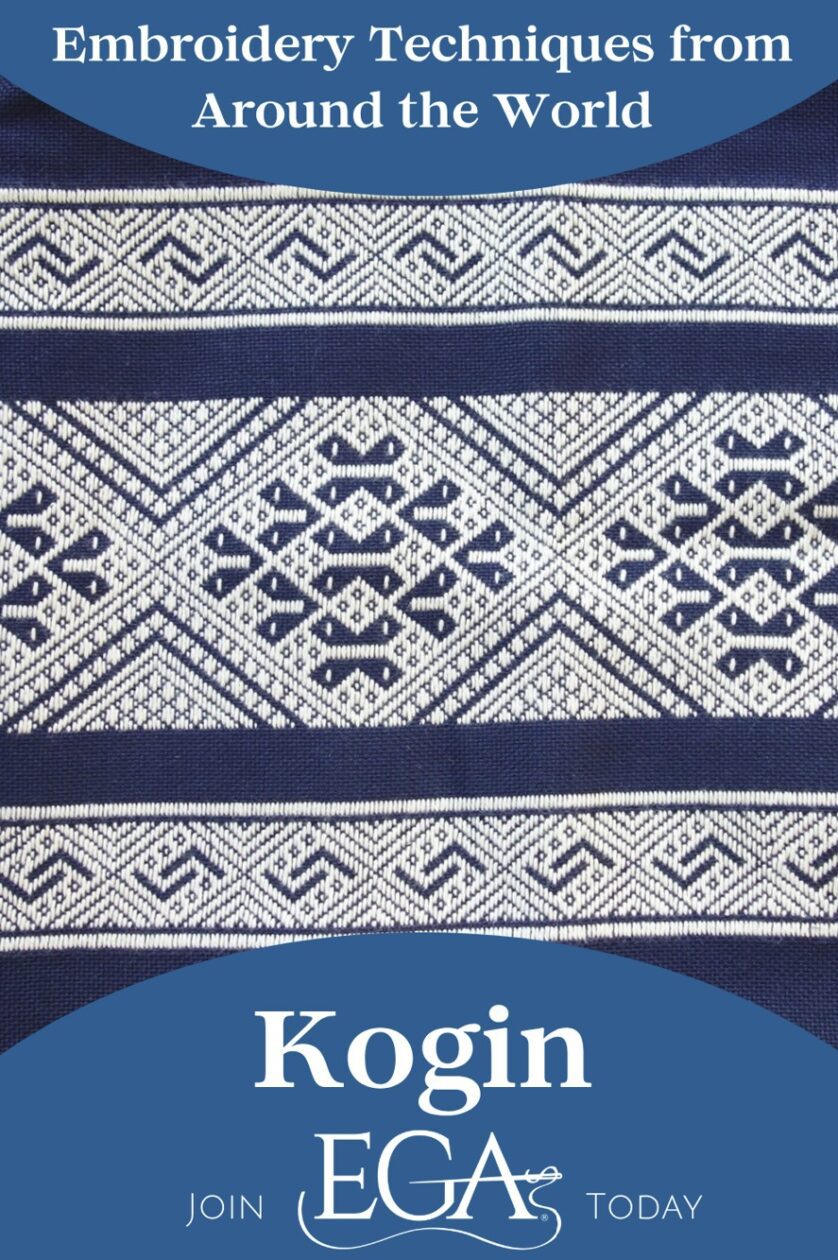
History: Kogin, also known as Kogin-zashi, originated in the Tsugaru region of northern Honshu Island in Japan, Aomori prefecture, during the Edo period (1603-1867). Kogin translates to “small cloth” and zashi translates to “stitches.” The Edo period was an interesting time for textiles and needlework in Japan; restrictive laws, called Sumptuary Laws, regulated the types of fibers, textiles, colors, and styles of clothing available to the lower classes. The access to and ability to wear restricted clothing and select fibers reflected the wearer’s social and economic status.
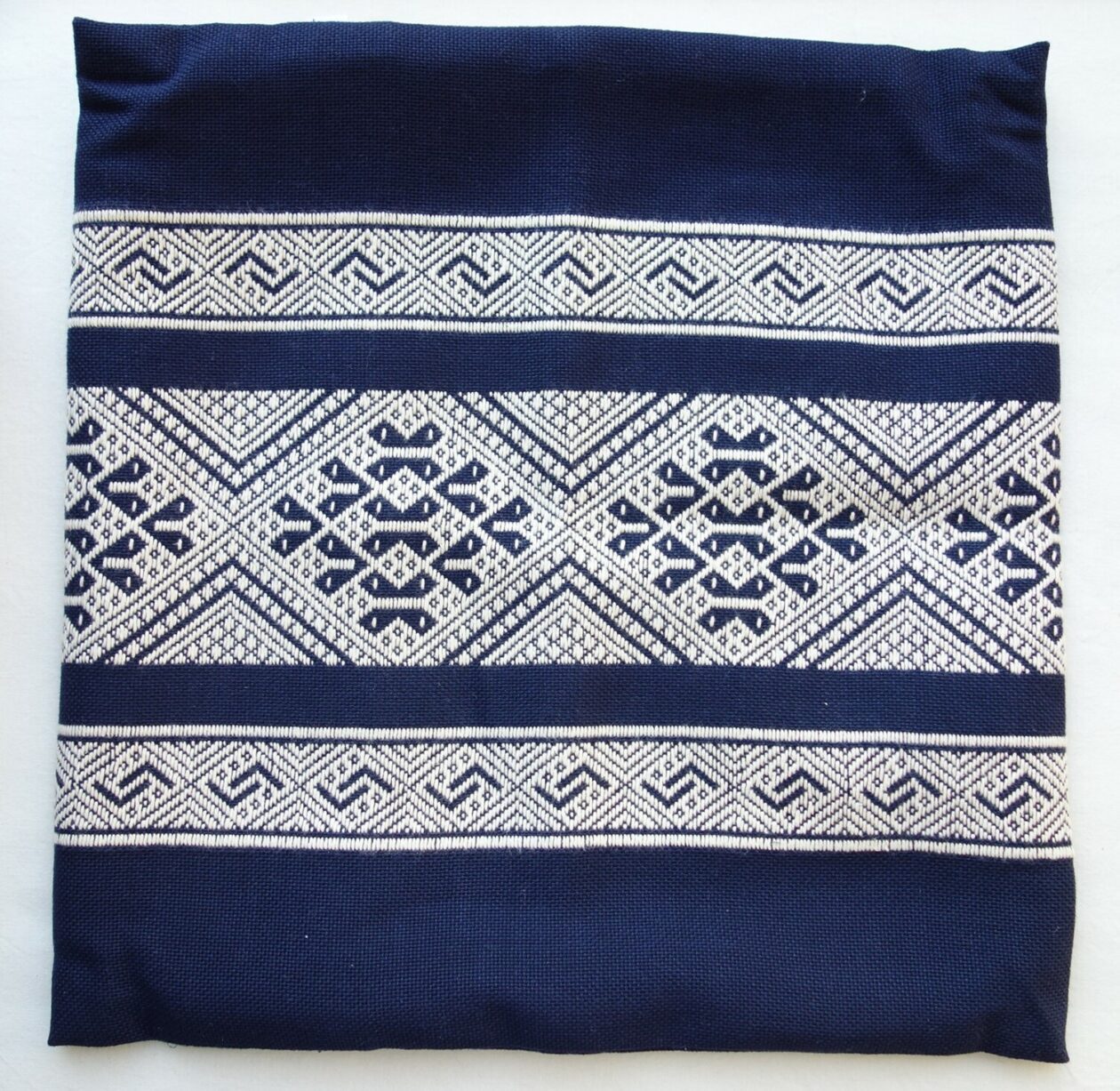
Chonin, which referred to merchants and sometimes artisans, fell into the lowest class, and was the most affected by these laws. Chonin were only allowed to use ordinary silk, ramie, and pongee. As a result of these restrictions, a quiet class rebellion arose among the peasant class, who sought to subvert the laws with needlework and textile techniques. Where embroidery was forbidden, the lower class would hide embroidery on inner sleeves and the inside of kimonos. Finer silks would line kimonos on the inside, hidden and unseen from the outside. And because of restrictions around access to finer, more sturdy fibers, the need to reinforce and reuse textiles arose, resulting in techniques like Sashiko, Boroboro, and Kogin.
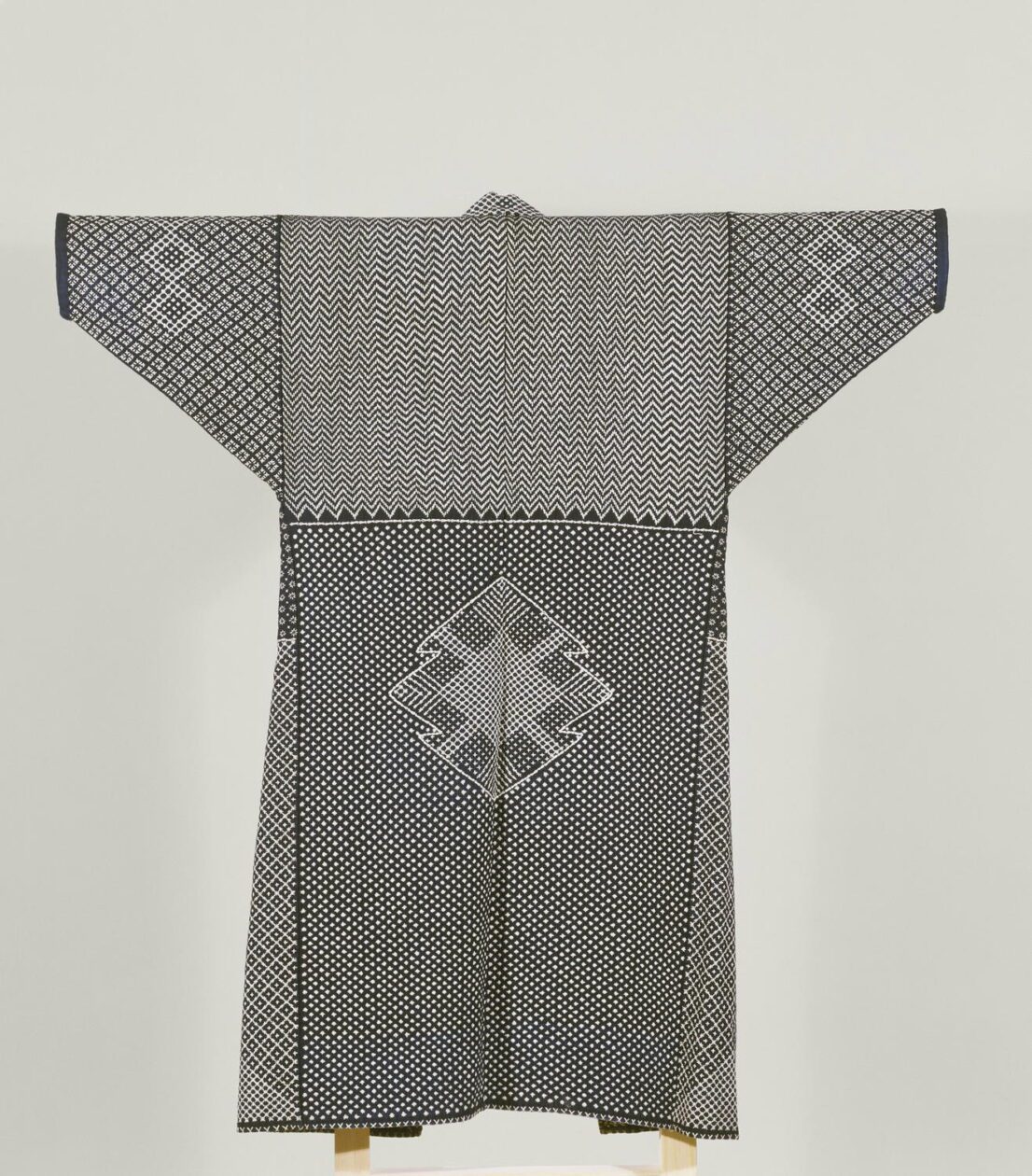
Developed by farmers in northern Japan, Kogin was traditionally worked on coarse hemp, linen, and ramie. Originally, white ramie threads were used to stitch the geometric patterns seen in Kogin. Later, Kogin embroiderers would subvert Sumptuary Laws by using white cotton thread to stitch the geometric patterns of Kogin into hemp or ramie. It not only ornamented the cloth and surreptitiously defied the laws; it also made clothing stronger and warmer in cold weather. Winters in northern Honshu Island were brutally cold, so layering multiple fabrics with dense, ornamental stitchwork became an easy and attractive way to craft strong, thick fabrics that could combat harsh winters.
During the Meiji period, Sumptuary Laws were abandoned and a new era for Kogin pattern design began. Access to materials expanded, and hundreds of Kogin patterns entered the culture. Three distinct styles emerged, tied to geographic locations:
-
- nishi kogin – known for its dense, fine, and complex patterning and horizontal stripes placed along the shoulders to create a stronger fabric, and hailing from the western side of the Iwaki River, west of Hirosaki city
- higashi kogin – known for simple, bold designs, diamond shapes, a lack of stripes, and sourcing from the eastern side of the Iwaki River, east of Hirosaki
- mishima kogin – known for smaller, often irregular patterns and sometimes three horizontal stripes, and coming from the river delta and north of Hirosaki
Materials, Techniques, and Stitches:
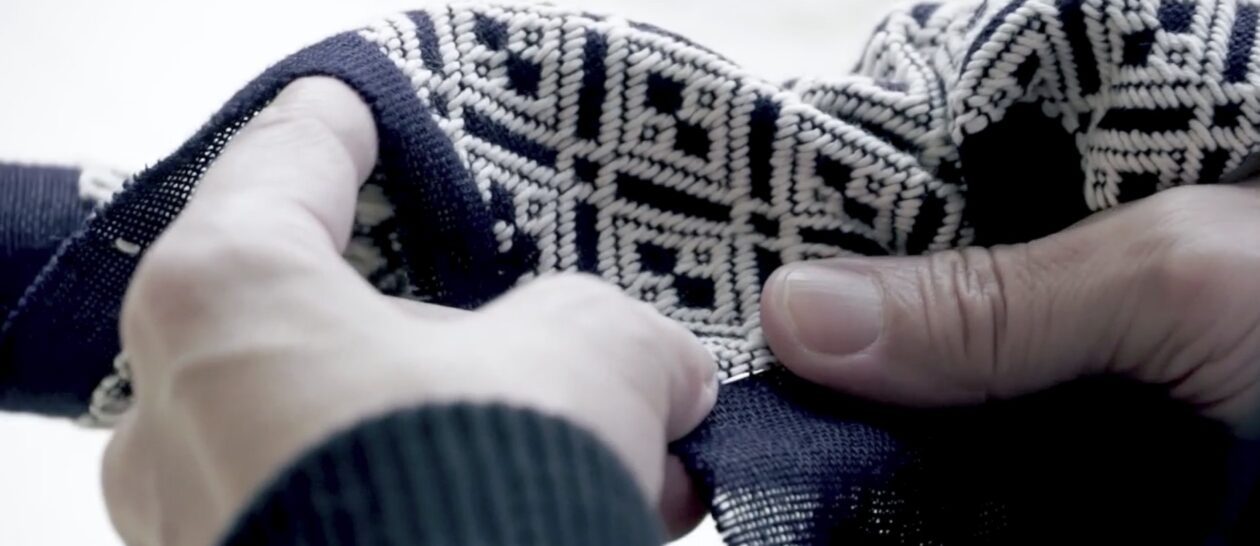
Kogin is a style of dense, darned embroidery, related to sashiko. Like Sashiko, embroiderers create repeating geometric patterns with small running stitches; unlike Sashiko, Kogin is a counted thread technique, with running stitches moving horizontally. Kogin requires the stitcher to count the number of warp threads and stitch over a certain (usually odd) number of threads in an evenweave fabric. Cotton or linen evenweave fabric and cotton thread features prominently in contemporary Kogin. Kogin needles are long like sashiko needles, although they tend to be more blunt. Kogin stitches will also vary in length, depending on the pattern.
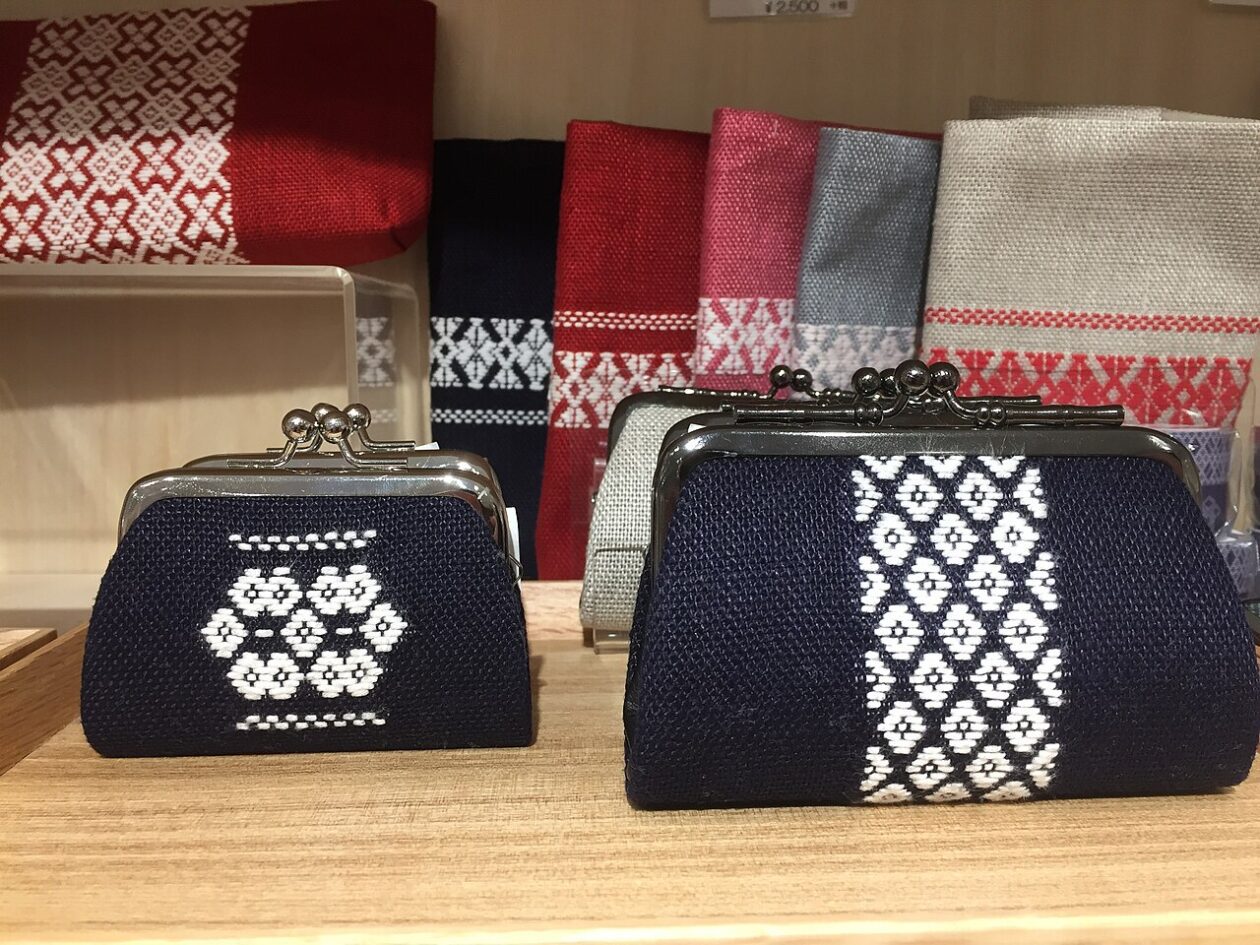
Kogin patterns are inspired by nature and Japanese life, with patterns resembling fish scales, bamboo, flowers, beans, and other flora and fauna native to Japan.
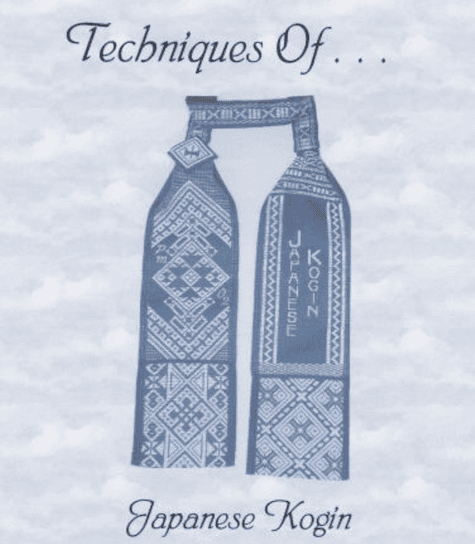
Want to learn more about Kogin? Explore Techniques of Japanese Kogin – By Phyllis Maurer.
Sources
Kogin-zashi. (2026, March 18). In Wikipedia. https://en.wikipedia.org/wiki/Kogin-zashi
Nishimura, Y. (1980). The Restrictive Laws of Clothing in the Edo Period. Journal of Home Economics of Japan, Vol. 31(Issue 6), 432-438. https://doi.org/10.11428/jhej1951.31.432
Shively, D. H. Sumptuary Regulation and Status in Early Tokugawa Japan. Harvard Journal of Asiatic Studies, Vol. 25, 123-164. https://doi.org/10.2307/2718340
Textile Research Centre (n.d.). Kogin Zashi. TRC Leiden. https://www.trcleiden.trc-leiden.nl/trc-needles/regional-traditions/east-asia/japan/kogin-zashi
Textile Research Centre (n.d.). Kogin Zashi Technique. TRC Leiden. https://www.trcleiden.trc-leiden.nl/trc-needles/regional-traditions/east-asia/japan/kogin-zashi-technique
Panamaroff, A. (n.d.). Kogin. https://www.edmontonneedlecraftguild.org/info/kogin
Panamaroff, A. (n.d.). Preserving the ‘kogin’ tradition, a unique form of sashiko from Hirosaki, Japan. TRC Leiden. https://trcleiden.nl/trc/index.php/en/blog/1575-preserving-the-kogin-tradition-unique-sashiko-in-hirosaki