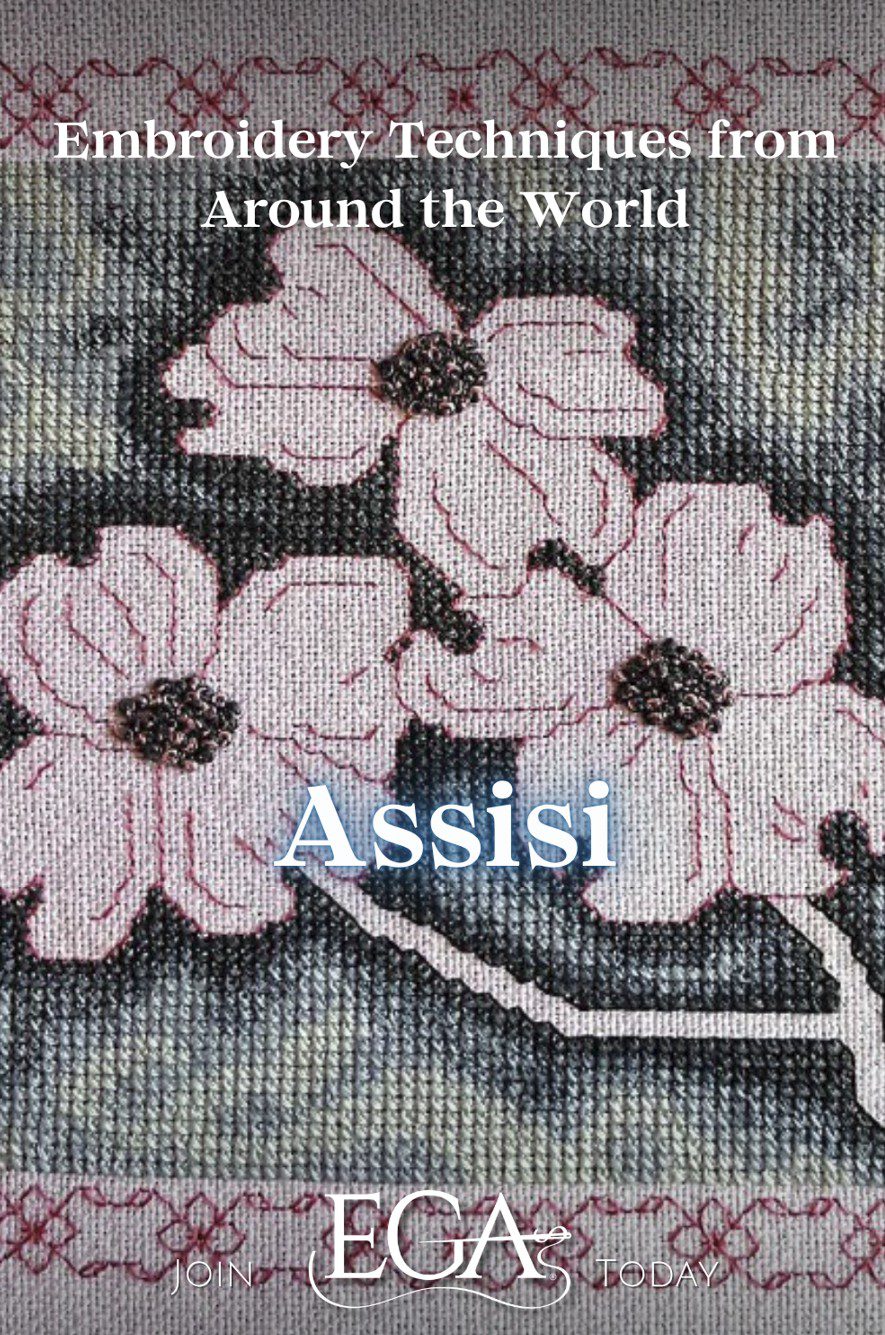
Technique: Assisi
Place of Origin: Italy
Earliest known date: 13th century
History: Assisi embroidery originated in Assisi, a town in Italy located in the Umbria region, during the Renaissance. The techniques involved in Assisi embroidery (outlined in the section below) were practiced for many centuries; however, the modern form of Assisi embroidery as it is recognized today took its shape and form in Assisi in the 18th century.

Early examples of Assisi embroidery often feature religious themes, pointing to its ecclesiastical beginnings. Convent nuns stitched church altar cloths, chasubles, vestments, and other religious items and materials with Assisi embroidery motifs. St. Clare of Assisi, an Italian nun who started the order of St. Clare, later became the patron saint of embroiderers. She was known for stitching altar cloths for churches in Assisi.
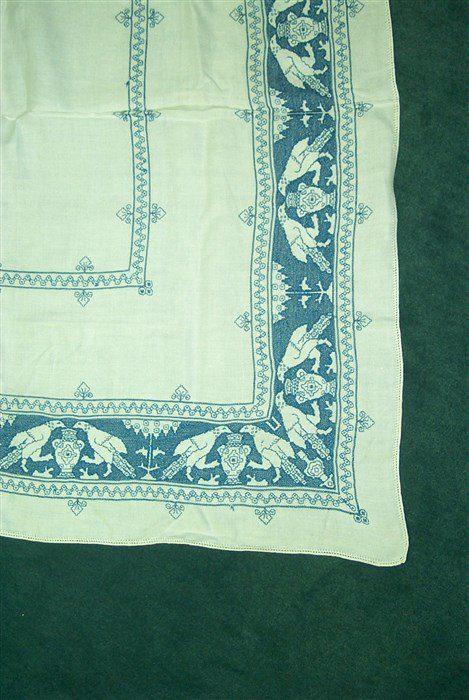
Assisi embroidery went through several evolutionary stages, reflected in its changing motifs. In the 13th and 14th centuries, motifs included stylized birds and animals, scrollwork, and geometric designs. In the 15th and 16th centuries, Assisi work reflected Biblical and Renaissance-inspired motifs, with demons, angels, and mythological creatures.
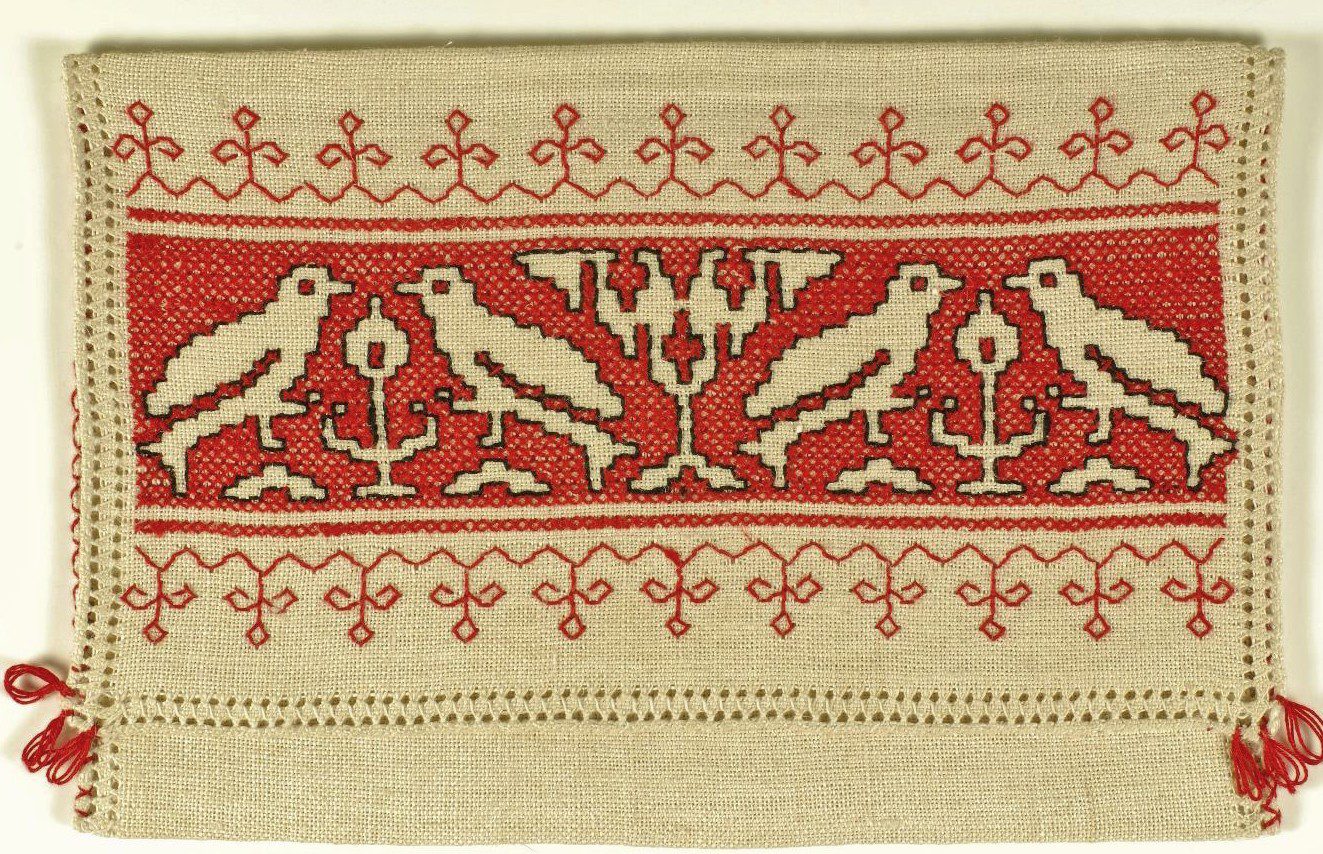
Materials, Techniques, and Stitches: Assisi embroidery is typically stitched on linen or cotton evenweave fabric, or silk fabric, using stranded cotton, linen, or silk thread. Assisi is a counted thread embroidery technique. The background is filled with embroidery or cross stitches and the main motifs are left as “voids,” or unfilled, often outlined, designs. Assisi embroidery is often bright and colorful, stitched with red, blue, green, brown, gold, black, and yellow threads, making the white “void” pop more brilliantly against the surrounding colors.
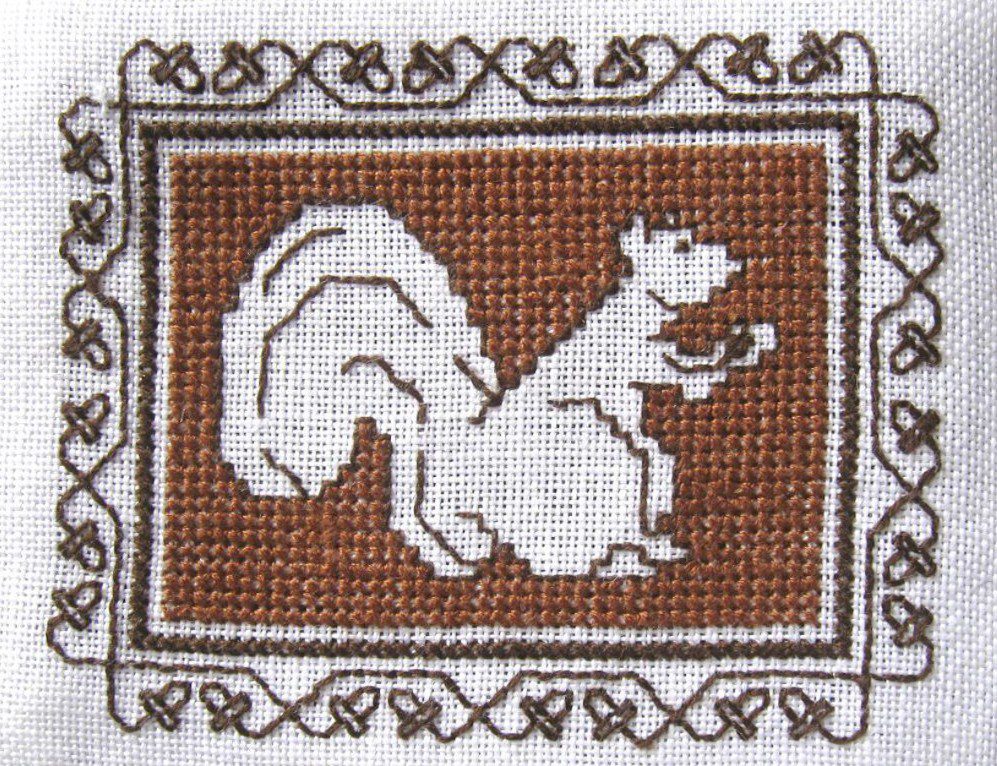
Stem stitch, back stitch, or more traditionally Holbein stitch may be used to create the outline stitches, with cross stitch, Algerian eye stitch, Italian cross (punto croce), and long-armed cross stitch used for the filling stitches.
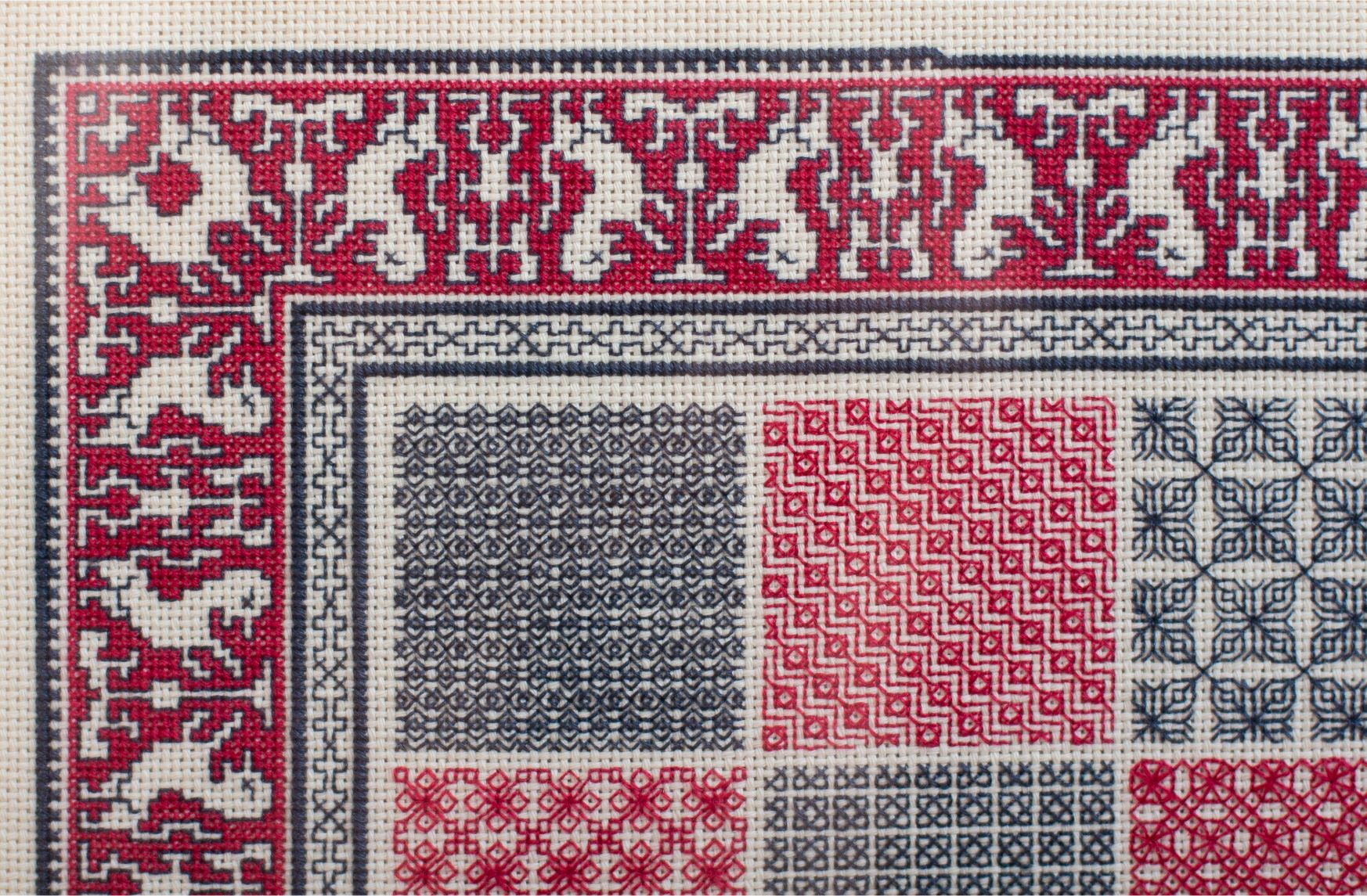
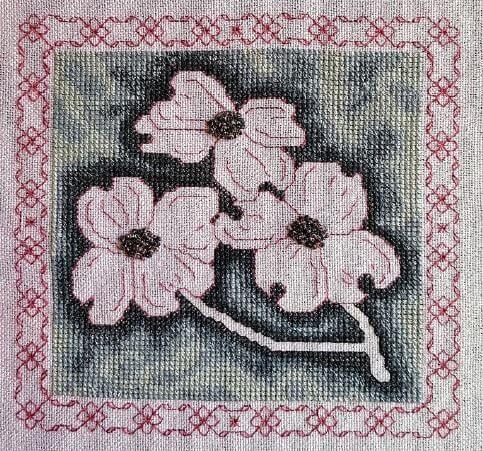
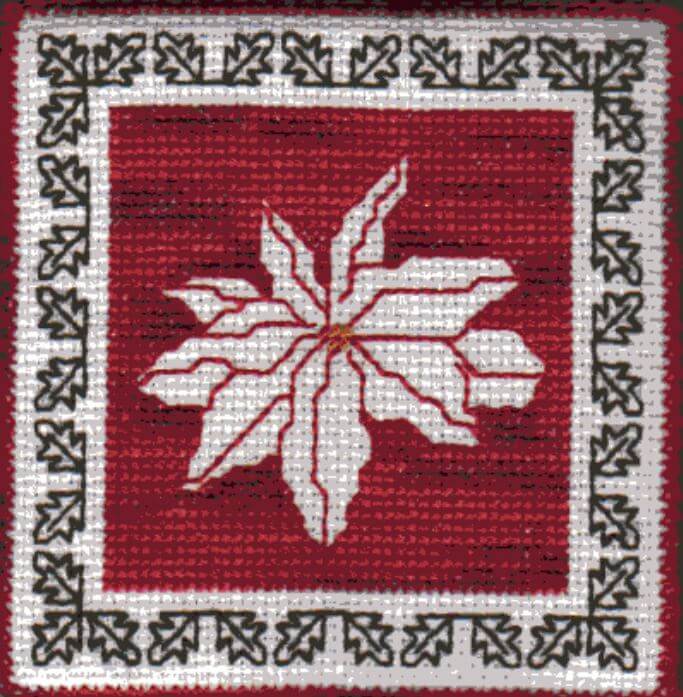
Interested in learning more about Assisi embroidery? Check out EGA’s An Introduction to Assisi Embroidery and the Dogwood Assisi and Assisi Poinsettia in Petite Projects (below).
Sources:
(n.d.). Assisi Embroidery. TRC Leiden. https://trc-leiden.nl/trc-needles/regional-traditions/europe-and-north-america/embroideries/assisi-embroidery
Assisi Embroidery. (2025, May 17). In Wikipedia. https://en.wikipedia.org/wiki/Assisi_embroidery
Snyder, D. (2019). An Introduction to Assisi Embroidery. The Embroiderers’ Guild of America. https://egausa.org/technique-assisi-counted-cross-stitch-guide/
Alexander, E. (n.d.). Assisi Embroidery: An Ancient Art Born And Reborn By Female Hands. Italy Segrata. https://italysegreta.com/assisi-embroidery-an-ancient-art-born-and-revived-by-female-hands/
(2007, April 13). Assisi Work – Free Patterns. Needle ‘N Thread. https://www.needlenthread.com/2007/04/assisi-work-free-patterns.html