EGA could not have chosen a better Virtual lecture Series Chair than Jana Bass. A Life Member of EGA, Jana started stitching at the age of five, and has not stopped exploring various needlework styles and techniques ever since. Her curiosity and constant desire to expand her own needlework horizons helps fuel EGA’s Virtual Lecture schedule—when Jana reads a great needlework book, attends an interesting lecture, or meets a fascinating needleworker, she seeks them out for EGA’s virtual lecture attendees. Keep reading to learn more about Jana Bass and her plans for the Virtual Lecture series!
What were your first experiences with embroidery?
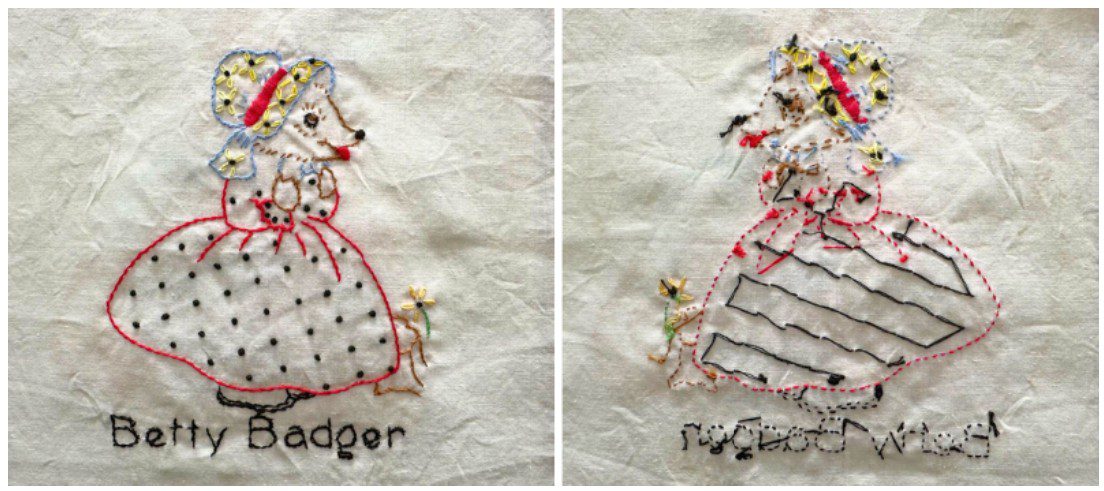
I was reading by the time I was four, and by the time I was five, my mom got me started on sewing my own doll’s clothes with my own kid-sized sewing machine. In her later years, she admitted she didn’t know what to do with me (lots of energy, mischief, and questions!), so by the time I was seven, she also introduced me to the basics of embroidery. I think she figured it would finally keep me quiet. Her mother had started 12 stamped-on embroidery pieces and my mom had them, probably because my grandmother’s arthritis made needlework hard to do. They were iron-on transfers on cotton, stitched with Coats & Clark embroidery floss. Mom did not enjoy doing needlework, but (in desperation?) she dug those pieces out and taught me to do outline and stem stitches, along with straight stitches and French knots. I have all of them today, all stitched by 3 generations, which I love. One of these years, I would like to put them into a quilt—I even have the fabric, but right now, not the time!
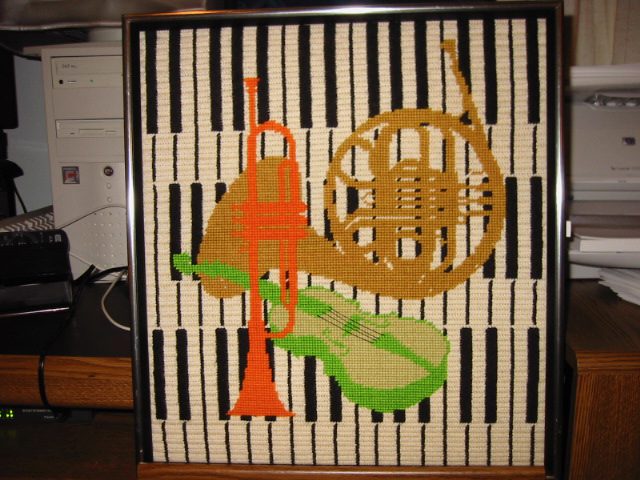
When I reached junior high, I received a needlepoint kit for Christmas with the design already stamped on it. The canvas was Penelope and the directions had you stitch it using Continental stitch in hand. There was never a way to get the distortion out of that canvas, but I did finish it. I moved on to an occasional painted canvas, stamped cross stitch, and some crewel. Both crewel and the painted canvas frustrated me. In crewel, I could never make my long and short stitches work out the way I saw it in my head, and the painted canvases had intersections where there were two colors (I would always pick the wrong color.). Then the stamped-on cross stitch would never line up precisely enough for me, either. By the time I was in my 20s, I was still doing Bucilla and Paragon surface embroidery kits, but needlepoint still called to me.
What is your favorite style of embroidery? Why is it your favorite?
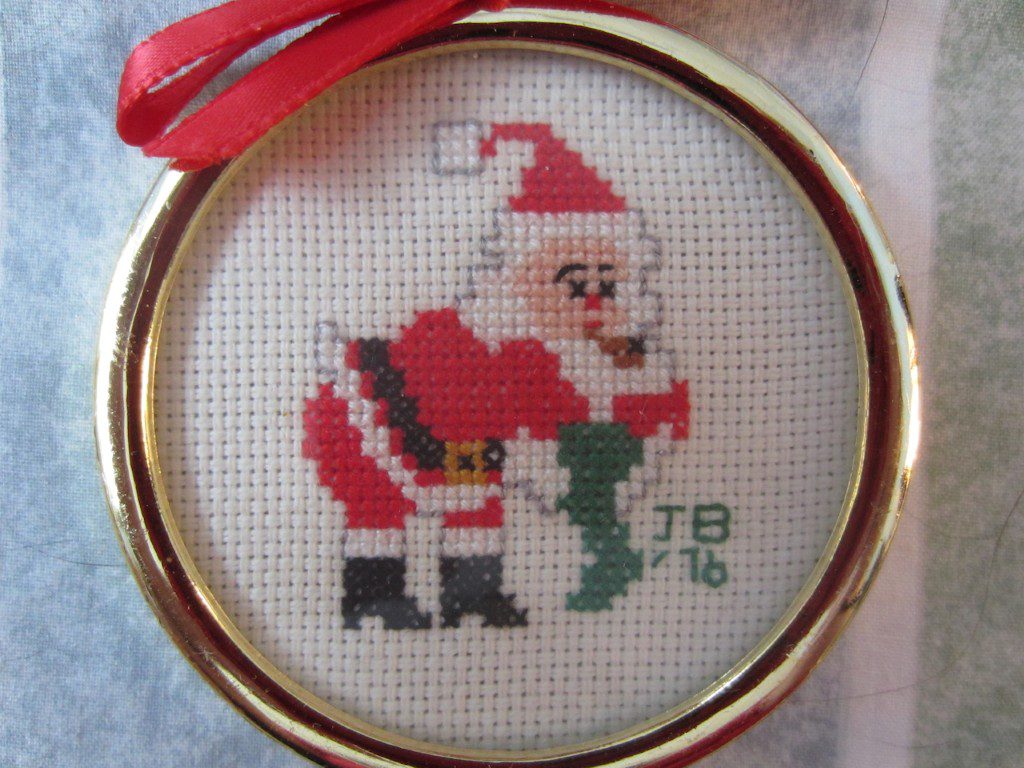
After another frustrating session with another “painted” canvas, I looked through McCall’s Needlework Magazine and spotted a needlepoint design that was (gasp!) charted. I made a list and went up to Jane Ellen Balzuweit’s needlework shop that was north of Dayton at the time and bought blank(!) canvas and the called-for wools. I was in heaven. I knew exactly what stitch went where and in what color. Then I looked for more. I stopped in at a shop near my grocery store and discovered little ornaments by Carolina Cross Stitch that were done in counted cross stitch—they even came with the frames for finishing and a chart! We were in the process of moving to Denver, so it took a few months to finish them, but I still have them.
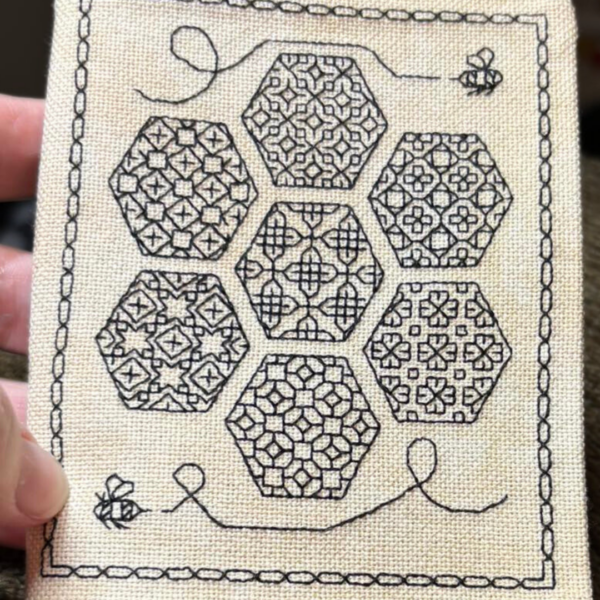
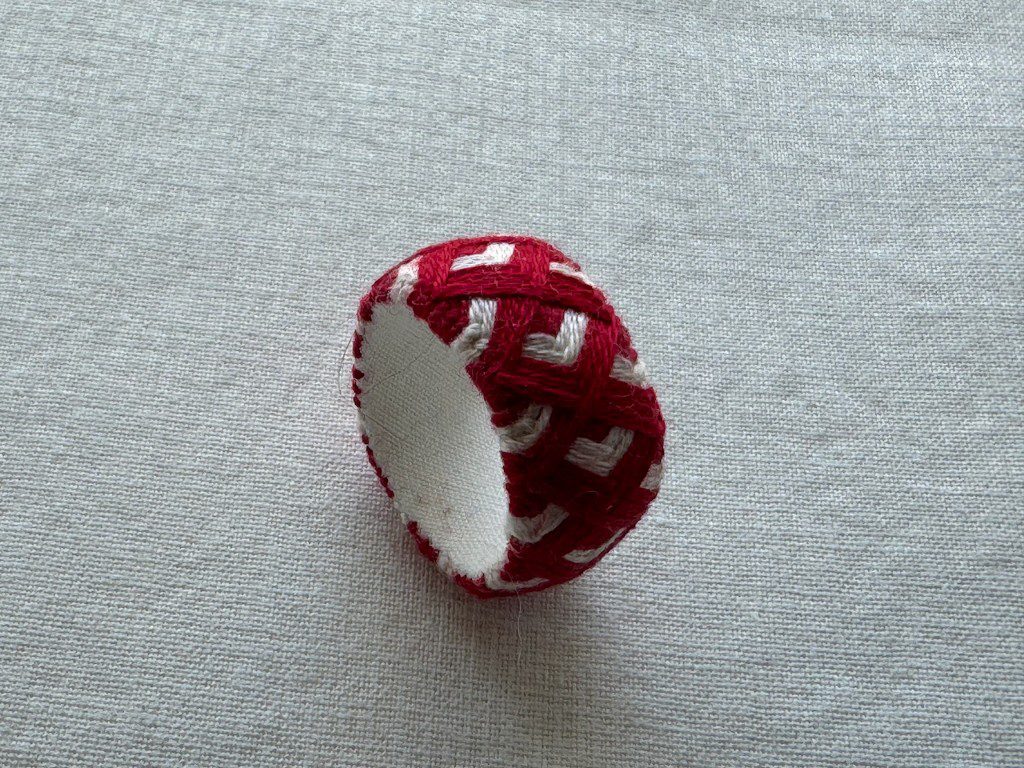
I have tried many forms of needlework, including Yubinuki—not exactly counted, but interesting to see the pattern develop—beadwork, stumpwork, Dorset buttons, reticella, rozashi, and more. I like to say that since I used to teach high school math, ultimately, anything counted is pretty much a favorite—cross stitch, hardanger, pulled thread, blackwork (reversible!), drawn thread, and so on.
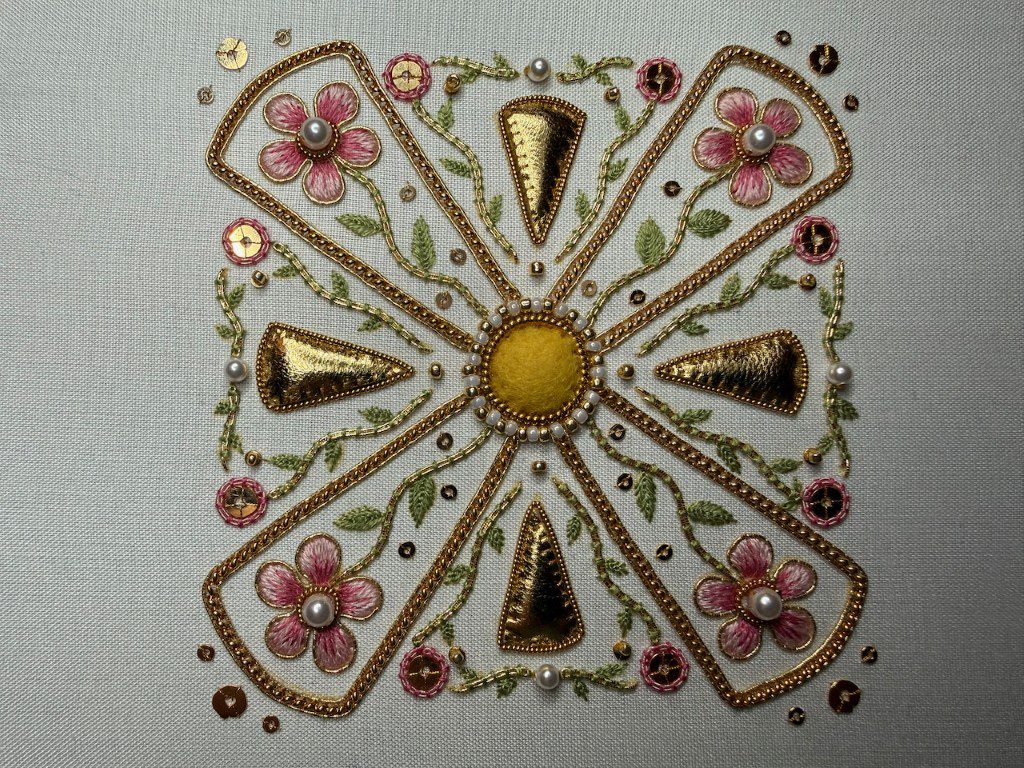
More recently, I have discovered that I really enjoy doing metal thread work. Wait. That’s not counted! No, it isn’t, but there is a certain precision to it that I’ve been finding I really like. I’ve dabbled in it over the past few years, but with Dayton EGA’s Goldwork/Metal Threads Special Interest Group (SIG), we’ve been focusing on a piece from Inspirations Magazine #127 by Tania Cohen. A lot of us have found this to be a great learning piece and I’m closing in on the finish. It’s not perfect, but I’ve learned a TON of things in the process. As of this writing, the only thing I have left to do is the chipping in the center. The SIG has another one we are planning to begin, perhaps in June. I’m looking forward to it.
Then there is Melinda Sherbring’s Group Correspondence Course (GCC), Uncommon Stitches, which covers exactly what it says. It’s not counted, but there are some metal threads in it. I have it started—and if you are looking for a lecture, Melinda does one on this topic. I also have Denise Pratt’s GCC, Love & Laughter, started—it’s definitely counted, so it makes for a nice, comfortable break. I’ve done several Denise pieces and love how detailed she is in her directions. Lastly, I have the beaded nametag for the Orlando Seminar to start/finish—time’s a-wastin’.
And then… I have more than one counted canvas project going on—I love Kathy Rees’s designs and I often change them to stitch them on 24-count Congress cloth. I make lots of changes of fibers in order to have threads that will work on Congress cloth. It’s an interesting and fun challenge. I’m also enjoying Clara Warschauer’s beaded pieces—Koi, The Frog, Sonora Quail…
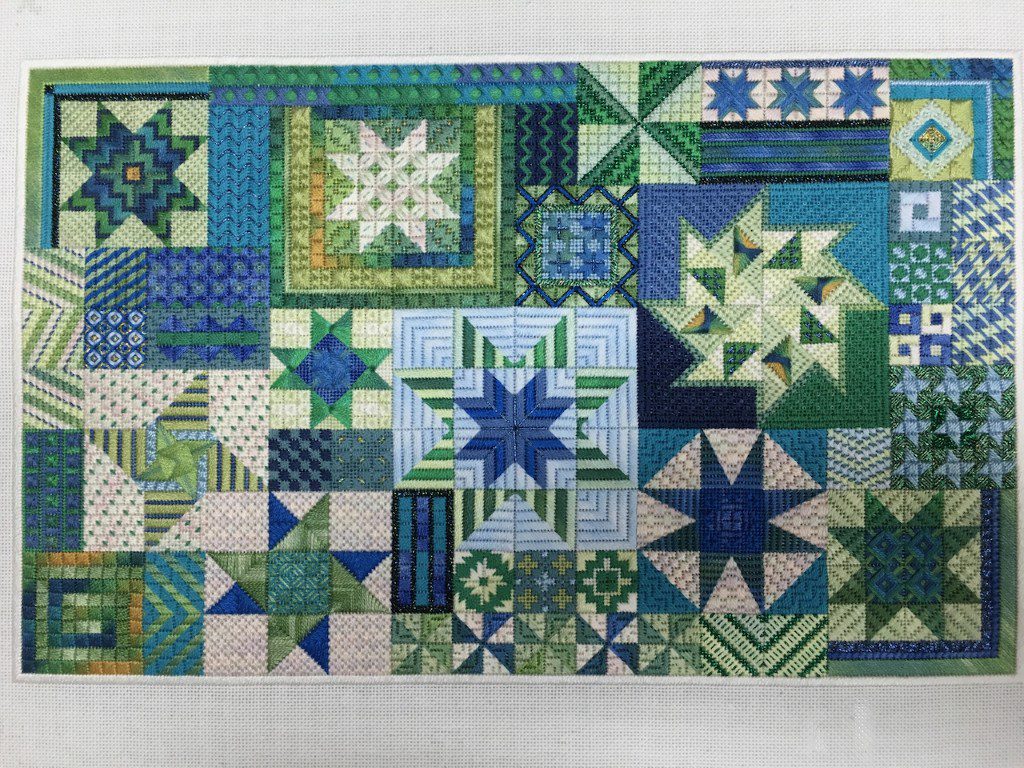
I’m easily distracted by the next shiny stitchy object—can you tell? I take classes all the time, including many of EGA’s Online Studio classes. In my stitching, I’m a jack of all trades, mistress of none, but still curious! But anything counted is truly my first stitching love.
How did you first become involved with EGA?
When we moved to Denver, I “learned” Denver by going to the ne-edlework shops I found in the Yellow Pages and started building a small stash of projects. I also took classes at a shop that was out in Arvada, and learned how to stitch on linen, and do hardanger and pulled thread from the late Joan McBride, who was one of the publishers of Counted Thread at the time. It was at one of those shops that I discovered there was something called The Embroiderers’ Guild of America and that they had meetings. By now, I had an infant, but my husband nervously babysat her all by himself (a stretch for him as an only child) so I could go to an evening meeting in another part of Denver. Oh my goodness—I had found my people! They had stashes, too!
I belonged to the Colorado Chapter for several years after we moved to Washington, D.C. They had a great newsletter I didn’t want to give up! While in D.C., I joined the Washington, D.C. chapter. The first class I went to there was with Ginny Thompson—a terrific experience. I also went all over northern Virginia, again finding shops through the Yellow Pages. It was there I met more stitchers and even stitched shop models for a couple of years. The shop owners liked to change up stitches and fibers, so I learned a lot through doing those shop models.
When we got transferred back to Dayton, I discovered through yet another shop that there was now an EGA chapter there—Dayton EGA. I found more of my people and became their 2nd VP within a year. I had to step down when I returned to teaching full time (long story), but now that I’m retired, I’ve been Dayton’s Education Chair, President, chaired their 2019 Symposium, and am currently their webmaster and VP for Programs. I’m also the Online Education Coordinator for the Great Lakes Region (GLR), arranging bimonthly lectures and running Zooms for their GCCs.
You are EGA’s Virtual Lecture Series Chair. How do you discover new voices for EGA’s Virtual Lectures—what do you look for, and what criteria do you follow?
I enjoy lectures—always have. In fact, the first lecture I attended after joining the D.C. chapter was with the legendary Mary Rhodes, as in the Rhodes stitch. Fascinating woman.
One of the things I do is I attend lots of lectures via Zoom. I have always believed in investing in my own learning, and attending lectures certainly serves a double purpose in this context. When I see a great lecture, I will arrange that lecture for the Virtual Lecture Series (the December Cosplay lecture with Maral Agnerian is an example). Sometimes, it will be a suggestion from a friend (the Black Gold Tapestry with Sandra Sawatsky), or I will look at my book collection and think how cool it would be to hear from the author (Gale Owen-Crocker, an expert on the Bayeaux Tapestry is one). I also prowl online for ideas—I would LOVE to schedule one on Ukrainian embroidery, but the two people I have contacted have either been in ill health or going to have major surgery. That one is still a “unicorn” lecture.
I talk a lot with Donna Pence, my partner in crime, about the possibilities. She and I have worked together on the Virtual Lecture Series under various chairs since it began in August 2021, and she is a great sounding board.
What do I look for? For one, the speaker needs to be knowledgeable enough to handle the wide range of questions from our attendees. We have a very well-informed audience, as well as some who are not as knowledgeable in a specific topic and are there to learn, so the speaker needs to be well-versed in what they are talking about. Speakers also need to be engaging and excited about their topic. If someone darn near puts me to sleep and drones on during their lecture (AKA is boring), I tend to avoid them. In addition, they need to be good at communicating and eye candy is always a major plus! Sometimes we have some speakers we haven’t heard before, but the topic is fascinating—hard to resist—so we will roll the dice. We like to think we have some really good lectures to offer for the rest of 2026.
2027 is already in the works, with an eye toward offering the Annual Pass again. It has been a very popular program, so watch for an announcement in your Inbox this fall from EGA.
You host monthly meetings called “Growing Your Connection” with Wendy Lynn. Can you tell us a little bit about Growing Your Connection? How can chapters and/or members participate, and what can they expect from these meetings?
Wendy came up with the idea of “Growing Your Chapter” in 2023. As she talked about it during a Membership & Marketing Meeting, it dawned on me that it would be a good idea to run it as a webinar in order to accommodate a larger audience. So, I offered to run the webinar! At first, it was about strategies to increase membership in our chapters. We branched a little bit into the tech side of how to do things like creating a website, running a hybrid meeting, and using Canva or Google Forms with your chapter. Wendy did a fantastic one on what a chapter Treasurer needs to do—it’s one of our most-watched recordings. But… we also realized that many members saw these as being for chapter officers only. To address this, Wendy decided a name change was in order, which is why the name became “Growing Your Connection” in Spring 2025. We also changed the approach so that the different webinars would appeal to ALL members and not just chapter officers.
In April 2025, we began the new approach with a program on Petite Projects. Petite Projects are available to ALL members, but the approach was to not only explore what they are and how they come to fruition (Janet Salerno was a great help with that, as was Leslie Brady), but also what changes people had made when actually stitching them. Joanne Porento (Indianapolis Chapter) generously shared quite a few of the projects she had changed up, which was not only great eye candy, but showed everyone the possibilities. There were a lot of “who knew?” moments. The recording for this one is also very popular. In May 2025, we did a webinar on using EGA’s Forums—especially handy since the forums are used by the Online Studio classes.
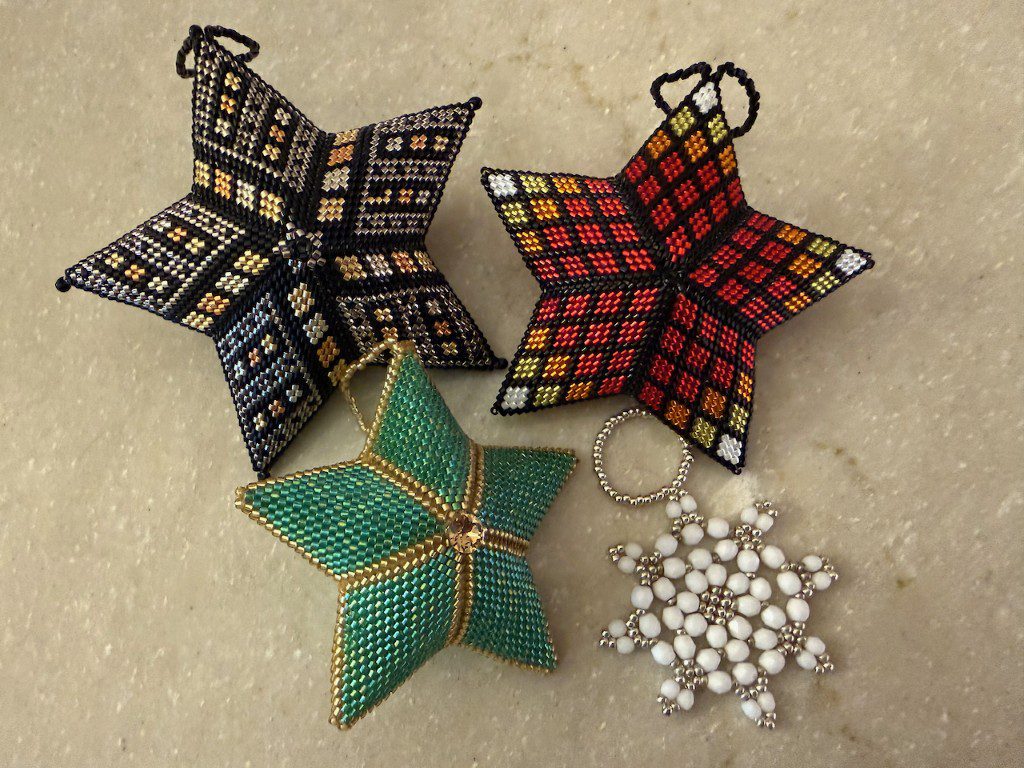
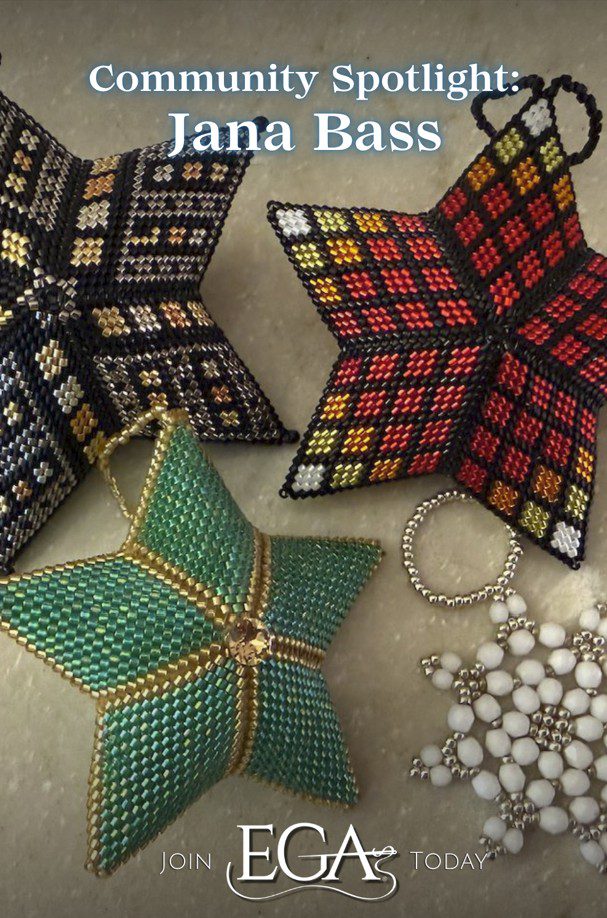
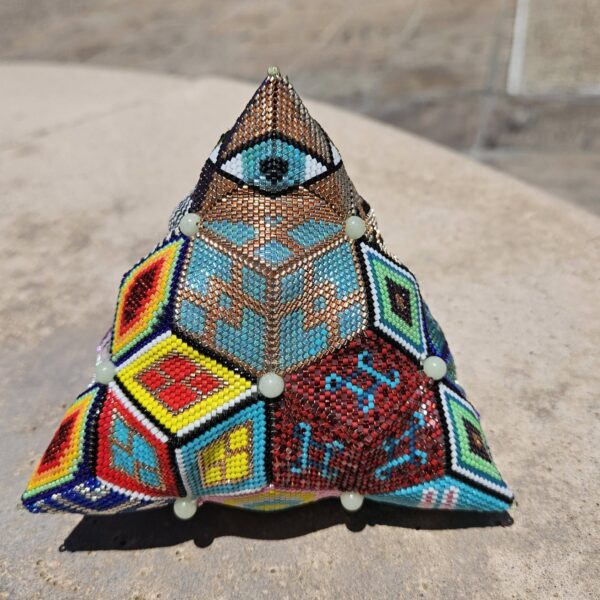
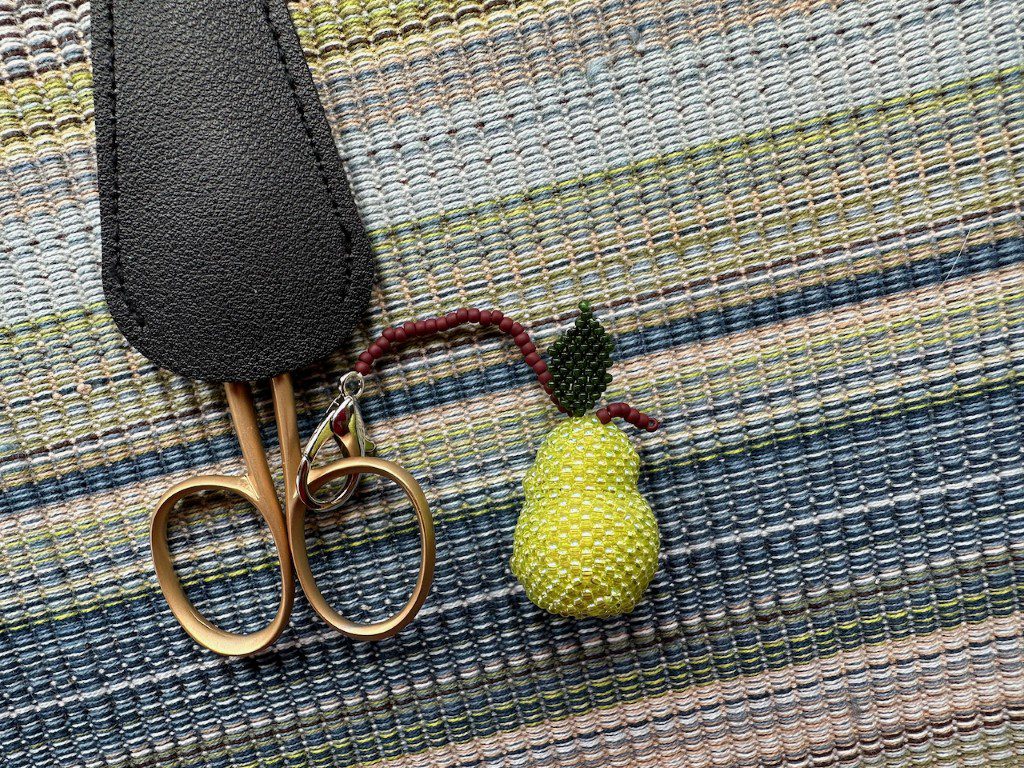
Beaded 3-dimensional stars, beaded by Jana Bass
Which brings me to our biggest change and most complicated to arrange—Breakout rooms—which we do as regular Zoom meetings. In August, we invited the Group Correspondence Course (GCC) teachers to join us with each of them in her own Breakout room. That way, attendees could “visit” each teacher to see the GCCs and ask questions about them, all directly speaking to the teacher. We expanded that to include the upcoming 2026 Online Studio teachers in September and the Master Craftsman Teacher Program chairs in early November 2025. The teachers and respective chairs have been very generous with their time to do this. The upside is the access to the teachers and chairs allows for even better information about these courses and programs—and sometimes you get sneak peeks as to what is coming. The downside is that when we are using Breakout rooms, we cannot record them and attendance is limited to 100 people (webinars go to 500).
For 2026, Wendy has had to step back for a while, so Ina Gibson, who is the current Director of Membership and Marketing, has pitched in to help the “Growing Your Connection” series continue. We are planning to repeat the above Breakout room sessions with the GCC teachers and hope to repeat with the Master Craftsman Program and Online Studio Program. We are adding the hosts of the various SIGs in June and ICC (Individual Correspondence Course) teachers in October. Those will not be recorded because we will be using Breakout rooms. However, by the time you read this, we will have had Lea Peacock (EGA President), Judy Jeroy (Chair of the Judging Program) and Brad Cape (Executive Director of EGA) as guests—all of whose presentations will have been recorded (no Breakout rooms!).
“Growing Your Connection” is normally the 4th Saturday of the month at 1 PM Eastern Time and is FREE. And because they are free, you can use the recordings as a chapter program if you like. We do change the schedule a little toward the end of the year, and do not do any at the end of November or December (holidays!). So, look for the announcement with the link to register in your Inbox roughly two weeks before each Growing Your Connection. Recordings can be found here.
You also host the Special Interest Group for Counted Thread with Wendy Lynn. Can you tell us a little bit about Special Interest Groups? What does a typical Special Interest Group meeting entail?
Special Interest Groups (SIGs) are a way for like-minded stitchers to get together (via Zoom) and share their love for their specific area of stitching interest. There have been some SIGs run at the chapter level for some time now. Dayton EGA started a Goldwork/Metal Threads one in 2022 but went national in 2023. Tina Maes has been running two Beading SIGs, and Wendy Lynn and Leslie Brady have been running a Surface Embroidery SIG for a while, too. One of the areas left out of the mix was Counted Thread, and we have a LOT of members who do cross stitch, hardanger, pulled thread, and more (we even include counted canvas), but there was no SIG for them. It was Wendy’s idea to start this up, but she could not do it alone. That’s where Ina Gibson and I came in—both of us being avid counted thread stitchers.
For the Counted Thread SIG, the idea was for counted thread stitchers to have a way of coming together and sharing what they are doing, sharing ideas, tips (we do like enabling), and maybe a bit more. As with most SIGs, we always start with introductions and a Show & Tell. Sometimes we will have a theme for the meeting (did you get anything from the last Nashville Market?), or it will be about your oldest WIP, your latest WIP, and so on. Sometimes there is no theme, or the meeting just steers itself in the conversation. We often just go with the flow, all the while everyone is stitching. This seems to be pretty typical of most of the SIGs.
The three of us, Wendy, Ina, and I, usually take turns doing the Sundays (1st Sunday of the month at 3 PM Eastern), Ina also does the 3rd Friday afternoons at 3 PM Eastern, and Wendy normally hosts the 4th Friday mornings at 10 AM Eastern. Wendy’s participation is currently on hold, so Ina and I are rotating the Sundays. Zoom invitations generally go out to the list two days before the SIG meets. If you are interested in joining this SIG, send an email to countedthread@egausa.org.
EGA members can see the list of currently offered SIGs here. The list of SIGs has grown, with the newest ones being for Dimensional Embroidery (hosted by Jean Hubsch), Japanese Embroidery (hosted by Christene Thurston), and Members At Large & Friends (hosted by Kim Meyer with Ina Gibson). If you go to the above link, you will see where you can contact the host and join in the fun!
What is your favorite piece of embroidery advice? What is your least favorite piece of embroidery advice?
I have several favorites, but I guess my favorite piece of embroidery advice is to make sure you have good lighting and magnification. I’ve worn glasses since I was 9 years old and finally went to bifocals in my 40s (UGH!). I’ve used magnification for a long time but have had to add really good lighting as my eyes get older, darn it. I have lots of lights—I keep looking for what would be better! I may have to have a sale on my lighting stash at some point…
My least favorite is when someone tells me, “Oh, you can do this—it isn’t hard,” and they are talking about a certain type of embroidery I shy away from (probably because they love it for themselves). But if it doesn’t make me happy when I’m doing it… Well, life’s too short to do something that is supposed to be fun and isn’t. I can appreciate the skill that goes into it, ooh and aah over the historic pieces done in that technique as well as what people are currently doing, but I also know when it’s just not for me. Believe me, I’ve probably tried it!
Do you have any advice for stitchers interested in volunteering with EGA?
Do it! It can be a great way to meet people, make friends, be enabled… And if you don’t like how something is done, get in there and work to change it!