Technique: Berlin Wool Work
Place of Origin: Berlin, Germany
Earliest known date: 1804
History: Berlin Wool Work, also known as Berlin Work, originated in Berlin, Germany in the early 1800s. As the name suggests, this embroidery style features wool yarn stitched on canvas. Berlin wool work patterns resembled cross stitch patterns. The first Berlin wool work pattern was printed in 1804; at the time, the base pattern grids were printed in black and white, with the embroidery pattern colored in by hand afterwards. Patterns were often printed as individual sheets instead of booklets, making Berlin wool work inexpensive and accessible. These pattern charts could also be applied to beaded and knitted designs.
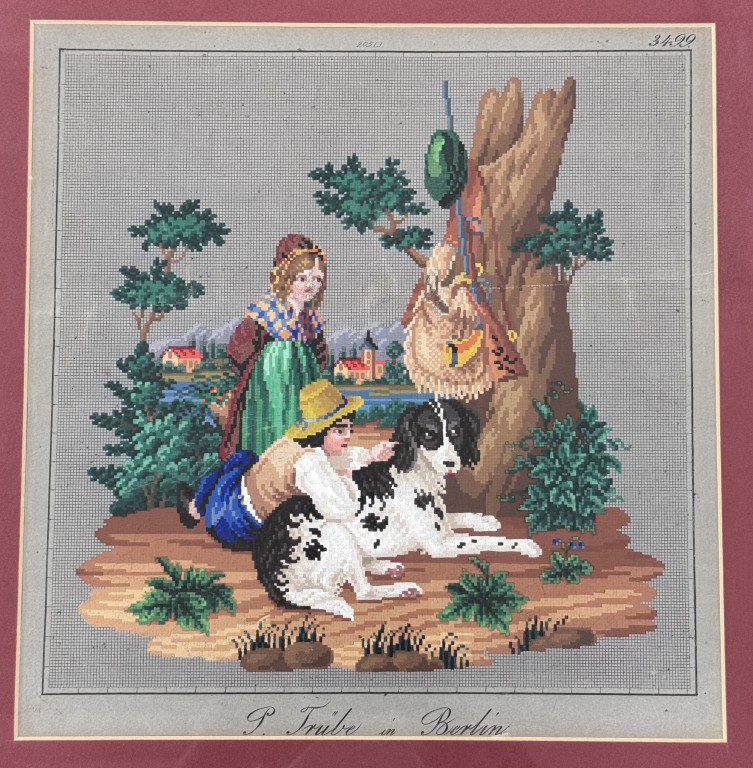
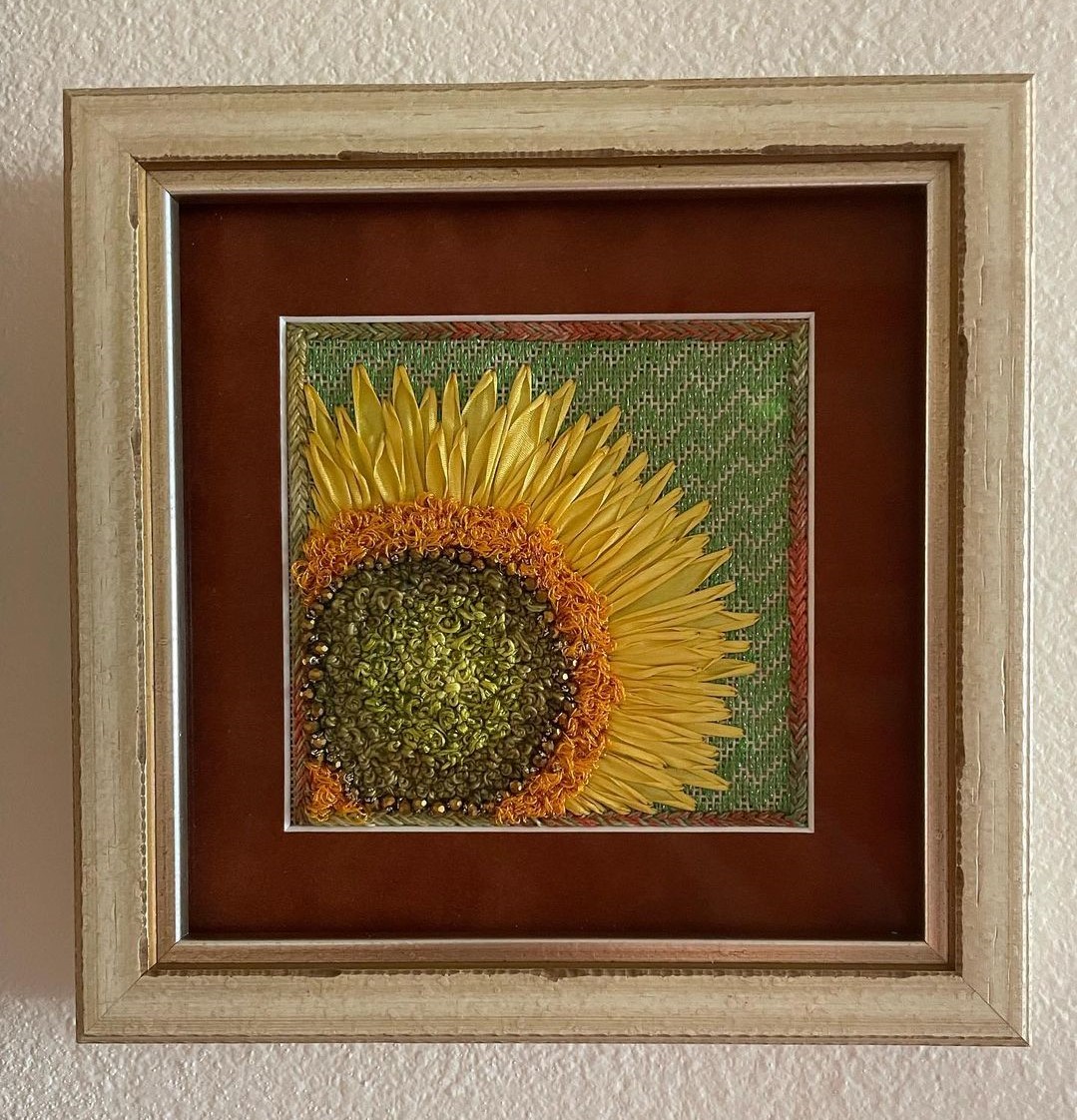
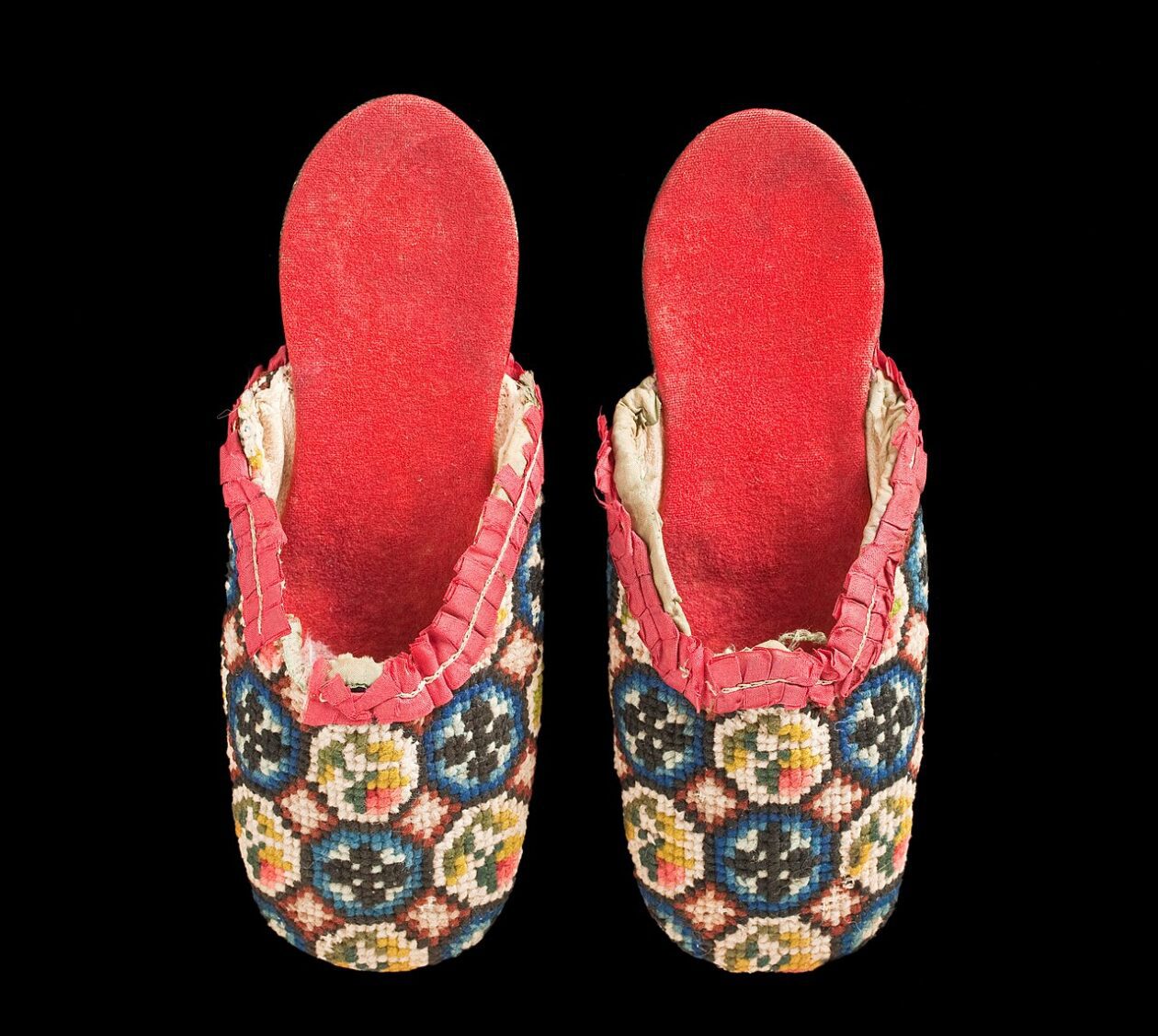
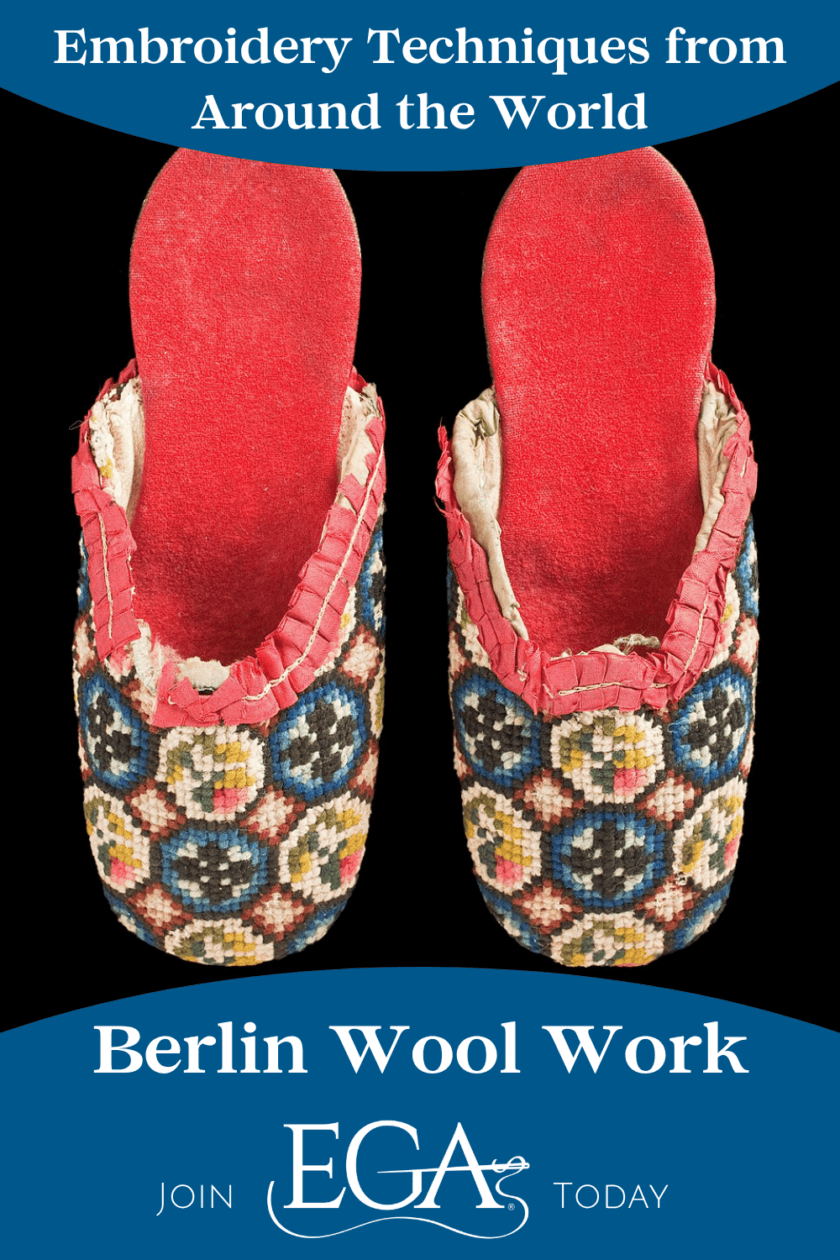
Berlin wool work is characterized by pictorial designs, bright, bold colors, and advanced shading techniques that lend designs a multidimensional look. Berlin wool work’s use of wool yarn and dense stitching made it especially suitable for utilitarian objects that experienced a lot of wear and use: common upholstered items like cushions, seat covers, foot stools, and curtains, as well as books, needlebooks, boxes, wall hangings, framed art, slippers, pouches, purses, bags, caps, belts, and more.
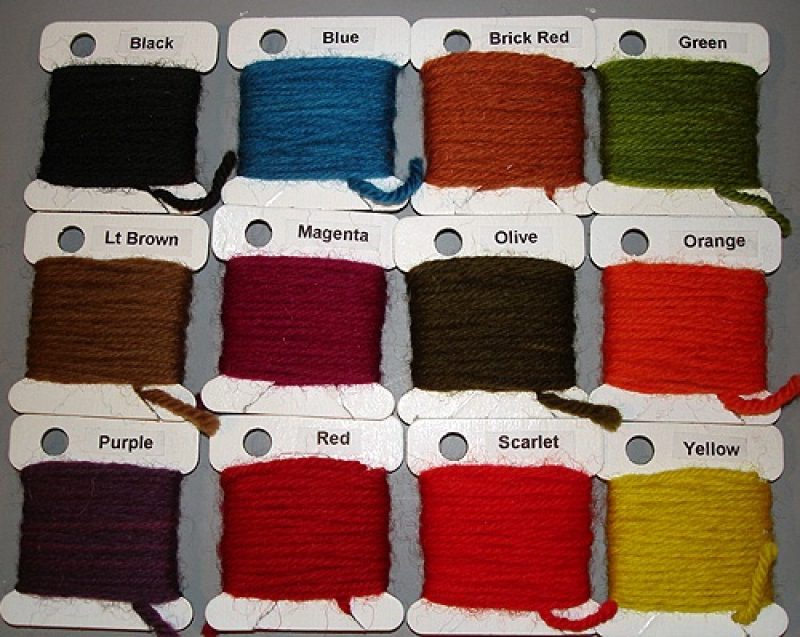
Materials, Techniques, and Stitches: In the 19th century, this canvas work technique utilized Berlin wool, which was derived from Merino sheep in Saxony, Germany. This wool was softer than other commercially available wool and easier to use for Berlin wool work and crewel embroidery. Penelope canvas was common, and later Aida.
The discovery of aniline opened up a world of color in the mid-19th century. Aniline helped launch the synthetic dye industry, offering a wide range of bright colors that do not fade. Berlin wool absorbed aniline dyes exceptionally well, producing a rich, robust palette of colors for embroidery.
Berlin wool work consists mainly of cross stitch or tent stitch, although Beeton’s Book of Needlework (1870) also lists Gobelin, Straight Gobelin, and slanting Gobelin stitch, Leviathan and Double Leviathan stitch, raised or velvet stitch, long and slanting cross stitch, Damask stitch, Rep stitch, plaited stitch, and plush stitch (many of these stitches may now go by different names—visit Archive.org to browse Beeton’s Book of Needlework for more information).
Silk and beads may also be used in Berlin wool work as accents. Silk was also sometimes used as the primary embroidery floss used on small pieces that would not suffer heavy wear.
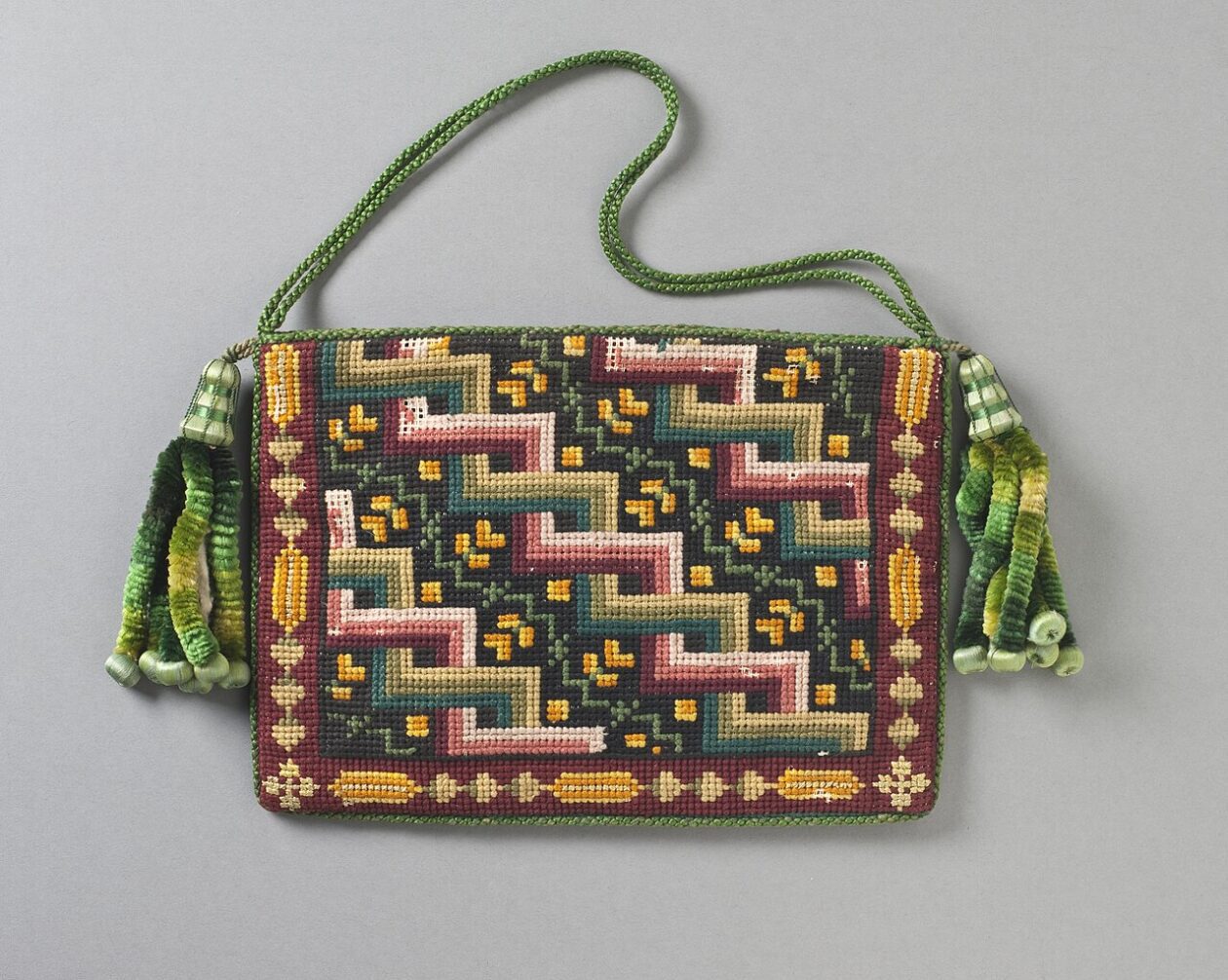
Motifs: Berlin wool work designs were often pictorial. Being of both the Romantic era and the Victorian era, floral designs were prevalent. Biblical scenes, geometric patterns, animals, and pastorals were popular, as were needle paintings that directly copied well-known works of art.
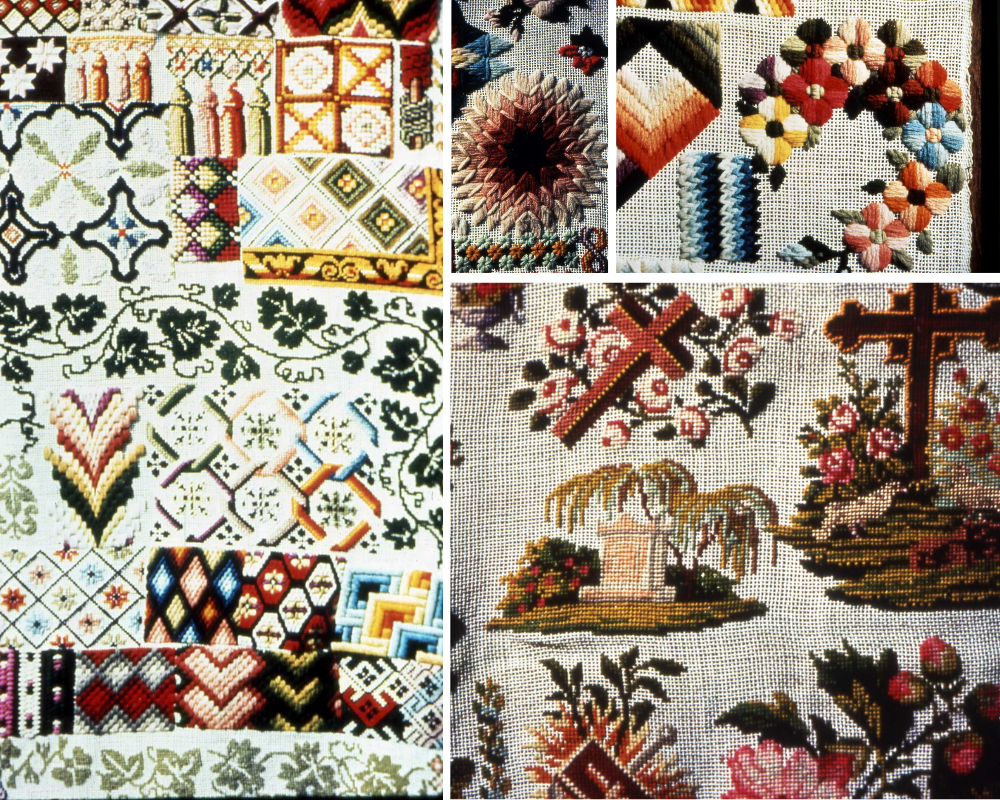
Interested in exploring more Berlin wool work? EGA members can visit the Berlin work: Elizabeth Kaplan Sampler online gallery at EGA! Our Lending Library for members has a selection of books on this topic, you may see them here.
Sources
Berlin Wool Work. In Wikipedia. https://en.wikipedia.org/wiki/Berlin_wool_work
Textile Research Centre (n.d.). Berlin Wool Work. TRC Leiden. https://trc-leiden.nl/trc-needles/regional-traditions/europe-and-north-america/embroideries/berlin-wool-work
Textile Research Centre (n.d.). Aniline. TRC Leiden. https://trc-leiden.nl/trc-needles/materials/dyes/aniline
Textile Research Centre (n.d.). Berlin wool. TRC Leiden. https://trc-leiden.nl/trc-needles/materials/threads/berlin-wool
Beeton, I. M. (1870). Beeton’s Book of Needlework. London : Ward, Lock, and Tyler. https://archive.org/details/krl00402947/page/572/mode/2up
Stepanova, I. (2023, January 2). Berlin Wool: Fine Fiber from an Innovative Age. Piecework. https://pieceworkmagazine.com/berlin-wool-fine-fiber-from-an-innovative-age/
Royal School of Needlework (n.d.). Berlin wool work. RSN Stitchbank. https://rsnstitchbank.org/technique/berlin-wool-work
Witchita Art & Culture (n.d.). Berlin wool work. https://www.wcfta.com/berlin-wool-work/