Elya Rachel Assayag “reads” embroidery. Specifically, Elya studies Moroccan embroideries as historical artifacts to uncover the hidden histories of the women who stitched them. Her work is also preservational, as she endeavors to analyze, translate, and record the styles, motifs, histories, and cultural stories embedded in Moroccan embroideries. We talked with Elya ahead of her virtual lecture, The Threads that Speak Louder Than Words: The Untold Embroidered Histories of Women in Morocco, to learn more about her work.
What drew you to Moroccan embroidery?
I’m a social and cultural historian of Morocco. For many years, I looked for ways to trace the history of those absent from common historical narratives, particularly women. Encountering a 1918 Moroccan embroidery book connected all the dots. Textile embroidery, as a mainly feminine craft in Morocco, is an important historical source, created by women for women. Because it’s a non-verbal source, we need to understand how to “read” it as a historical source; once we do, it sheds light on many neglected histories.
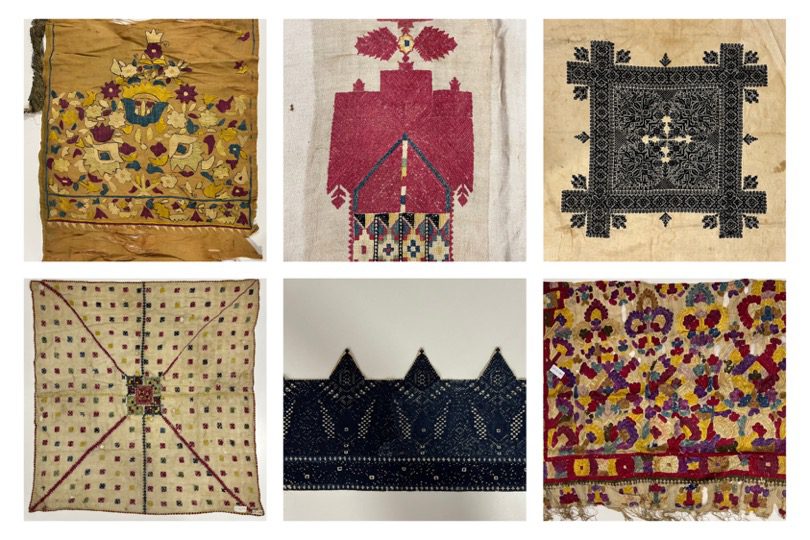
Beyond their historical value, Moroccan embroideries are aesthetically mesmerizing. For centuries, women across Morocco preserved unique embroidery styles, creating a wide range of distinctive Moroccan embroideries. Each region uses different stitches, materials, and designs. Even nearby cities once had distinct styles, adding to Morocco’s rich, colorful culture.
Why was it important to investigate the history of Moroccan embroidery?
As with many crafts, Moroccan hand embroidery declined sharply during the twentieth century. Modernization, alongside the colonial period in North Africa, led to major shifts in Moroccan embroidery, causing several styles to disappear completely and others to undergo major aesthetic changes.
Investigating the history of Moroccan embroideries serves a dual purpose. It helps trace and document forgotten embroideries no longer reproduced today and emphasizes embroidery’s importance as a historical source. By documenting old embroideries and the shifts they underwent, we can understand broader social phenomena that began in the past but still affect our lives today. One major example is the shift in how knowledge about crafts is transmitted.
Moroccan embroidery is particularly interesting because of its diversity and the rapid shifts during the colonial period, but these dynamics apply to other regions and periods.
Your Virtual Lecture, The Threads that Speak Louder Than Words: The Untold Embroidered Histories of Women in Morocco, covers various types of embroidery, “from the unique floral patterns of the Ottoman Empire, to Andalusian geometric shapes, to bizarre creatures from Italy and Spain.” Moroccan embroidery as a term seems to cover a wide range of styles and techniques, but are there any hallmarks that define Moroccan embroidery?
In general, most Moroccan embroidery styles feature geometric or floral motifs and avoid depicting figures (following the broader aniconic aesthetics of North Africa).
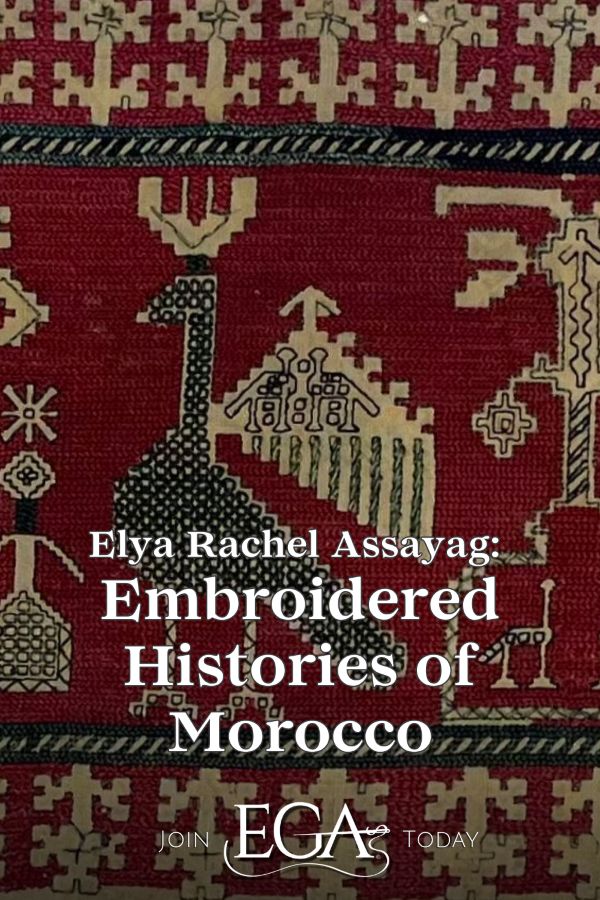
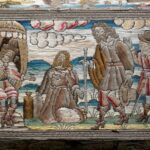
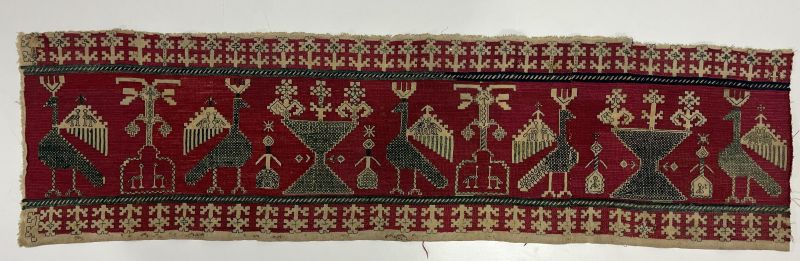
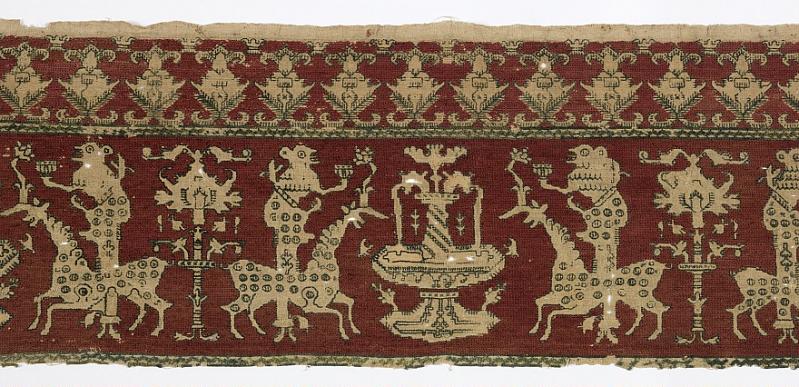
However, in one small town in Morocco named Azemmour, this does not apply. The embroidery in Azemmour depicts humans and animals [above image], as well as mythical figures like creatures and dragons [below image]. This figurative embroidery stands out among other Moroccan embroidery styles and raises questions about its influences, how it was preserved within Morocco’s aniconic traditions, and how it is still produced today. The elusive, ephemeral nature of threads and textiles makes these historical questions hard to answer; however, in this talk, I share some possible answers. The story of the Azemmour embroidery demonstrates the importance of using embroidery as a historical source. It lets us trace the history of women in Morocco, but not only there. Azemmour embroidery cast threads across the entire Mediterranean, connecting women from distant places and different periods.
Are there materials or methods common to Moroccan embroidery?
The materials of Moroccan embroidery changed over time. From wool threads and linen fabrics, by the late 19th and 20th centuries, most embroideries were done with silk or cotton threads. Nowadays, most silk threads have been replaced with synthetic threads that imitate silk’s shimmer. The dyes that colored threads and fabrics also shifted from natural to synthetic.
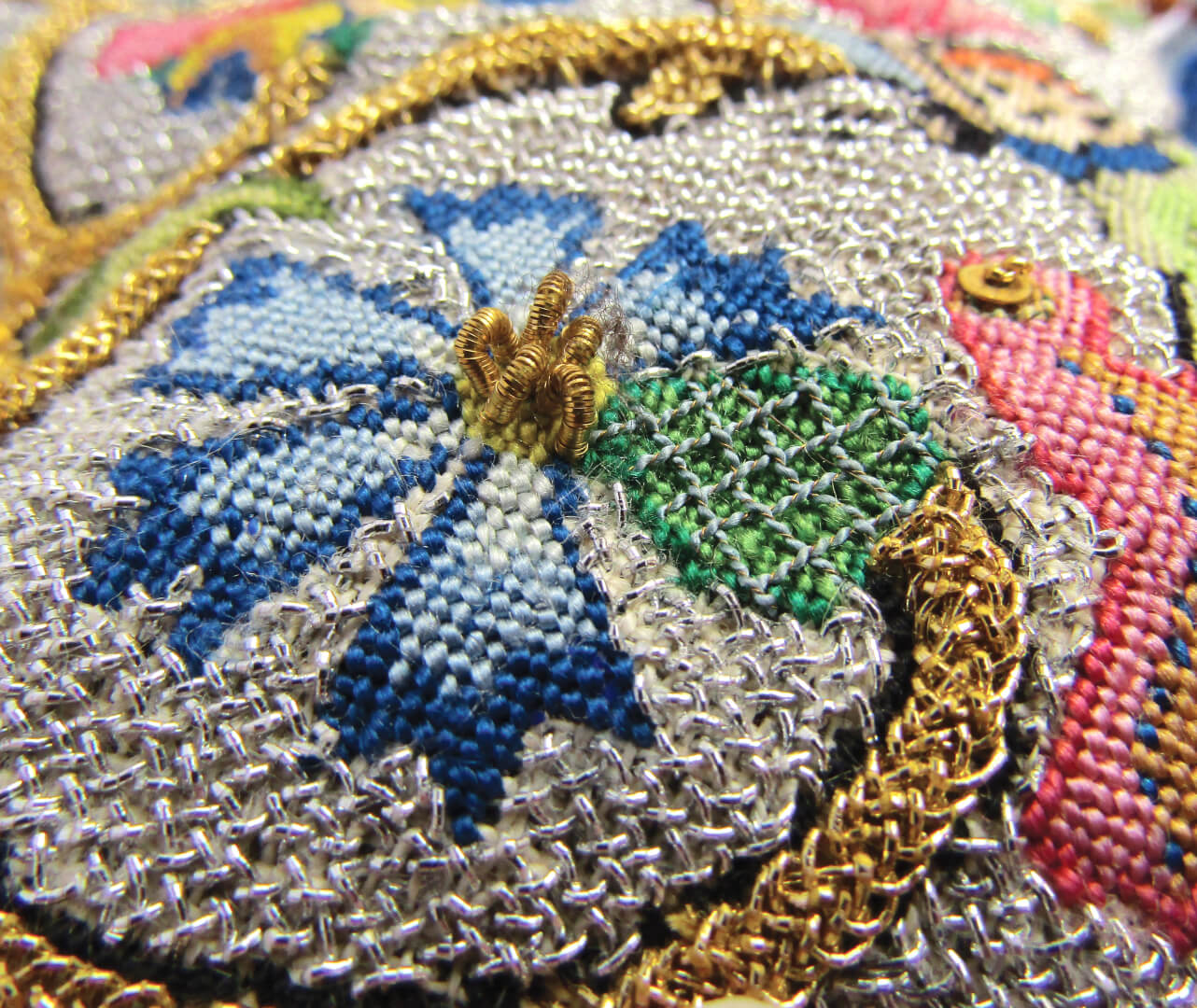
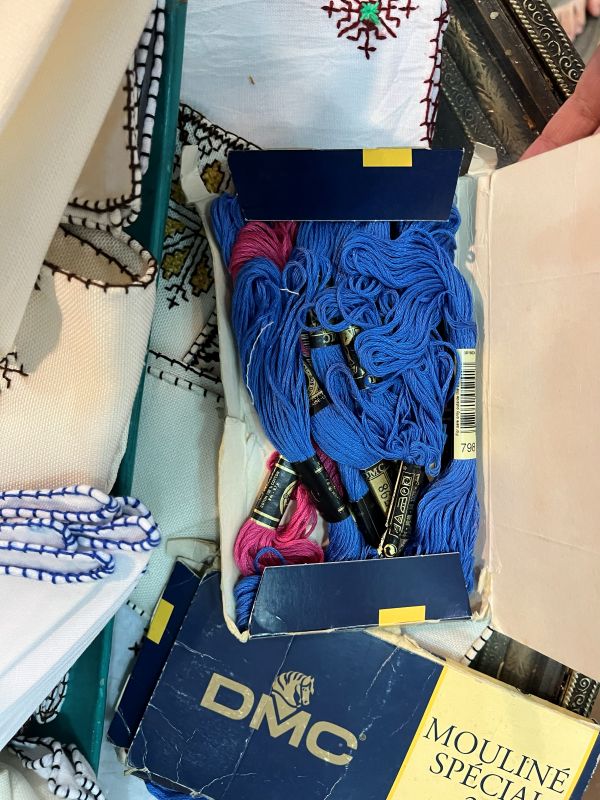
Another interesting shift in embroidery materials is the introduction of D.M.C. threads to Moroccan markets. During the 20th century, D.M.C. targeted markets worldwide and became the world’s largest embroidery thread company. Colonialism in Morocco and the increased presence of Europeans during that time helped D.M.C. become the largest embroidery supplier also in Morocco. Today, when visiting embroidery cooperatives and craft stores in different cities in Morocco, most use D.M.C. threads [image below].
Your dissertation is called “Embroidering Histories: Women, Craft, and Colonial Powers in Morocco.” How did embroidery factor into the lives of Jewish, Muslim, and European women in Morocco?
My dissertation examines how embroidery serves as a nonverbal means of communication among women in Morocco, as well as between women in Morocco and across the Mediterranean. Women in Morocco passed down their embroidery knowledge from generation to generation, but not only within Morocco. Examining the different styles of embroidery and the influences on these embroideries highlights the ongoing communication between embroiderers across the Mediterranean from early periods. Already in the Early Modern period, embroideries and other textiles circulated across the Mediterranean. Women from different places were exposed to styles from across the sea and decided what to adopt, adapt, and change in their own embroidery style. Without meeting or talking directly, women transmitted knowledge to one another, “translating” it into their own aesthetic languages.
Do you also embroider? What is your favorite style of embroidery?
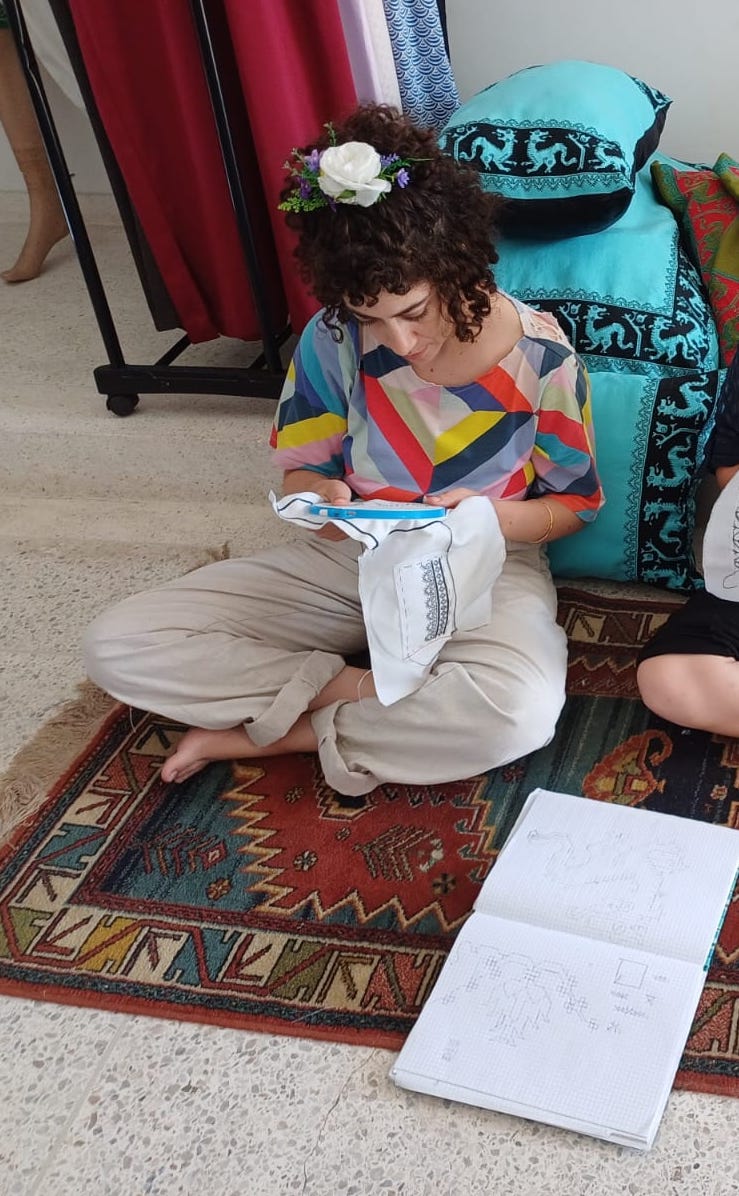
An important aspect of my study is the “Making and Knowing” approach. Embroidering alongside women across Morocco informed much of my research [See me stitching above and below].
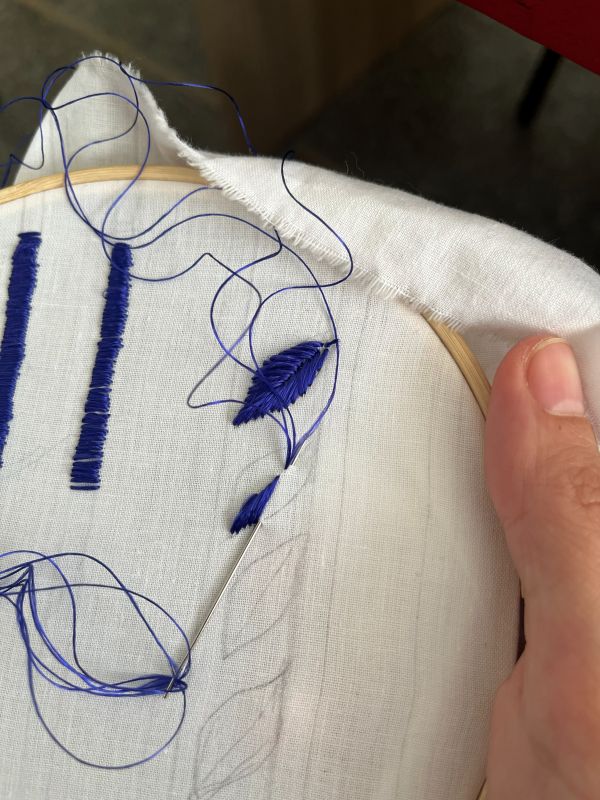
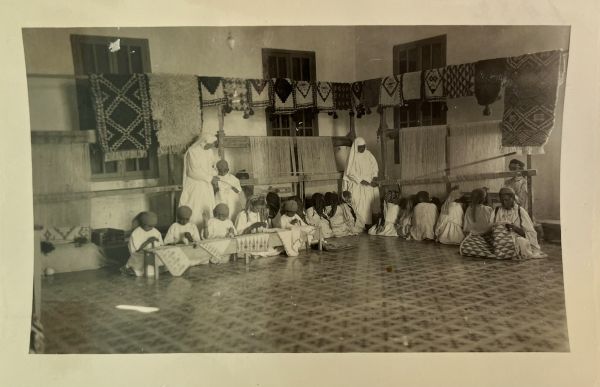
It made me notice things I would never have noticed without doing the craft myself: It taught me how to “read” embroidery collections I found in museums and private collections, noticing the subtle differences between various stitches, the level of the embroiderer, and more; it helped me notice important things in archival sources I might have missed otherwise; and, most importantly, it taught me the tight connections and bonds created between women who embroider for hours together [image below].
Where can interested embroiderers learn more about Moroccan embroidery? Do you have any favorite resources or texts?
Because Moroccan embroidery underwent major transformations during the colonial period, modern pattern books usually depict adapted and simplified Moroccan embroidery. Thus, I recommend looking at earlier embroidery pattern books from the first half of the 20th century.
The first and most extensive book that includes both a study of the different styles of Moroccan embroidery and meticulous patterns and instructions is Prosper Ricard’s Broderies – Arts Marocains [Embroidery – Moroccan Art]. (Alger: J. Carbonel, 1918) [Images below]
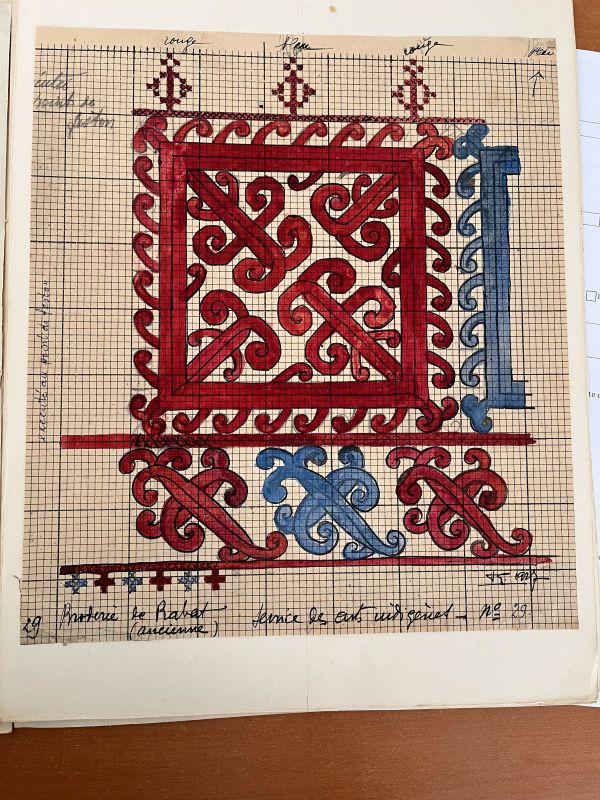
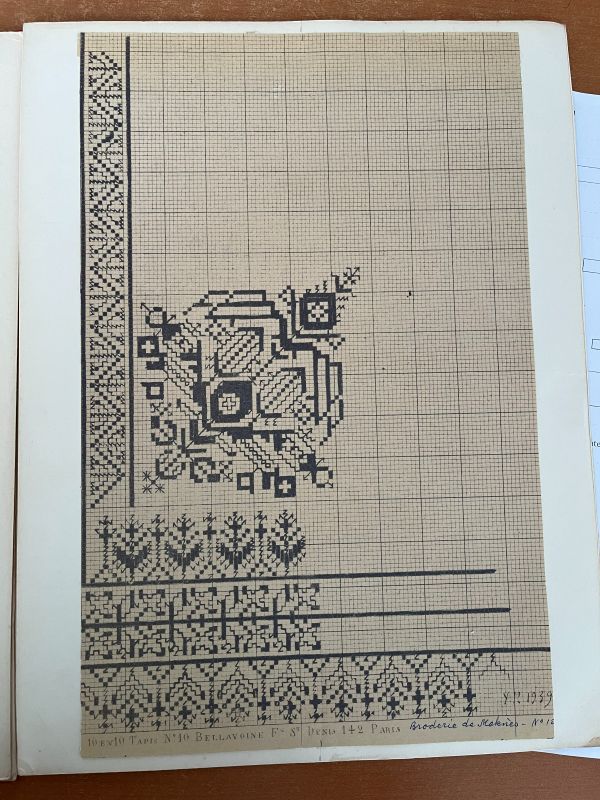
Other pattern books from the first half of the 20th century center on patterns from specific cities. Some examples: Christiane Brunot-David, Le Broderie de Rabat [The Embroidery of Rabat], (Collection Hespéris, no. 9. Institut des hautes-études marocaines, 1943); Henri Gayot and Madame Minault, Étude Documentaire La Broderie de Meknes [A study documenting the Embroidery of Meknes], Ministère de l’Instruction Publique et des Beaux-Arts – Enseignement Technique, (Rabat, École du Livre, 1956); Mme. Fatima, الطرز المغربي الاصيل [The Original Moroccan Embroidery], 1969.
As is evident, the majority of these earlier books are in Arabic and French. But that’s the beauty of embroidery as a non-verbal means of communication. The patterns speak for themselves. Embroiderers from across the world can trace the patterns, learn from the rich Moroccan embroidery traditions, decide what to adopt into their own craft and what to change without necessarily understanding the written language of the books. Exactly as my study shows that has been happening for hundreds of years.
.
Where can interested embroiderers follow you and your research on Moroccan embroidery?
For further questions: era2145@columbia.edu