Janet Salerno’s upcoming Online Studio Class, Ode to Sudoku, presents both a puzzle and embroidery project to intrepid stitchers. It’s a novel adventure that reflects Janet’s love of counted thread embroidery. A graduate of EGA’s Master Craftsman Counted Thread program, Janet is always seeking out new ways to design thoughtful projects that reflect the versatility of counted thread techniques. She believes that despite the inherent structure imposed by techniques like Blackwork, Assisi, cross stitch, and Hardanger, there is still opportunity to play and invent. We talked with Janet to learn more about her early exposures to crafting and find out where interested stitchers can take classes with her in the future. She has two stitching events in 2027—keep reading to learn more!
What were your first experiences with embroidery and needlework?
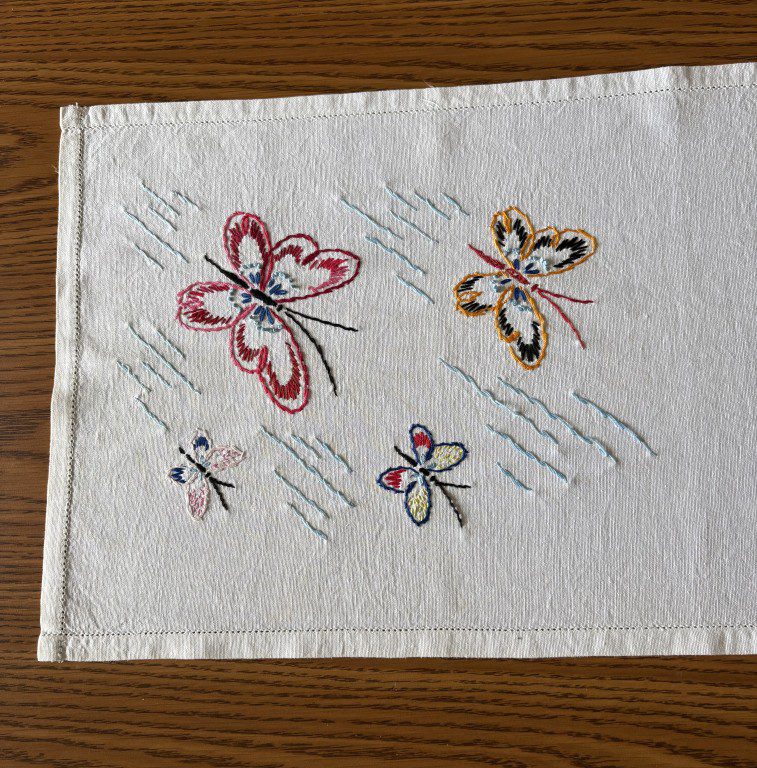
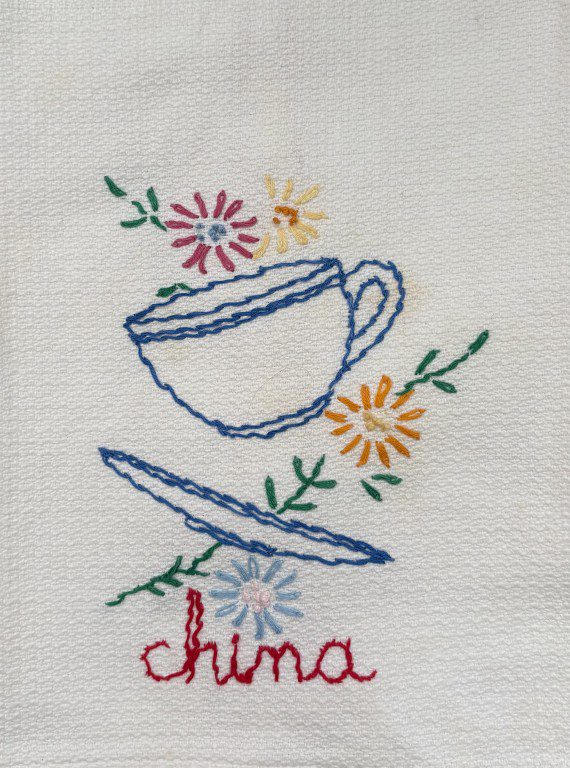
I believe I was 6 or 7 years old when I was taught to knit by my mother. I made little garter stitch square blankets for my dolls. I was also fortunate to have one grandmother from Italy and one from Germany who were always doing some kind of handiwork. As a child I was curious and eager to learn. I was taught basic embroidery stitches; lazy daisy, French knot, chain, satin, straight, and stem stitch by my mother. This opened up many other opportunities for me. With floss and needle, I was able to embroider pillow cases, dishtowels, dresser scarves and tablecloths on stamped fabric.
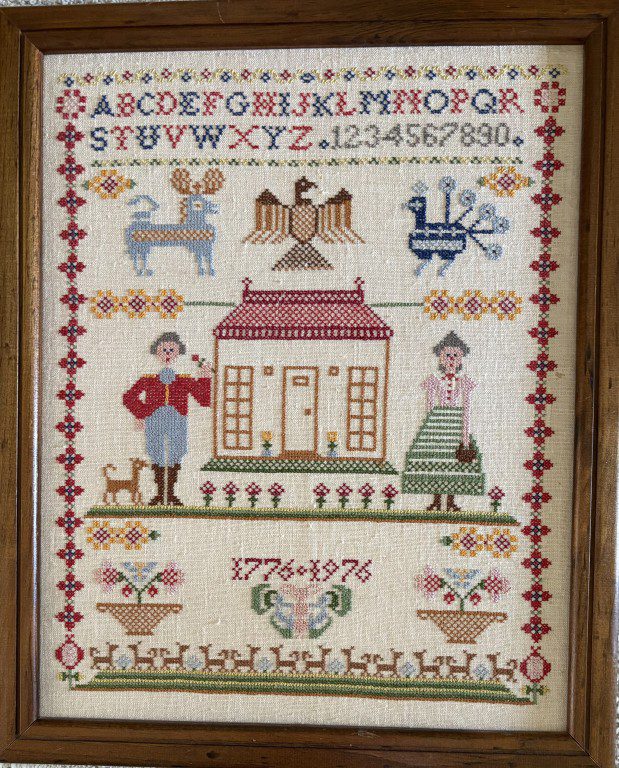
I didn’t attempt cross stitch until 1976 when I purchased a stamped sampler kit from Woman’s Day magazine that celebrated the country’s 200th birthday. With no formal instruction or YouTube videos to watch, my stitches were far from perfect and not all of them were crossed the same. But the sampler was completed and I was very proud of my accomplishment. I enjoy looking at these early pieces as a reminder of where I started and how far I have come.
But it wasn’t until 1979, when I took an adult education class in counted cross stitch, that I realized I was on my way to bigger and better things. The instructor had us working on 22- count fabric and it wasn’t until several years later when I experimented with 11- and 14- count Aida that I really got the technique down.
What is your favorite style of embroidery? Why is it your favorite?
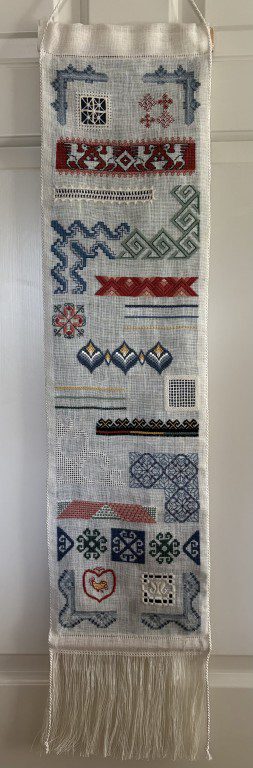
My favorite style is counted thread embroidery worked on linen. This offers extreme versatility with the different techniques that are included and I love all of them; cross stitch, Assisi, Blackwork, pulled and drawn thread and Hardanger. These can stand alone or easily be combined. I also like that I know exactly where my needle should go, resulting in uniform and precise stitches. The wide availability of evenweave fabrics in various counts and colors and a plethora of thread choices, is an additional bonus.
How did you come to be involved with EGA?
I moved to Mechanicsburg, PA, in 1980. There was a local paper called the West Shore Shopper. Every now and then I would see an advertisement for a local EGA meeting and was curious about what it was all about. During the same time, I became involved in a hands-on home party for needlework called Creative Expressions. I did many of their projects, but it was when one of the hosts showed me some of the EGA GCC courses she had done, I was sold. I attended my first EGA meeting in 1983 and have been a member ever since.
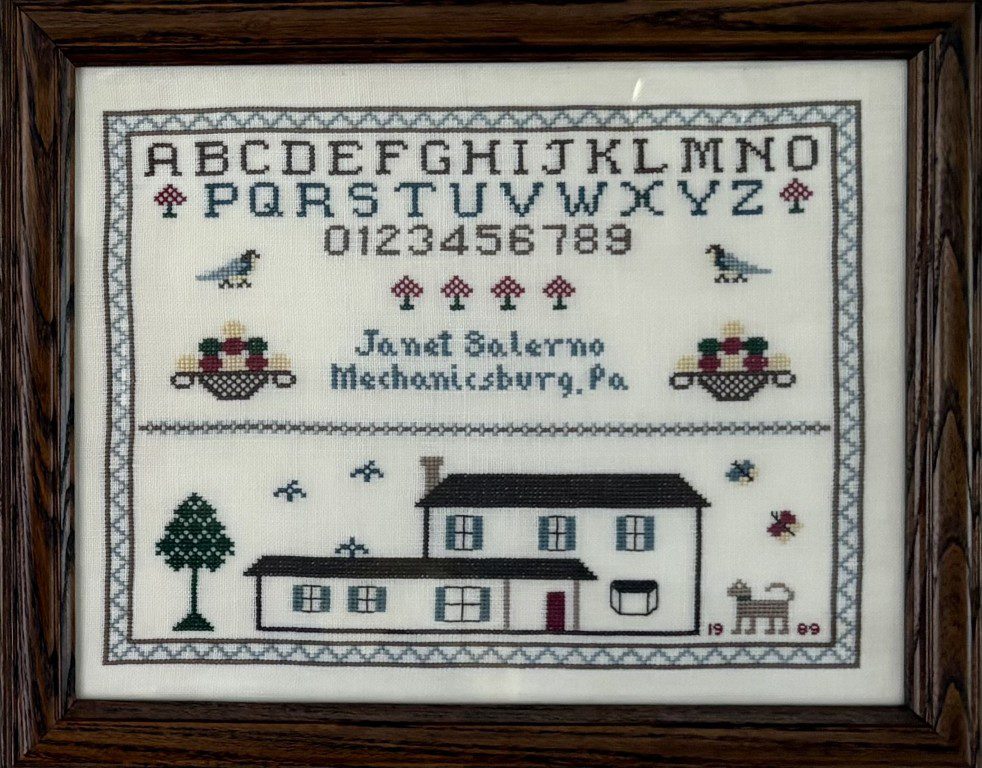
You are an EGA Master Craftsman in Counted Thread. What was the Master Craftsman experience like for you? Do you have any advice for others interested in pursuing the Master Craftsman certification?
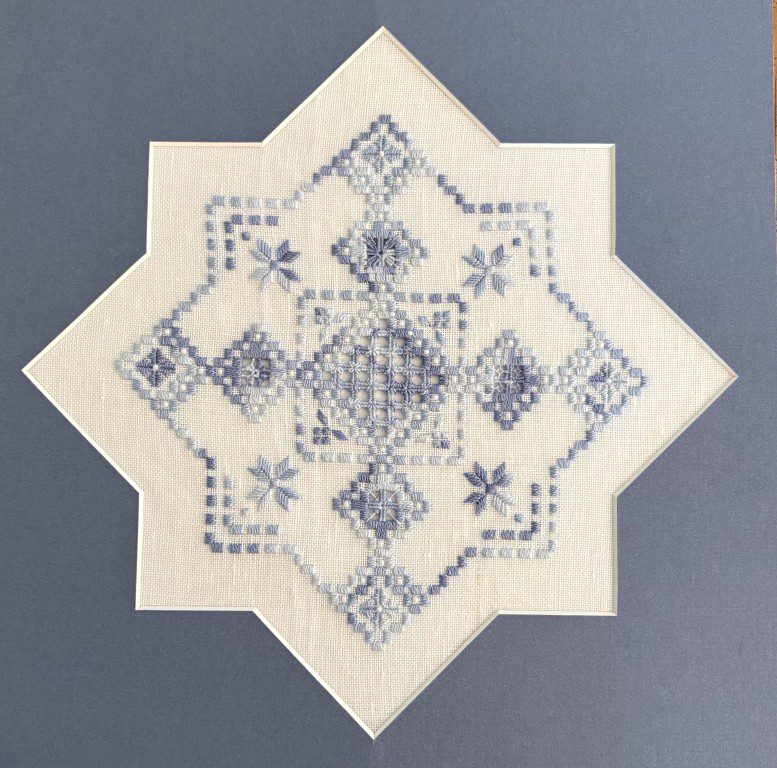
I decided to enroll in the Master Craftsman in Counted Thread Program to polish my technical skills, with an aspiration to eventually pursue teacher certification. At the time judging took place twice a year. l decided I would try to submit a piece each time and, if all went well, would have the 6 steps finished in three years. My plan didn’t go exactly as planned, but I came close. My cross-stitch sampler for Step 1, which included a version of my current home, received a provisional pass. That meant there were a few things I needed to correct but I could proceed with Step 2, Assisi. This step caused me the biggest problem. My first submission was rejected because my single row of cross-stitches, two threads away from the main design, was considered part of the border and needed to be reversible, and mine was not. My second attempt was a far simpler design and passed. Each of the remaining pieces passed on the first attempt. Later, I turned my Hardanger piece into a GCC course, Treasured Elegance.
Continue reading to learn more about Ode to Sudoku and to see Janet’s upcoming events.
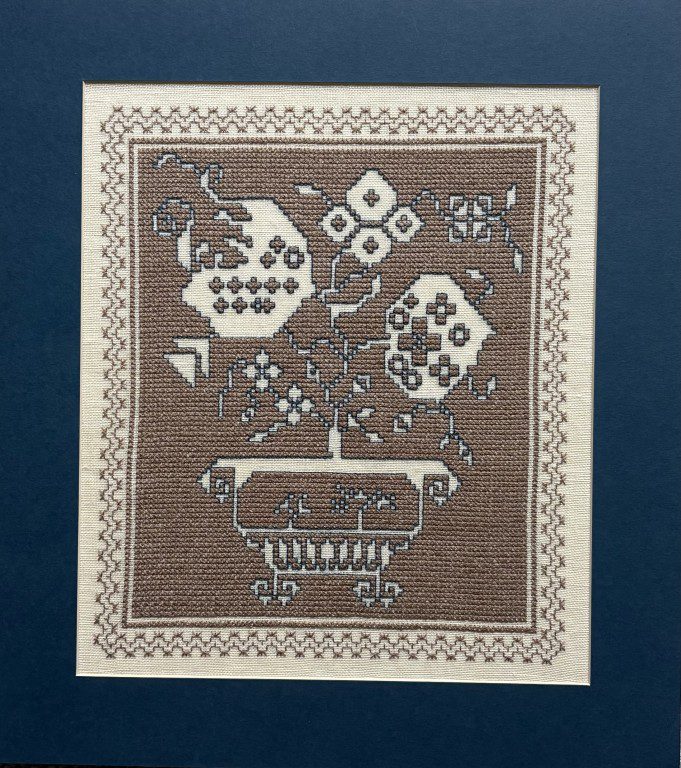
I am happy that I went through the program. I was challenged, learned a lot, and it left me feeling confident in my technical skills. My first piece of advice for those considering pursuing a Master Craftsman designation is to make sure you have had some classes or instructions in the technique (and techniques for counted thread) you are pursuing. In addition, as someone who went through the program and later became chairman, it is imperative to follow the directions to a T and keep it simple. Give the committee exactly what they are asking for. Save the complicated pieces for later.
Where do you find inspiration for your designs? What does your design process look like?
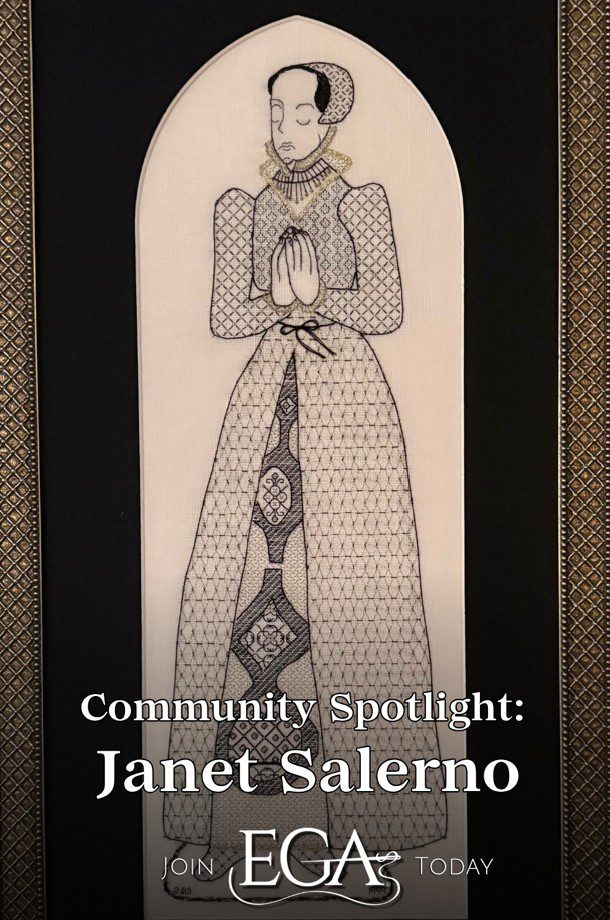
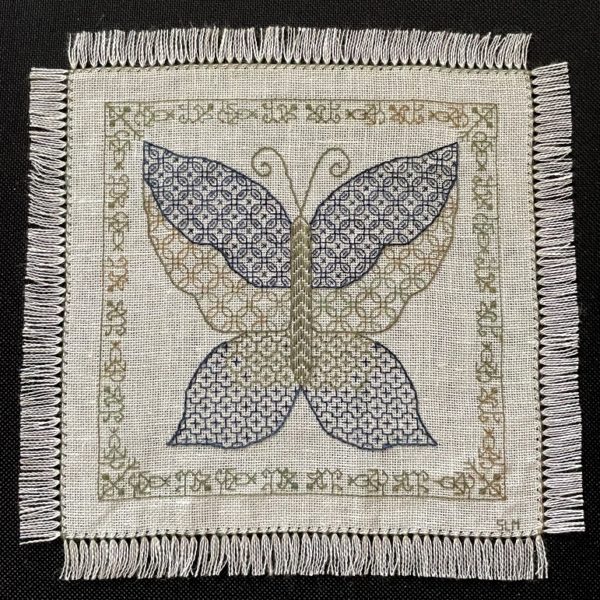
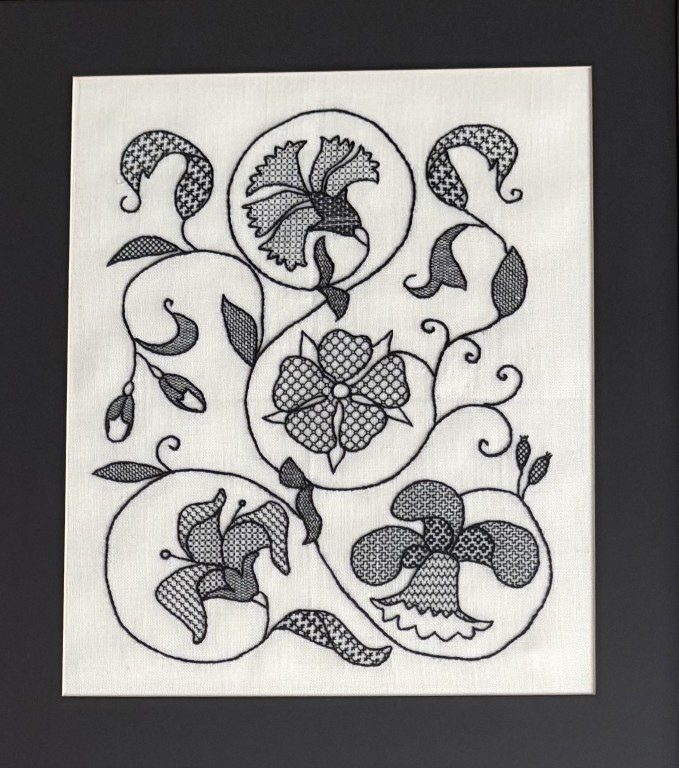
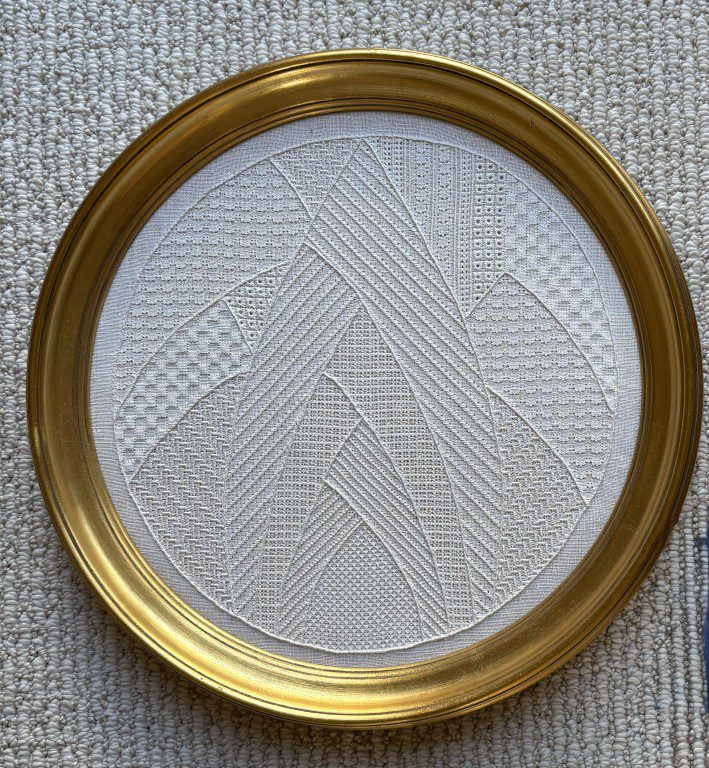
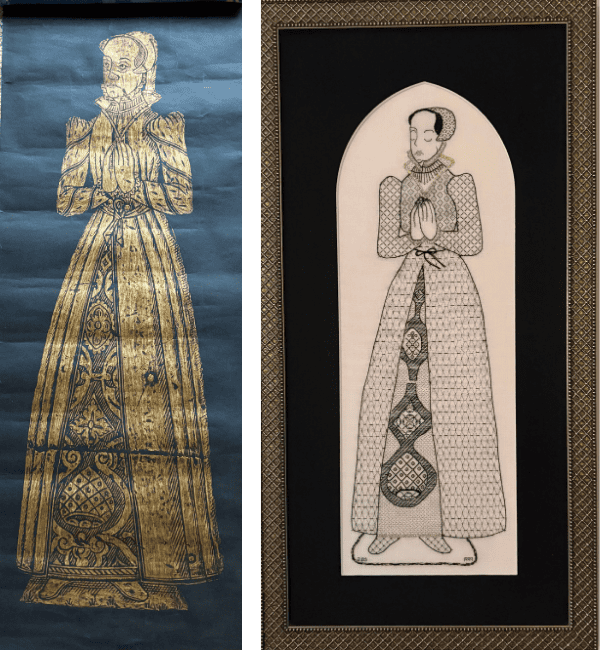
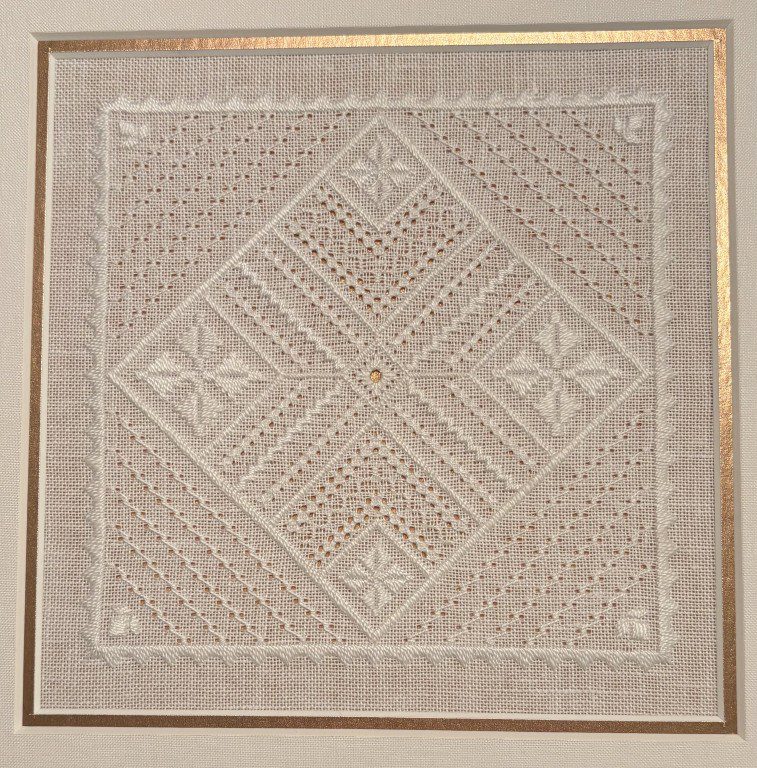
I find inspiration from many different places. Sometimes, it is a design I stumble across (usually geometric) that calls to me. The inspiration for Isla was in a tile surrounding a pool at Isla Del Sol in St. Petersburg, FL, hence the name. I immediately saw blackwork and darning patterns. With Avice Tyndall, it was a brass rubbing I did in England many years ago. Once again, I saw blackwork and knew that one day I would have to stitch her. Sometimes a chapter will ask me for a specific type of class, technique, or project and that helps me come up with something. I need parameters to help narrow down all the options so I can remain focused on the task at hand. I often find that the ideas I start with in my head can look quite different by the end of the process. At other times I decide on particular stitches I want to use in a piece and come up with something that will work. It is a lot of trial and error until I come up with something I am happy with. It is not a quick process for me. Often, I will put a piece aside for a time and find that when I return new ideas come to me. Sometimes they even come to me in my sleep.
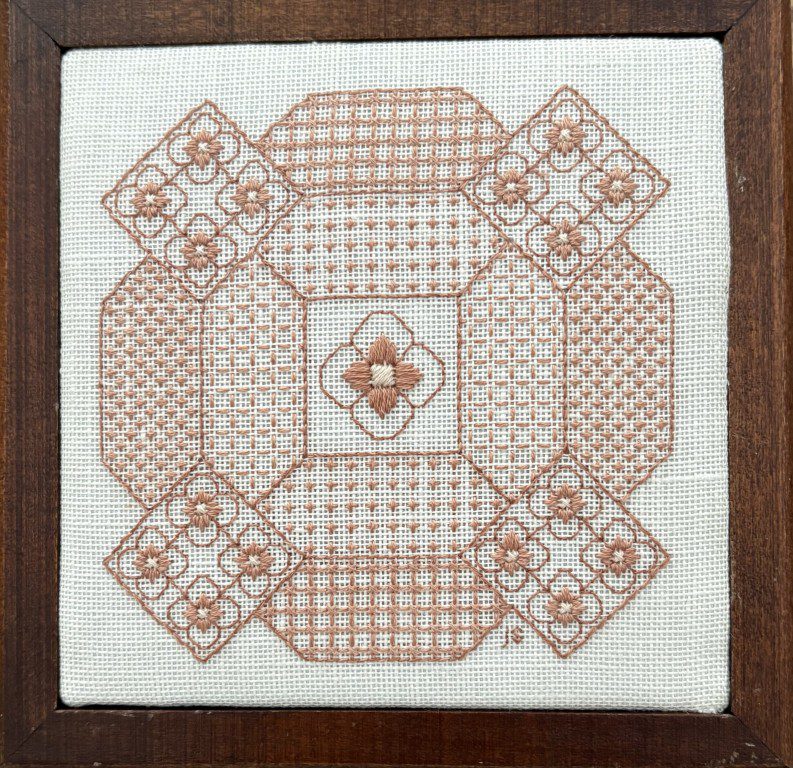
I play with a design idea either on Corel draw or PC Stitch and then begin to stitch. Sometimes I start in the center and work outwards adding one section at a time. Other times I have an overall design with individual shapes to fill. I often spend lots of time looking through some of the many stitch books I have until I find a particular pattern that will work to achieve the look I am trying to achieve. My design process does not always look the same.
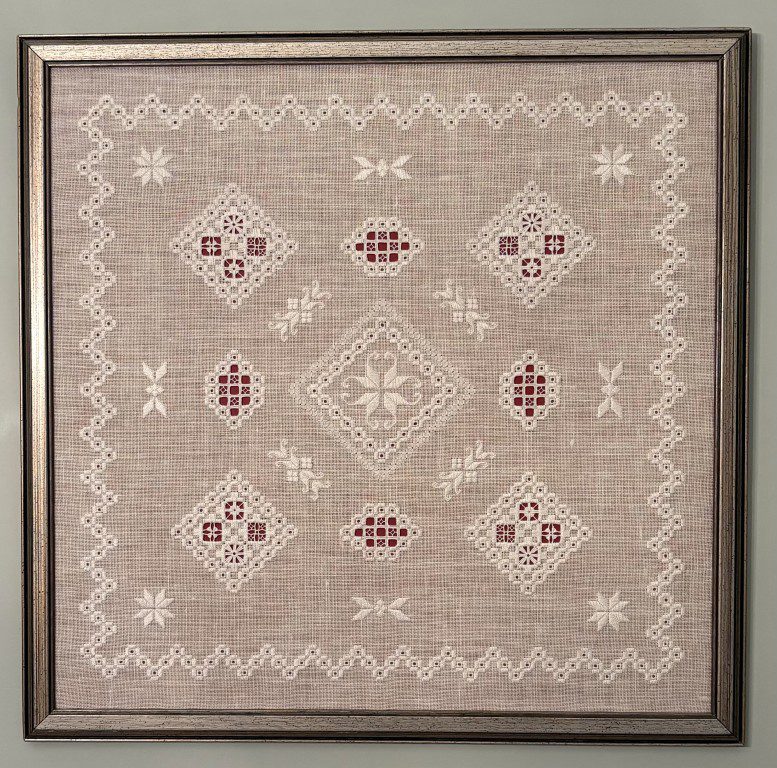
Do you have a favorite embroidery design? Why is it your favorite?
I would have to say it is probably my blackwork brass rubbing adaptation of Avice Tyndall. When I look at her, I feel calm and relaxed. It also reminds me of the time my husband and I spent in Wiltshire, England, when we were first married and he was doing research for his dissertation in English History. I believe it is the piece that I am most proud of.
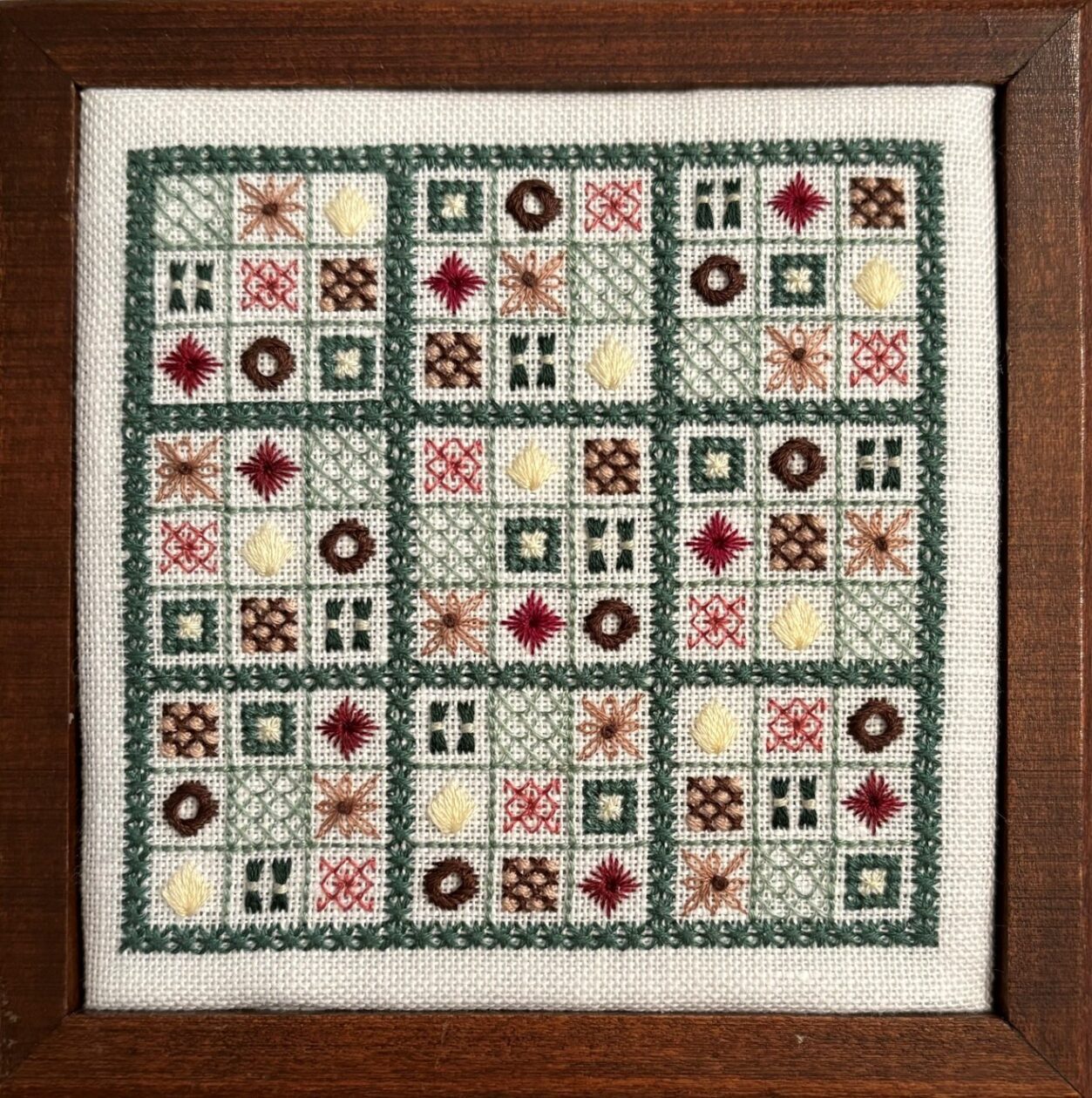
Your Online Studio Class, Ode to Sudoku, is both a puzzle and an embroidery design! It’s such an inventive and engaging piece. What inspired Ode to Sudoku? What should embroiderers know about this class?
I was first introduced to Sudoku puzzles by one of my fifth-grade gifted students in 2005. I was hooked immediately and took it upon myself to learn how to do them and in turn teach my students. I experimented by creating puzzles where I changed the numbers to symbols to add some variety to the puzzle. It was a hit. I had always toyed with the idea of turning it into a needlework design and finally in 2025 I accomplished that goal. The biggest challenge for me was to find 9 different colors that would work as many of my designs are white-on-white, black-on-white, or monochromatic. I knew it would be relatively easy to come up with stitches for the individual blocks. Once I settled on the colors the piece came together fairly quickly, and I was pleased with the results.
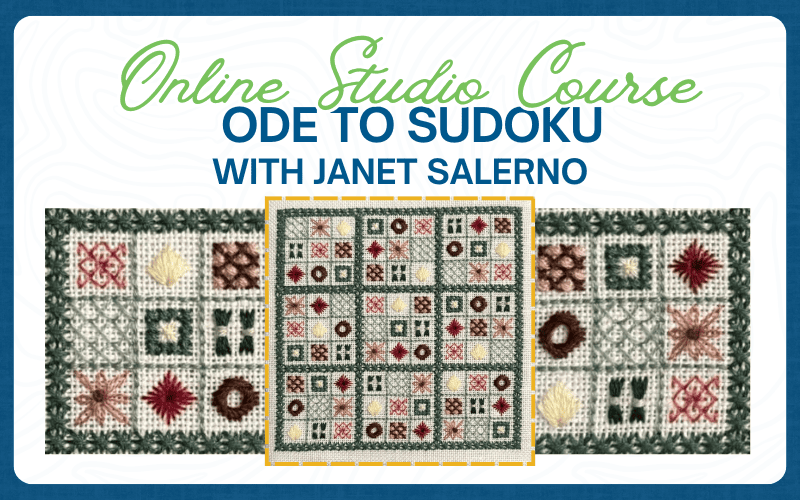
The class is designed for all levels of stitchers. Students do not need to know how to solve the puzzle as the solution is provided, but hopefully some will be encouraged to try. Since there is no kit provided, students can go through their stash for fabric and threads. I am hopeful that many will experiment and come up with some exciting color combinations. If they are not ready for that challenge, they can use the colors that I did. My piece was inserted in a box with a 5 x 5 inch opening, but students are free to finish it as they choose. The instructions are clear, thorough, and easy to follow, with detailed stitch diagrams. I encourage, and am happy to answer, all questions.
What is your favorite piece of embroidery advice?
My favorite piece of advice is to have fun. This wonderful hobby of ours is meant to be enjoyable with opportunities for learning, growth, creativity and making friends with like minded people. Do not be afraid to try new techniques. You may find something that really excites you or on the flip side, a project that moves to the once and done pile. Continue to learn, experiment, and challenge yourself as much as you can, and accept the mistakes you will make along the way. And finally, be proud of all that you accomplish.
Where can interested embroiderers learn more about you and your work?
Currently, I do not have a website and only a limited presence on social media, Facebook (Janet Donadio Salerno) and Instagram (@jsdsalerno).
I will, however, be teaching at the NER Region Seminar, Needles & Blooms, May 13-16, 2027, in Burlington, Vermont, and the Mid-Atlantic Region’s Seminar, Stitcher’s Great Escape, June 15-20, 2027, in Fairfax, Virginia. Additional information on the specific classes I am offering can be found on their respective websites.