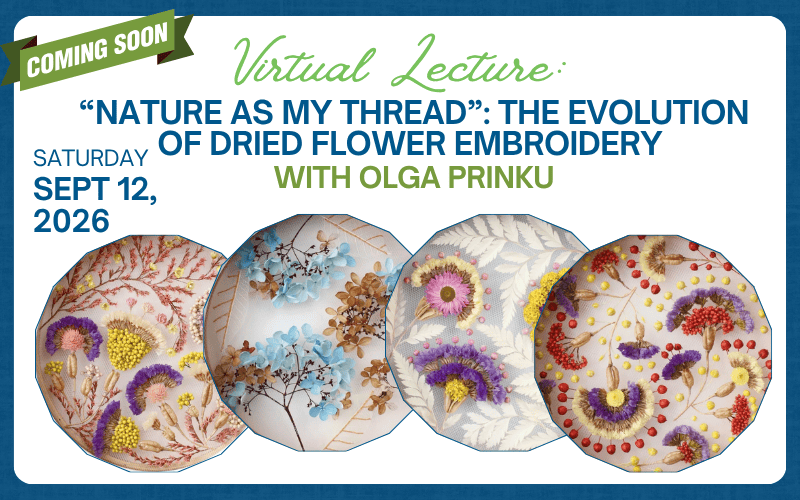
Olga Prinku is the artist and originator of dried flower embroidery on tulle. Her upcoming virtual lecture, “Nature As My Thread”: The Evolution of Dried Flower Embroidery, explores her experiences with the alluring technique, which she has mastered over the last decade. The delicate work requires a masterful understanding of color and composition and a deft handling of fragile organic materials. We were delighted to talk with Olga about how she came to dried flower embroidery and learn the secrets of using natural organic materials in needlework.
What were your first experiences with embroidery?
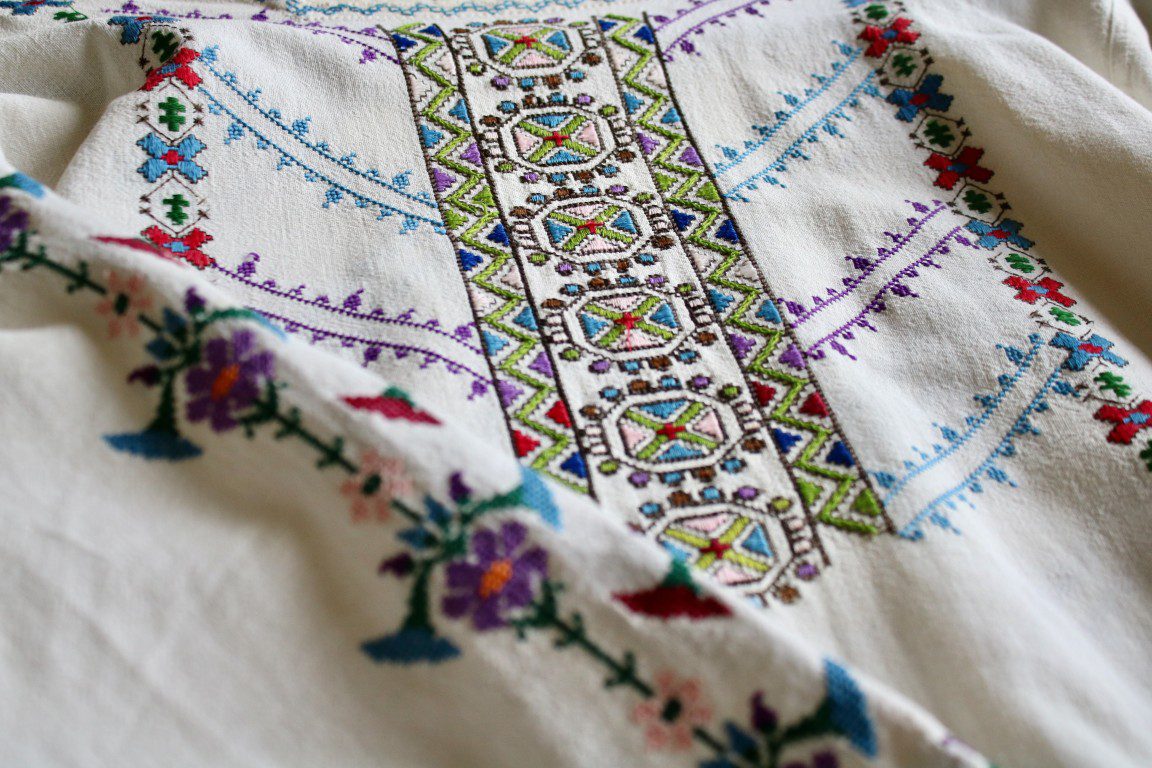
I remember learning to cross-stitch and chainstitch at school, in the Republic of Moldova – this would have been around the time of the end of the Soviet Union. Moldova has a long history of folk embroidery. I have a traditional embroidered blouse, called an ie, that was made by my grandmother – it’s beautiful, and one of my most treasured possessions. I remember as a child watching my mother stitch, and seeing at my auntie’s house in the village a big chest containing her dowry, filled with hand-embroidered tablecloths and cushions.
You started embroidering with flowers in 2016. What inspired you to turn to flowers—how did it all start?
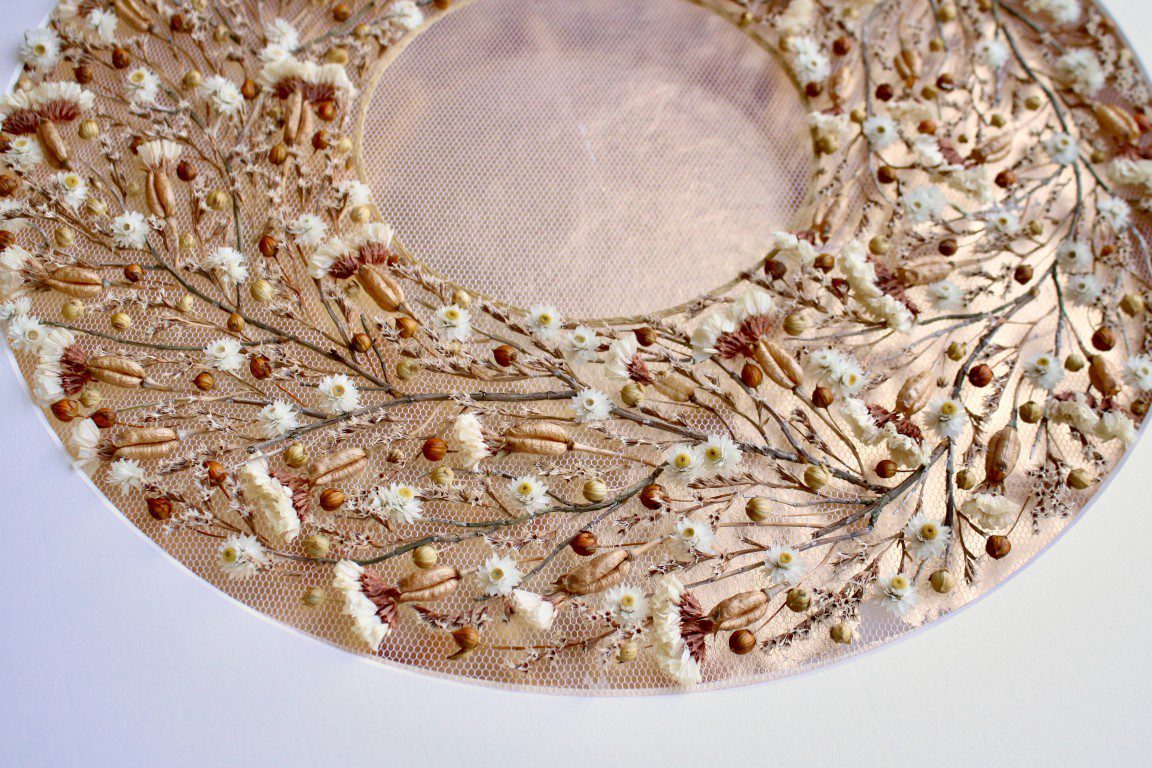
It grew out of a hobby of wreath-making at Christmas time. One year I used a garden sieve as a kind of frame for the foliage, poking the stems through the wire mesh to hold them in place. That made me wonder whether I could do the same thing with the stems of flowers and the mesh of tulle fabric stretched on an embroidery hoop. I began to experiment, and everything stemmed from there.
Where do you find inspiration for new designs?
Some of my pieces are influenced by the folkloric motifs of the traditional Moldovan embroidery I mentioned earlier. But mostly I’m inspired by the nature around where I live in North Yorkshire, England. It’s a beautiful part of the world for walking, with moors and meadows and woods. I find there’s so much to be fascinated by in the natural world at all scales and in all seasons, whether it’s the branching patterns of a forest canopy or the shape and structure you see when you look close up at a seedhead in autumn.
What does your design process look like?
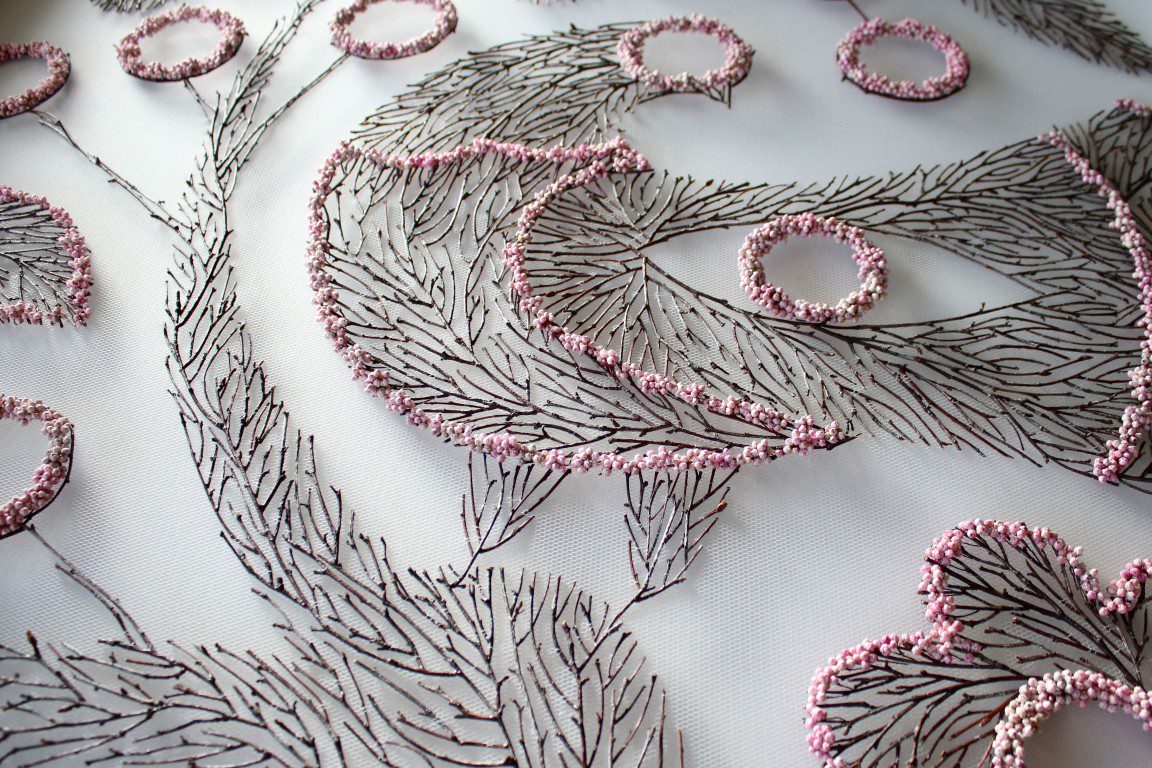
It varies from piece to piece, but it’s some combination of planning and freestyling. With some pieces I plan very precisely, do the design on the computer, print it out and have guides for myself on the tulle. With other pieces I’ll start with a more high-level idea of the shape and pattern I’m aiming for, and distribute the initial materials on the tulle in a way that creates spaces to work with. I’ll choose in advance the types of organic materials I’m going to work with, and have them on hand to select from and arrange as I go along.
Continue reading to learn more about Olga’s process and to see additional pieces.
What do you look for when considering using natural materials like dried flowers and other flora?
It’s partly aesthetics and partly practicality – there are some flowers that look attractive but unfortunately just don’t work very well for my purposes, for example because they’re too brittle when dried or they will lose their colour very quickly. I’m always thinking about how materials can be deconstructed and reconstructed on the fabric, or combined with others to form new patterns or draw attention to beauty that might often be overlooked, perhaps because something is considered as a weed. I always enjoy finding opportunities for visual puns, like using feathergrass to represent the feathers of a bird.
Do you have a favorite design? Why is it your favorite?
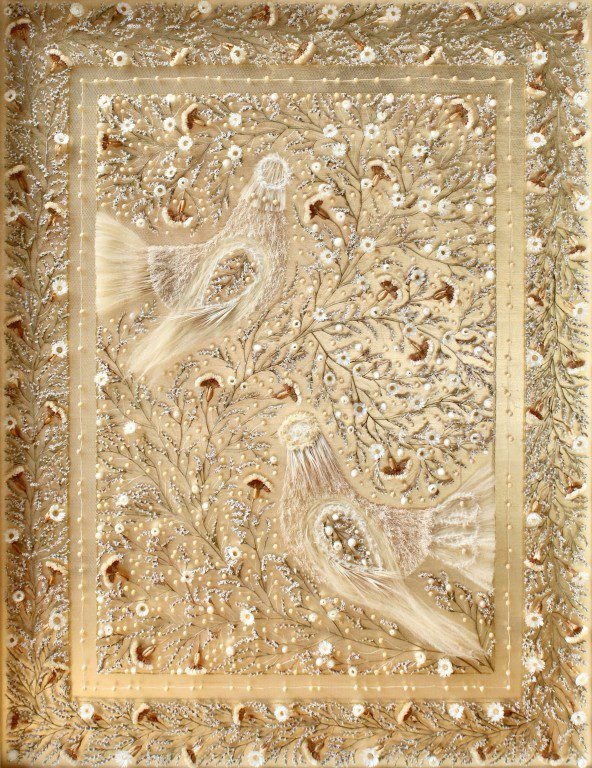
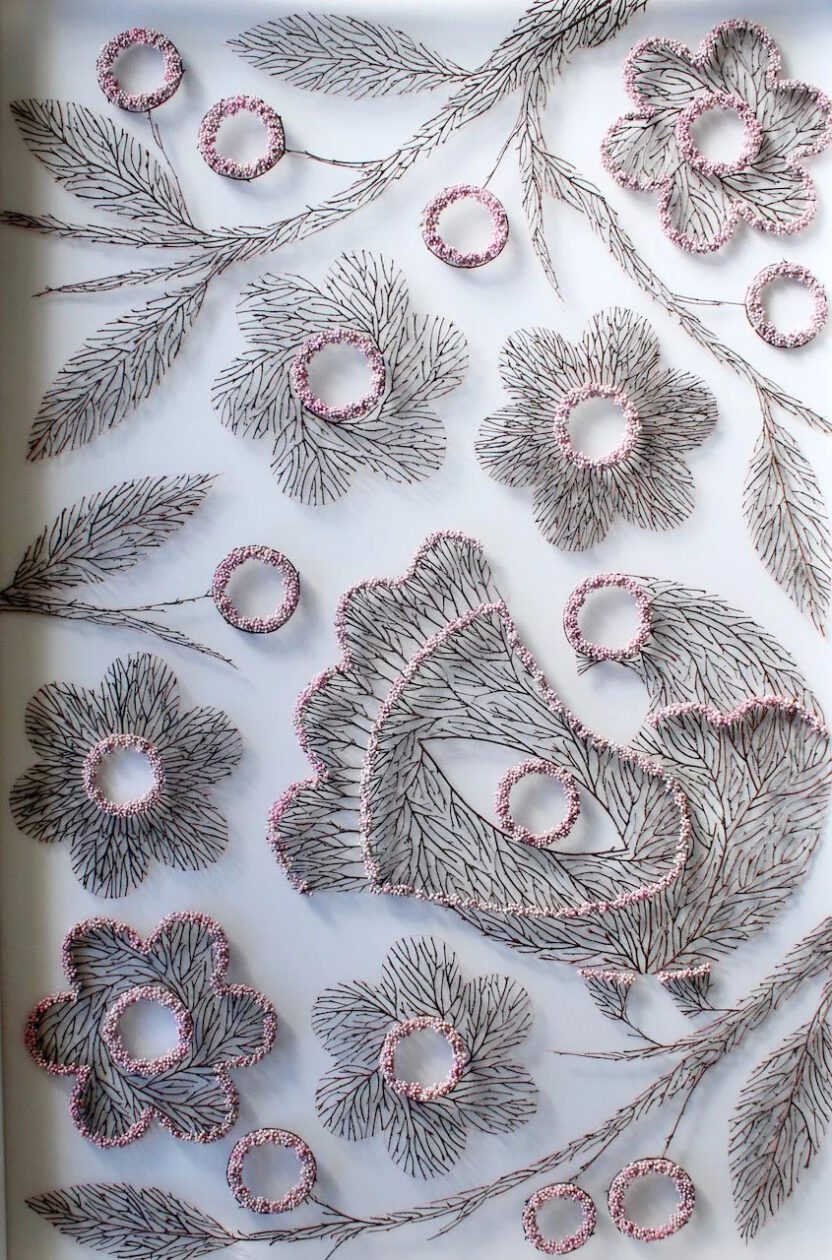
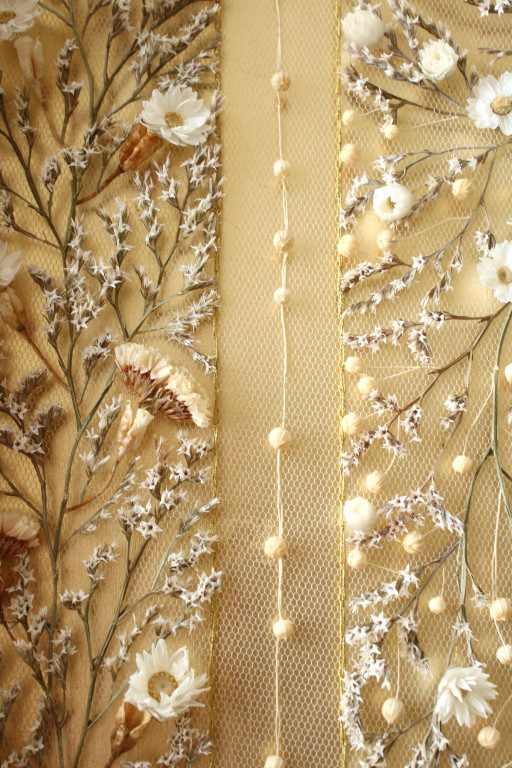
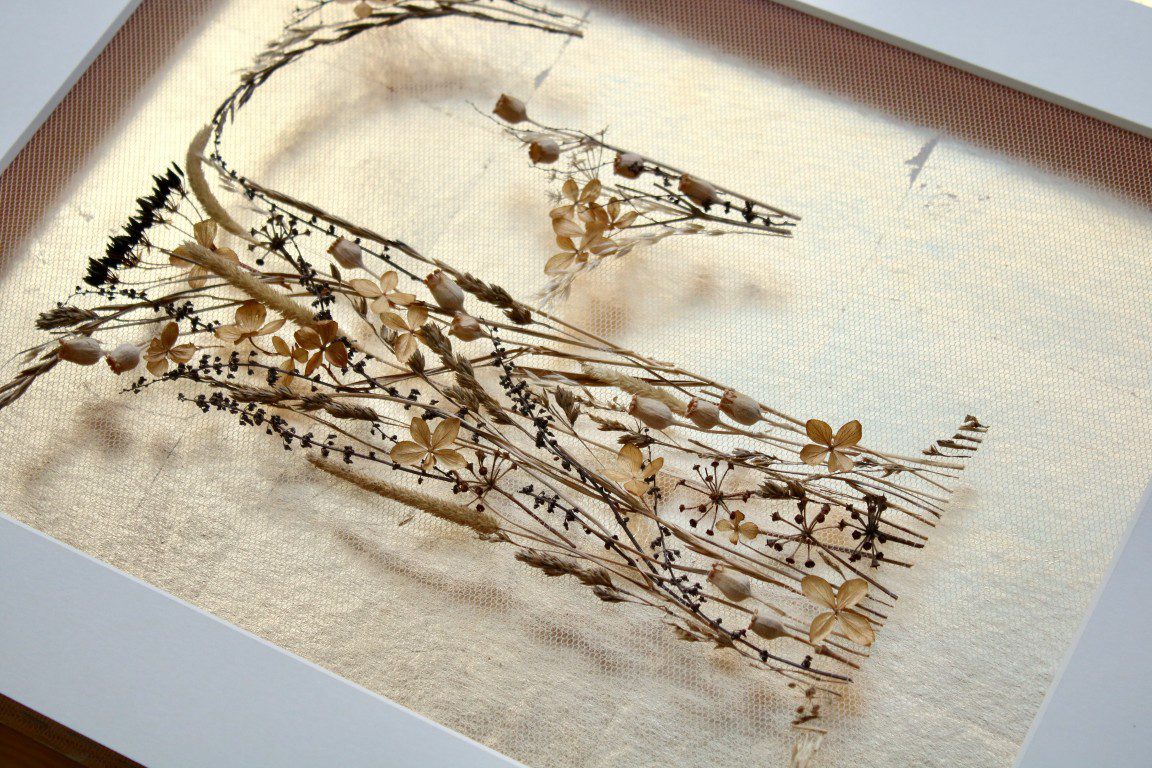
My favorite piece is usually the last one I made, because I feel like I’m always learning and progressing and developing my skills, and each new piece is an expression of knowledge and craftsmanship that has always accumulated a little further than with the piece before. But if I look back and try to choose a favorite, I think it would have to be the first time I tried something new. For example, Connections was my first large-scale work – a triptych of panels each 120 cm by 80 cm – and the first time I worked with twigs in a figurative design. I also love Whispers because it’s the first time I incorporated a border, which is reminiscent of traditional woven tapestry designs.
Do you have a favorite or least favorite organic material to work with—and why is it your favorite or least favorite?
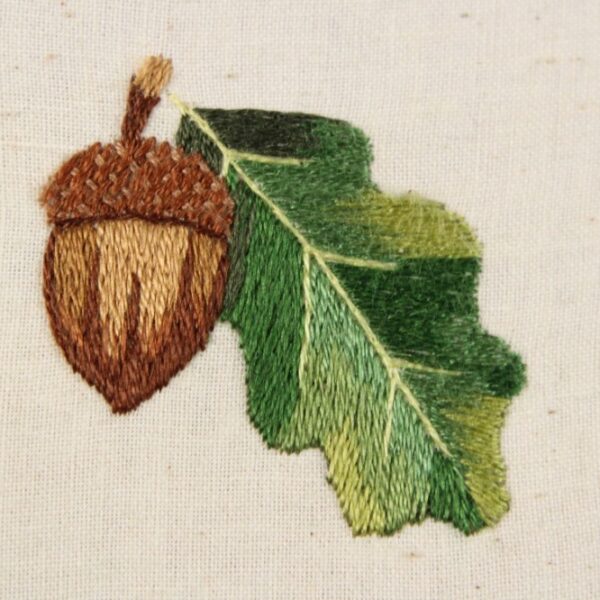
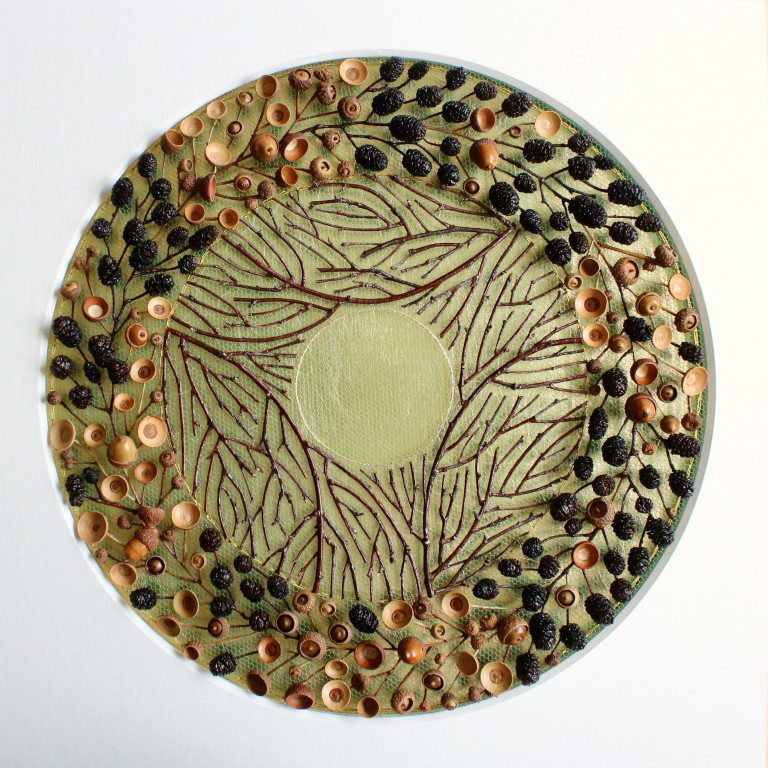
I’ve experimented with a lot of organic materials and if there’s a reason I find something difficult to work with, then I tend just to not work with it – I have a lot of embroidery samplers and small test pieces that are unfinished, but it’s only through trial and error that you find out what works. One material I really love is the acorn. It’s readily available to forage for on my local walks, and I can find ways to use it in all its stages of development, from green to ripe. In terms of flowers I use a lot of statice, which I can buy fresh and dry at home – it’s one of the easier flowers to work with, and comes in a lovely range of colors.
What advice do you have for other embroiderers who are interested in incorporating organic materials into their embroidery?
Patience, patience and more patience. Because dried flowers in particular can be so fragile, it’s a craft that rewards slowing down and paying close attention to the materials in your fingers – the creative process doesn’t go well if you try to rush it. But patience also in the sense of being willing to experiment, trying out lots of different plants to see which ones you enjoy creating with, accepting that not everything is going to work. And patience with nature across the seasons – I find it’s useful to observe a plant during its entire life cycle to decide if and at what stage it looks suitable to work with.
Do you have any favorite resources or reference materials to recommend for embroiderers interested in working with organic materials?
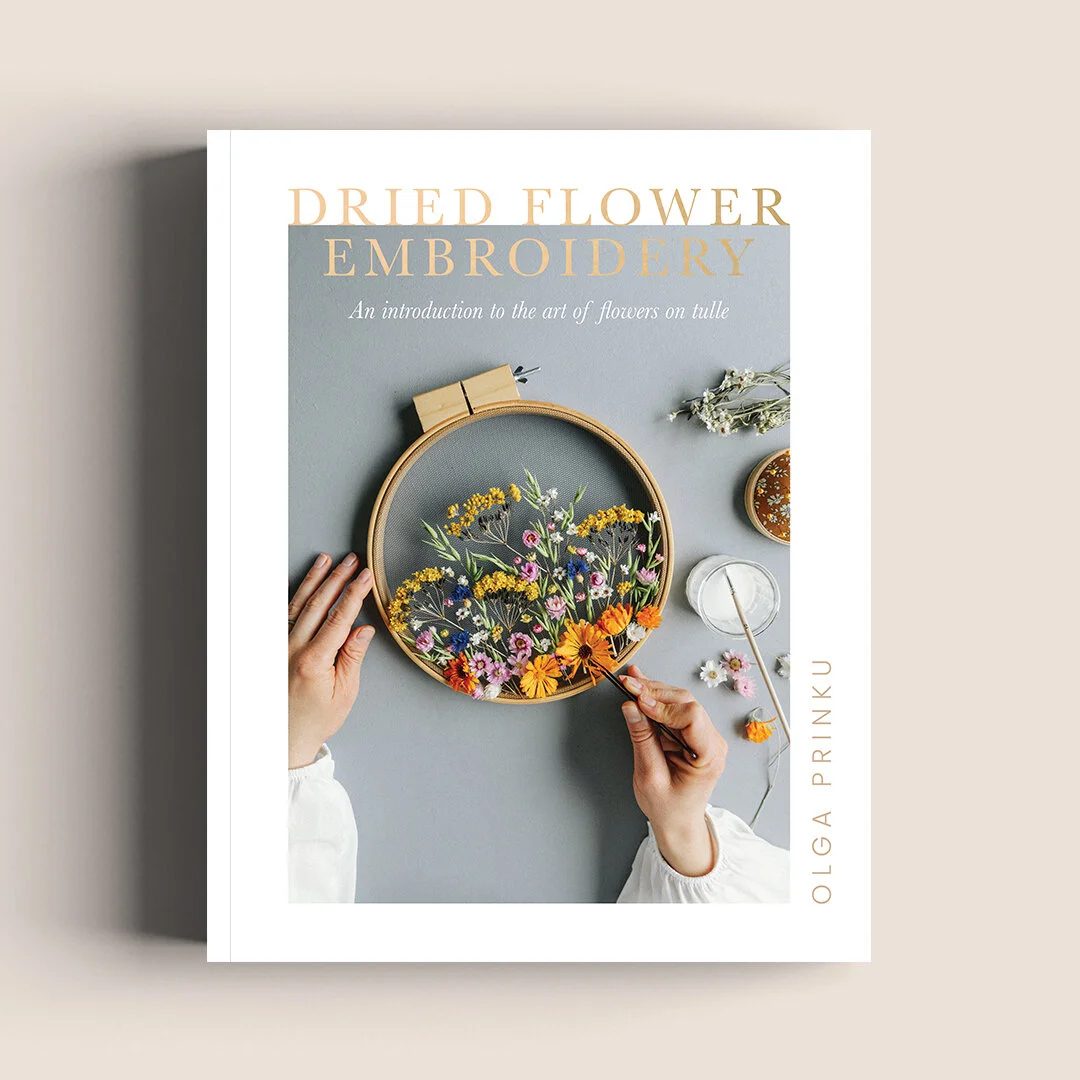
I hope you’ll forgive me if I mention my own book here! It’s called Dried Flower Embroidery: An introduction to the art of flowers on tulle, and it’s a combination of practical advice based on years of my experimentation with materials and tools and techniques, and a selection of step-by-step projects. I’d also definitely recommend using a plant identification app if you’re in the countryside foraging for potential new materials and you find things you’re not familiar with, to make sure you’re not touching anything poisonous – I use Pl@ntNet.
Do you have any upcoming events you’d like to share? Where can interested embroiderers follow you to learn more about your work (social platforms, website, etc)?
I’m very much looking forward to being part of an exhibition called Fragile Threads, which is being organized by the Royal School of Needlework in London from February 23 to March 7, 2027 – it’s a collection of work by different artists to highlight endangered species and inspire action to preserve ecosystems and diversity. I’ll also be holding a workshop during that time at the RSN’s headquarters in Hampton Court. My Instagram is @olgaprinku and my website is prinku.com, where you can sign up for my email newsletter to keep updated on what I’m up to.