Behind every stitch, there is a stitcher. As embroiderers, we are constant admirers of embroidery and needlework, but how often do we truly think about the stitchers who crafted our favorite works of art? Isabella Rosner thinks about those needleworkers all the time. She loves embroidery, but she also loves people—and she believes those two passions are inextricably intertwined. When she considers a piece of needlework, she doesn’t just look at the stitches used, the skill level, or the style. She’s also looking at the personal history hidden behind every stitch. What did the maker want from life? What were their struggles? What were their triumphs? Isabella is the perfect person to lead our upcoming virtual lecture, Embroidery in Times of Chaos, because she knows that we leave pieces of ourselves in all of our best work. We sat down with Isabella to learn more about her process of examining history through material culture.
What were your first experiences with embroidery? How did you learn?
I started embroidering in high school, but for some reason I can’t remember why or how! I know my first project was a jean jacket and that I covered it in quotes from Jane Austen, a British flag (which is fitting, given that I now live in England), and flames (I wish I knew why I made that choice). I think I needed a project that could keep my hands busy while I watched the many hours long period dramas I was obsessed with as a teenager. I had already done my fair share of hand sewing, crocheting, and knitting, so I was ready for a new challenge.
Though some of my grandparents and all of my great-grandparents worked in various textile trades, I did not come from an embroidery family so I taught myself how to stitch. I think there might have been some early YouTube in there, as well as some books. But really it was all about trial and error!
Do you have a favorite embroidery technique?
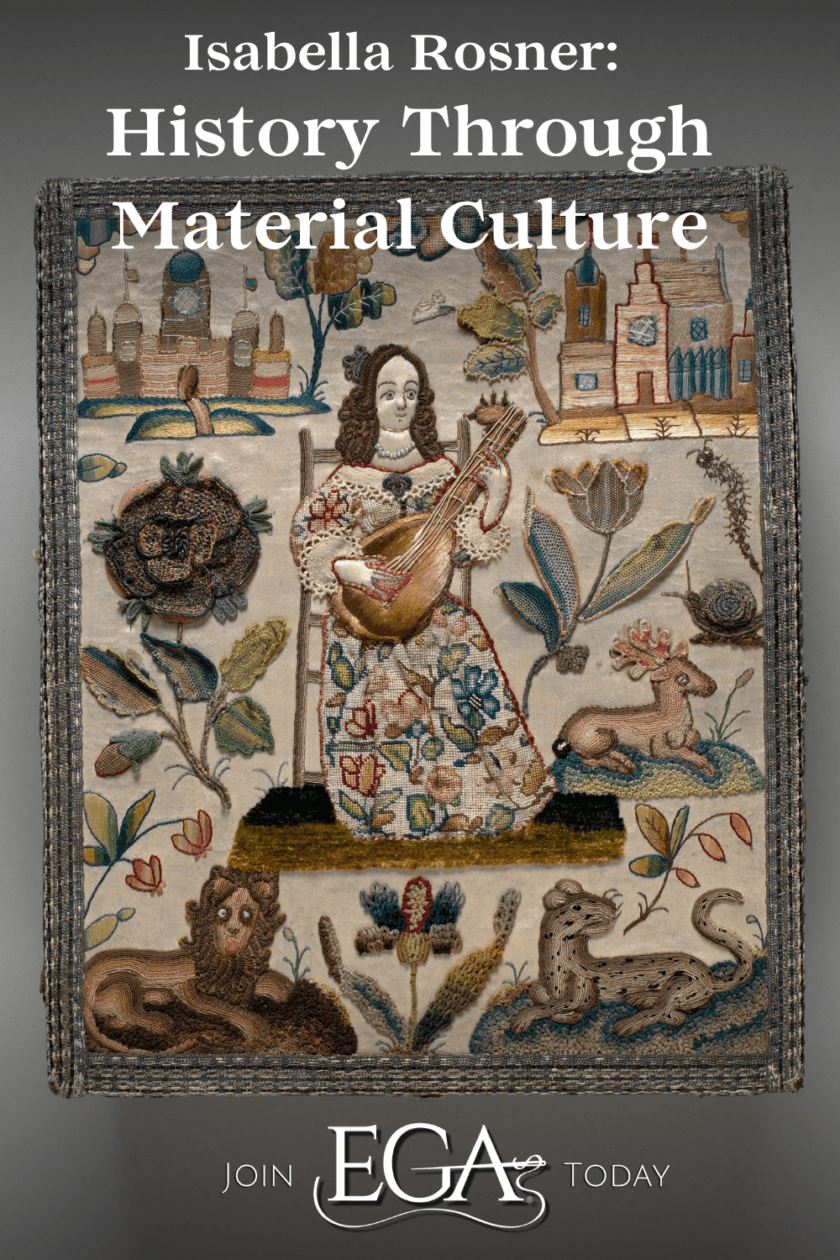
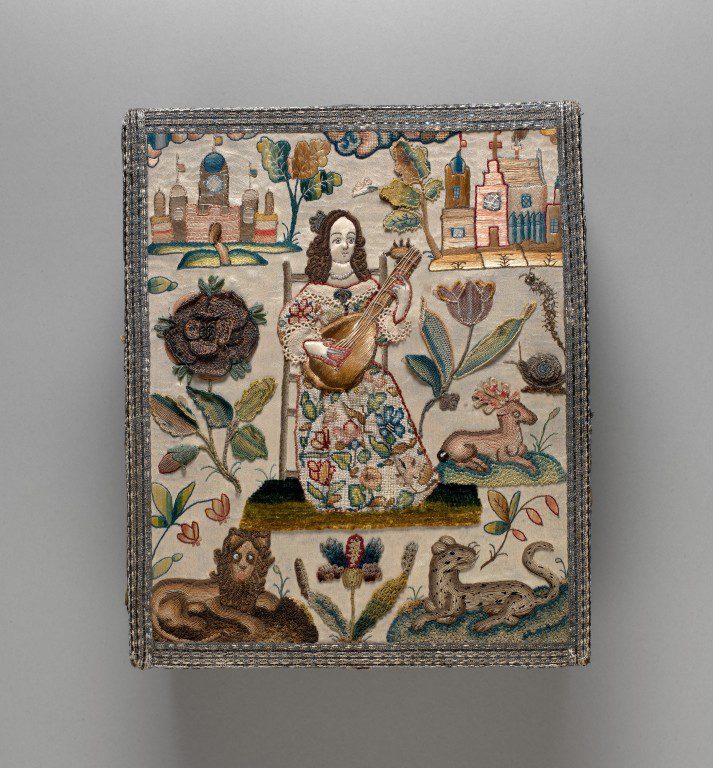
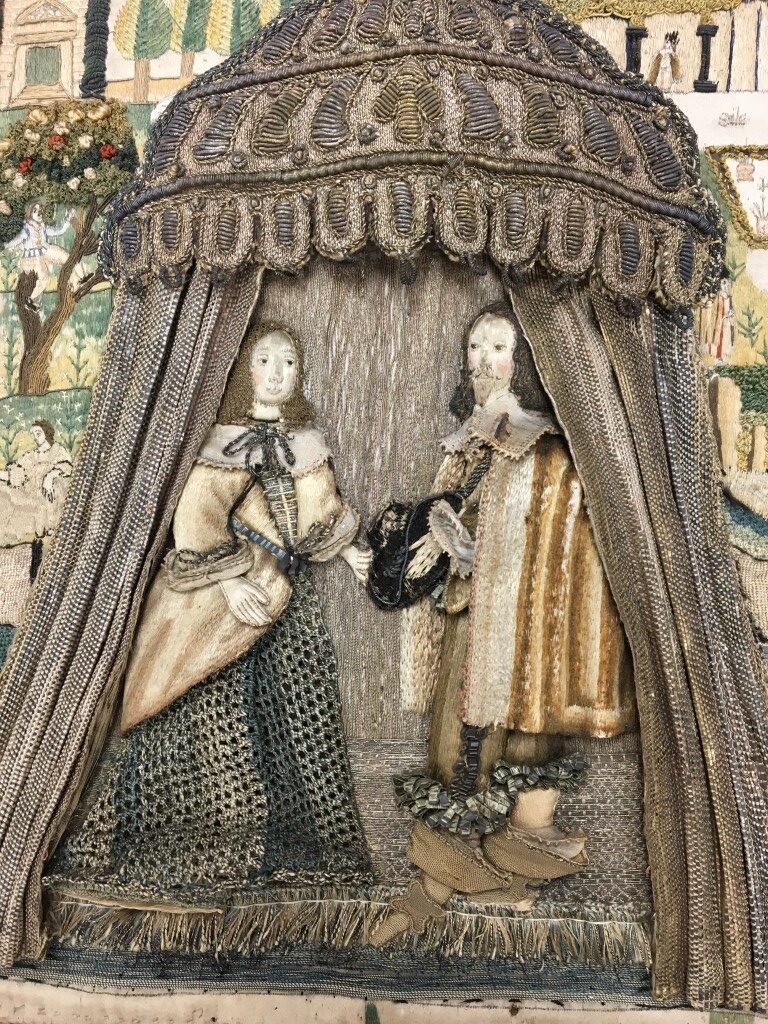
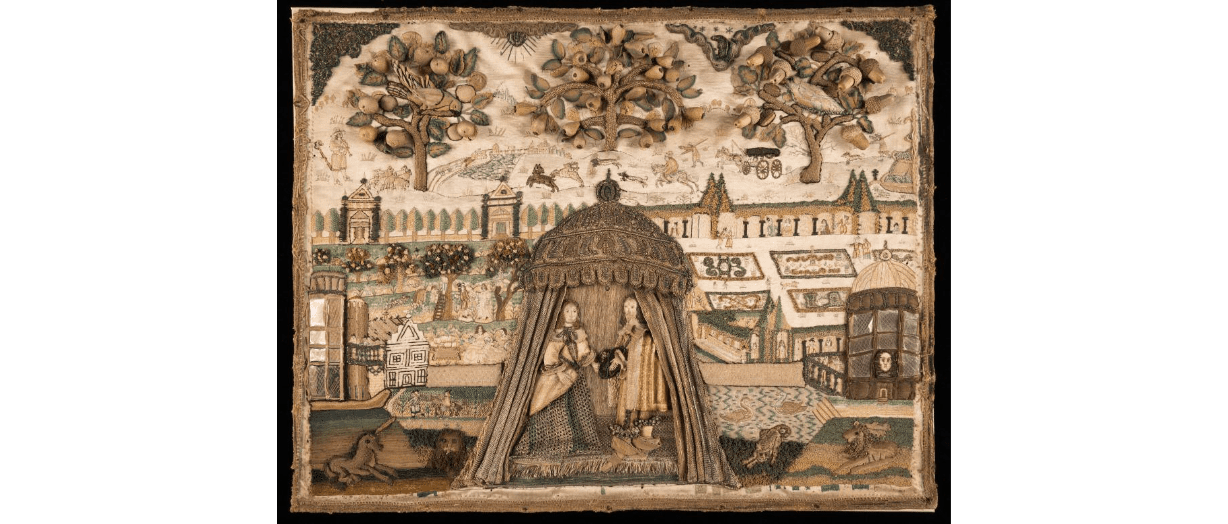
To do or to study? I’ve embarrassingly never had formal embroidery tuition so much of my own embroidery is freehand, going with the flow kind of stuff with some RSN Stitch Bank and embroidery books thrown in, too. I think raised work/stumpwork is my favorite technique to study—there is just such an amazing level of detail, and I love the skill involved in making something usually two-dimensional or three-dimensional and so tactile. I particularly love the 17th-century examples of that technique. Those embroiderers were able to achieve an amazing level of detail and were so creative, utilizing tiny needlelace collars and cuffs, satin-covered carved wooden heads and hands, and materials ranging from wire to pearls to mica.
You are an art historian who studies material culture from the 17th through the 19th century. What drew you to this field?
It’s a long story, but basically I have come to this field through my deep love of the everyday people of the past. I am enamoured by people—I find them absolutely fascinating, even when they disagree with me or frustrate me. I love their complexities and contradictions. I have long wanted to understand people in different time periods and to know more about how they felt about themselves and the world around them, and I think looking at their “stuff” is a great way to explore what brought them joy, what helped them cope, what connected them to other people, and what made them feel seen and heard. Material culture is also a great way to “meet” the types of people you don’t find in the written record, and those are often the people I’m most interested in.
Your profession has exposed you to a lot of historical objects. Do you have any favorite historical objects you’ve studied? What was most interesting about them?
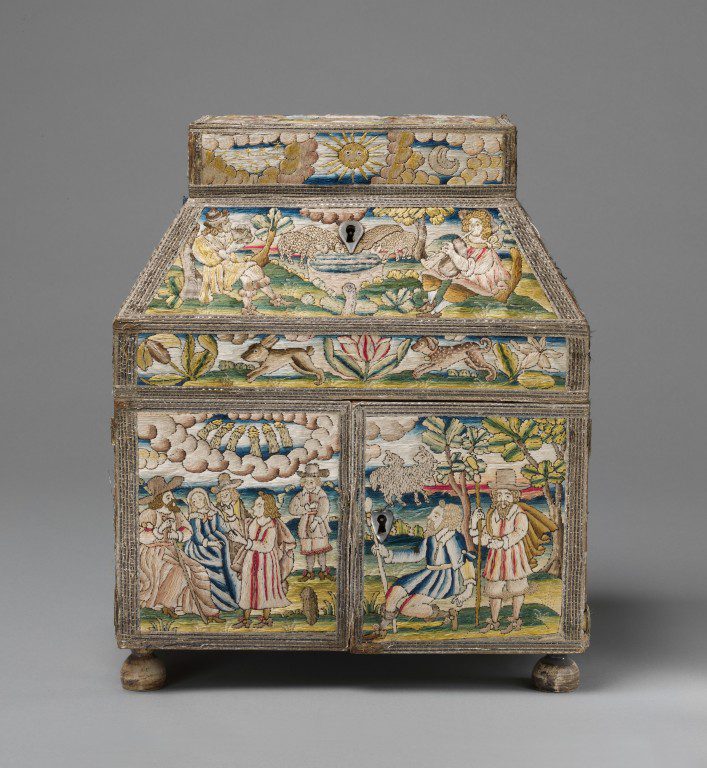
This is, I think, the most difficult question I could be asked. My list of favorite historical objects I’ve studied is many hundreds of items long, but to save you from spending hours reading this interview I’ll stick to two off the top of my head. They are an embroidered cabinet in the Met that shows the five senses and the hairwork embroidery of Annie Parker (which is technically far more than one object!).
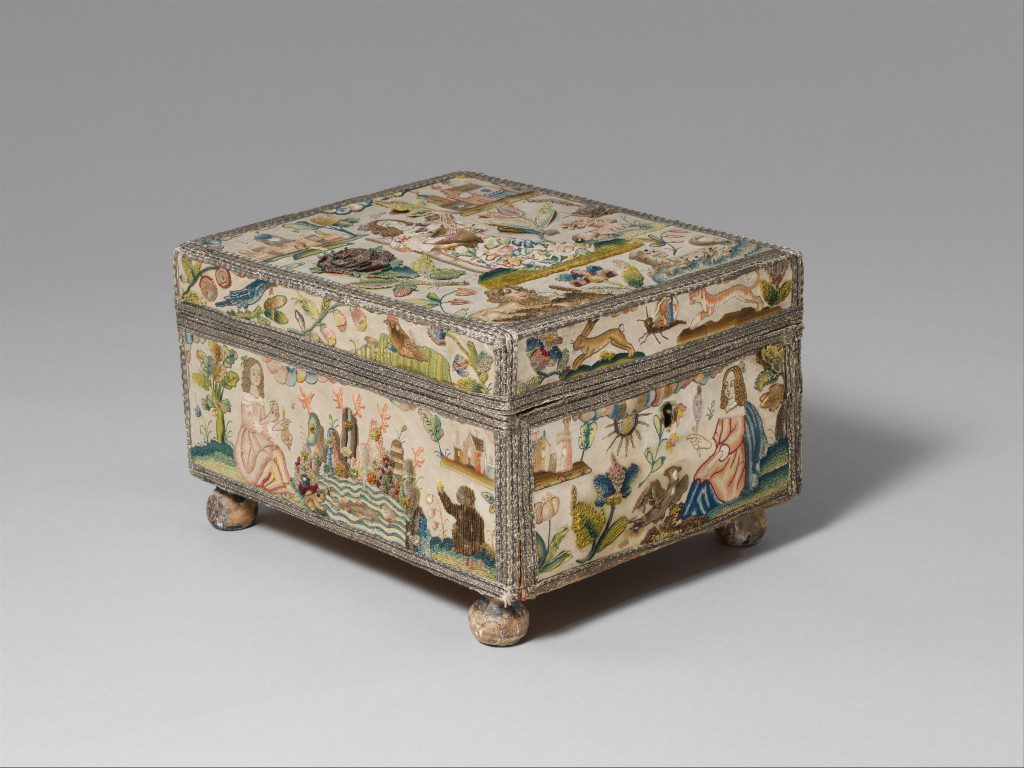
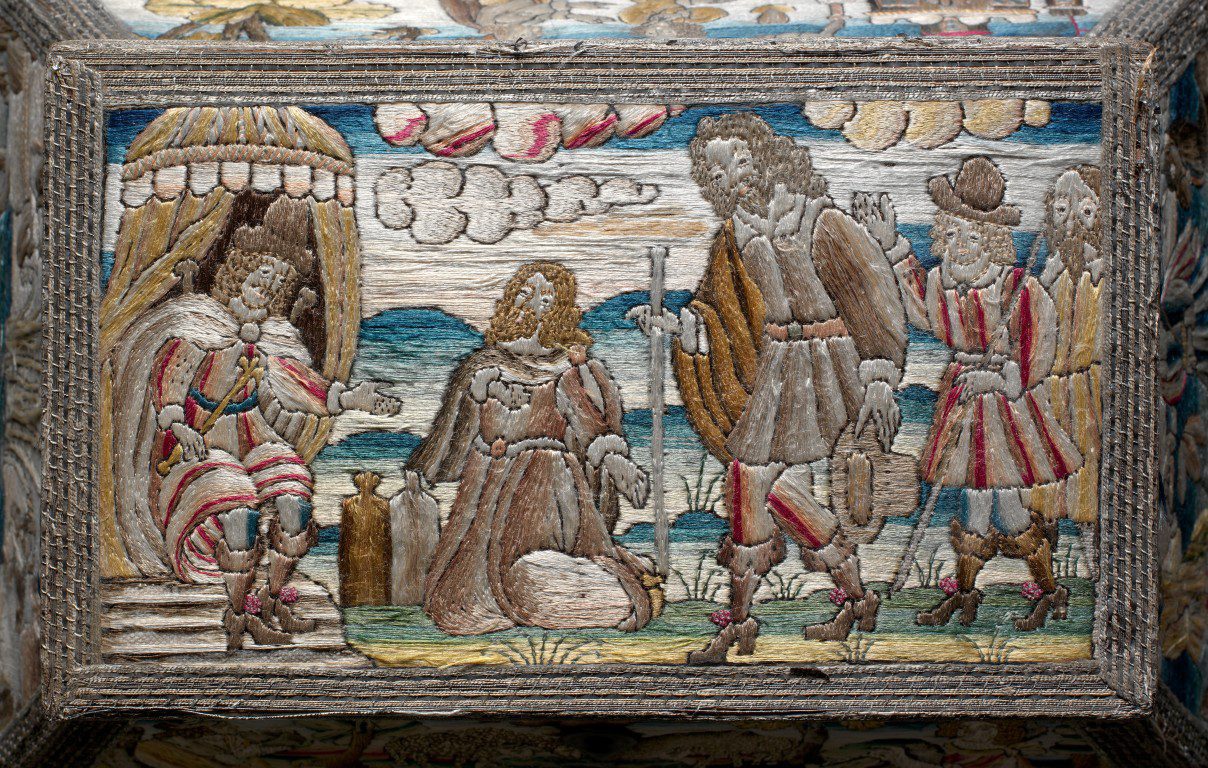
Seventeenth-century embroidered cabinets and caskets are one of my greatest loves. These boxes have secret compartments and they lock, offering their makers—the majority of whom (at least based on what survives) were teenage girls—spaces of privacy, ownership, and agency. I love that these boxes are usually covered on all sides in embroidery, a display of skill and knowledge, but also an interface between the privacy of what’s inside the box and the rest of the world. And I love that most of these stitchers were teenagers. How often do we get to find teenage girls from the past in other types of history? Not often, and when we do they are frequently mentioned for bad reasons, things like being pregnant out of wedlock, dying in childbirth, or getting accused of robbery.
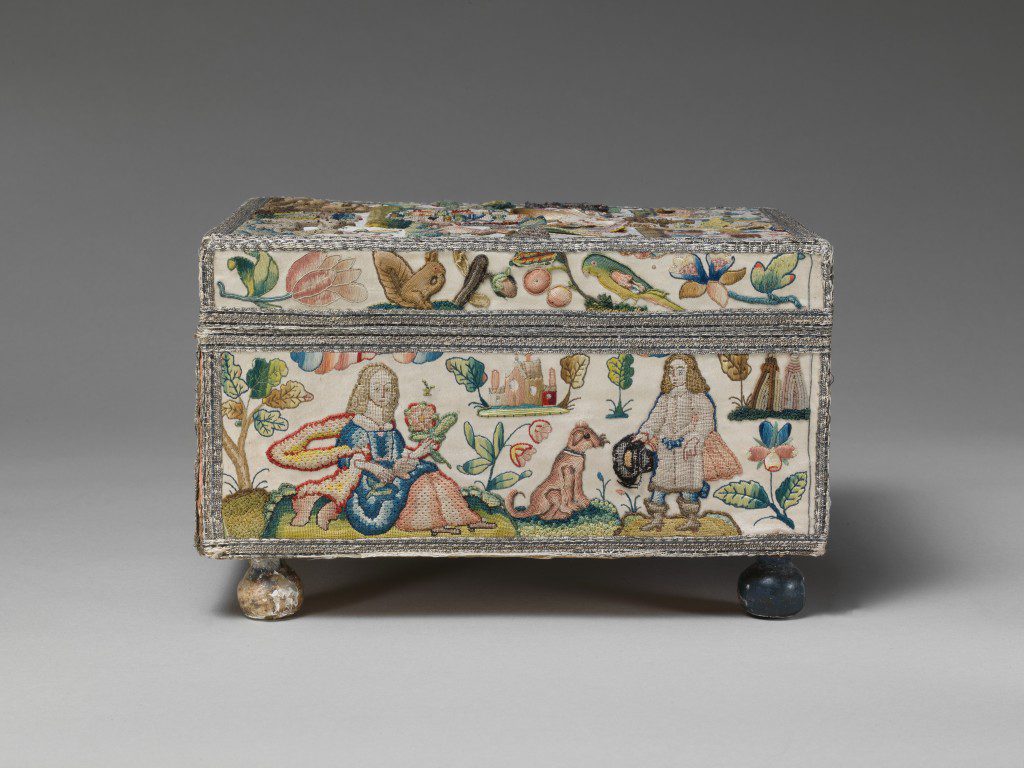
Through these boxes, and the samplers I’m also veeeeery in love with, we can find teenagers creating art, expressing themselves, and making their mark on a world that left them behind in many other ways. The example at the Met is a particular favorite because it involves so many different stitches, so many materials and motifs (everything from female personifications of the five senses to a craggy grotto to a courting gentleman and a dog), and so much texture. The motifs are on all sorts of scales and that mixture plus the impressive variety of stitches and materials makes it feel like this is a teenage girl who is really giving it her all, who is trying her best to show off all of her ample embroidery skill to the best of her ability. I love that the box is smaller than others and that it has a drop down door, and I love that the figures all have very kind faces (which is really impressive, given how hard it is to embroider faces!). I find the figures on this box so charming that I have the woman on the top, who represents Harmony, tattooed on my arm.
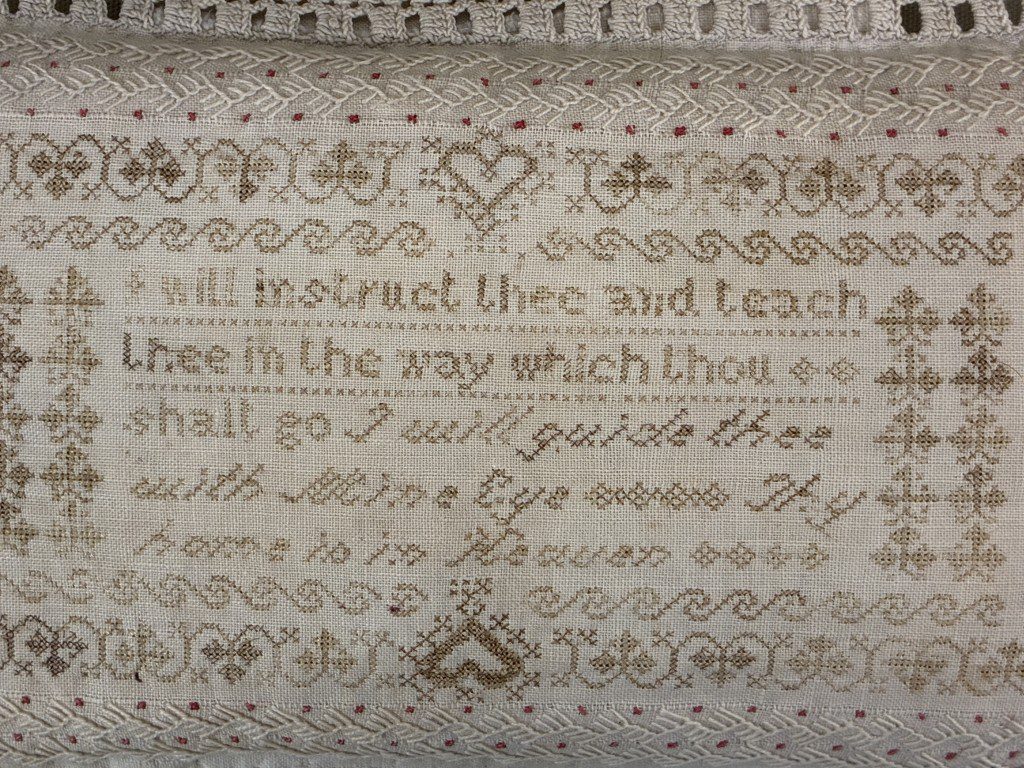
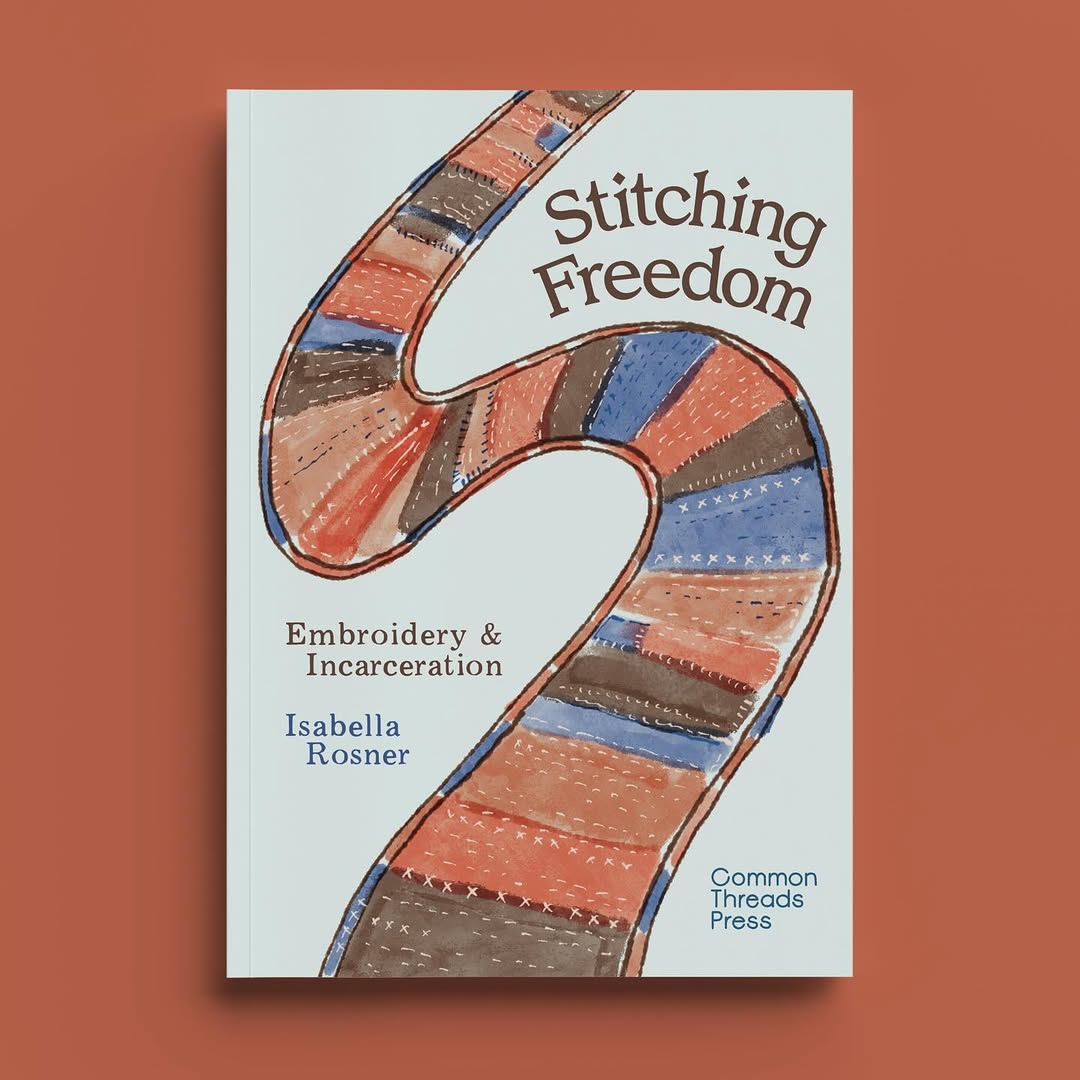
I am also compelled by embroidery made by people in spaces of incarceration like prisons, workhouses, and psychiatric hospitals. The list of favorite pieces in that category is as long as the list of favorite caskets and cabinets, but one particular embroiderer whose objects have really blown me away is Annie Parker, a south London Victorian woman who was arrested for drunkenness and other associated crimes more than 400 times. In one calendar year she spent 350 out of 365 days in jail. During her time in prison she embroidered samplers (and at least one pin cushion) with her hair. She always stitched hymns and religious verses in such exact cross stitches it’s clear that she was taught at a school for poorer children who would have needed to get jobs, likely in domestic service or the textile trades, after their education.
Her stitches are so tiny, and you don’t really realize they are made of brown hair until you get really close to them. I write about and think about Annie a lot, and am trying my best to understand the intricacies of her life rather than lean into the sensationalism that is really apparent in the Victorian newspapers she was often included in. Her embroidery tells us that she was a deeply pious woman trying to seek solace and better herself. I often talk about her trying to stitch herself better. Annie’s story makes me so sad and I want to help the world remember her, and I think her embroidery is a great way to do that not only because it is so skilled but also because it helps us question stereotypes about historical embroidery and historical embroiderers. Here is a destitute woman who stitches not from the comfort of her lofty home, but from behind prison walls. Her work is a reminder that embroidery is not exclusively an art form that is decorative, lighthearted, or beautiful.
What do you look for when approaching an historical embroidery object?
I try to “read” historical embroideries, eager to glean as much information from them as I can. At first I try to identify when and where an object is from, and if we can find out anything about who made it, used it, or owned it. I am luckily familiar enough with how embroidery looks over history and in a variety of countries to usually be able to guess with decent accuracy when and where something is from, and, if the object has a name or names associated with it, we can oftentimes get closer to exactly where and when it was crafted. If there is not a stitched name, set of initials, or other identifying information, I study the object to see if I can get to the type of person or people who would have made it or encountered it during its lifetime.
In addition to getting at the people involved, I want to know what the object itself has to tell us about the circumstances of its making. What is its condition? What materials are used? Are there a lot of them, or has the maker been sparing and economical? The back often reveals a lot about that. Alongside that, can the materials and how they are handled tell us if something was made professionally or not professionally? What is the stitching skill level? Was this personally formally educated? Were they aiming to have perfect stitches or not? Can we see what a stitcher’s priorities were? Sometimes it is about speed rather than perfection or vice versa. Sometimes it is about legibility, or brightness, or realism, or something else entirely. I always come to an object with questions, and those questions turn into other questions. Often, I will leave my time with an object with more questions than I had walking in, but those are my favorite moments. I think it’s so thrilling that a piece of embroidery may never stop revealing its secrets. There’s always more to learn.
Your upcoming Virtual Lecture is called Embroidery in Times of Chaos. Can you talk a little bit about the “chaotic times” needleworkers were stitching through that you plan to explore in the virtual lecture?
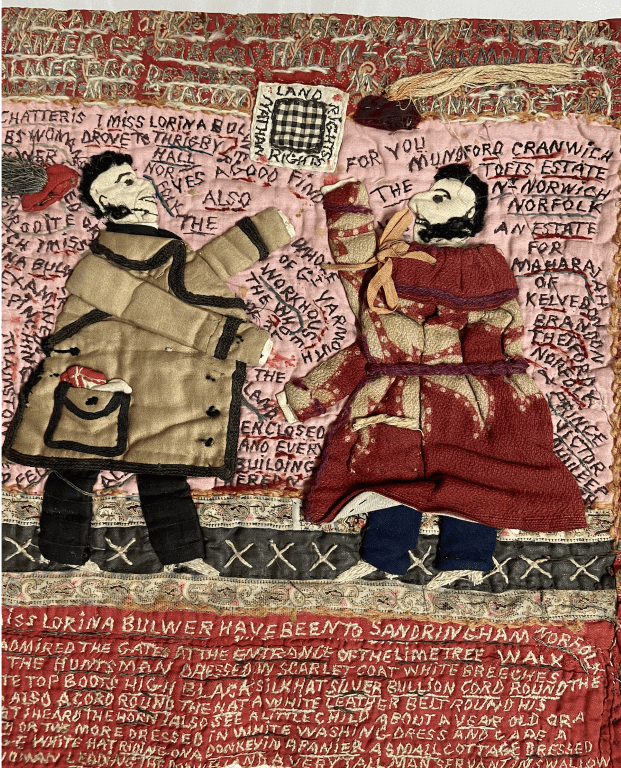
Sure thing! I’m thinking about “chaotic times” in a few different contexts, thinking about personal, national, and international moments of confusion, disarray, and tumult. On a personal level there is the angry, desperate stitching of Lorina Bulwer, who embroidered extremely lengthy diatribes from the Great Yarmouth Workhouse, where she did not want to be and where she felt she was wrongly institutionalised.
On a national level I look to the 1660s in London, fresh from a civil war and facing the Great Fire of London and a devastating round of the Plague. And then on an international level there is, of course, COVID. I wrote a version of this talk in spring 2021, when we were in the midst of various lockdowns and a world unlike anything we had seen before in our lifetimes. And how did so many of us cope with that turmoil? We stitched.
You have a podcast called Sew What? that explores historic needlework and the stitchers behind them. Do you have a favorite episode, or, for someone who has never listened, which episode would be a great place to jump in?
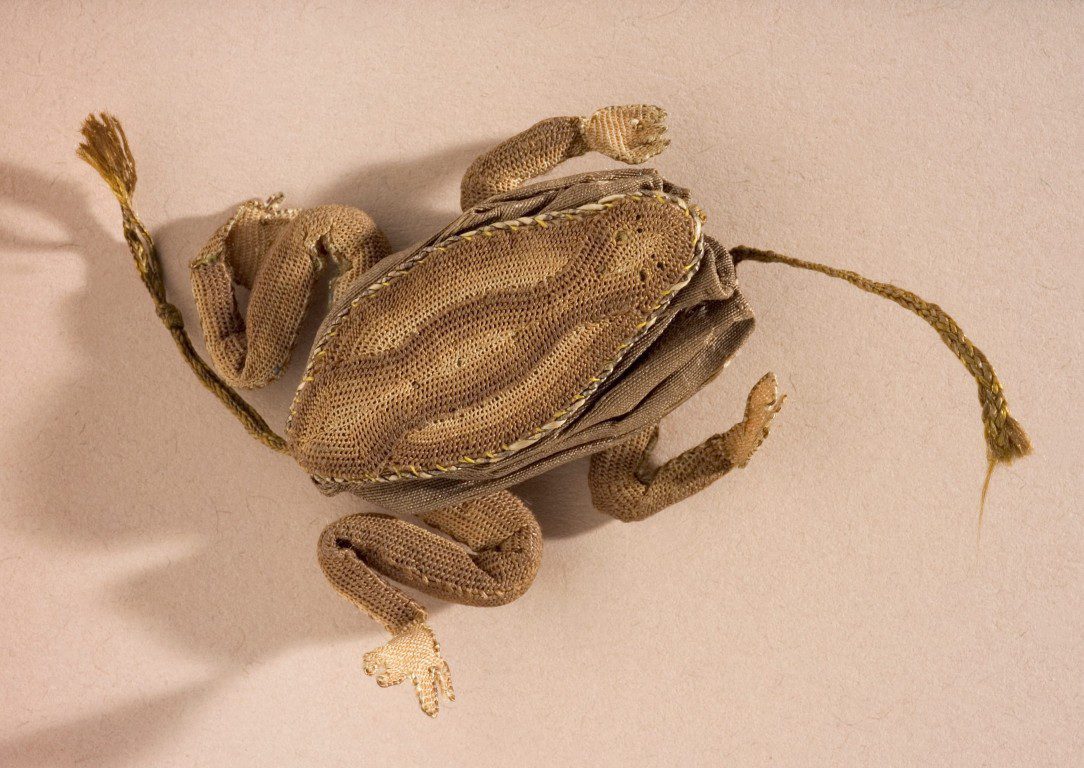
That is a GREAT question, and a hard one to answer! I think my favourite early episode is the one about frog pouches, “Hopping Into Early Modern Frog Pouches” (episode 3), simply because I am so deeply obsessed with seventeenth-century needlework frog bags and it was exciting to delve deep into my strange theories about why they were made. I’m not sure how well it holds up (I haven’t listened to it since editing it back in May 2020), but I’ve been thinking about frog pouches for a good few years and it was a great chance to say everything I wanted to say about them in one go. It might also be a good place to jump into the podcast, and not just because it’s about hopping frogs!
When it comes to the interview episodes, I think my favorites have been with artists I really, really love, like Bisa Butler and the Gee’s Bend quilters, and curators I deeply admire, like Amelia Peck and Melinda Watt, though really I have loved every interview I’ve had so it is very hard to choose some over others. I feel so lucky to have been able to have wonderful conversations with so many brilliant people!
You have a passion for making historical objects accessible to all. What advice do you have for other embroiderers interested in exploring historical objects?
My first suggestion is to get out there and explore! I realize that many people are not near museums that have historical textiles on display, but in the age of the internet that is not the only way to get up close and personal with objects from the past. Many museums have great online catalogues—the Met, V&A, Colonial Williamsburg, National Trust, LACMA, and the Fitzwilliam Museum are just a few of my favorite examples. You can zoom in and check out the objects in detail from the comfort of your home. Studying photographs and studying real historical objects are two very different undertakings, but checking out photos is very valuable, as it gets you familiar with what types of historical objects are out there. If you see enough stuff, you will be able to approximate when and where an object was made. If you have access to museums, historical societies, archives, or private collections, utilize them. Seeing objects in the flesh is not only special, it’s really informative—you can see how big or small something is, its condition, its texture, and tiny details you can’t capture in photographs. If you can handle historical objects safely and with the guidance of museum professionals or other informed individuals, even better. There is so much to learn through touch.
My second suggestion, closely tied to the first, is to read widely. There is so much great scholarship out there about historical objects, including embroidery! There are more broad texts like The Subversive Stitch or Threads of Life, and there are much more specific texts like Quaker School Girl Samplers or The Techniques of Indian Embroidery. A lot of these books should be available in your local library. If audio is more your medium, there are great podcasts out there, too. My favorite for textiles is Haptic & Hue.
I think sometimes people who do not feel knowledgeable about history feel intimidated about engaging with historical objects, but I would encourage you not to be. Exploring historical objects should and is for everyone! The entire history of historical objects or historical embroidery specifically is very large, so if it’s feeling too big, start small and specific. Do you have a favourite technique? A favourite time period? Place? Start there.
Where can interested needleworkers follow you to learn more?
I am on Instagram at @historicembroidery and on TikTok under the same handle. I have a Twitter account I no longer use (@IsabellaRosner) but I have posted some very fun embroidery on there in the past and it’s all still visible, if that’s your speed. I have a website, isabellarosner.com, which is not particularly active. Sew What? also has an Instagram, Facebook, and Twitter account, as well as a website.