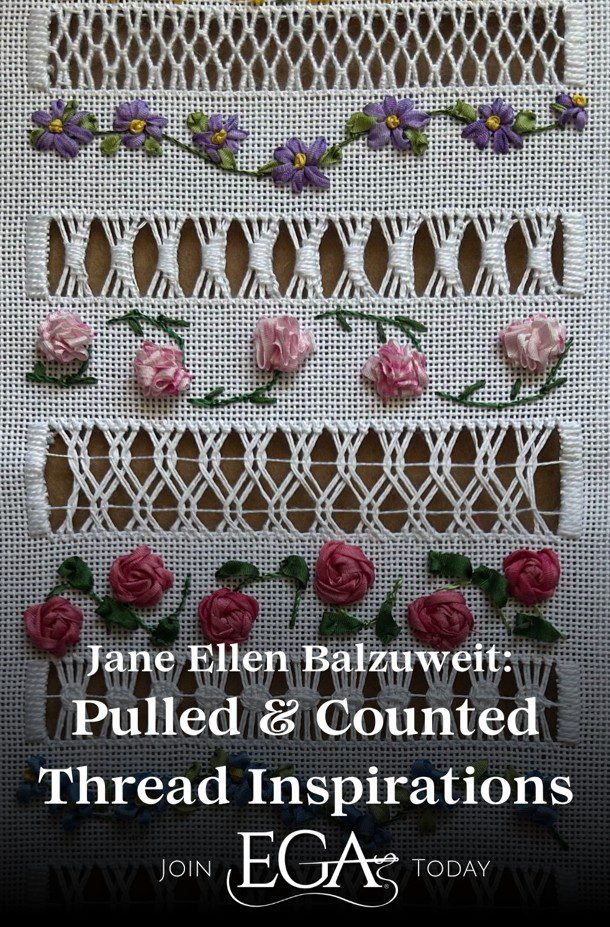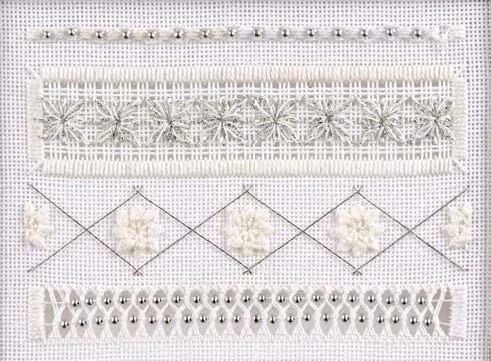
Like many embroiderers, Jane Ellen Balzuweit was raised among needleworkers who encouraged her to pursue the craft. One of the founding members of EGA’s Dayton Chapter, Jane Ellen holds EGA teaching certifications in Pulled Thread and Counted Thread techniques and enjoys designing and teaching courses in stumpwork and raised work, ribbon embroidery, whitework, Hardanger embroidery, and Ukrainian embroidery. Her virtual education course, Winter Flowers Sampler, features a mixture of Old Hedebo embroidery and Russian groundwork, which reflects Jane Ellen’s enduring interest in combining various needlework techniques to create new and arresting designs. We sat down with Jane Ellen to learn more about this new course, her history with EGA, and where she finds inspiration for her designs.
What were your first experiences with needlework and embroidery?
I come from a family where sewing and embroidery was an important part of our lives, on both the maternal and paternal side. I just feel I have always done it, but I’m not sure what age it started. My mother said she knew she was in trouble when I was not quite 2 and was laying on my stomach in the living room tearing bits of the colored funnies and wetting them and placing them on the black and white part of the newspaper.
I was in the second grade when my best friend and I made matching skirts with my mother’s help. Grandma always gave us a printed set of pillowcases every Christmas with new threads to embroider them on New Years Day for good luck. I was 8 when my maternal grandmother taught my sister how to tat with the help of a small learn how booklet (10 cents). We could not see what she was doing as she did it so fast, so we learned from the book and then she helped us to perfect it. Wearing embroidered clothing from our mother and both grandmothers made the technique important at a very early age.
How did you first come to be involved with EGA? You started the Dayton EGA chapter. How did that happen, and what was that process like?
While in college in the late 60s early 70s, I worked in a local fabric shop, teaching stretch and sew, men’s and women’s suits, swimwear and underwear. I made all my clothes (fabric was free if I made a model) and almost everything had embroidery on them. One of my students asked if I knew about EGA, which I did not. For graduation, she gave me a 2-year subscription.
Marge (Marjorie DeArmon) and several of her friends had attended a seminar and came home all excited about starting a chapter. Marge really did most of the work; she had us come to her house for stitch-ins and we talked about starting the chapter. It took a little over a year. A local church let the YWCA meet every Tuesday, so we set up in the main activity room, sat and stitched for several hours, and handed out information. We soon had enough people interested and we formed a chapter in 1975. We just celebrated our 50th last year.
Continue reading to see more of Jane Ellen’s beautiful work and to learn more about Winter Flowers Sampler.
How many styles of embroidery do you work and design in? What is your favorite style of embroidery? Why is it your favorite?
I always say what I’m working on is my favorite. I have also said maybe I haven’t found my favorite yet; however, time is running out.
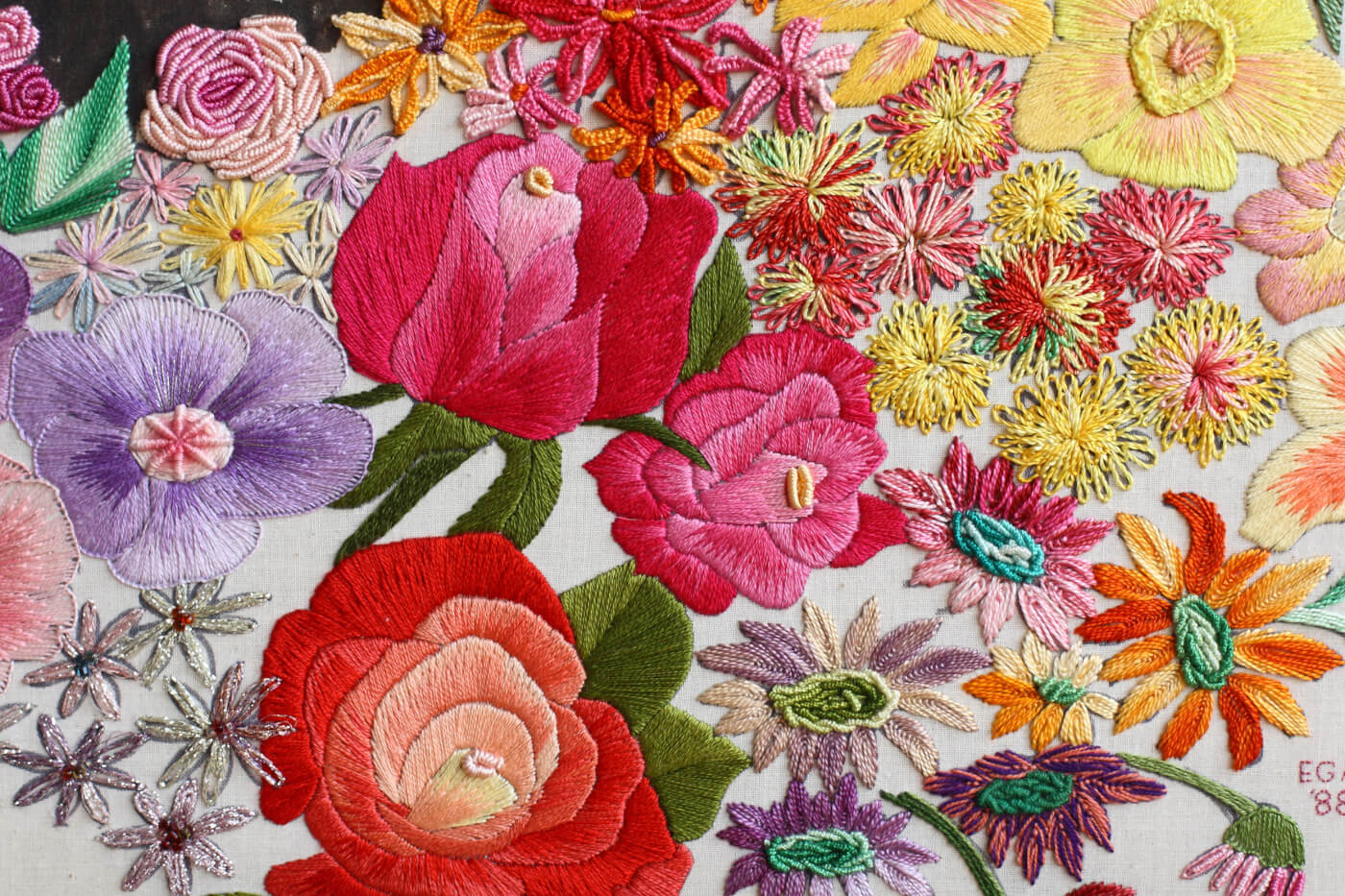
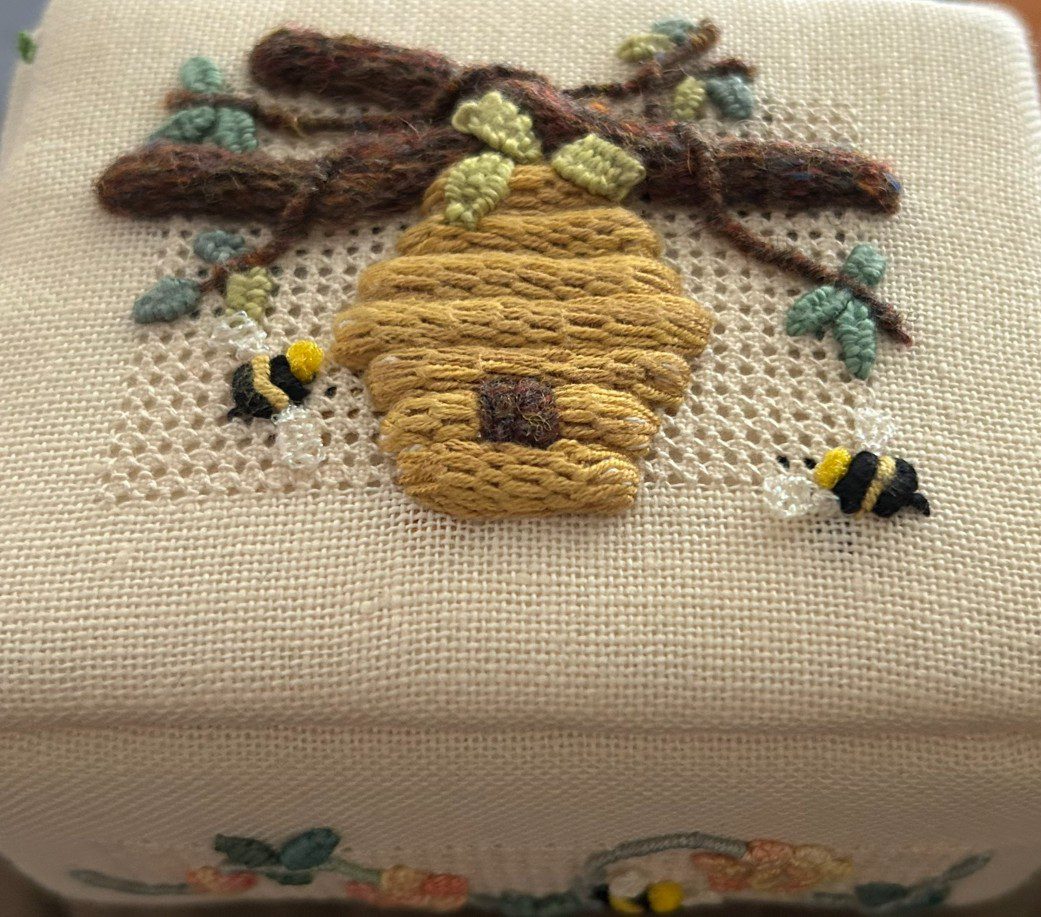
I really like designing stump or raised work, and recently have designed a new ribbon and Brazilian embroidery piece.
I always said I liked whitework because you do not have to worry about colors and shading. However, this is not true. In pulled work, larger and close holes give you the light and airy look, where small holes give a darker look.
I do not have a background in art, I have taken a few classes at the Dayton Art Institute and at EGA seminars and retreats, but drawing a form does not come easy—this is why I do samplers and geometric designs.
Where do you find inspiration for your designs? What does your design process look like?
Sometimes it comes from the title of the seminar. Or like for one of my samplers, “Lone Star State.” A group wanted me to do something related to Texas. So the sampler has a Hardanger Texas shape and of course Bluebonnets in ribbon embroidery.
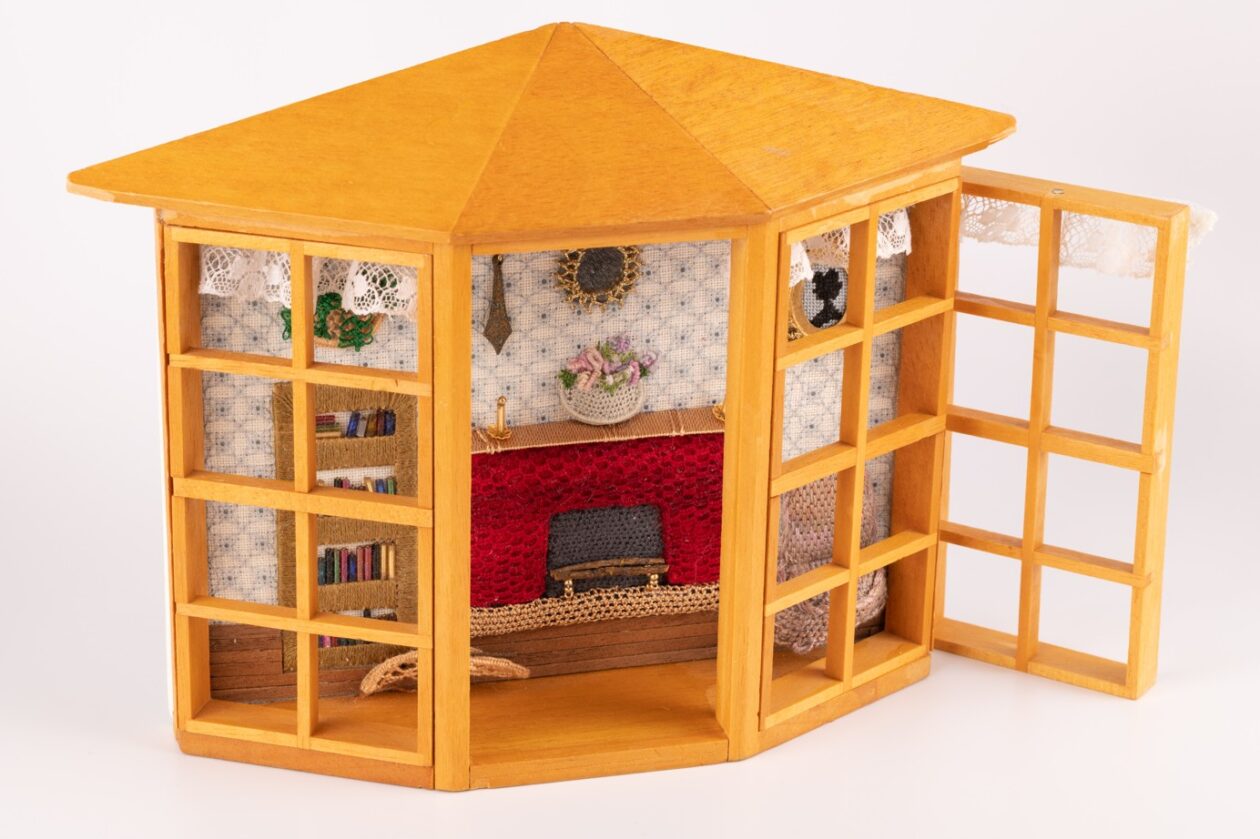
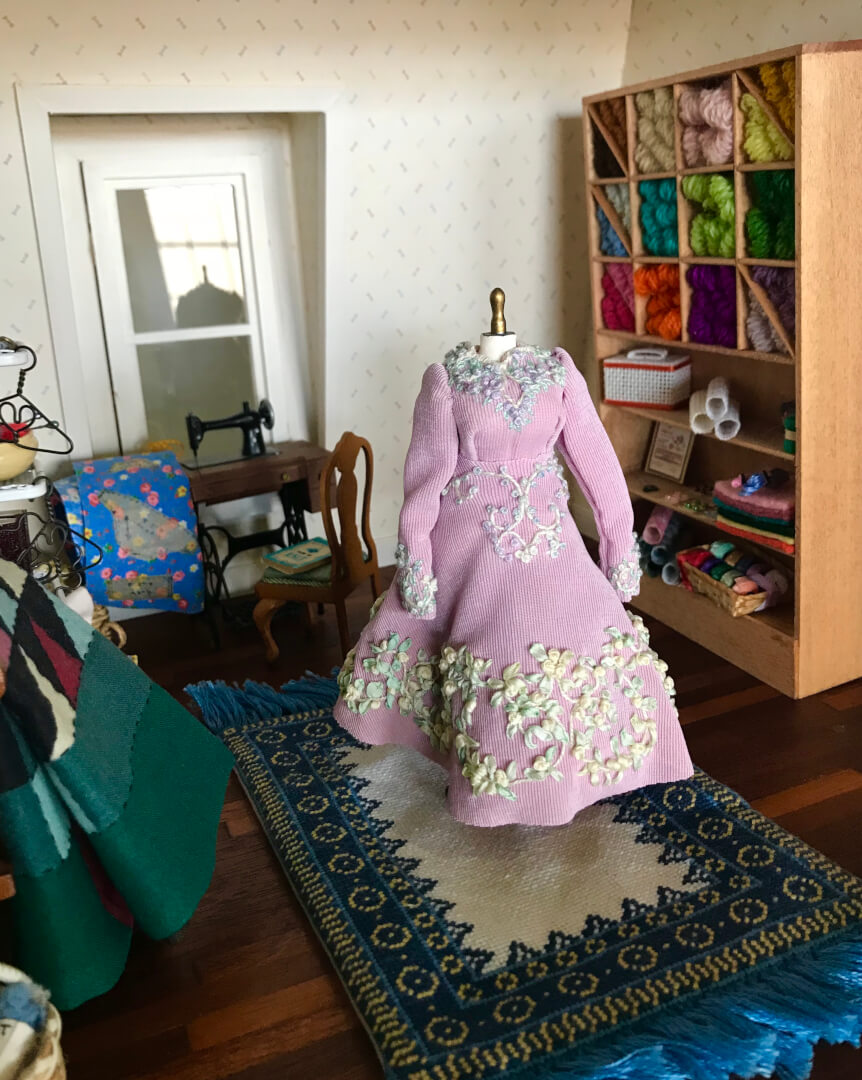
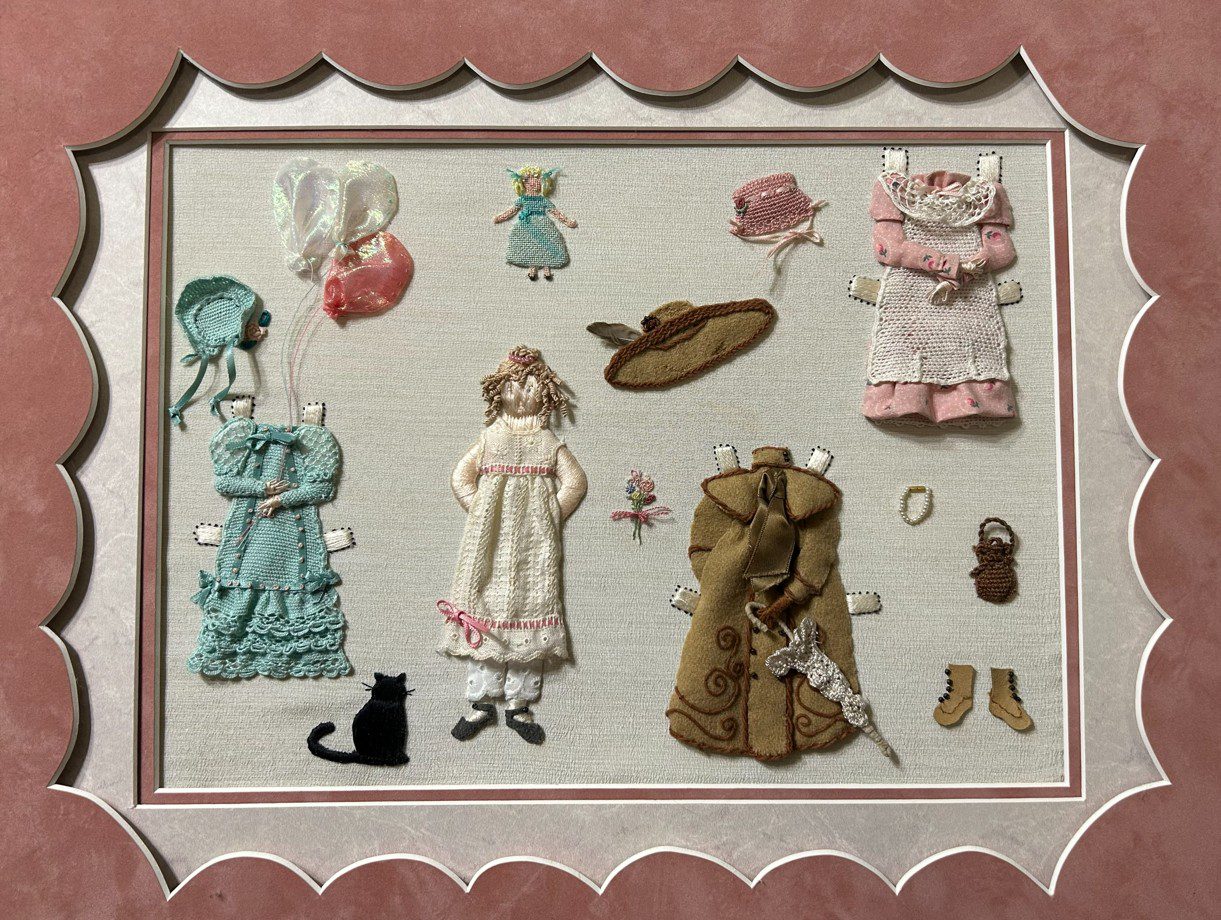
One of my favorites is a stumpwork paperdolls, as I loved paperdolls growing up. Another is A Doll House; I always wanted a big one, as I only had a small one. The process is deciding what is important for me and then working on adding it.
Do you have a favorite design or piece you’ve created? Why is it your favorite?
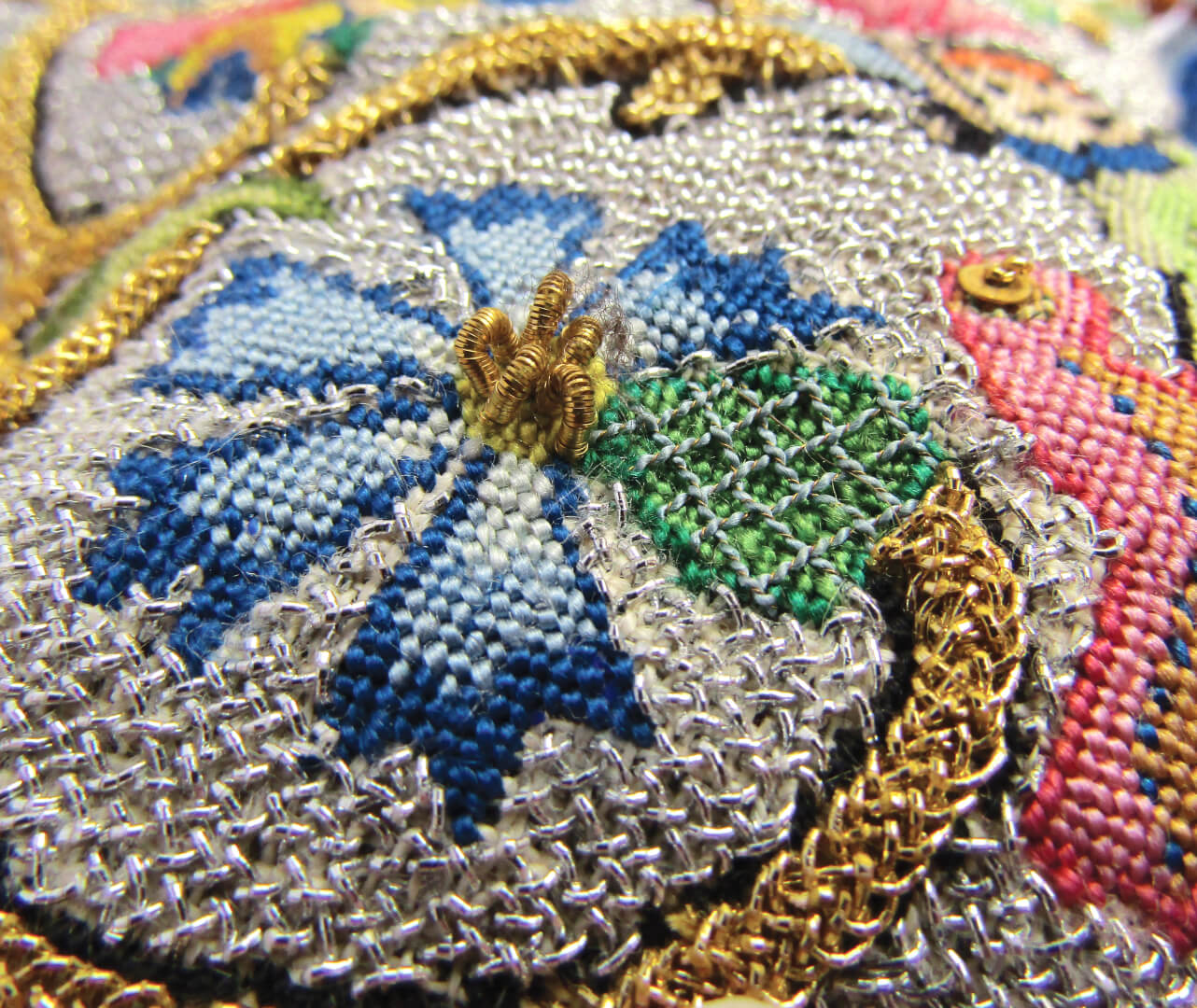
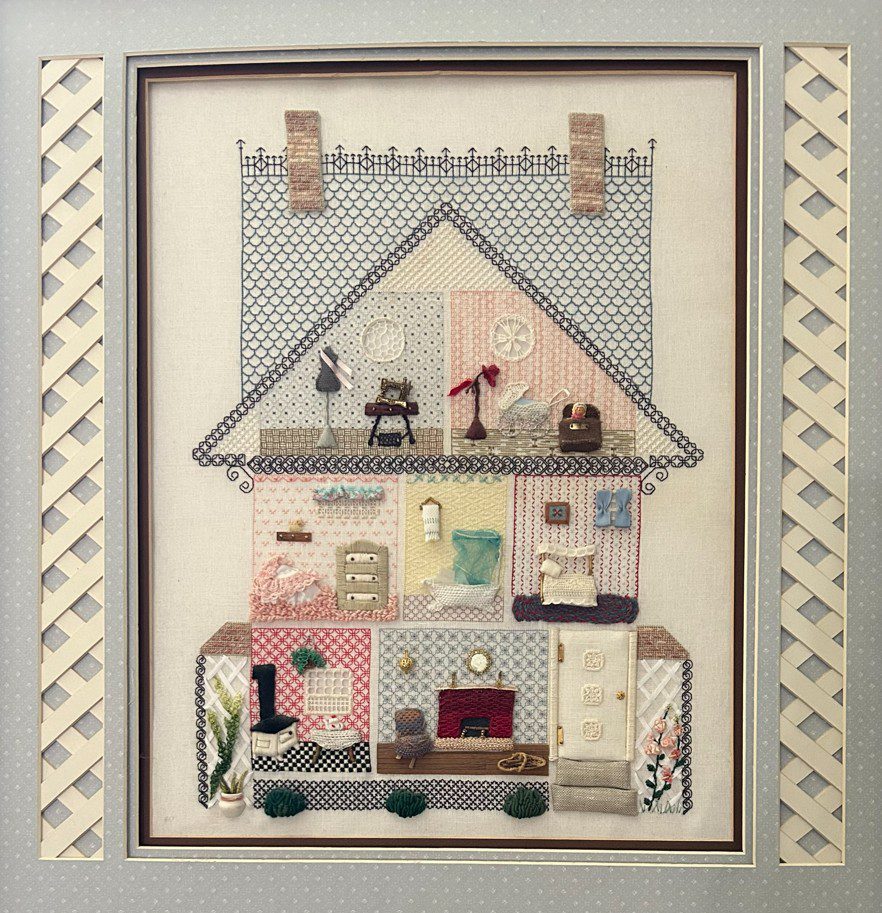
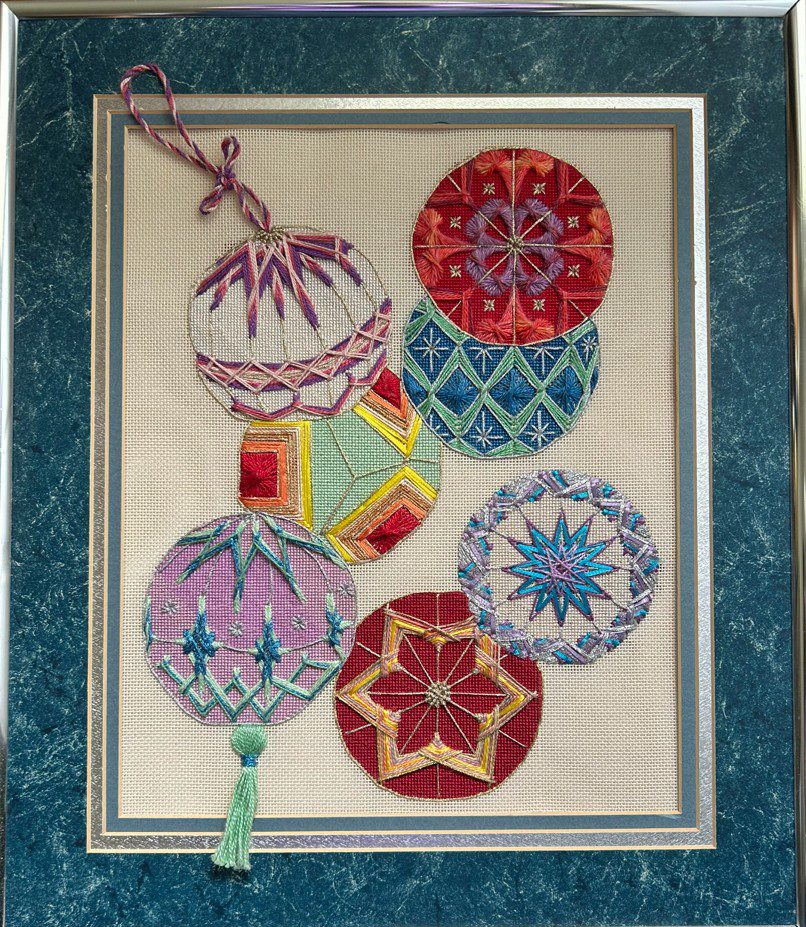
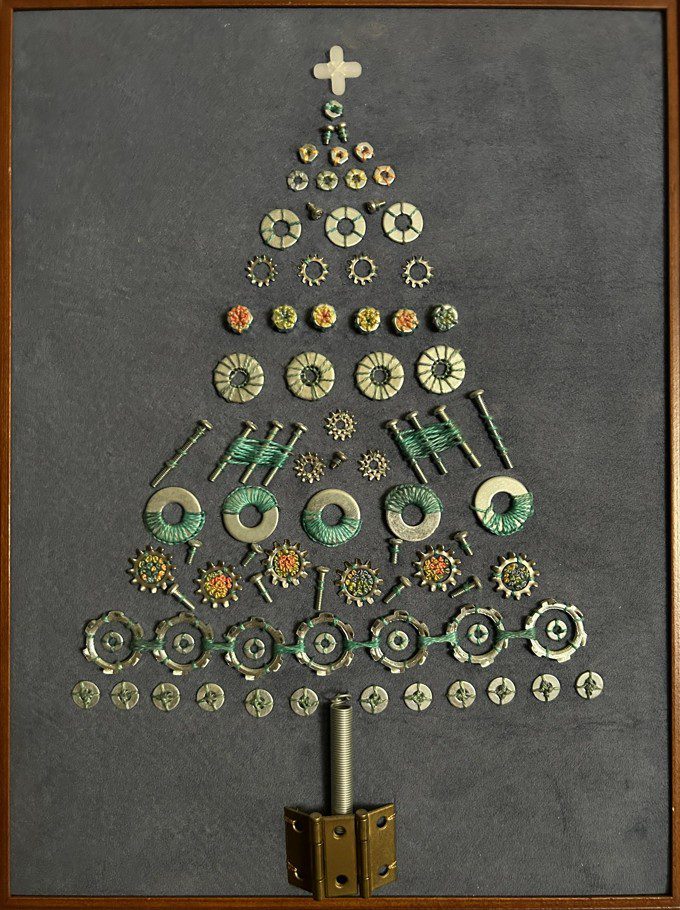
I have several. My Paper Dolls, My Lady’s House, an adaption of a sampler I saw at the Fitzwilliams museum. I tried making large Tamari balls and decided it would be easier in needlepoint, another favorite. Just for fun is my Christmas in Aisle 6. I started working parttime in a hardware store and was fascinated with screws and nuts.
I also have enjoyed designing my drawn thread sampler series, searching for different stitches.
The Winter Flowers Sampler is a new Virtual Education Course through EGA, and A Touch of Fall is available as a GCC Lightning Round until August 31, 2026. What should interested stitchers know about these courses before registering?
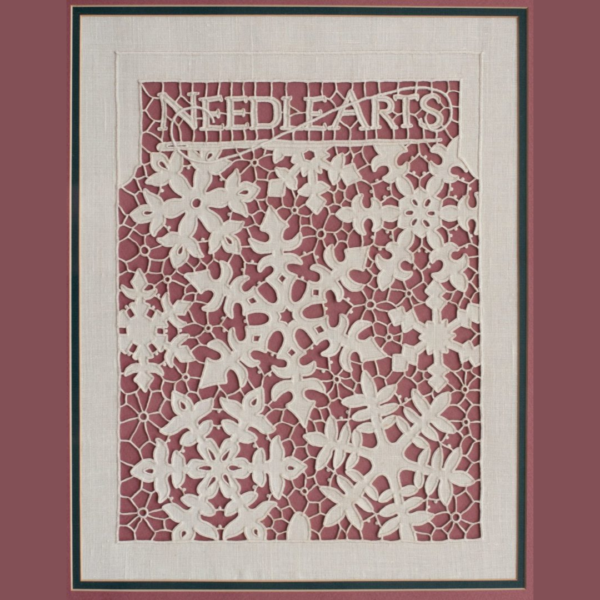
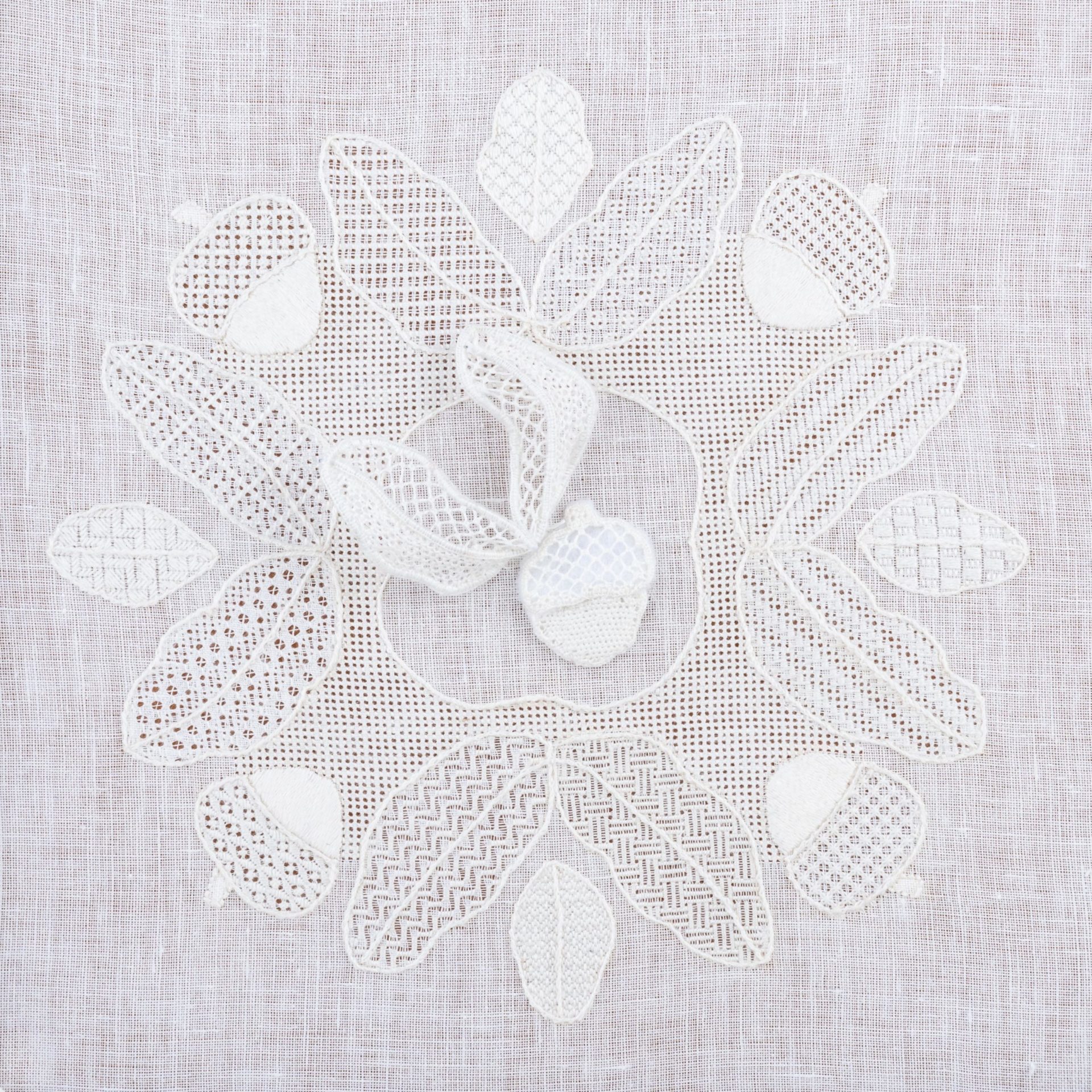
“A Touch of Fall” started out several years ago as a Dresden Lace embroidery, working on a handkerchief linen with a 55 count. This is no longer available in the U.S., but this piece is a great study of pulled thread stitches, the combination stitches, that it was decided to keep it a little longer. I have enlarged the pattern to 32 count linen and the center is an optional pulled thread acorn or needlelace. I have had students leave it for initials and one student put a beaded acorn and leaves. Everyone who takes the course says it is a great pulled thread study with compensation.
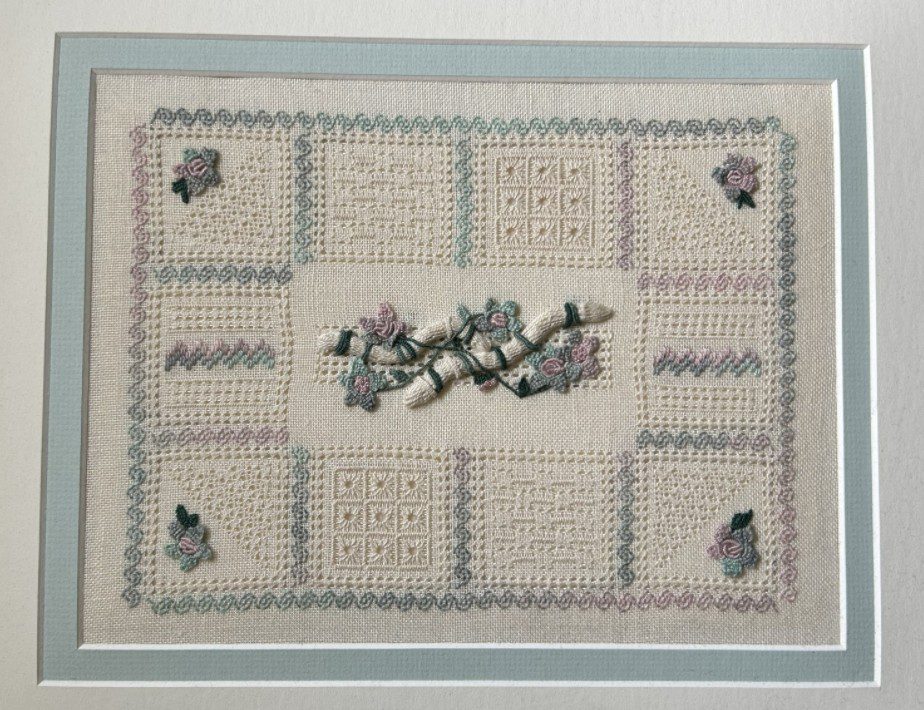
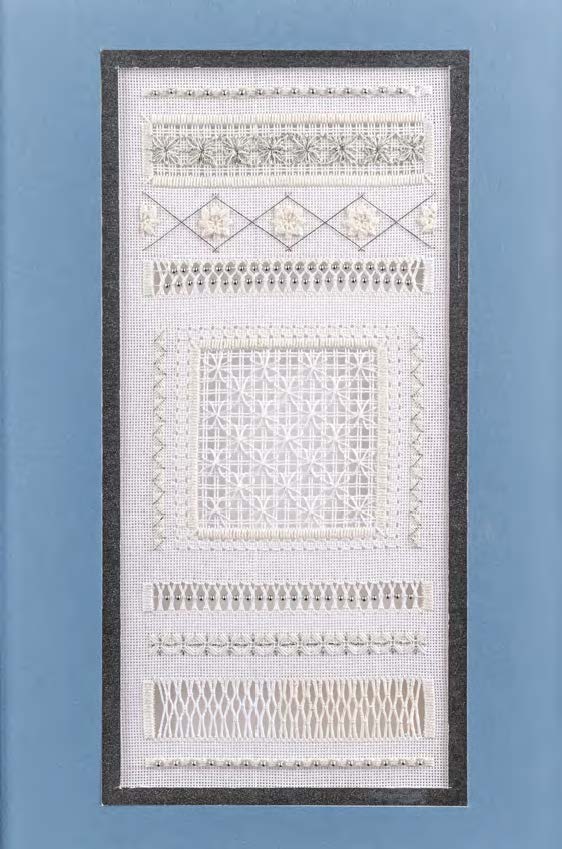
“Winter Flowers” is a great way to get a taste of drawn work. Students will learn a variation on Old Hedebo technique. There are 3 bands of different twisted threads, with two using beads. There is also a band of Russian Ground. This piece has a way of looking difficult; however, it is not that difficult and is a great learning piece.
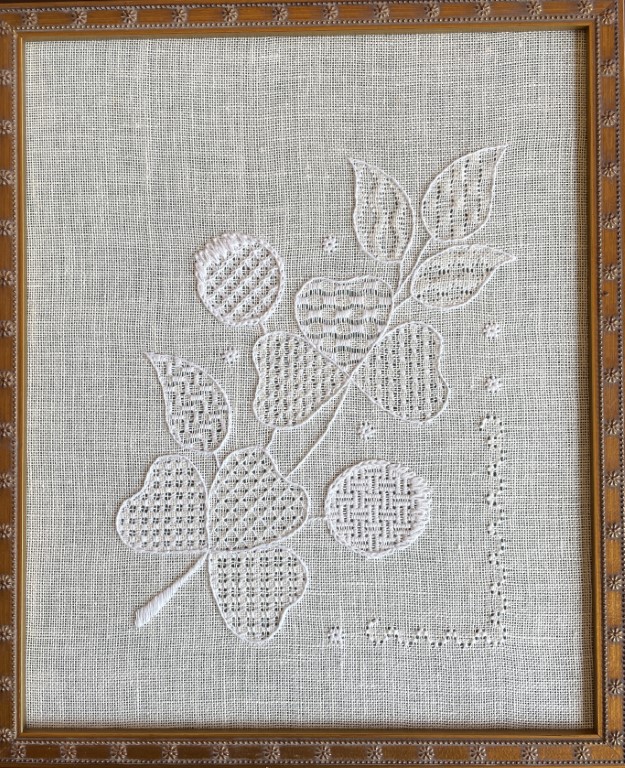
You’re also teaching Pulled Stitches Clover, a Marion Scoular design, until December 2026, when the design will be retired. How did you come to be involved with this popular design course?
As for Marion’s lovely piece, which is very delightful, I am not sure how I came to be involved. We have known each other for quite a few years, but really got to know each other better at the Atlanta EGA seminar a couple of years ago. We have e-mailed each other, shared our favorite teas, and when the Clover was accepted, she sent me a copy. I am not sure if she asked Judy (who was in charge of GCC) to ask me or if it was Judy’s idea. I have loved it and it has been popular. I hope it becomes a Lightning Round before it is retired to give more students an opportunity to take the course. It is interesting: almost all of those sent to be evaluated have added color to it.
What advice do you have for beginning embroiderers interested in learning pulled or counted thread and whitework techniques? Do you have any favorite resources? Any favorite personal practices you pursue to hone your own skills?
Make a doodle cloth. I keep them in different counts and use different threads. Most of the books are older ones, but I am sure the EGA library has them. I read a lot, and it is most important to take classes. It is always interesting how another teacher uses a stitch. I just finished a class in surface embroidery and have a neat idea how to combine what I have learned with pulled thread.
Where can interested stitchers learn more about your work and upcoming projects and courses?
Word of mouth for the most part. However, it was just a couple of weeks ago it was suggested I use Facebook. I have never even opened my Facebook, but had to have one to get access to other Facebook accounts. So now I need someone to give me a lesson on how to post.