More and more embroiderers are exploring visible mending techniques, both to extend the life of beloved items, as well as to showcase their embroidery skills. If you’ve never stitched before, visible mending offers new stitchers an easy introduction to embroidery techniques and entry level tools. Many visible mending projects feature simple surface embroidery stitches like running stitch, and utilize readily available embroidery floss and needles. It’s a very forgiving art form, too: highlighting and embracing imperfections is the whole point! Learn more about visible mending in our Introduction to Visible Mending.
Today, we’re sharing stunning examples of visible mending mastery to inspire stitchers to explore the possibilities of using embroidery to mend their own clothing and items. We hope they help you generate new ideas for embroidery projects, and embrace a more sustainable, eco-friendly mindset!
1. Perfectly Imperfect Plaid
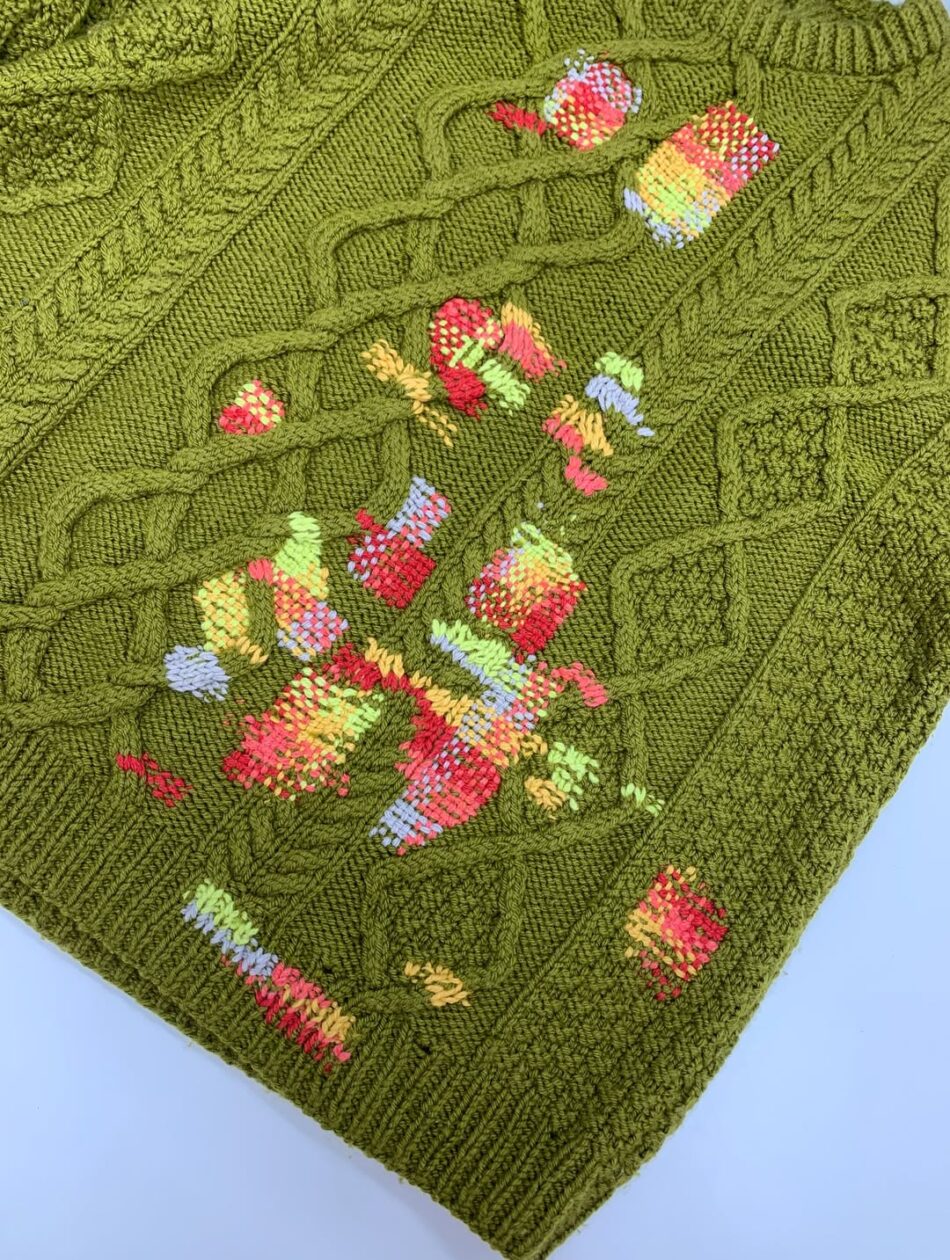
Collingwood Morris is a textile artist who specializes in visible creative mending and posts under the name @visible_creative_mending. She transformed a beautiful, albeit moth-eaten, handknit cabled sweater into the perfectly imperfect plaid sweater you see above. She utilizes contrasting woven plaid designs in much of her work—we love how she sees damaged fabric as an opportunity to draw the eye to something bright and beautiful.
2. Needle Felting Visible Mending

Aleksandra Zdravković, who works under the name Konfekt, uses several different methods of visible mending to extend the life of garments and textiles. But it was this needle felted sleeve that caught our eye! All you need is some wool roving, a felting needle, and a little patience to start filling holes with delightful designs.
3. Patchwork Quilt-Style Visible Mending
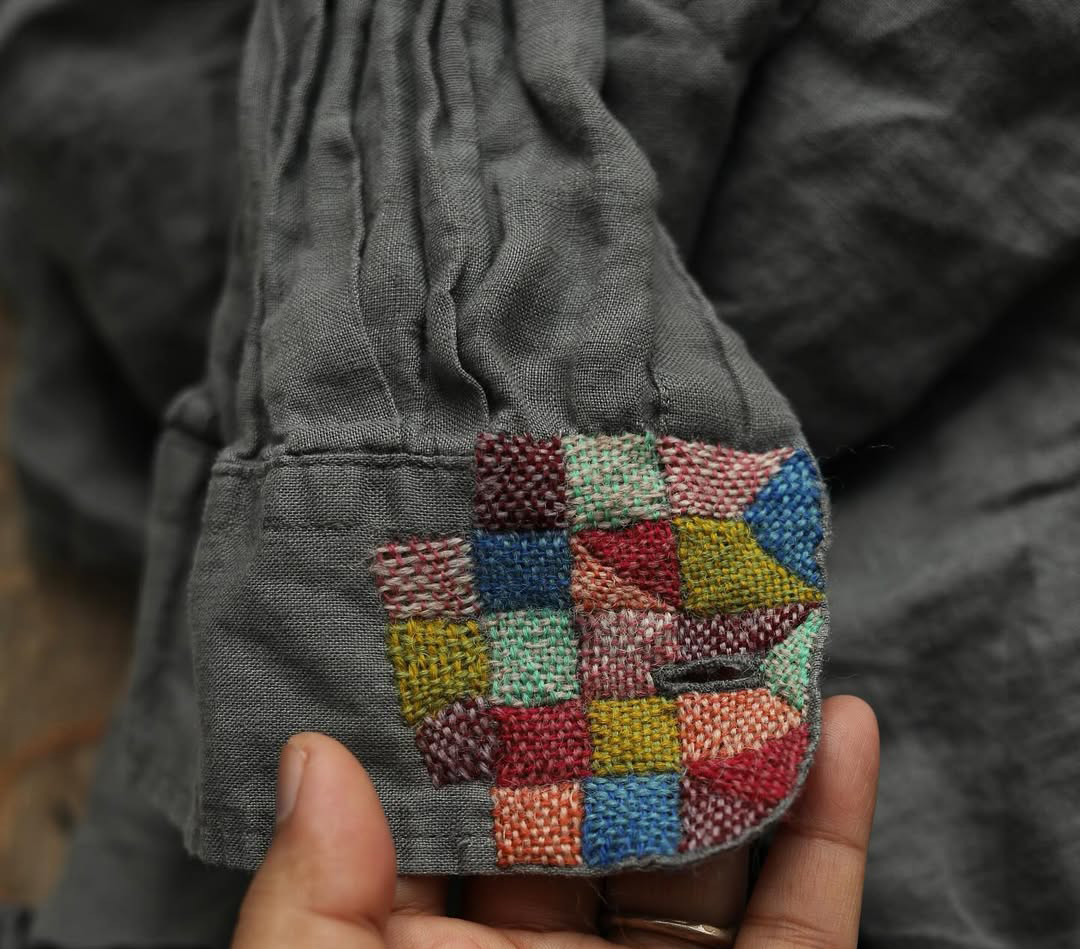
Crafter, teacher, and author Arounna Khounnoraj’s work showcases several different styles of mending. She takes an experimental approach to visible mending to discover beautiful new ways to save garments and textiles. The above mended sleeve, shared to her Instagram profile @bookhou, illustrates a weave mending technique using wool thread, finished in a style reminiscent of a patchwork quilt.
4. Underside Patch Visible Mending
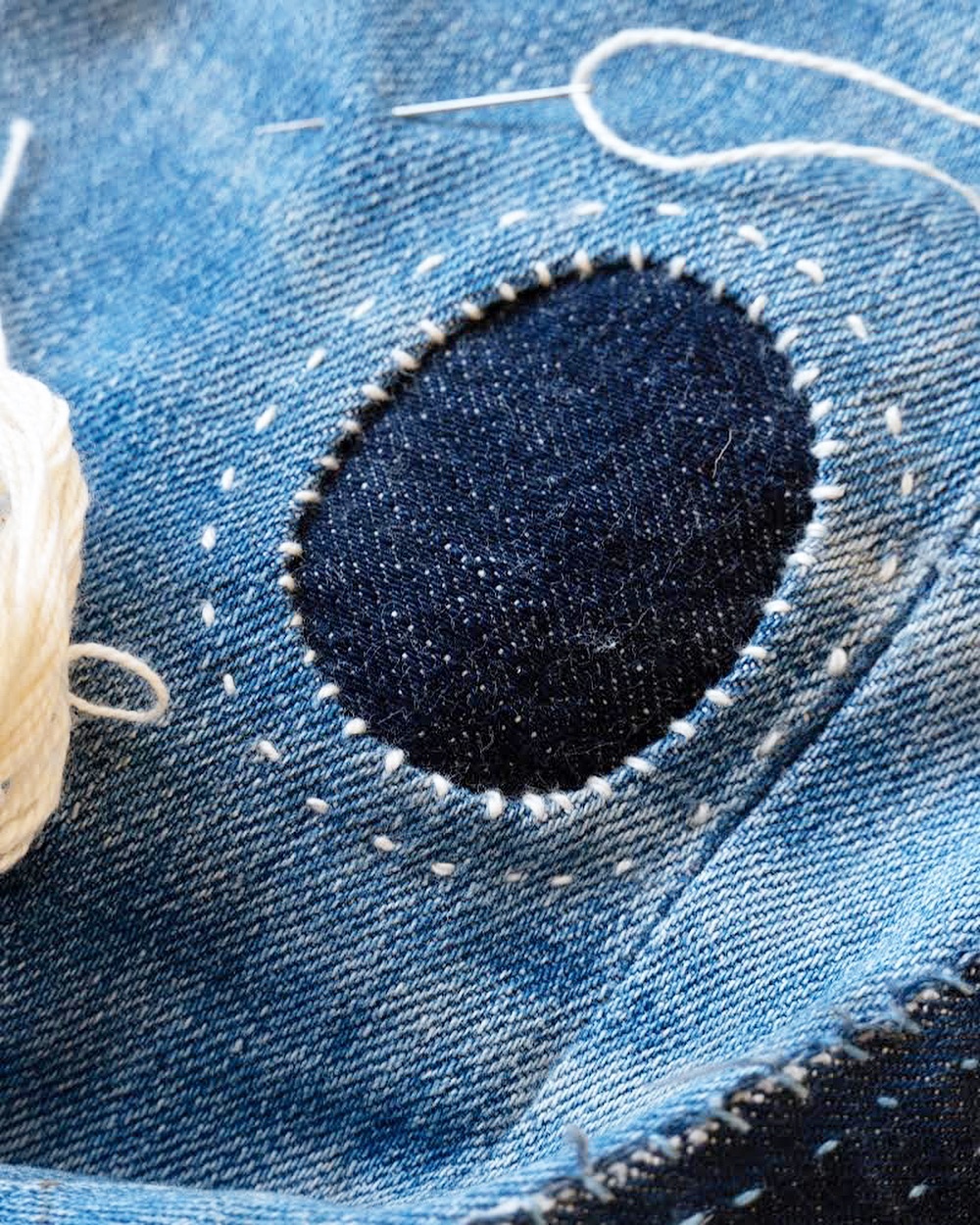
This simple but elegant example of visible mending from Kerstin Nuemuller works well to fix larger areas of damage in a textile. She notes that this is a “quick denim mend… [with a] patch placed on the inside of the jeans and hand stitched in place. If you know what you’re doing it only takes a couple of minutes to get done!”
5. Applique/Patch Visible Mending
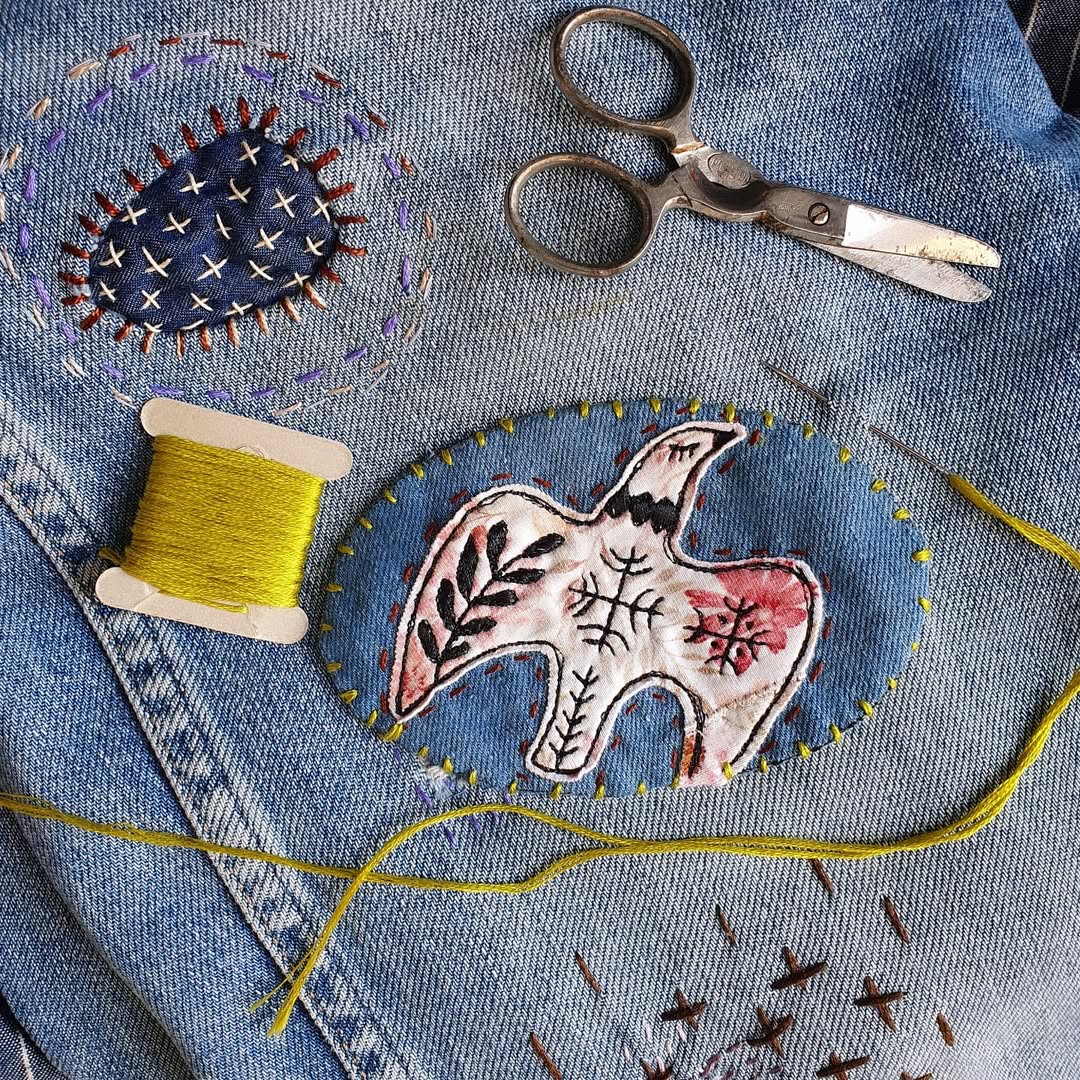
Planteverte is a sustainable textile and embroidery artist who works with thrifted materials to revive old fabrics. A combination of visible mending methods features across their upcycling efforts, as seen above, with topside patches dominating many of their pieces. They use a selection of fabrics for patches and often layer surface embroidery over the patches to create animals, shapes, and other objects.
6. Boro-Style Visible Mending
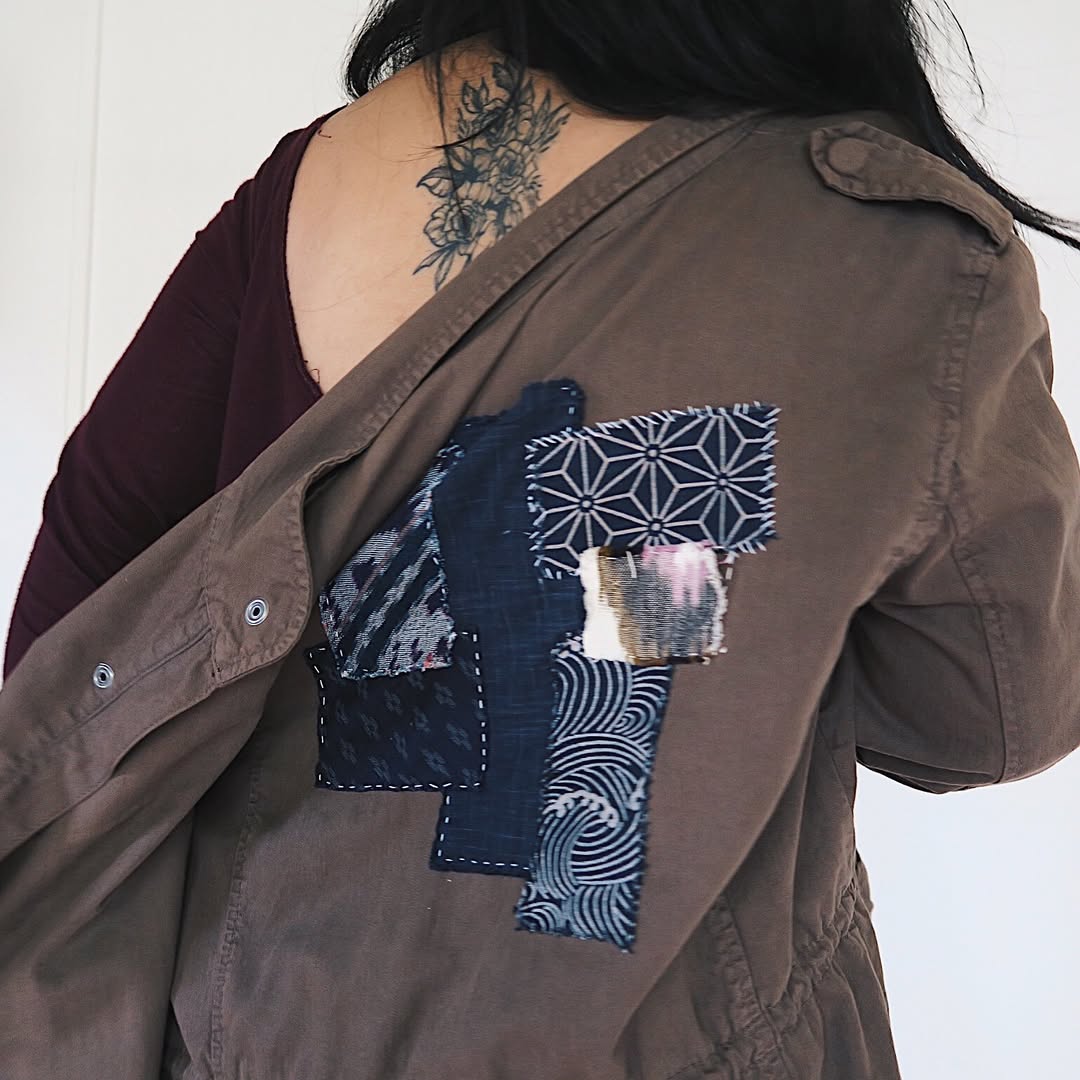
Boro is a Japanese-style of patchwork visible mending where worn textiles and fabric scraps are layered and stitched together to create a reinforced fabric. Boro and Sashiko are often paired together in visible mending projects, but are two distinct styles. The above patchwork mend from Jessica Necor Studio demonstrates the boro method well, with simple stitchwork framing layers of patterned fabrics.
7. Sashiko-Style Visible Mending
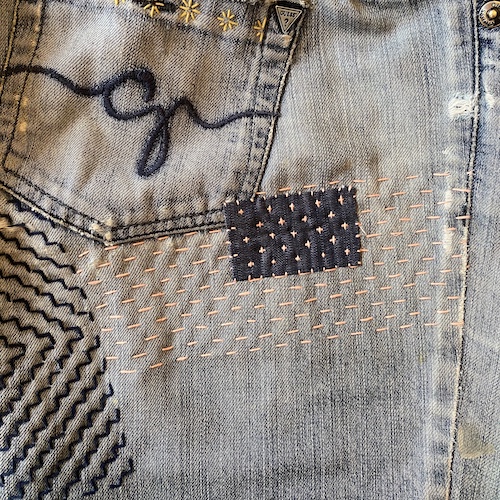
Sashiko is a Japanese style of visible mending that began as a decorative means of reinforcing worn textiles; it has since evolved into a technique used for embellishing clothing. Today, many embroiderers stitch sashiko for purely decorative purposes, but it remains an effective method for reinforcing worn textiles. The Crafty Mummy’s denim jeans (above) illustrate how multiple Sashiko stitches and patches can revive an old pair of pants. Learn more about the history of Sashiko in Embroidery Techniques from Around the World: Sashiko.
8. Frame the Wear & Tear
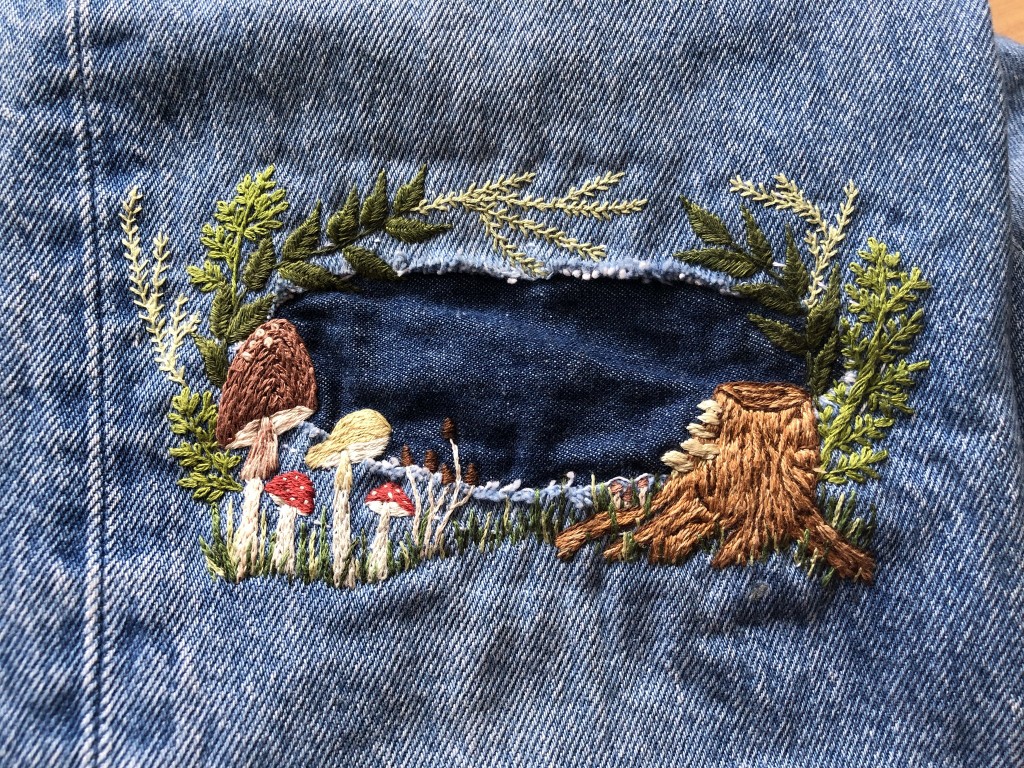
Melissa Galbraith of MCreativeJ teaches workshops on embroidered patch mends that frame the wear and tear with surface embroidery. We love that this visible mending style uses holes as an opportunity to stitch intentional frames that showcase the wear and make you feel as if you’re peering into another world. Check out Melissa’s EGA project tutorials for Stumpwork Gingko Leaf Earrings and Textural Terrarium Embroidery.
9. Classic Embroidered Visible Mending
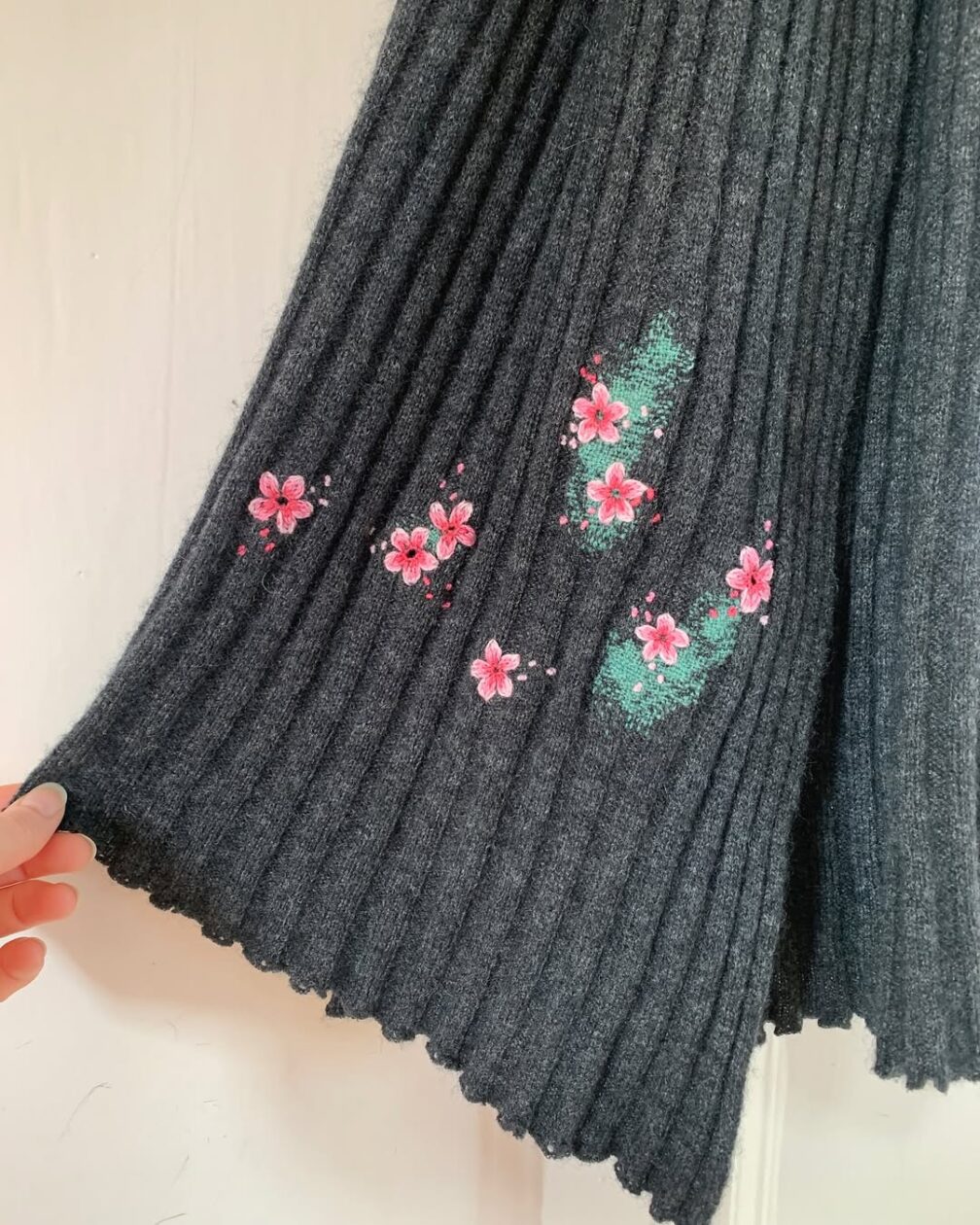
Simply using surface embroidery is an easy and accessible way for embroiderers to start experimenting with visible mending. This method works especially well on knit textiles, where a base layer of darning creates a stable canvas for surface embroidery stitches, as shown on the piece from @visible_creative_mending (above).
10. Visible Mending Sampler
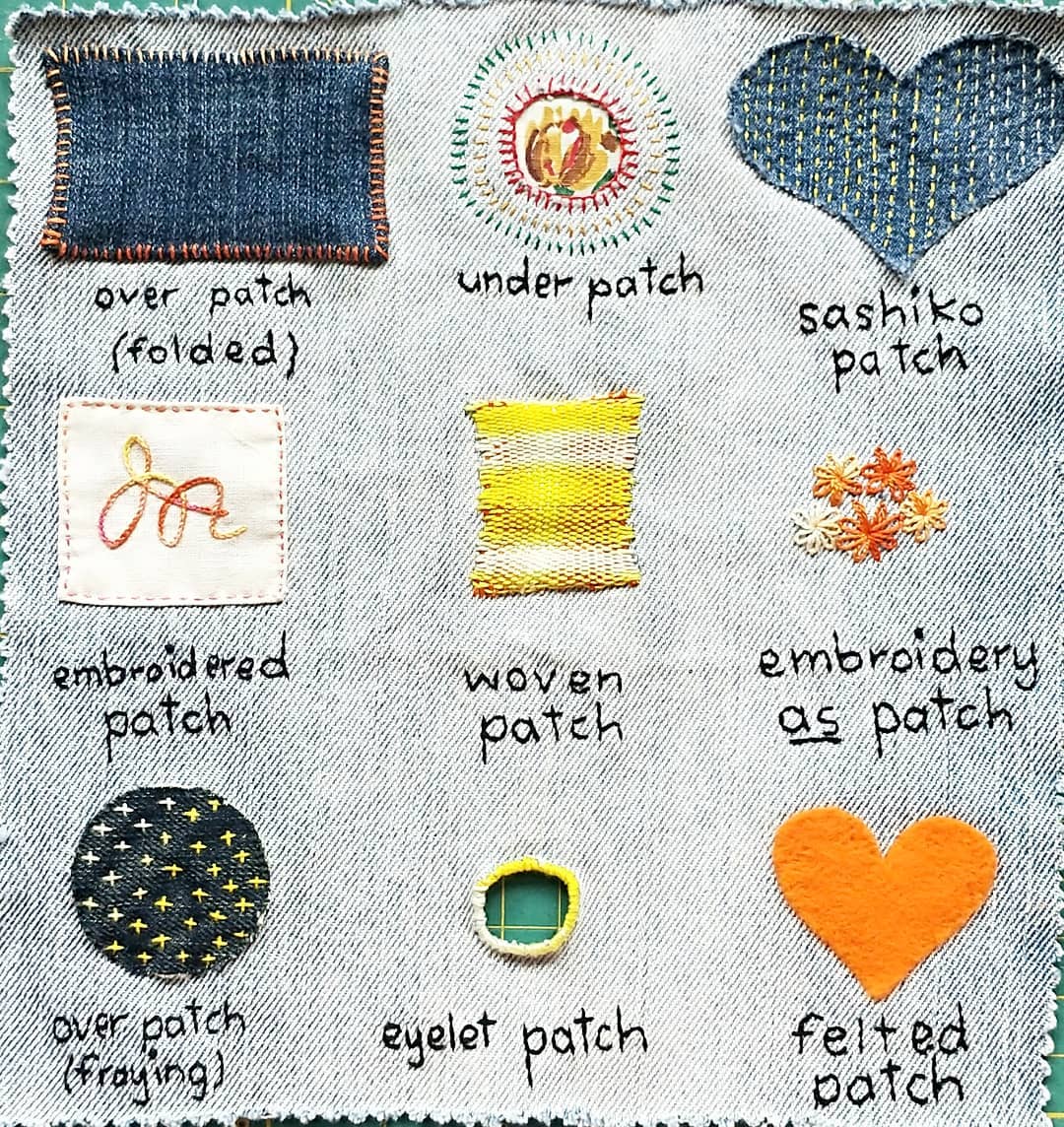
Our final bit of inspiration is just that—pure inspiration. Less a project, and more a selection of ideas to support your imagination as you think of different ways you might want to engage with visible mending. Candy Barnes’ (@heartfulstitches) mending sampler showcases all the different possibilities to explore with visible mending.
From felted or woven patches, to under patches and sashiko patches, to embroidery itself as the patch, there are so many ways to start visibly mending your clothing! We hope these ideas have sparked your interest and expanded your imagination to explore the multitude of visible mending possibilities!