Technique: Lagartera Embroidery
Place of Origin: Lagartera, Spain
Earliest known date: approximately 16th century
History: Lagartera embroidery can trace its origins to Coptic embroidery motifs that arose out of Egypt in the years 313-641. The later migration of Mozarabs to Largartera, Spain, brought Coptic embroideries to the region, where it evolved over eight centuries to become Largartera embroidery. It is hard to pinpoint an exact date for Lagartera embroidery for this reason.
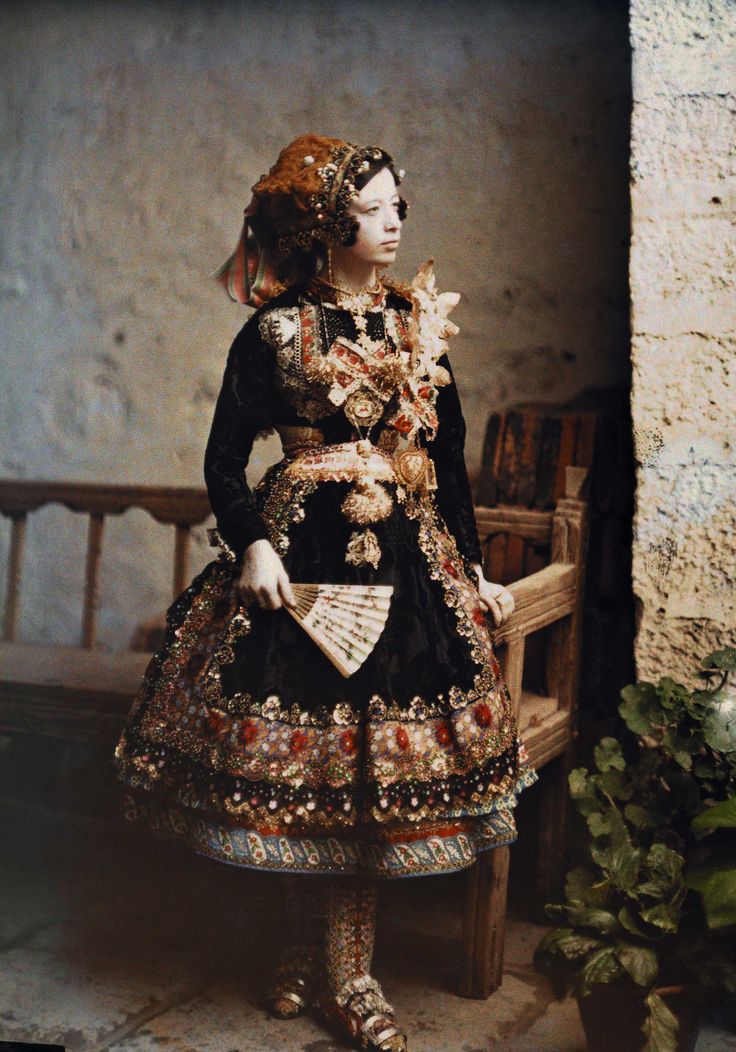
The pueblo of Lagartera is world renowned for its embroidery. Lagartera embroidery and the related labrado craft hold special pride of place in the region. In 2023, Lagartera embroidery and labrado earned the Bien de Interés Cultural, which literally translates to “a good of cultural interest” and bestows a legal designation for recognition and protection for works of Spanish historical heritage.
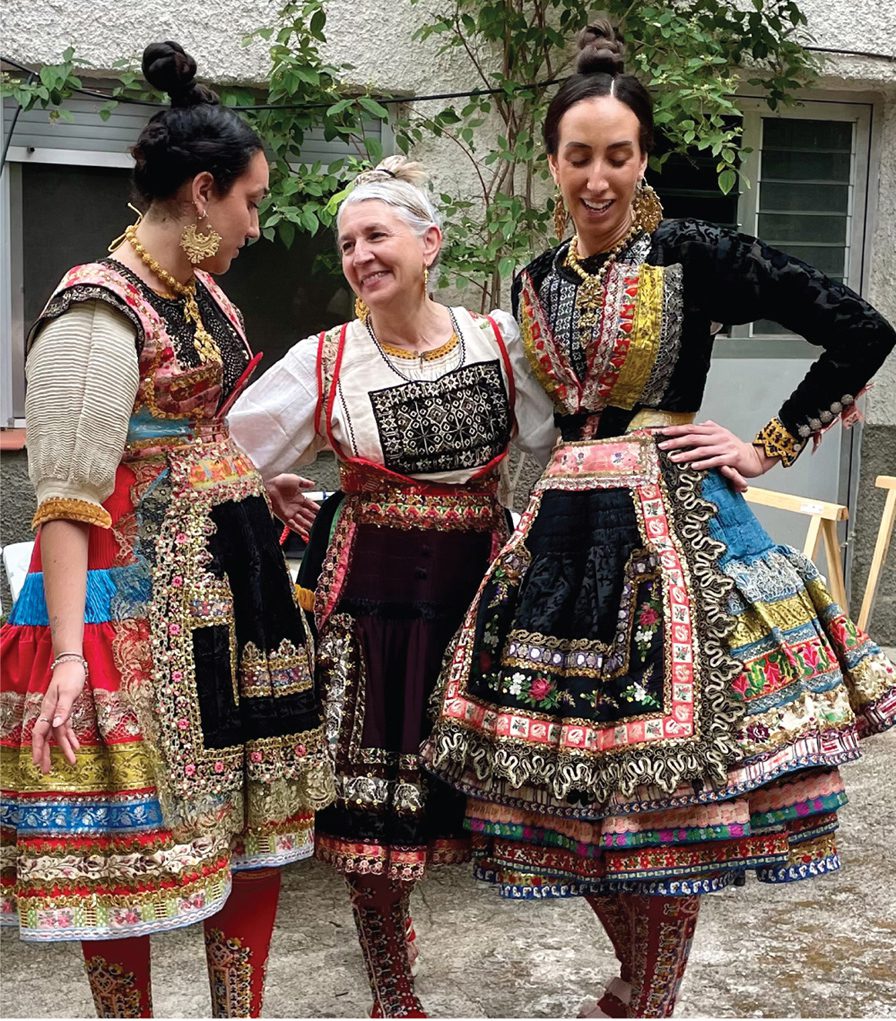
Lagartera embroidery and labrado were traditionally used for home furnishings and clothing. These pieces have been showcased every year in Lagartera since 1590 during the Corpus Christi Festival, when altars are placed throughout the village, doors and homes are dressed with embroidered fabrics, and village members don traditional costumes that have been handed down from generation to generation.
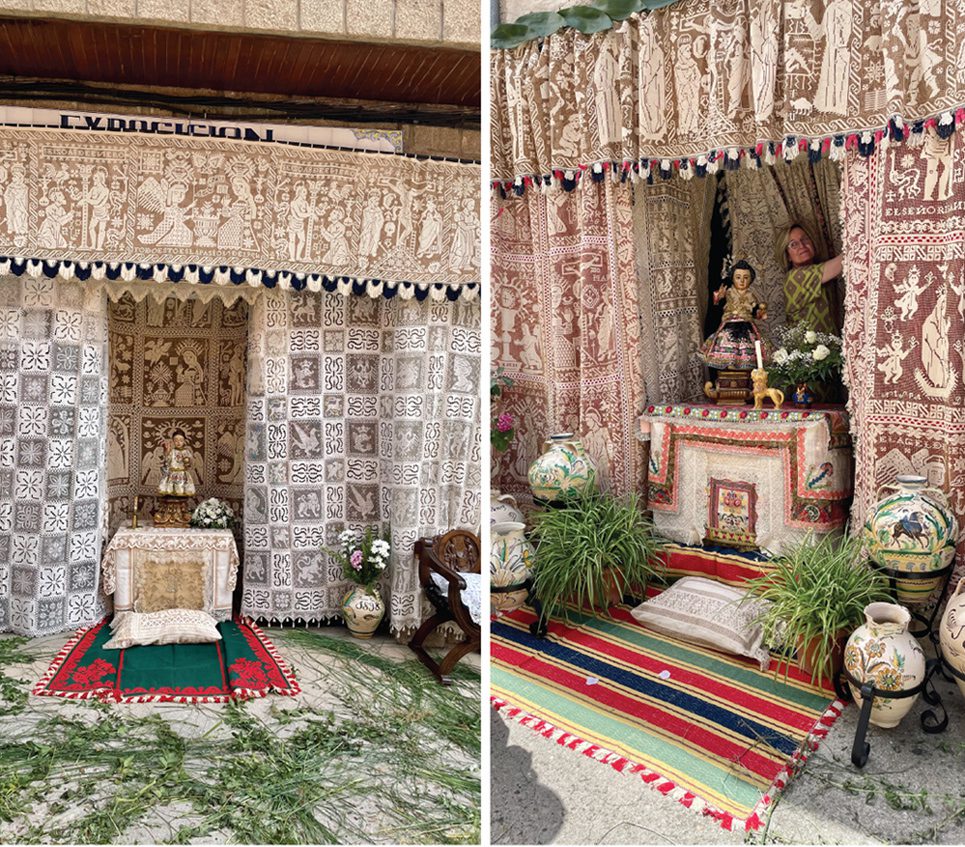
Lagartera and labrado techniques are also passed down through families; embroidery was one of the primary ways the people of Lagartera earned money in the 1900s, and it continues to bring tourists and travelers to view the beauty of the craft during the annual Corpus Christi Festival in June.
Materials, Techniques, and Stitches: Lagartera embroidery is a counted thread technique. It is usually worked on handwoven, evenweave linen in satin stitch, with motifs outlined in running stitch or double running stitch. Wool and silk threads are common.
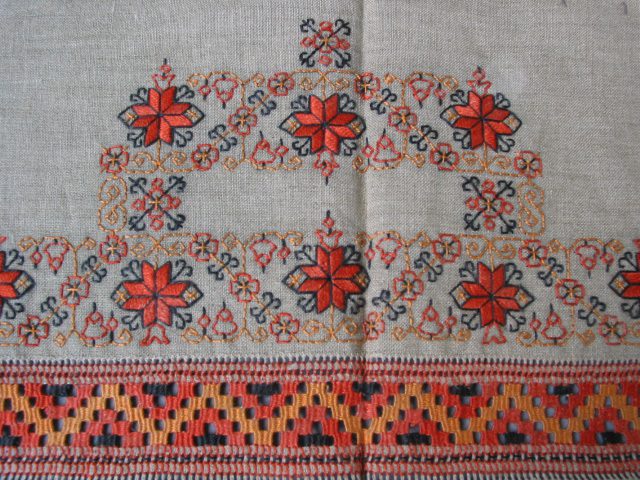
Labrado is a more advanced method involving pulled and drawn thread techniques, counted stitch work, smocking, pleating, rolled hems, and layered fabrics, ribbons, and trimmings. Embroiderers who engage in labrado are called labranderas. Motifs are sometimes religious in nature, or more often geometric, reflective of Lagartera’s Coptic history.
EGA members can learn more about Lagartera embroidery by borrowing books like Lagartera Embroidery and Stitches from Spain (Milner Craft Series) from the EGA Lending Library and by following the Asociación Amigas del Traje de Lagartera, which offers workshops to preserve the legacy of this historic craft.
Sources:
Textile Research Centre (n.d.). Lagartera embroidery. TRC Leiden. https://trc-leiden.nl/trc-needles/regional-traditions/europe-and-north-america/embroideries/lagartera-embrodiery
Tansey, C. (2026, June 17). For One Day a Year, Spain’s Most Celebrated Sewn Craft is On Display. Conde Nast Traveler. https://www.cntraveler.com/story/for-one-day-a-year-spains-most-celebrated-sewn-craft-is-on-display
(2018, January 29). The Embroideries of Lagartera. Directorio Deco by Gloria Gonzalez. https://www.directoriodeco.com/the-embroideries-of-lagartera/
Lever, A. (2021, November 1). A short history of Lagarteran embroideries. Temas Lagarteranos. https://www.temaslagarteranos.es/eng/handicrafts/a-short-history-of-lagarteran-embroideries/
Gibson, L. (2025, June 25). Lagartera, a town full of embroidery and Spanish heritage. Oliver + S. https://oliverands.com/community/blog/2025/06/lagartera.html