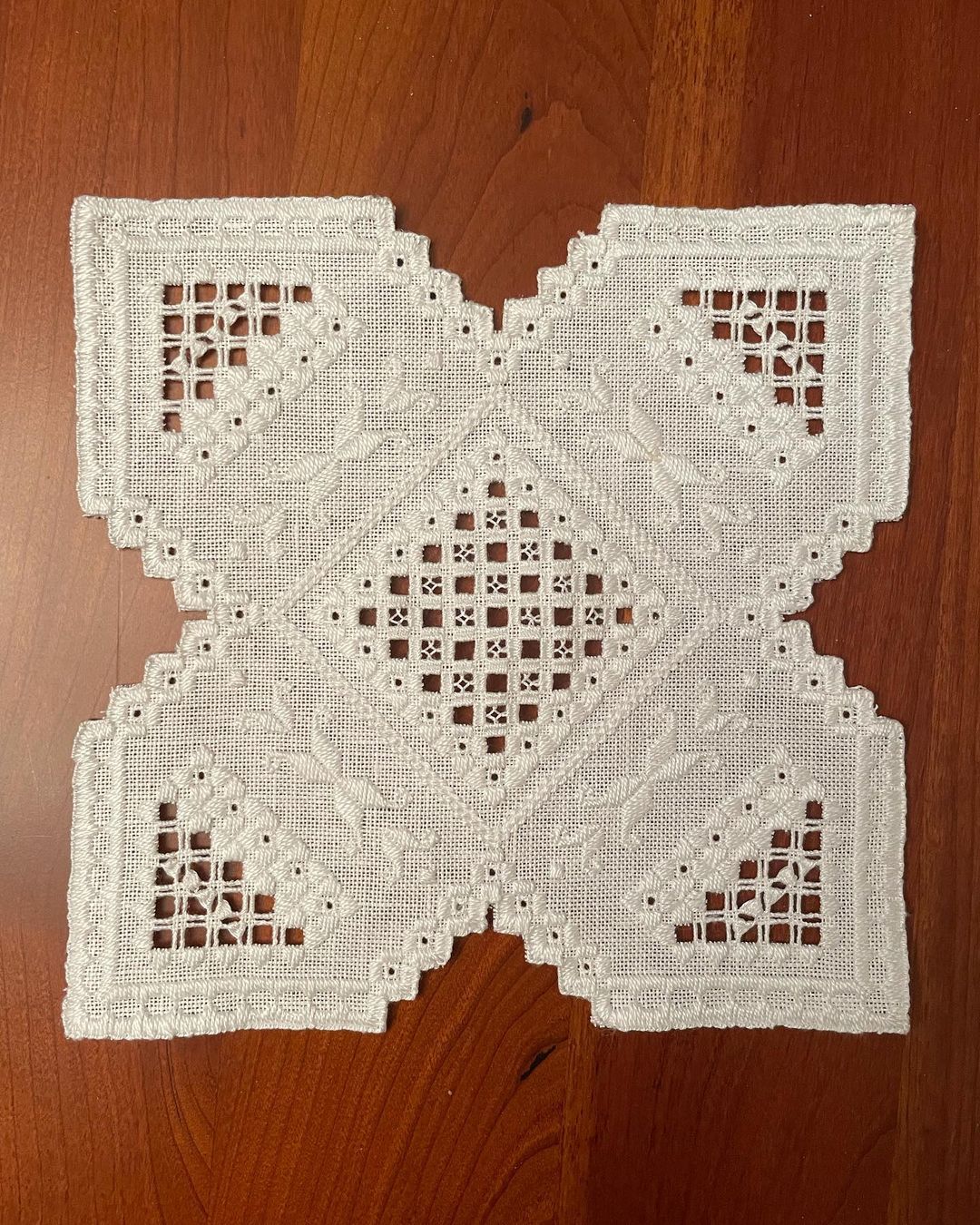
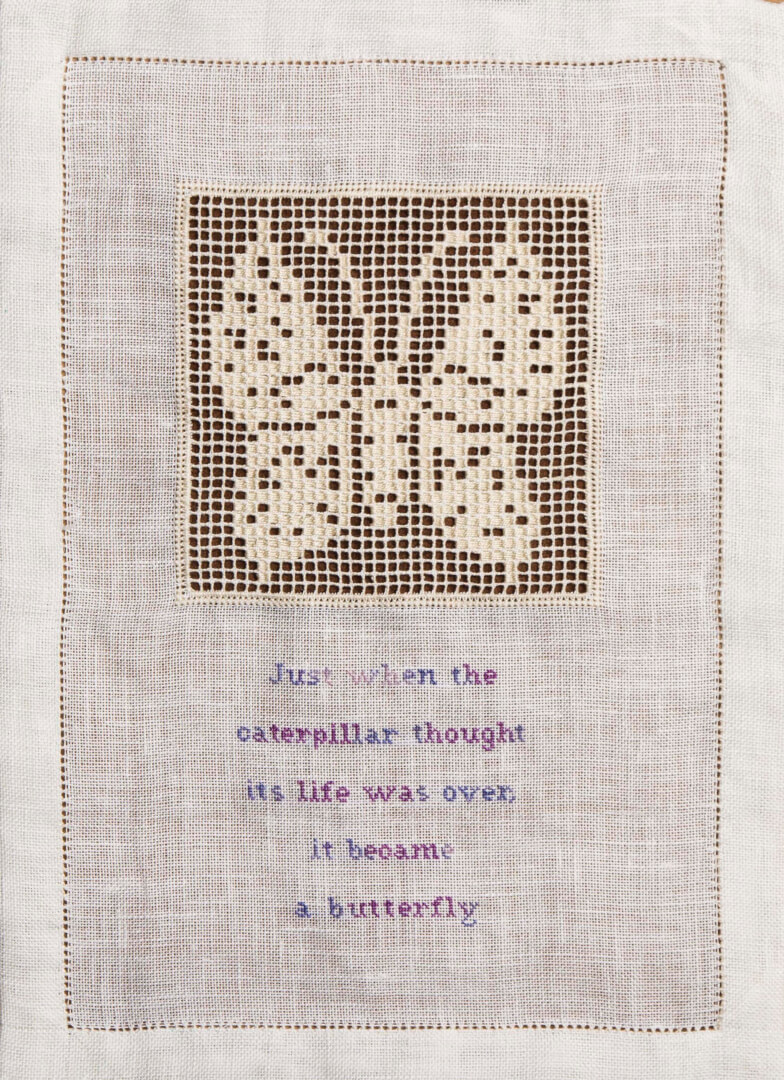
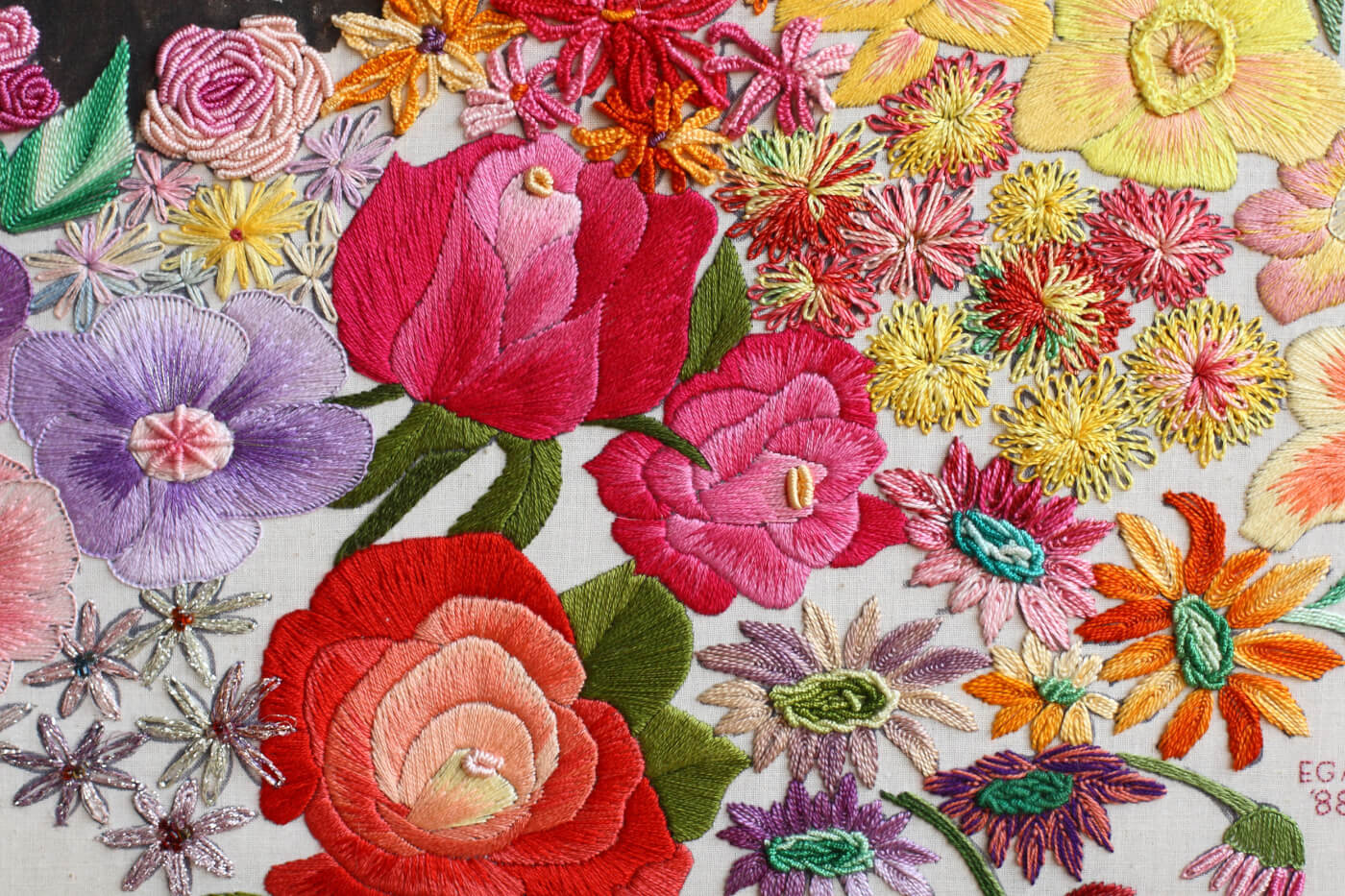
Karen Schueler has served as Fiber Forum President since 2022, but her relationship with Fiber Forum began as an embroidery artist and EGA member. She joined Fiber Forum around 2000, has several juried works in Fiber Forum’s annual galleries, and has served as editor of the Fiber Forum newsletter, as a Jurying Receiver, and as an attendee at multiple Fiber Forum Retreats. Karen continues to expand her horizons through EGA’s courses as well as being an active participant in needlework guilds, proving that the best leaders in our community are also lifelong learners.
What were your first experiences with embroidery?
My embroidery education began in Oxford, England, when my husband had a year’s sabbatical leave from the University of New Mexico in 1977. While he was attending philosophy seminars and writing a book, I enrolled in an embroidery course which turned out to be a City and Guilds of London Institute certification program. Each week, we learned a new stitch which was worked traditionally first and then with unusual threads or applications using our own designs or adaptations from magazine illustrations. I had a painting degree, but embroidery quickly became the medium I wanted to use for my art.
I absorbed everything I could find about embroidery that year. I joined the local branch of the British Embroiderers’ Guild, taking day classes and going on visits to the Victoria and Albert Museum. The Oxford public library had an extensive collection of embroidery books that I read from cover to cover and I took advantage of Blackwell’s frequent sales of Batsford embroidery books. There were embroidery exhibits at every County museum, and displays at craft fairs or in studio tours by City and Guilds graduates showing original work. My final piece and most ambitious embroidery for the course, ‘Contrast in Textures,’ was in the year-end show. However, as I had no plans to be an embroidery teacher, I did not go on to complete a certificate in City and Guilds. The other students faced several more years of study plus exams and assessments before getting certified.
Previously, any exposure to embroidery was mainly from the craft articles I saved from the women’s magazines while in high school. My first job after I received my art degree at UC Berkeley was designing and sewing fancy men’s shirts for a boutique. I started appliqueing ‘story’ pillows with the shirt scraps and making patchwork quilts that I sold at local crafts shows. The small green DMC Encyclopedia of Needlework was my first embroidery book.
From Berkeley we moved to Albuquerque in 1971. New Mexico was a great place for fine art and fine crafts with its many galleries and art museums. I tried to see as many exhibits as I could while working full time and sewing quilts and pillows when I had spare time. On a tour to northern France, I was able to visit the Bayeux Tapestry.
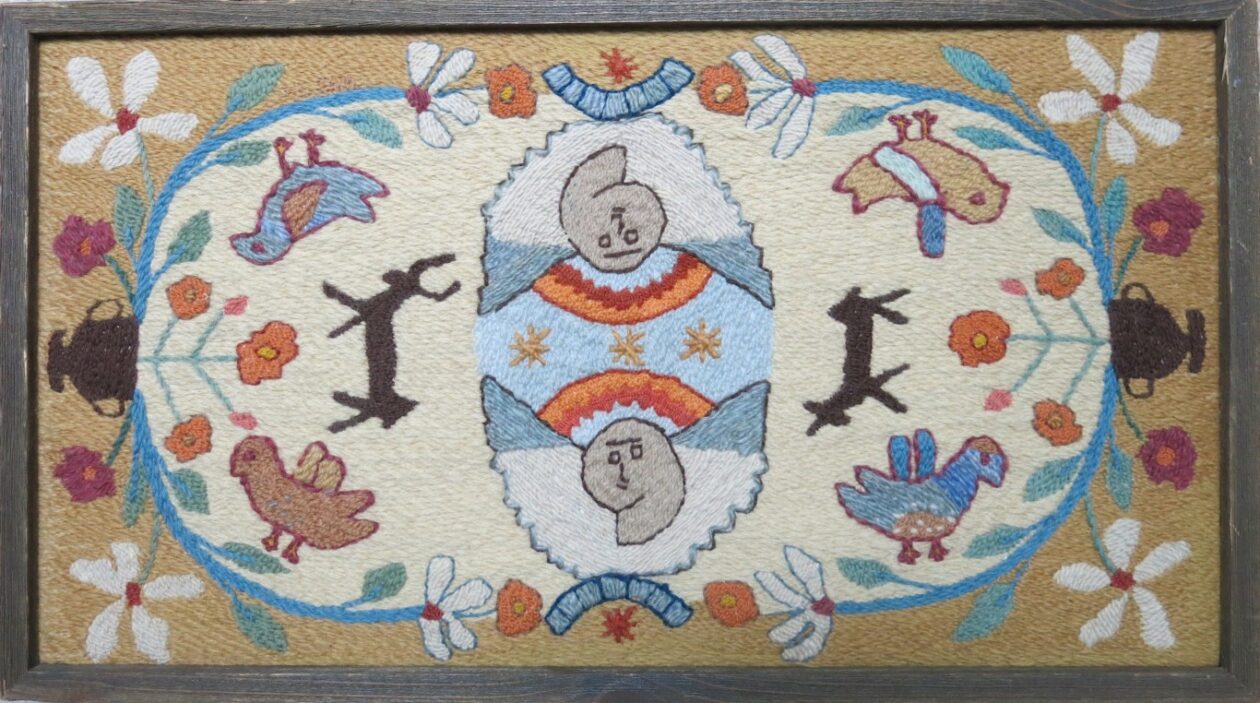
I did not join the Sandia Mountains Chapter in Albuquerque until 1982, when I was able to find a baby sitter. A major show of work by the Chapter members convinced me that this group was where I could learn more about embroidery and make new friends. I fell in love with Colcha Embroidery, the Spanish Colonial stitching done with hand spun wool, and helped the Chapter assemble the Colcha Embroidery Study Box and the Colcha Embroidery Handbook.
We returned to Oxford two more times, this time with two young sons, and I rejoined the Embroiderers’ Guild. In 1985, I was able to attend a design workshop with Constance Howard at Gawthorpe Hall near Manchester. During our third stay in 1991-92, I attended a class with Julia Caprara and enrolled in a course on Silk Painting. Returning to painting opened up the unlimited possibilities of combining paint with my embroidery. I started searching for silk threads and silk fabric everywhere as well as fabric paints.
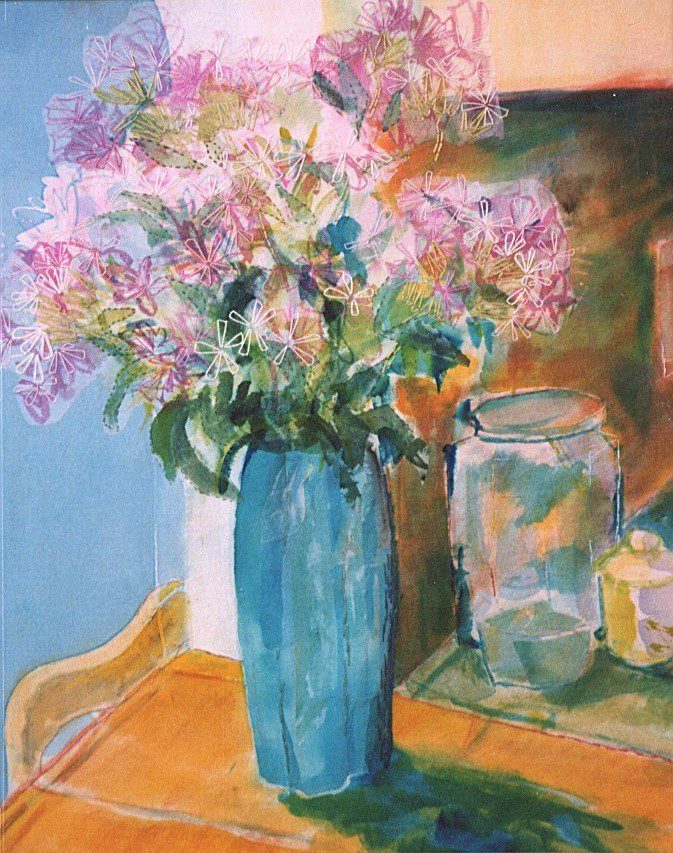
During the 36 years I lived in Albuquerque, as well as when I was a member of the Sandia Mountains Chapter of EGA, I joined the New Mexico Quilters’ Association, the Las Arañas Weavers’ Guild, and the NM Silk Painters as I loved all of these fiber techniques. Santa Fe frequently hosted Art Quilt symposiums with professional works displayed that combined quilting, embroidery, and surface design. Although there were no college-level textile programs in Albuquerque, there were plenty of opportunities to learn fiber art techniques from guild classes and outside workshops and to display artwork.
Do you have a favorite style of embroidery or technique?
I mainly do surface stitching, but occasionally use free motion machine embroidery. In 1997, I enrolled in an EGA Individual Correspondence Class with Pam Goderis on ‘Machine Embroidery: Textural Techniques,’ which was an intensive study of the effects one can produce with an ordinary sewing machine. I can use free motion machine work comfortably, but I always want to add a bit of hand stitching to my machine work.
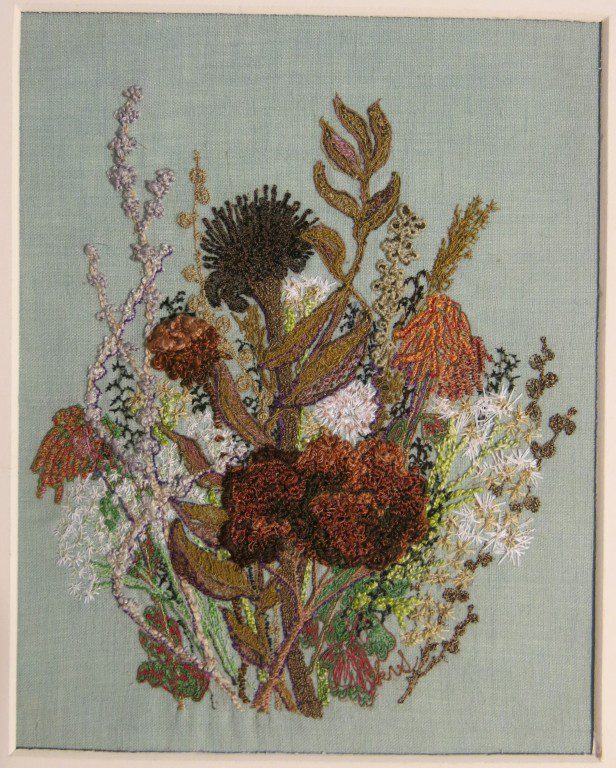
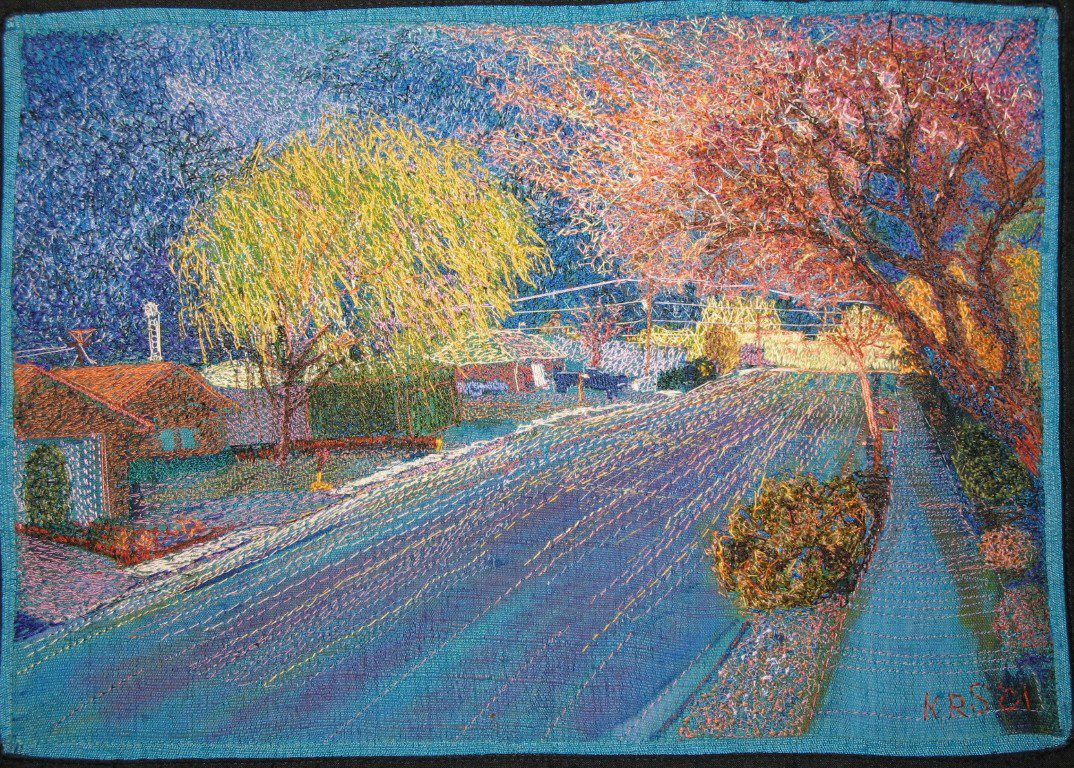
It was a class in Santa Fe with Ilse Aviks on ‘Mark Making’ that confirmed my preference for handstitching. The more generic stitches such as satin stitch, long stitch, stem stitch, self-couching, maybe French knots, running stitch, or blanket stitch seem the most effective as they can be repeated to make patterns or to fill a shape. What is amusing to me is how only a minimum amount of stitching might be needed for the viewer to complete the picture in his or her brain.
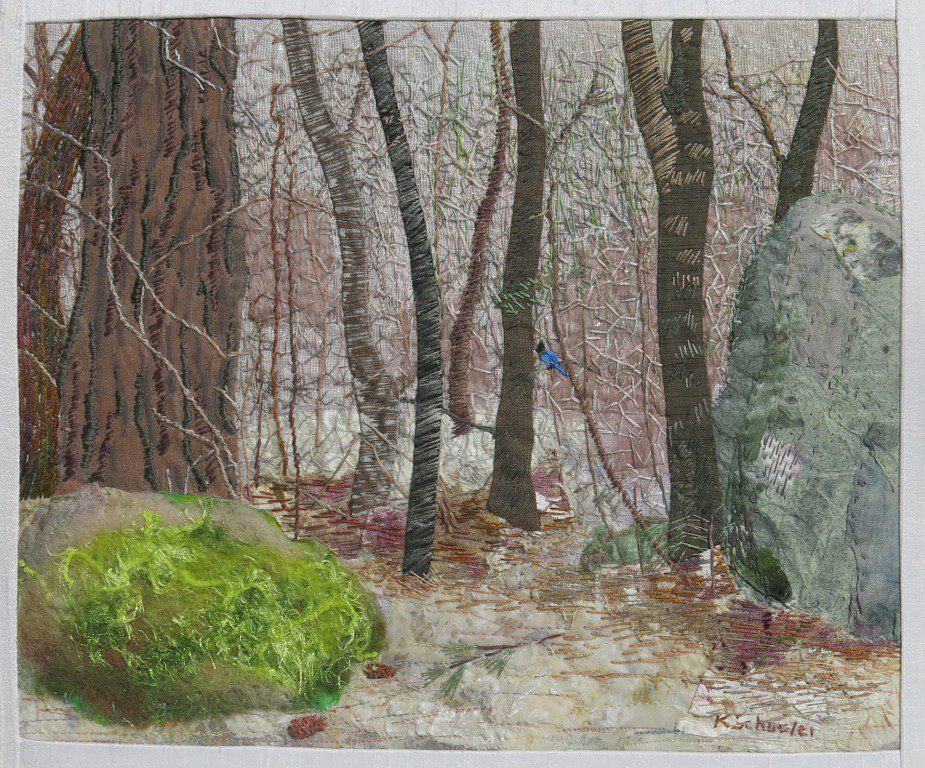
I often stitch over bits of dyed silk ‘mop’ cloth used to clean the brush during painting. I also like stitching on linen and have experimented with shibori, silk screening, and batik as backgrounds as well as felted work. Recently, I have explored stitching on pre-stretched canvas painted with acrylics and collaged with fabrics. I like the tightness of the canvas, but it is harder to stitch. Cotton and linen threads work best with this ground.
Continue reading to see more of Karen’s work.
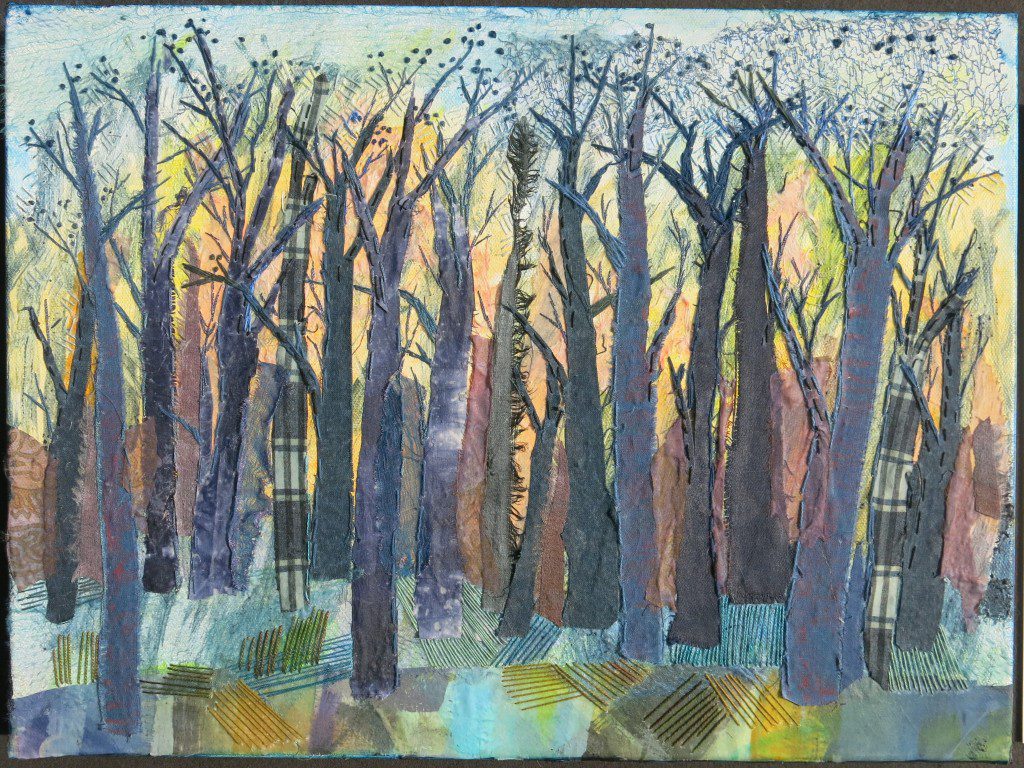
Most of my pictures are based on scenes that I have photographed or sketched but sometimes they are fantasy pictures inspired by unusual fabrics or intriguing found objects. I don’t seem to have one style. It seems that each image that I want to convey requires a different approach.
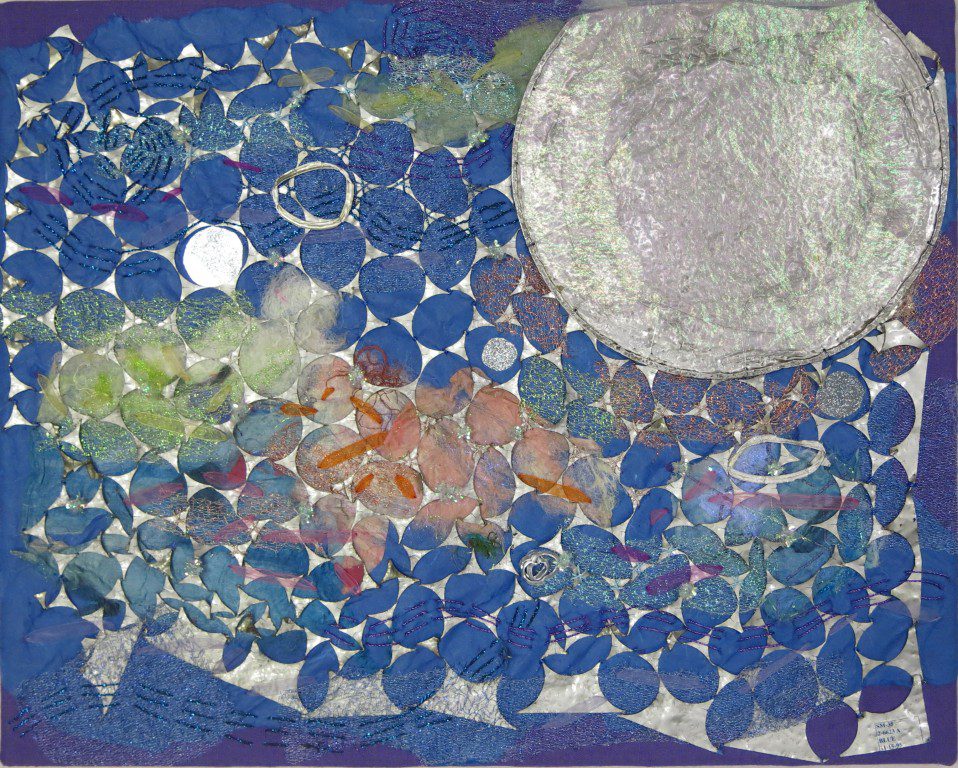
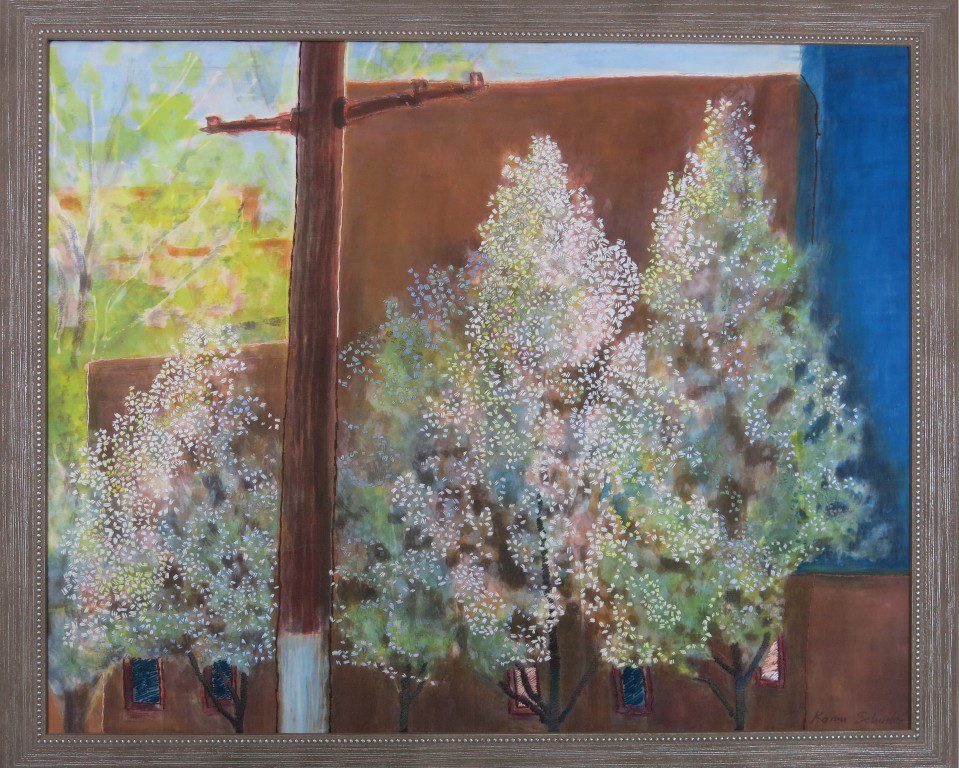
While in New Mexico, I stitched scenes of mountains, my neighborhood, the patio and garden. After we moved to Delaware in 2007 for my husband’s next teaching position, I had several years of feeling ‘uprooted’ and my embroideries of that time reflect that feeling of movement.
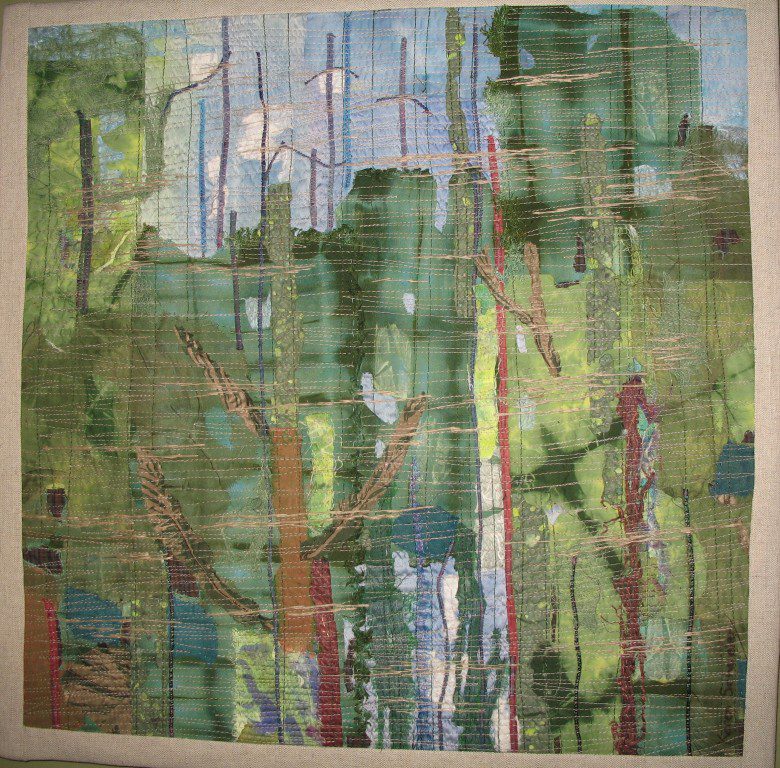
Eventually, I joined the Brandywine Chapter EGA, the Harmony Weaver’s Guild, a local arts alliance and a fiber art critic group. Now the everpresent trees of Delaware and the garden plants around my home are frequent subjects, but I have not abandoned some of the New Mexican themes that continue to inspire me.
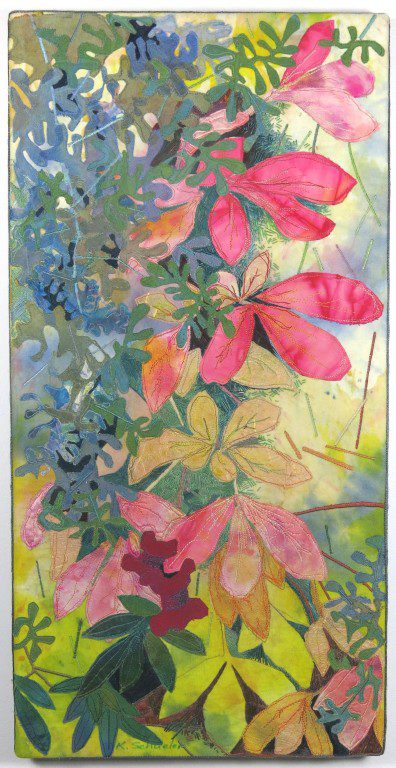
How did you come to be involved with Fiber Forum?
Fiber Forum was started while I was away in England in 1992, so it took me a while to understand what the organization was about. I believed I joined in 2000.
Fiber Forum is the right niche for me in EGA as my inclination is to create art with a needle and thread, and to exhibit my work. I had been displaying my embroideries at the Sandia Mountains Chapter exhibits and entering local and statewide competitions, so Fiber Forum seemed like the right next step. Membership in FF encouraged me to submit work to the 17th ‘Through the Needle’s Eye’ national EGA exhibit and I have had entries in each TNE since. In 2006, Shirley Kay Wolfersperger, Emily Holcomb, and I were pleased to exhibit together in a three woman show at the EGA Headquarters in Louisville.
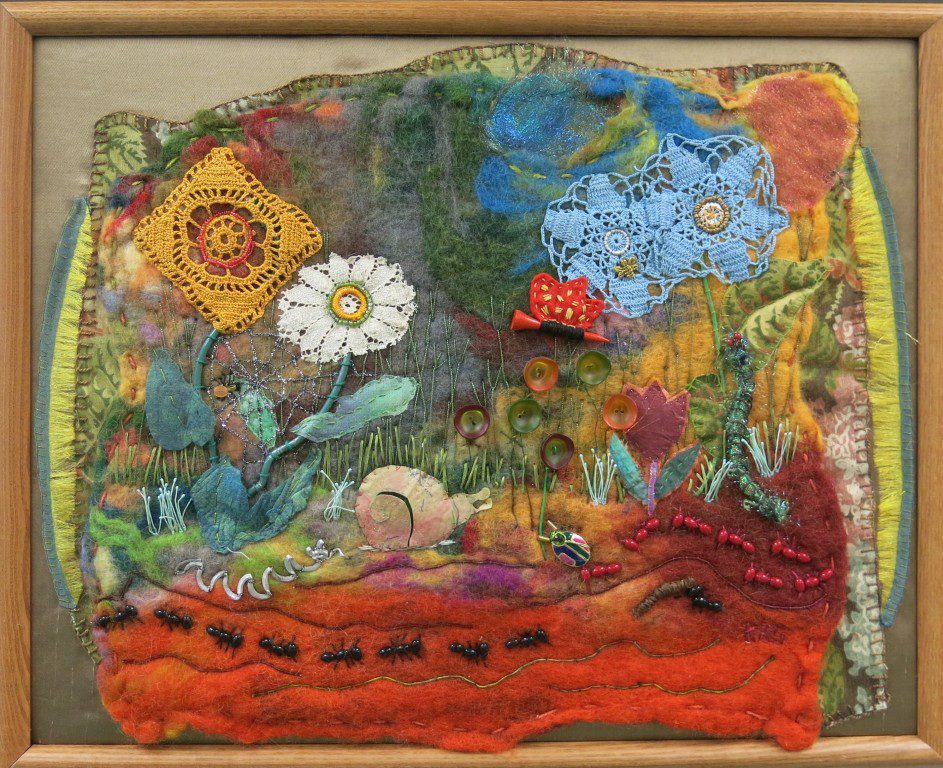
I have served in several positions at Fiber Forum, first as editor of the Fiber Forum newsletter, The Forum, for a number of years, and then as the Jurying Receiver who prepares the images for the jurors’ review. I was the Fiber Forum Retreat Liaison in 2012, and brought Jan Beaney and Jean Littlejohn from England to Santa Fe for the week.
In 2022, I was elected the Fiber Forum Chair, now called President. My years at Sandia Mountains were good training as I had held many different offices during that time. I was the Founding President of the Albuquerque Fiber Arts Council, Inc. serving from 1999 to 2007. During those years, the number of participating fiber art guilds (including EGA Chapters) grew from seven to sixteen that worked together to host the biennial Albuquerque Fiber Arts Fiesta, which lasted from 1997 to 2024.
Once our sons were finished with college, I was able to attend the Fiber Forum Retreats more regularly. The week-long workshops have introduced me to some of the most influential fiber artists of our day. My first Retreat was a beading class with Nancy Meinhardt in Santa Fe. I was out of my element and didn’t have the insight to create art with beads, but it was a joy to be among fellow embroiderers. Other Retreat instructors that have helped me find my path in embroidery have been Barbara Lee Smith, Jane Dunnewold, Carol Shinn, Mary Ruth Smith, Kat Diuguid, Karin Birch, and Susan Brandeis.
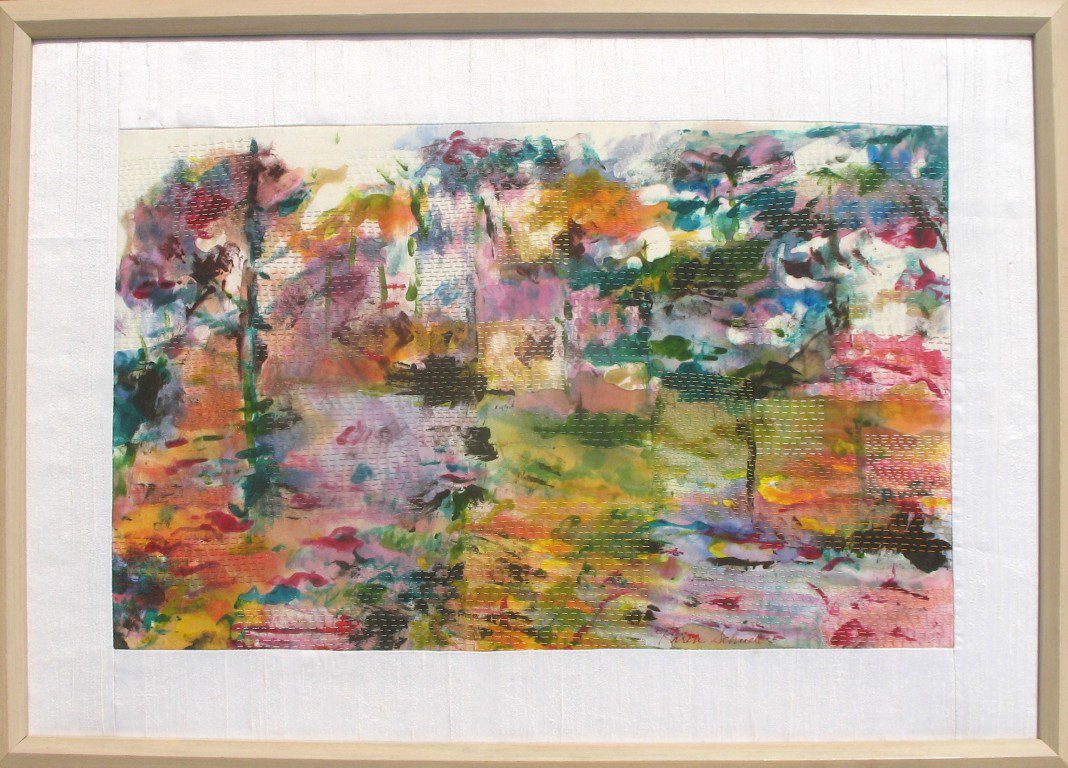
Acquiring a Fiber Forum membership requires submitting finished works to Fiber Forum. Why would an embroiderer want to submit to FF and gain a membership? What are the benefits of joining Fiber Forum?
One has to be a member of EGA to submit images of work to our annual Jurying, but cannot join Fiber Forum unless the work receives three out five points from the two jurors who look at the overall design and total impact, color, workmanship, and suitability of materials.
Fiber Forum offers EGA members who are designing and stitching original works of art recognition for their contribution to the field of embroidery. These EGA members may have explored all the traditional techniques offered by EGA, or have completed Master Craftsman programs and want to continue the challenge of creating their own designs, or have an art background and have decided on embroidery as their medium.
As Fiber Forum encourages exhibits of embroidery, we are proud to display each years’ accepted works on the Fiber Forum webpage under Galleries. Fiber Forum members also have a guaranteed show each year in the Education Exhibit at the national seminar. Fiber Forum members often have their work accepted in the national EGA exhibit, ‘Through the Needle’s Eye,’ which is a high honor within EGA.
Due to the volunteer efforts of members, we have a number of educational programs. The major Fiber Forum educational outreach is the annual Fiber Forum Retreat that introduces members to professional teachers or fiber artists while staying at an interesting location. Working with these professionals exposes the student to different approaches to techniques or subject matter. Fiber Forum has online lectures with fiber artists several times a year and the Open Studio presentations share information about preparing artist statements or taking better photographs as another way to help people learn how to do their work better. Our quarterly newsletter, The Forum, shows work by members as well as articles and essays about exhibits or works in progress. We also have a Facebook Page about Fiber Forum.
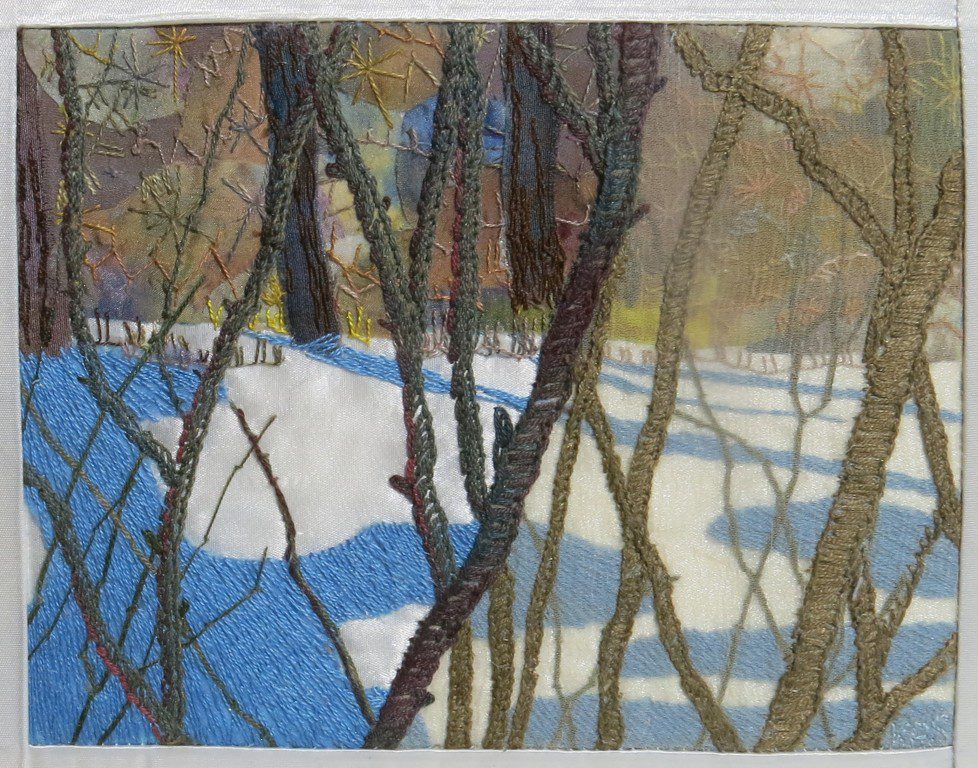
What are some of the most important points embroiderers should know about submitting their work to Fiber Forum?
Jurying is done from the two digital images of the embroideries—a full view and one detail image—that are sent as attachments. You don’t mail in the actual artwork. Only EGA members can submit images of work for the annual Fiber Forum jurying. The work may be of any of the embroidery techniques—surface stitchery, quilting, counted work, mixed media—as long as a portion of the work is done with a threaded needle. Work must be of the original design and execution of the artist, has to have been completed within the past three years, and cannot be used as a class project until after the Jurying. If one is adapting an idea or image from work done in a different media, the artist must be acknowledged and it is best to get permission from the artist.
The submissions of images are anonymous to the jurors who are professional fiber artists or instructors. Applicants are limited to two entries. The jurors do not know if you are a member who has to renew after three years, are submitting for the first time, or if you are a member who would just like an evaluation of current work.
Submissions for Jurying are accepted over a two week period, between March 1-15 each year. This allows time to correct any problems that the Jurying Receiver notices. Procedures for submitting to the Fiber Forum Jurying, the Registration form, and the payment ($30 per entry) are now online on the Fiber Forum page within the EGA website. The Registration form will ask for basic information about the artwork such as size, technique, and materials. The images of the artwork and a 100-word Artist Statement will be emailed as attachments to the Jurying Receiver as directed in the Procedures.
The jurors look at each image as though they are selecting work for a gallery show, so they need to see the frame or edges in the full image. The jurors often refer to the artist statement for an explanation of the artist’s inspiration or direction for the work. It takes about two months before the scores are in. Each applicant will receive their scores in a private letter from the Jurying Receiver that includes the comments by the Jurors about the work submitted, often with praise for the accomplishment, but sometimes with suggestions for improvement. Successful applicants will receive a note from the Membership Chair about how to join Fiber Forum by paying the $25 annual membership fee.
The jurors can often disagree and give very different scores, which is why we always select two jurors. They do not confer with each other, nor are they directly deciding who is eligible to join Fiber Forum. The two scores from the jurors are averaged to decide the final score. Your work must score 3 out of 5 evaluation points for you to be eligible to join Fiber Forum and only images of accepted work will be published in the Fiber Forum Gallery, Needle Arts, or the FF newsletter. No one but the Jurying Receiver knows whose work was not accepted. Learning to accept the judgment of the jurors is an educational process for any artist who submits to competitions or calls for entry.
What are some common mistakes you see with submissions to Fiber Forum?
This is very basic, but do not send an image that only has a number as its title. The image title, detail of the image, the title of your artwork, and the title for your artist statement must be the same.
The photography of the work is important as that is what the jurors see. Some people use professional photographers, however people can get good images using their smart phone these days if they learn how to use its photo programs. Always take the photo in good light at the highest resolution and make sure the photograph is in focus so that the jurors can zoom in on the stitching. Fiber Forum posts some photography tips on its webpage.
A minimum and a maximum limit to the size of the images is stated in our online Jurying Procedures, so please read the instructions carefully. A full image showing the edges of the work is required. Framed work should be photographed with the edges straight and cropped to remove background distractions. A larger work such as a quilt or a 3-D sculpture may require more than one detail image. Jewelry or hats show better on a model or mannequin.
The detail of the work needs to be its own photograph and should be selected for good composition. Cropping a part of the whole image to be your detail will result in too small an image for our requirements. Set the camera aspect ratio to suit the dimensions, such as 1 to 1 for a square work, as that lessens the amount of background that needs to be cropped. Always check the number of pixels on the smaller side of the image to make sure the cropping has not reduced the size too much. Send a copy of your images as an attachment to a friend to make sure it can be opened.
The artist statement is important too and is not where you list the step by step creation of the work or the materials used that can be found on the registration form. It should be a short (100 word) personal essay about your inspiration for this work, or the challenge of trying something new, or the difficulty of interpreting something important. This information will be helpful in explaining what your intention was for this work.
Think also about what you are stitching. Embellishing a commercially printed fabric would not be considered original embroidery. However, if you painted or printed the background design and then embellished it, then it would be all your own work. There are many wonderful techniques available to embroiderers to show your unique approach to a subject and to express your personal interpretation of the themes you have chosen.
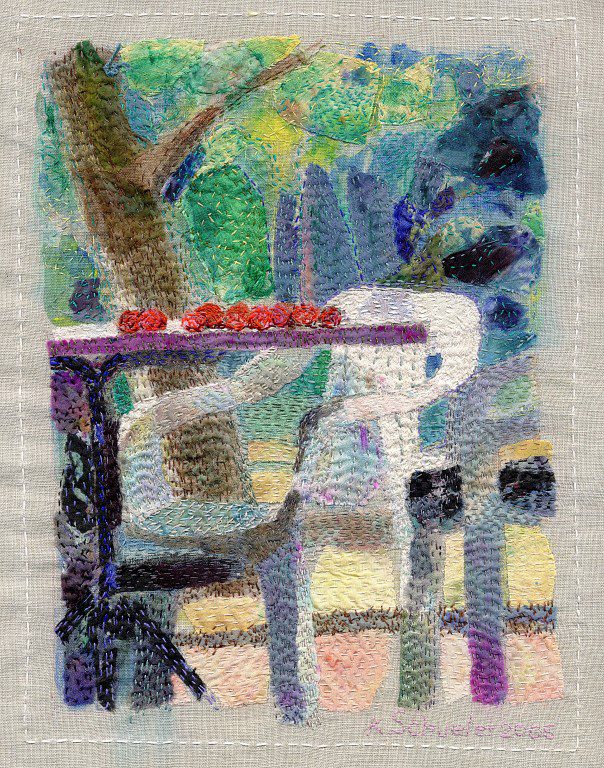
We know there are dozens to choose from, but do you have a favorite or any favorite Fiber Forum pieces? Why are you drawn to them?
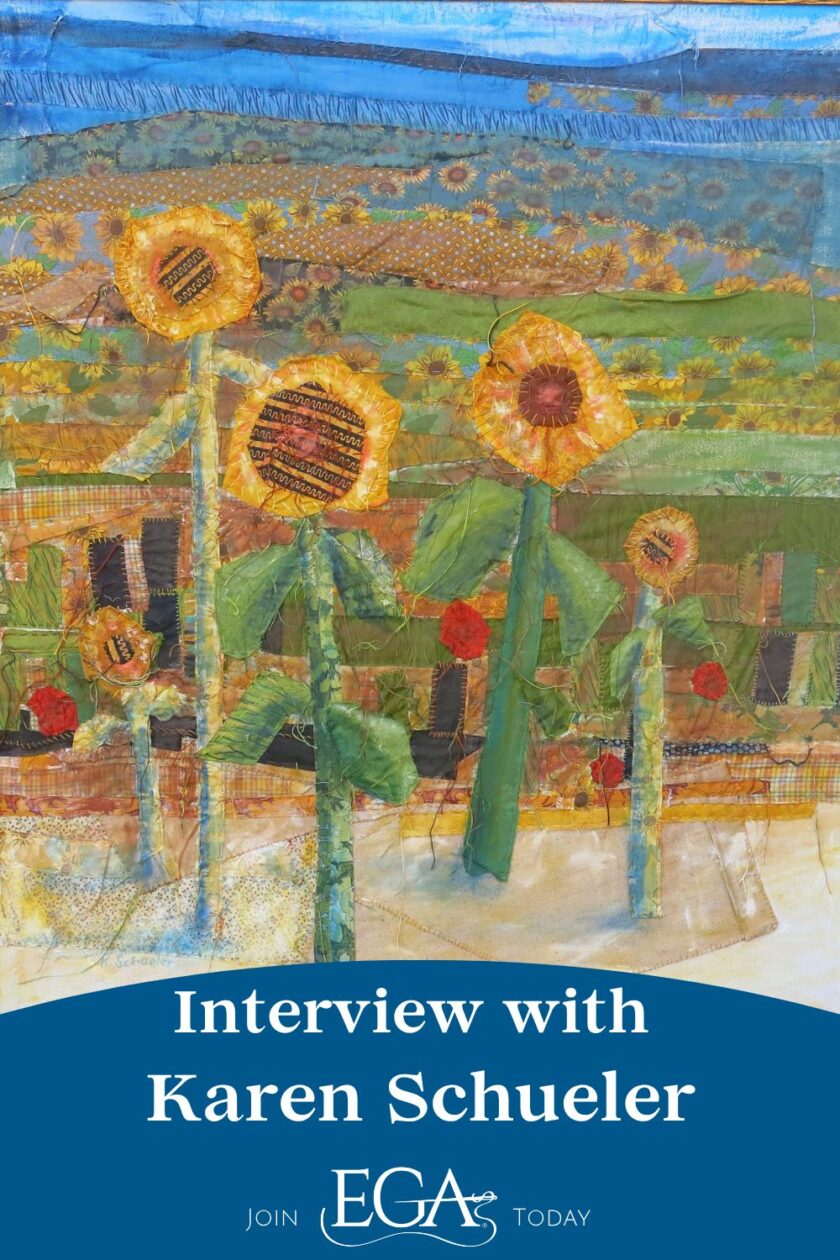
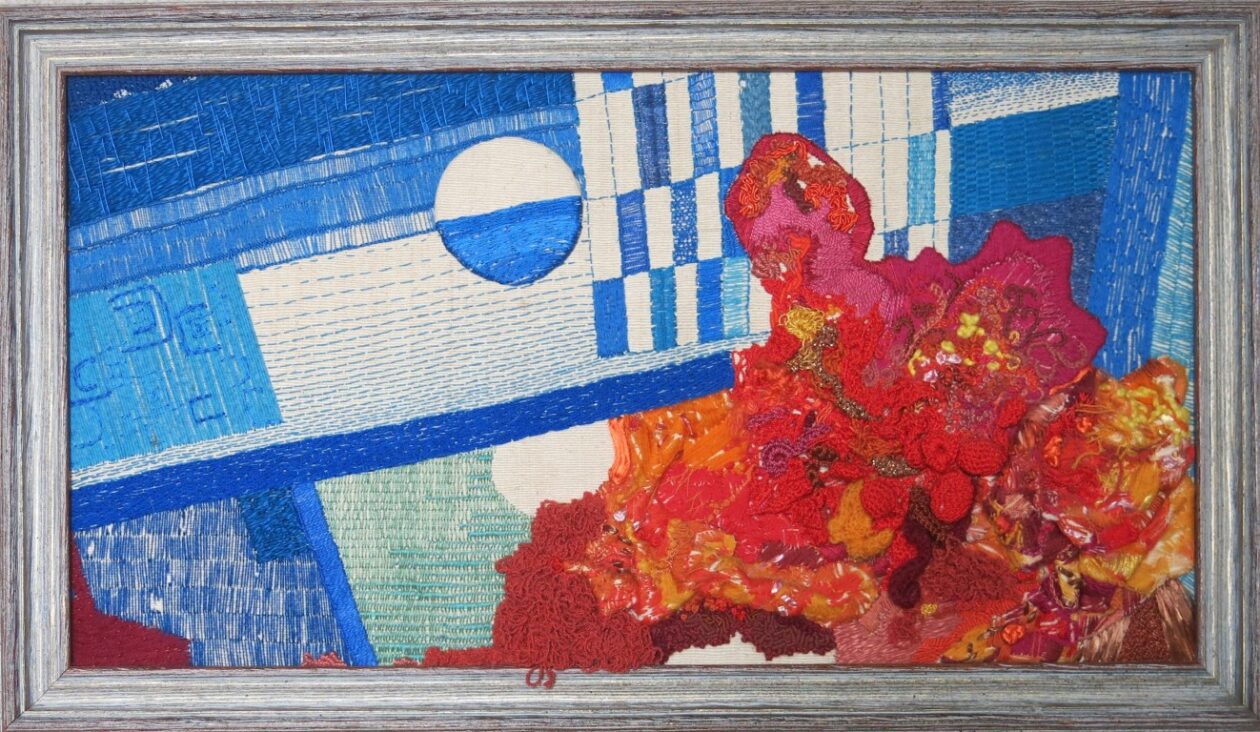
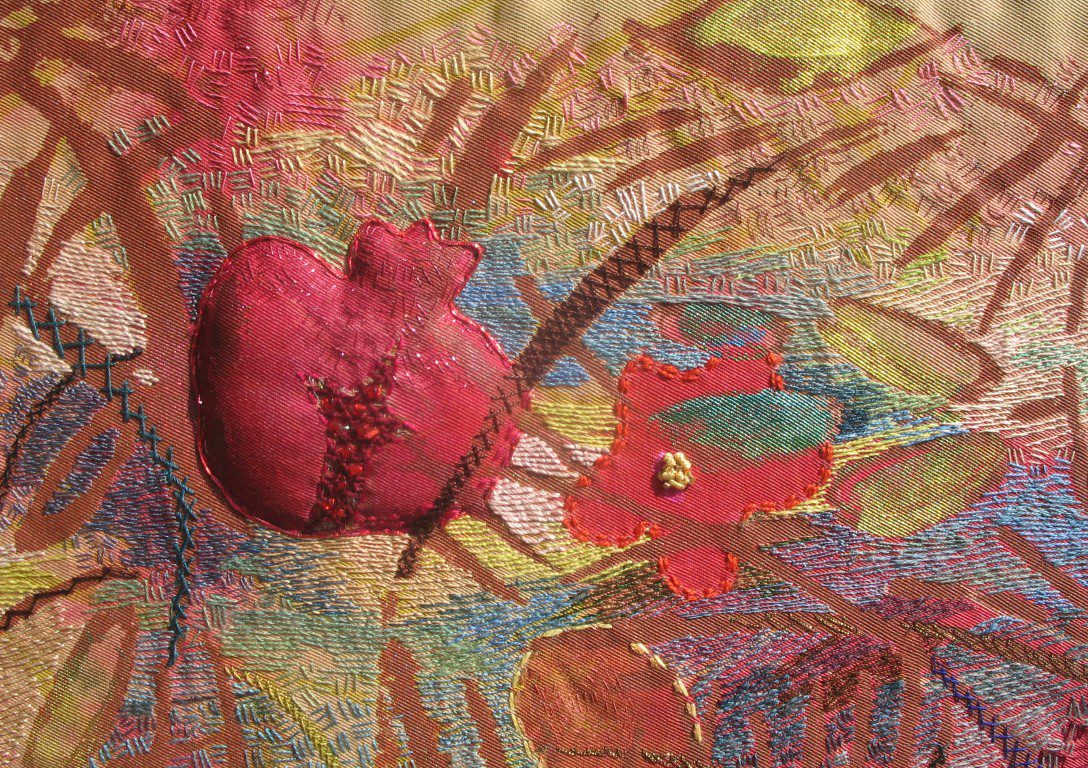
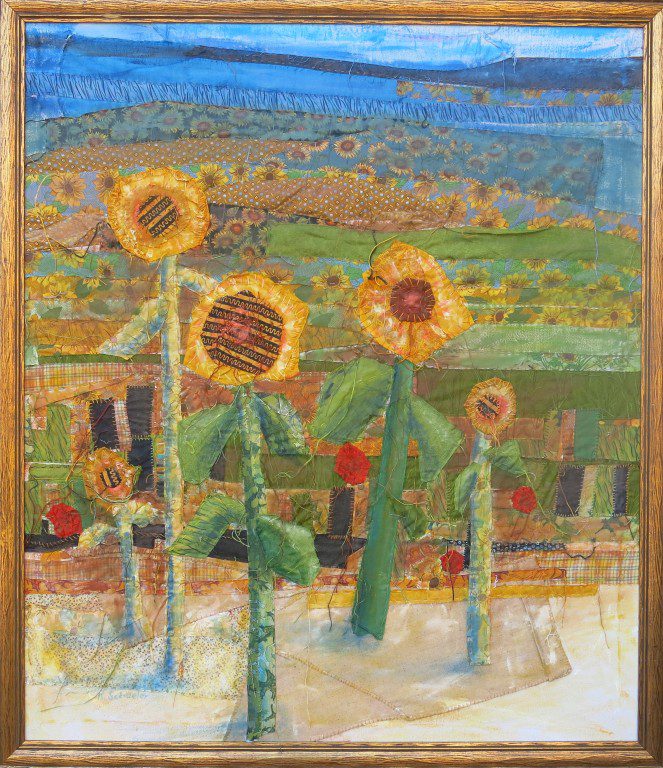
I have selected ‘Tomatoes’ (above), which was one of three works stitched with small dyed silk patches over dyed or painted linen exhibited in the 19th ‘Through the Needle’s Eye’ national exhibit, where I was awarded the Diana Grossman Memorial Award. My entries in the 20th national EGA exhibit, ‘Promise of Pomegranates’ (below) and ‘October in Transit’ were both given Judges’ awards. The Pomegranate work was the result of a complex cloth Fiber Forum Retreat with Jane Dunnewold where I felt compelled to add embroidery to the layers of surface design. I really enjoyed stitching ‘Kansas Sunflowers’ (below) as I worked large with raw edge applique, dangling threads, repurposed clothing, and paint. Amazingly, the work just fit a vintage gilded frame that I had.
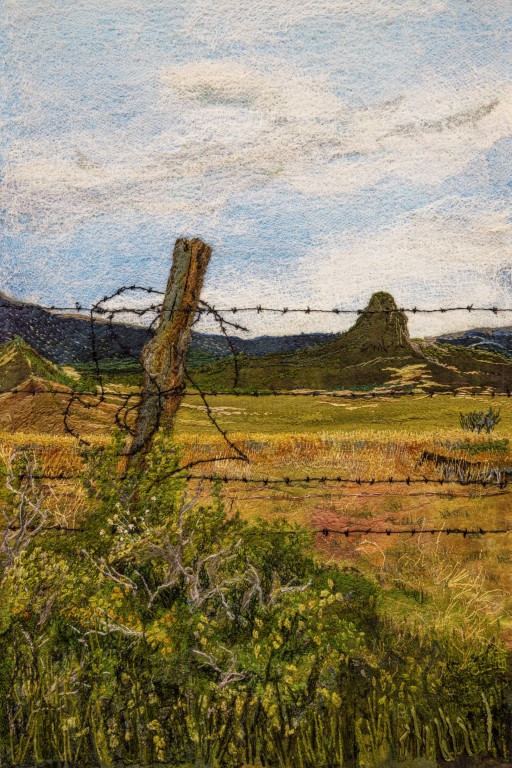
I will just name two artists among the many friends I have in Fiber Forum. The counted thread work on linen by Ayelet Lindenstraus Larson always astounds me. Her work can be seen in each year of our Gallery Shows. Judith Baker Montano combines masterful machine and hand work to depict Western scenes, such as her work ‘Geommer Butte From the Fence’ (below) accepted for Fiber Forum in 2025.
What advice do you have for embroiderers who are interested in submitting their pieces to Fiber Forum, but don’t feel quite ready yet?
Get familiar with Fiber Forum by signing up to be a Friend of Fiber Forum for just $10 per year. The sign up link is on our webpage. As a Friend, you will receive our quarterly newsletter and will be invited to all meetings and online presentations. Sometimes, we are able to place a Friend in a Retreat if a space opens in the class.
Photographed by: Warren Lee; Courtesy of: Ms. Jeanine Anderson
To build up one’s strength in doing original needleart, look at art shows in galleries and museums or at local events and imagine how a work might be translated into an embroidery. Notice what you don’t think works when you view someone else’s embroideries, including projects that teachers prepare for classes. Consider filling a sketch book with images from magazines or your own photographs to learn what subject matter or colors or patterns speak to you. Take classes in other art areas such as drawing, painting or printmaking as these techniques may fuel your creativity.
That being said, there are a number of Friends who do not aspire to be a Fiber Forum member, but who are supportive of creative stitchers and continue as a Friend for many years. Friends often contribute valuable skills and experience that help Fiber Forum with some of our presentations or Retreat planning.