Technique: Ayrshire Work
Place of Origin: Scotland
Earliest known date: Early 19th century
History: Ayrshire Work, or Ayrshire Whitework, is a form of drawn thread whitework that originated in the county of Ayr on the southwest coast of Scotland in the early 19th century. A spiritual relative to Dresden work and tambour embroidery, which were both practiced in Scotland at the local and commercial scale, Ayrshire became a popular form of needlework among women in the community, who were already accustomed to the techniques. Ayrshire, with its rich and fertile landscape, already had a successful flax farm and linen weaving industry. In the early 1800s, when cotton found its way to Scotland from America, the weavers of Ayrshire turned to weaving fine cotton muslin.
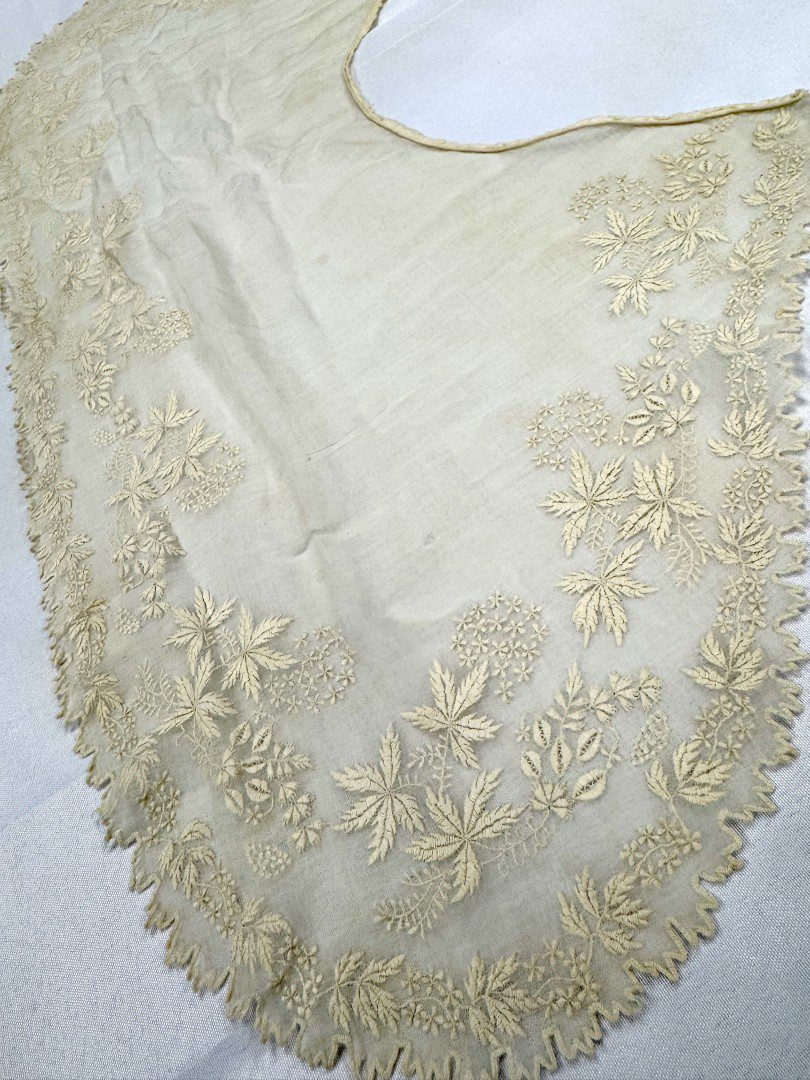
The looms produced the fabric, but were not sophisticated enough to create the designs. The women of Ayr became pieceworkers, stitching whitework designs in the fabric—work that became a significant income stream for thousands of families.
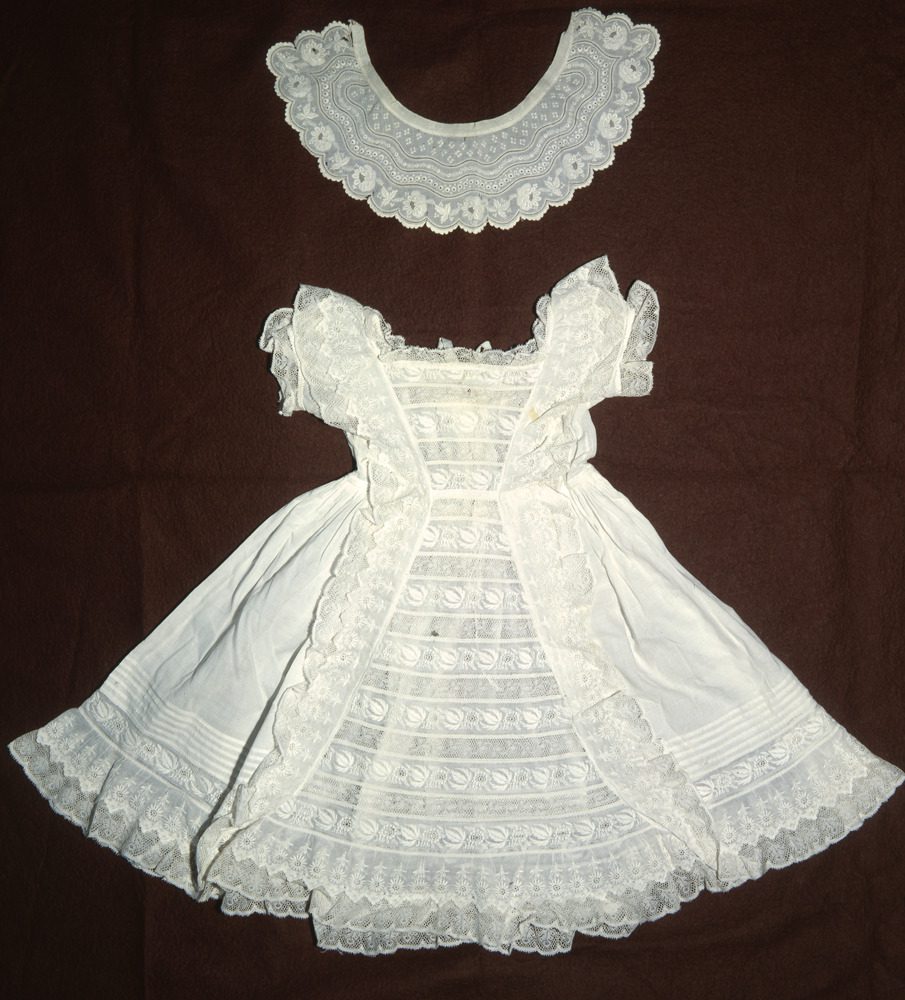
Ayrshire work really took hold when a Mrs. Jamieson of Ayr, wife to a cotton agent, took inspiration from a French christening robe with lace filling stitches, copied the patterning, and taught the technique to embroiderers. As the technique became more popular and in demand, Glasgow cotton muslin producers began stamping fabrics with designs using hand blocks and lithographic prints, using a water soluble ink.
Ayrshire whitework was used in christening gowns, cotton caps, collars and cuffs, baby bonnets, robes, and fine household linens.
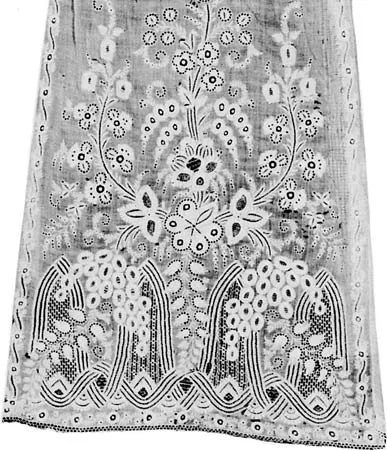
Tom Scott, Edinburgh, via Encyclopedia Brittanica
Materials, Techniques, and Stitches: Ayrshire is stitched on firm, fine cotton muslin with white cotton thread. A form of drawn whitework embroidery, Ayrshire whitework is often lacy and delicate, and usually features motifs outlined in satin stitch with lace insets and lace filling stitches. Some common stitches include:
-
- Satin stitch
- Beading stitch
- Eyelet stitch
- Ladder stitch
- Hollie stitch
- Overcast stitch
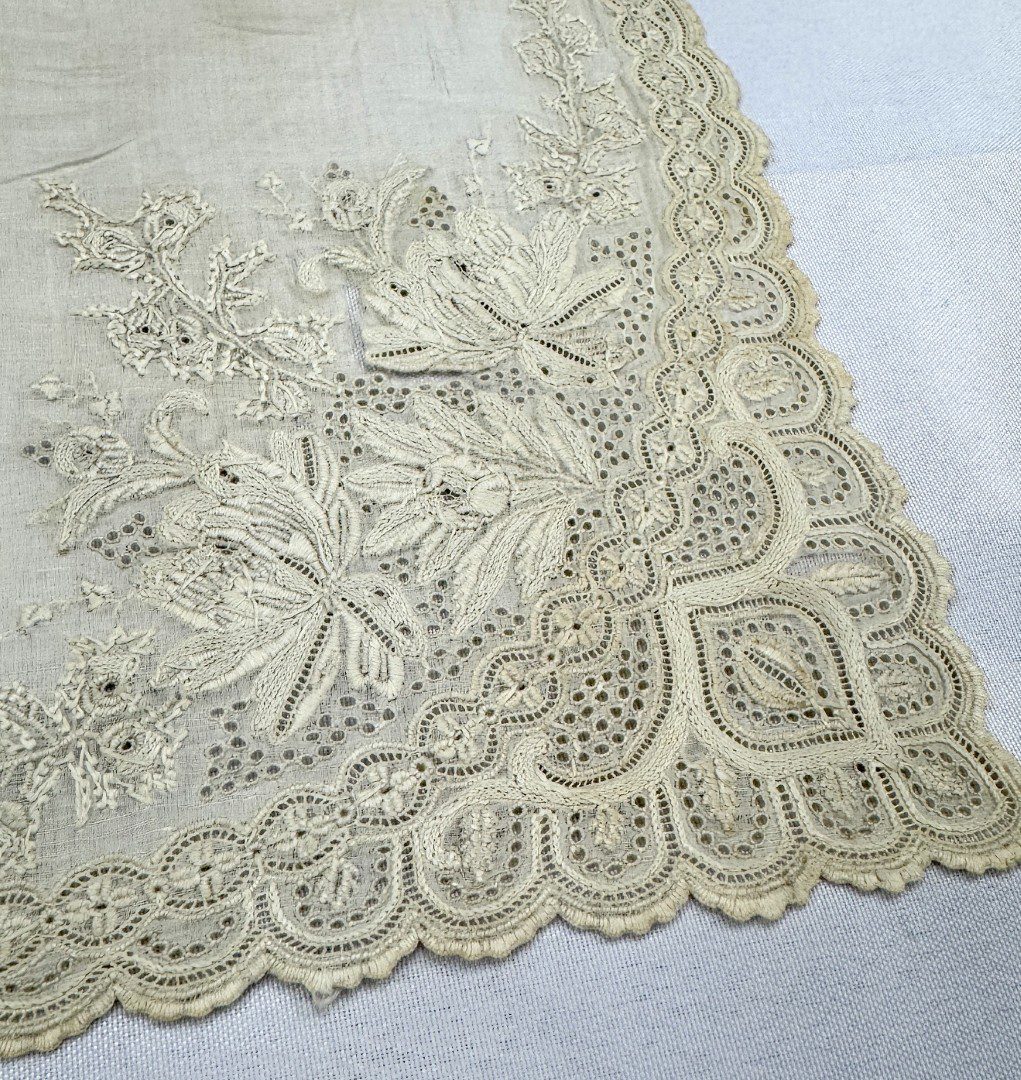
Ayrshire whitework primarily featured delicate floral motifs with lace insets. Florals were such a defining characteristic of Ayrshire work that the embroiderers stitching Ayrshire were called “Flowerers,” and their work was known as “flowering”!
Sources
Whitework embroidery. In Wikipedia. https://en.wikipedia.org/wiki/Whitework_embroidery
Tuckett, Sally (2016). “‘Needle Crusaders’: The Nineteenth-Century Ayrshire Whitework Industry” (PDF). Journal of Scottish Historical Studies.
Textile Research Centre (n.d.). Ayrshire Whitework. TRC Leiden. https://trc-leiden.nl/trc-needles/regional-traditions/europe-and-north-america/embroideries/ayrshire-whitework
Royal School of Needlework (n.d.). Ayrshire. RSN Stitchbank. https://rsnstitchbank.org/technique/ayrshire-whitework
(n.d.). Flowers and Flowerers: A brief history of Ayrshire Whitework. Project Ark. https://projectarksouthland.weebly.com/blog–hauhiko/flowers-and-flowerers-a-brief-history-of-ayrshire-whitework
(n.d.). Ayrshire Whitework. Britannica. https://www.britannica.com/art/Ayrshire-whitework