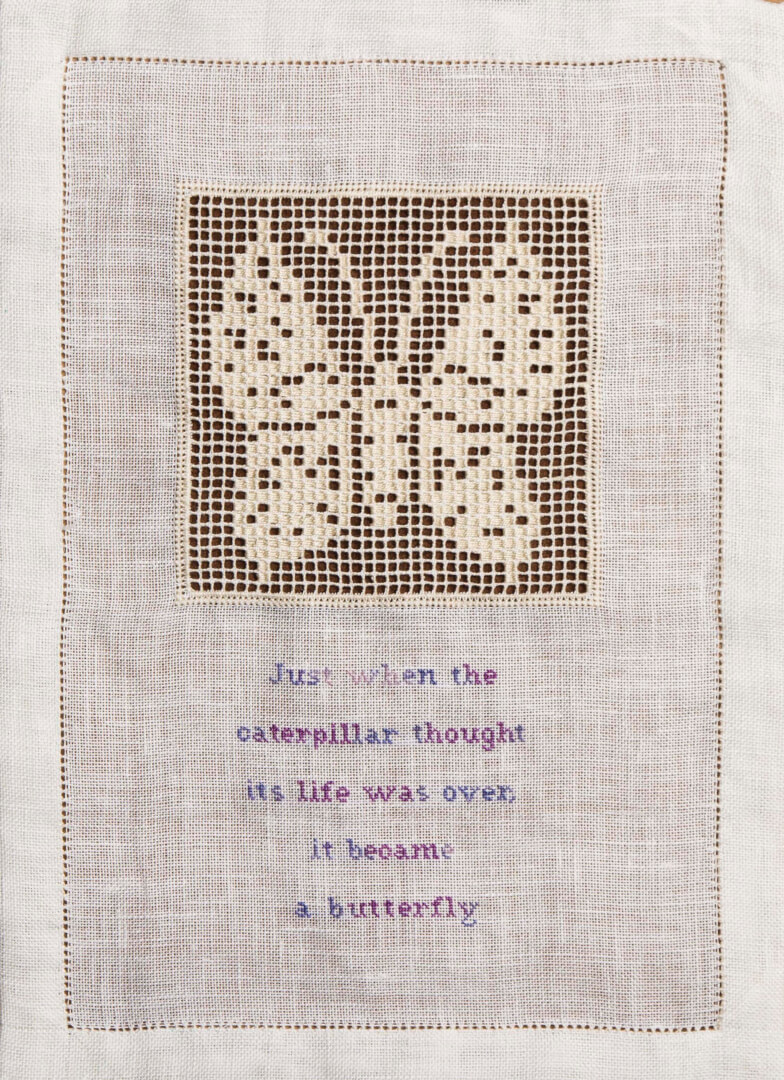
India Hayford’s Individual Correspondence Course, Design for Needlework, is set to retire at the end of 2026. If you’ve always wanted to learn how to design your own embroidery pieces, it’s the ideal educational experience for priming your imagination and creative processing skills. India’s history with needlework follows a familiar path—a love and passion for embroidery passed down generationally, a defining moment where needle and hand became inseparable, a processing of emotional turmoil through thread and canvas. We sat down with India to learn more about her experiences as a needleworker and designer.
How did you first get started with embroidery?
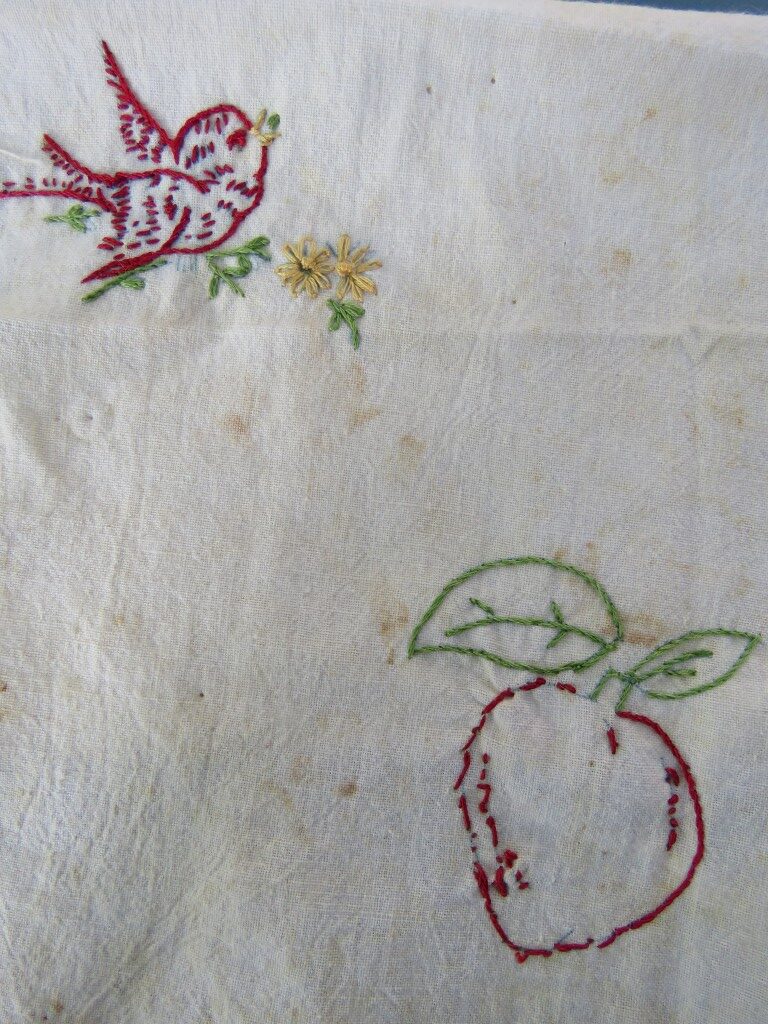
My grandmother threaded a needle with embroidery floss for me when I was four. She drew a picture of an apple on a scrap of cotton and showed me how to do a running stitch. That embroidery is pinned to the corkboard in my studio, with her perfect stitches on one side of the apple and my straggling ones on the other.
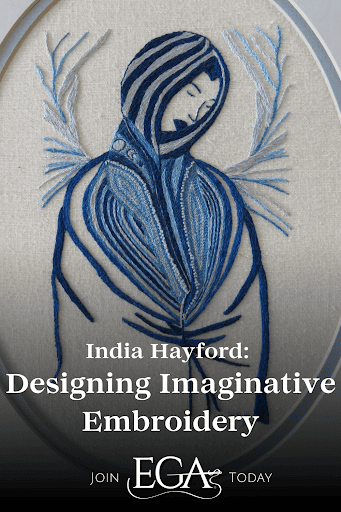
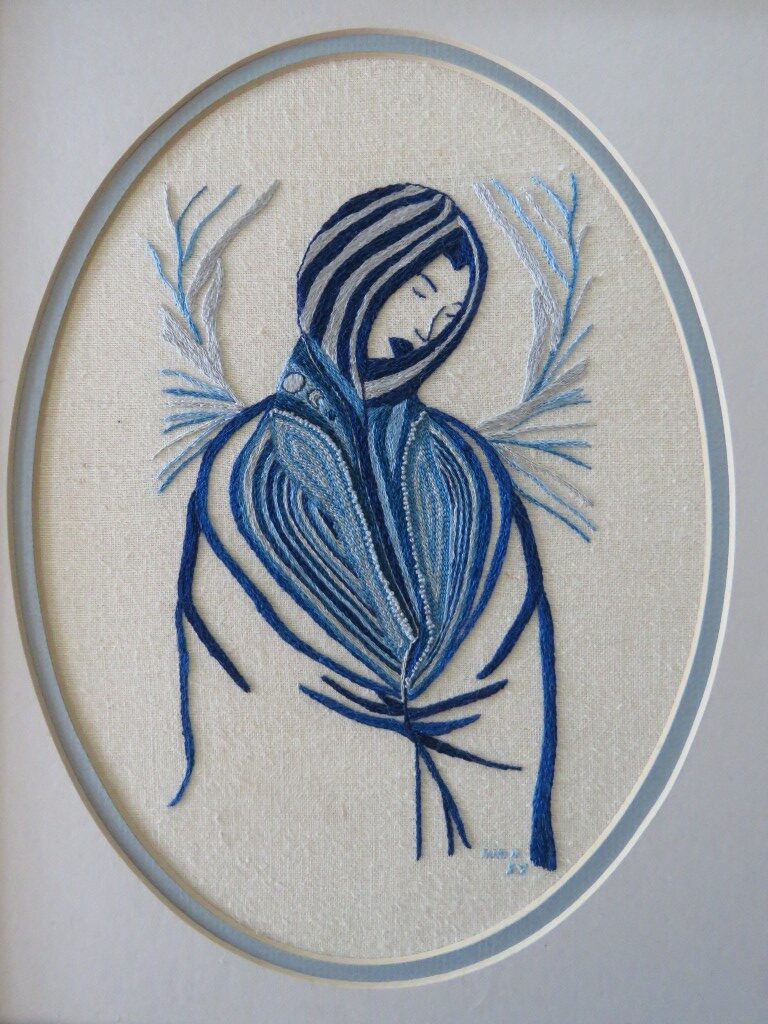
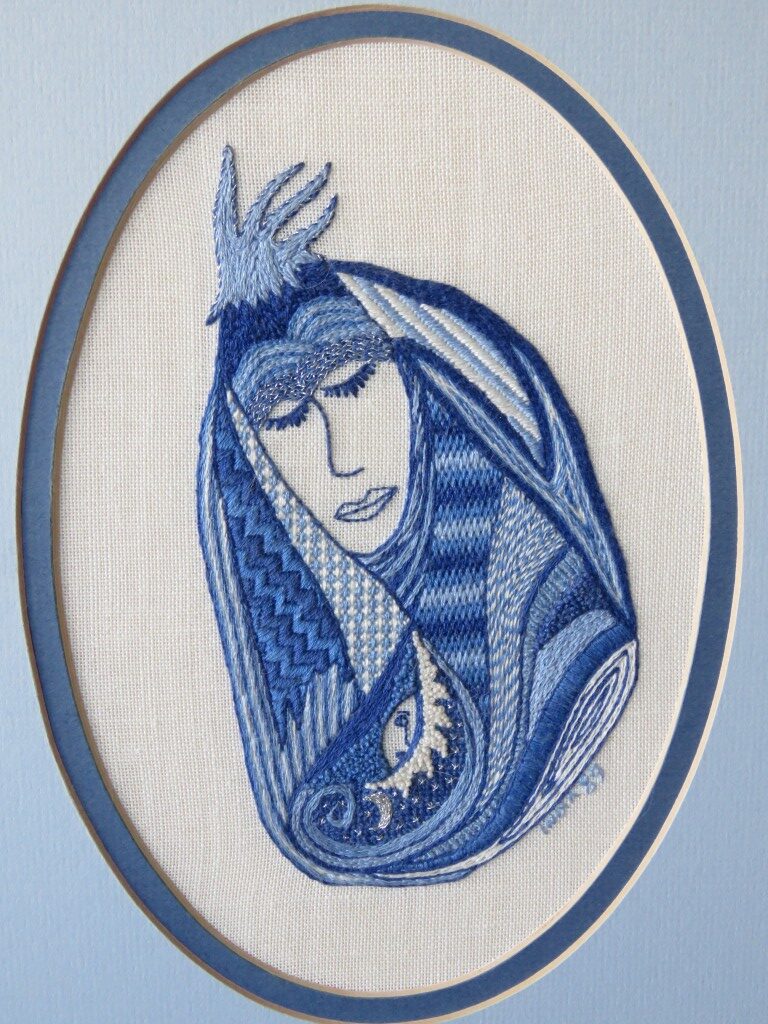
During a long, arduous journey to motherhood, I worked through some of my feelings by drawing mother and child images. Since I had little training, the portraits were primitive. One day, I needed a last-minute project for my monthly EGA chapter meeting. I chose a drawing of a stylized woman, transferred a minimal outline to linen, grabbed a fistful of blue thread, and took off for the meeting where I started filling in the blanks.
The result was Madonna Without Child, which expressed the heartache I felt over repeated miscarriages. While expecting my son, I embroidered a second blue composition, optimistically called Madonna with Child. Fifteen years later, I considered embroidering a third blue madonna based on The Scream by Edvard Munch, to be called Madonna with Teenage Child. That teenager now has a teenager of his own.
What is your favorite style of embroidery? Why is it your favorite?
Freehand surface embroidery allows me to explore subjects, texture, and color without the restraint of charts and patterns. I start out with a bare outline of a composition and fill in the details as I go. Results have varied over the decades, but I always enjoy the exploration.
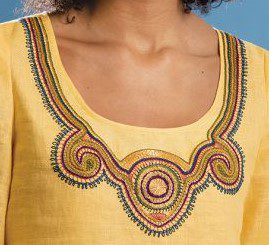
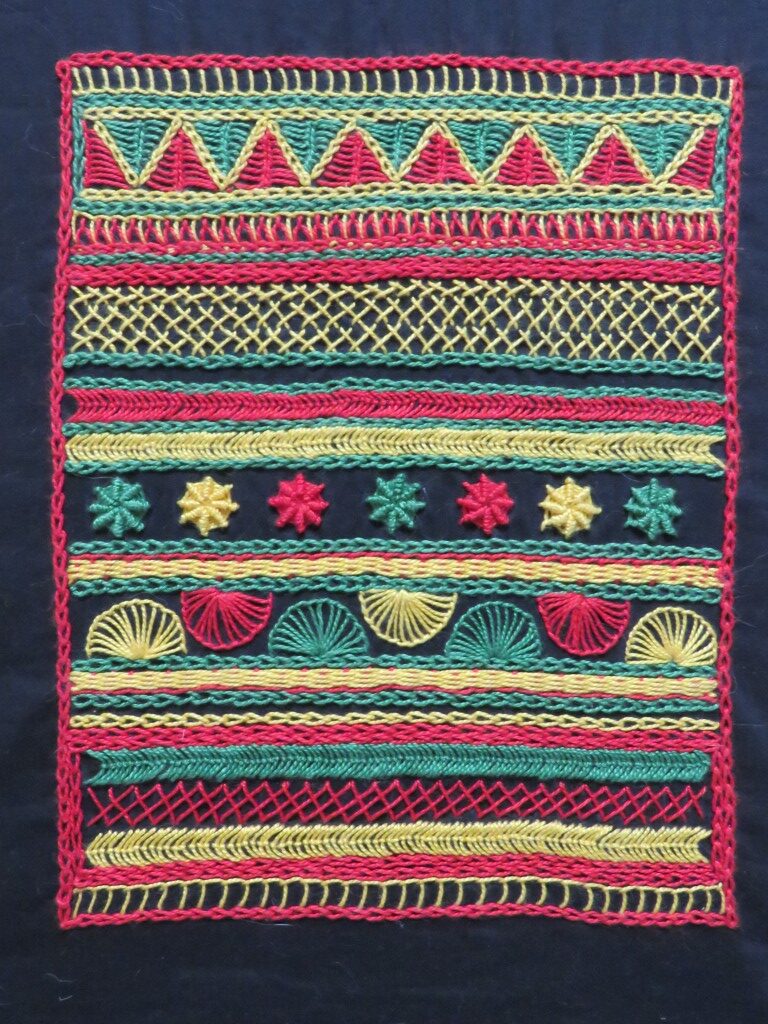
Yemenite Jewish embroidery is a beloved technique that I studied, executed, wrote about, and taught for almost 20 years. One of the highlights of my embroidery career was teaching the technique to the granddaughter of a Yemenite Jew who after World War II was airlifted to Israel along with most of the rest of Yemen’s Jewish population. The student returned to California intending to teach the traditional stitches and designs to other Yemenite Jewish descendants. Passing on that particular torch and contributing to the preservation of an all but extinct technique was one of the most satisfying things I’ve ever done.
Where do you find inspiration for your embroidery designs?
An easier question to answer would be where do I not find inspiration for design? I started to cite “old car parts” as uninspiring, but then got to thinking about stumpwork, tailfins, and 3-D vines growing out of broken windows.
Do you have a favorite embroidery design? Why is it your favorite?
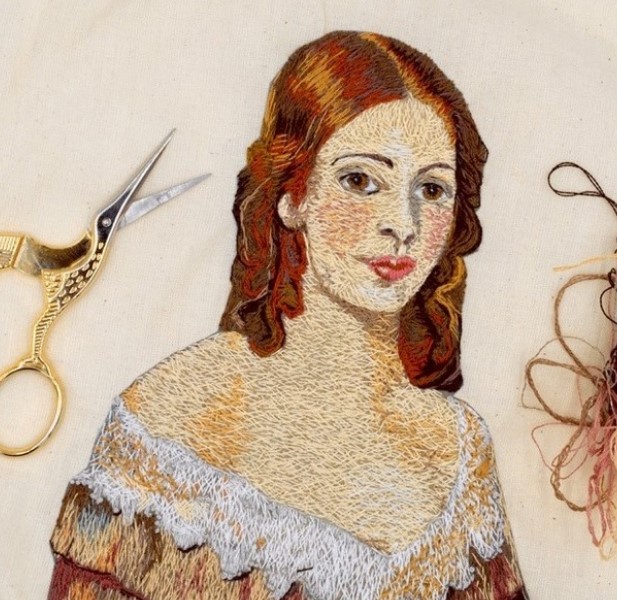
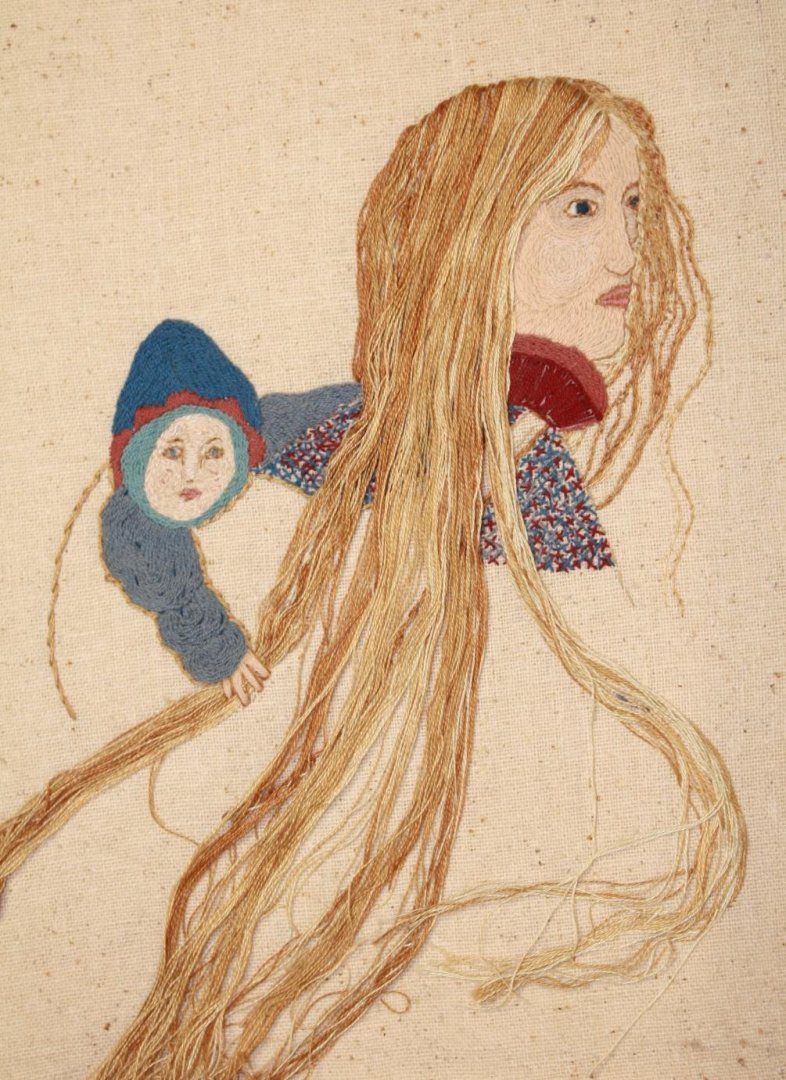
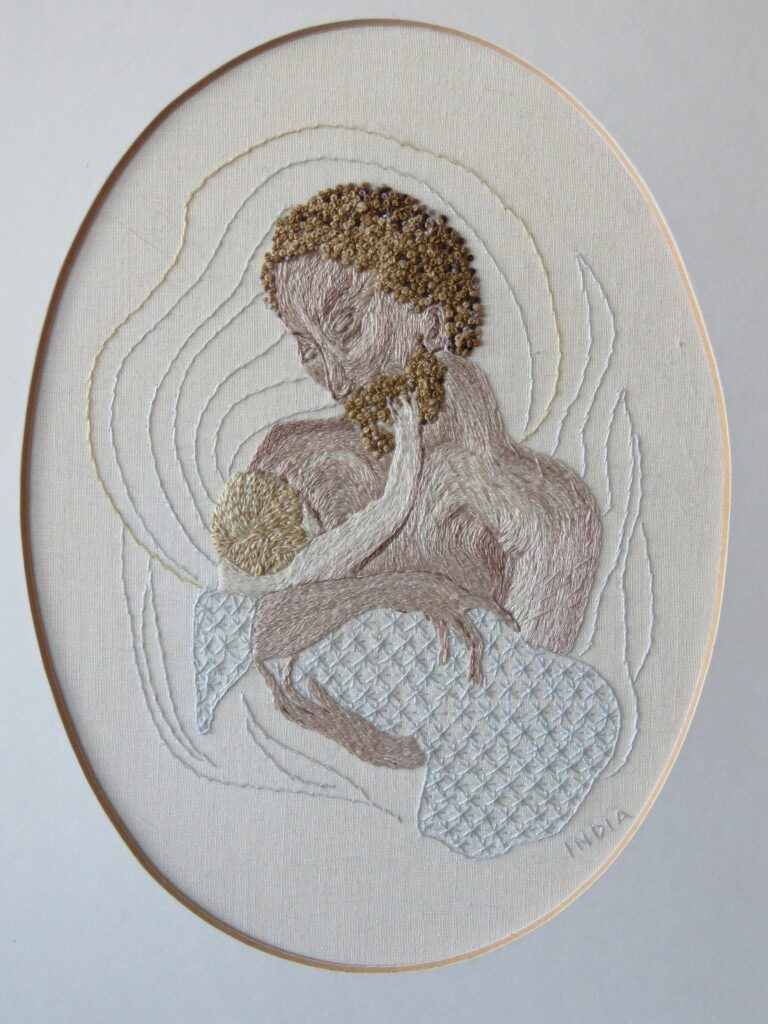
In 1989, I stitched a portrait of my husband holding our baby son. A 1904 sketch of a mother and child by Pablo Picasso provided the inspiration. It was my first attempt at portrait embroidery and I’m still pleased with the emotion it conveys. Later I did a companion portrait of my daughter and me (Madonna with Long Hair)
Your EGA Individual Correspondence Course, Design for Needlework, endeavors to “immerse students in a study of visual language, design mechanics, sensibility, and critical judgment.” What should interested embroidery students know before registering for this course?
I am retiring the course but will accept new students through December 31, 2026. What students get out of the course will be directly proportional to the work they put into the course. Steps build on each other. Doing a quick and dirty job on an exercise that seems dull or unnecessary will impact progress. Since the course is time-intensive, a few exercises employ paint, pencils, crayons, or ink as short-cuts, though doing those exercises in needlework is always an option.
What is the best piece of advice you would give to an embroiderer interested in creating their own designs?
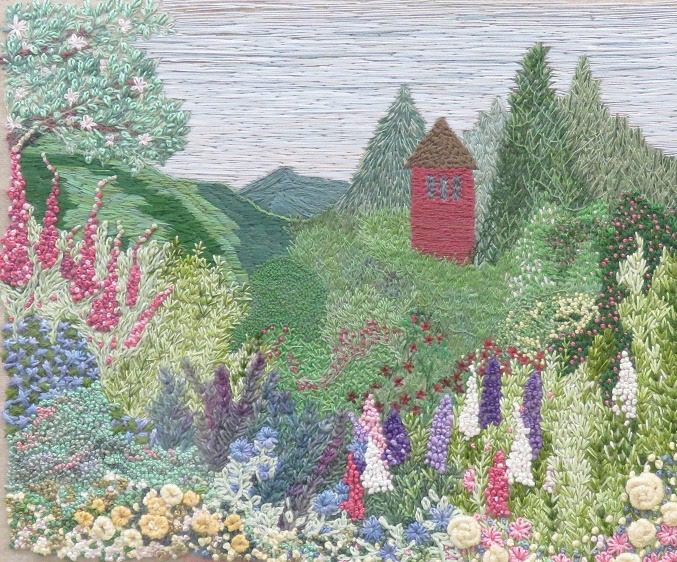
Too many people never make a first attempt at design because they’re too busy anticipating failure. Cowboy up—failure and success are inevitably linked. Doodle with a pencil while talking on the phone, transfer the outlines of the doodle to a piece of cloth, and fill it in with thread the same way a child colors line drawings in a coloring book. Voila—you’ve created an original design and cleared the first hurdle to creativity. After that, the only trick is to keep experimenting.
What is a common friction point for embroiderers designing their own pieces, and do you have any tips for circumventing that friction?
Perfectionism spoils both fun and progress. Antidote: Remember how to play. Make mistakes and don’t hide them away. They aren’t marks of shame. They are the guideposts of your progress.
Do you have any favorite resources or reference materials to recommend to embroiderers interested in deepening their design skills?
There are hundreds of new books on design, so I hesitate to mention the older ones I studied myself. For those struggling with creative insecurity, I suggest Betty Edward’s Drawing on the Right Side of the Brain and Julia Cameron’s The Artist’s Way.
Where can embroiderers follow you and learn more about your work? (social media platforms, website, etc)
You can find my work at indiahayford.com
For a full decade, embroiderer Ann Harris was my guiding star. I took her original ICC design course around the turn of the century. When I mentioned I was thinking about teaching, she said, “That is music to my ears.” She encouraged me to take the teacher certification exam. When I graduated, she presented me with the copyright to her original design course and mailed me an enormous box of reference books. I cannot fully express what that friendship and mentorship meant to me. Her support and encouragement were two of the greatest gifts anyone ever gave me.
“Come to the edge,” he said.
“We can’t, we’re afraid!” they responded.
“Come to the edge,” he said.
“We can’t, We will fall!” they responded.
“Come to the edge,” he said.
And so they came.
And he pushed them.
And they flew.”
― Guillaume Apollinaire