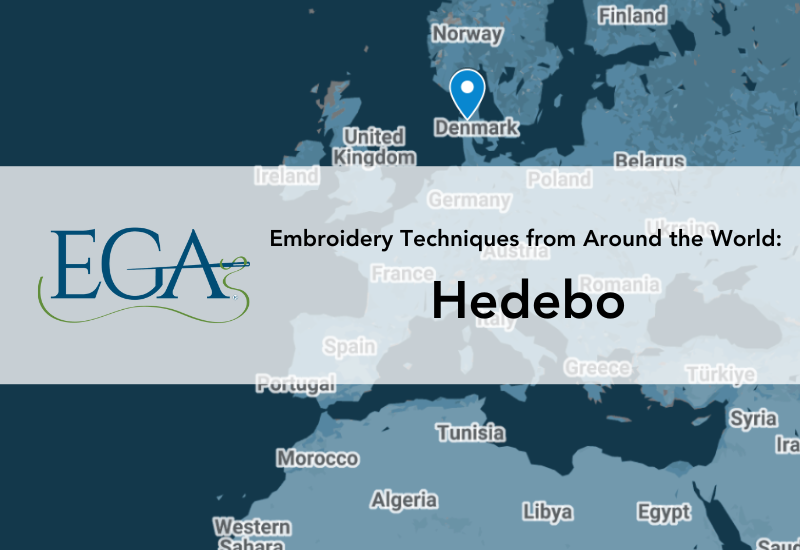
Technique: Hedebo
Place of Origin: Denmark
Earliest known date: 1700s
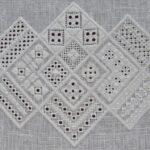
History: Hedebo embroidery, also called Hedebo needlelace, originated among the peasant and farming communities of Denmark living in the Heden (from hede, or heath) regions between Copenhagen, Køge, and Roskilde.
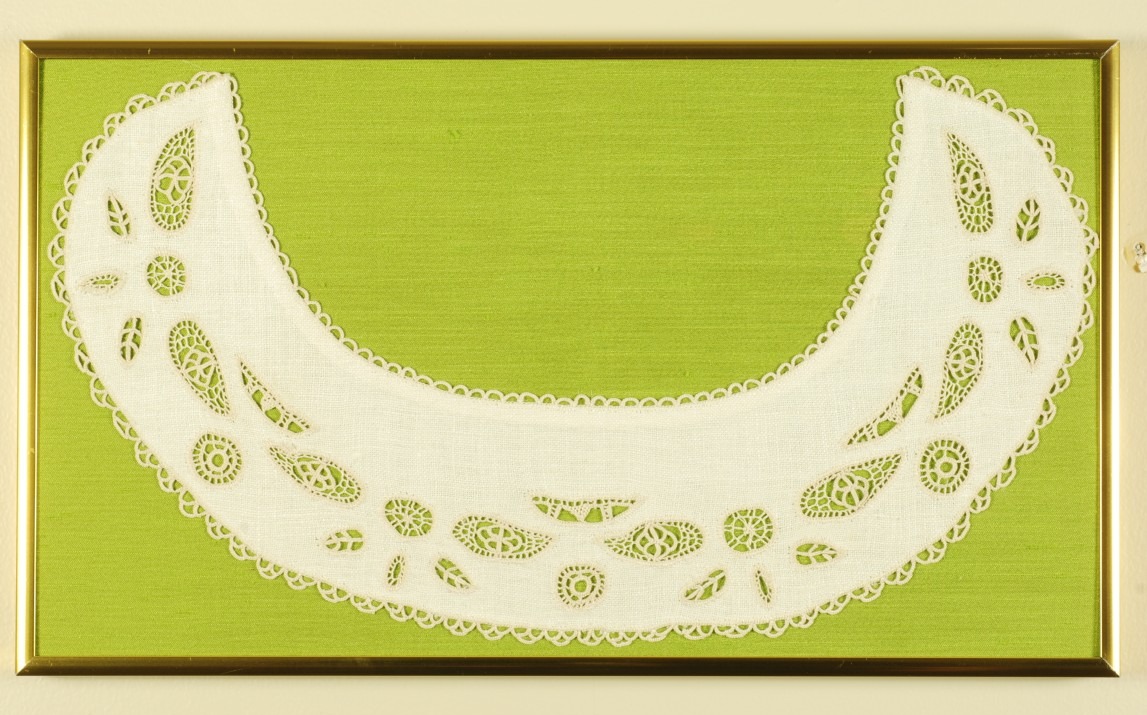
A popular form of Danish whitework embroidery, Hedebo was first practiced by peasant women in the Heden solely for personal use, stitching household linens and clothing. Then, in the mid-to-late 19th century, upper middle class Copenhagen families began taking interest in Hedebo embroidery. At this time, it became common for wealthy families to hire wet nurses from the Heden, who brought with them their Hedebo embroideries. The wives and mothers of wealthy families then began crafting Hedebo embroidery for use in their homes and wardrobes. By the 20th century, Hedebo’s popularity had spread across Denmark, promoted by organizations like the National Museum of Denmark and the Society for the Promotion of Hedebo Embroidery. In 1870, the Danish Folk Museum recognized Hedebo as a national treasure.
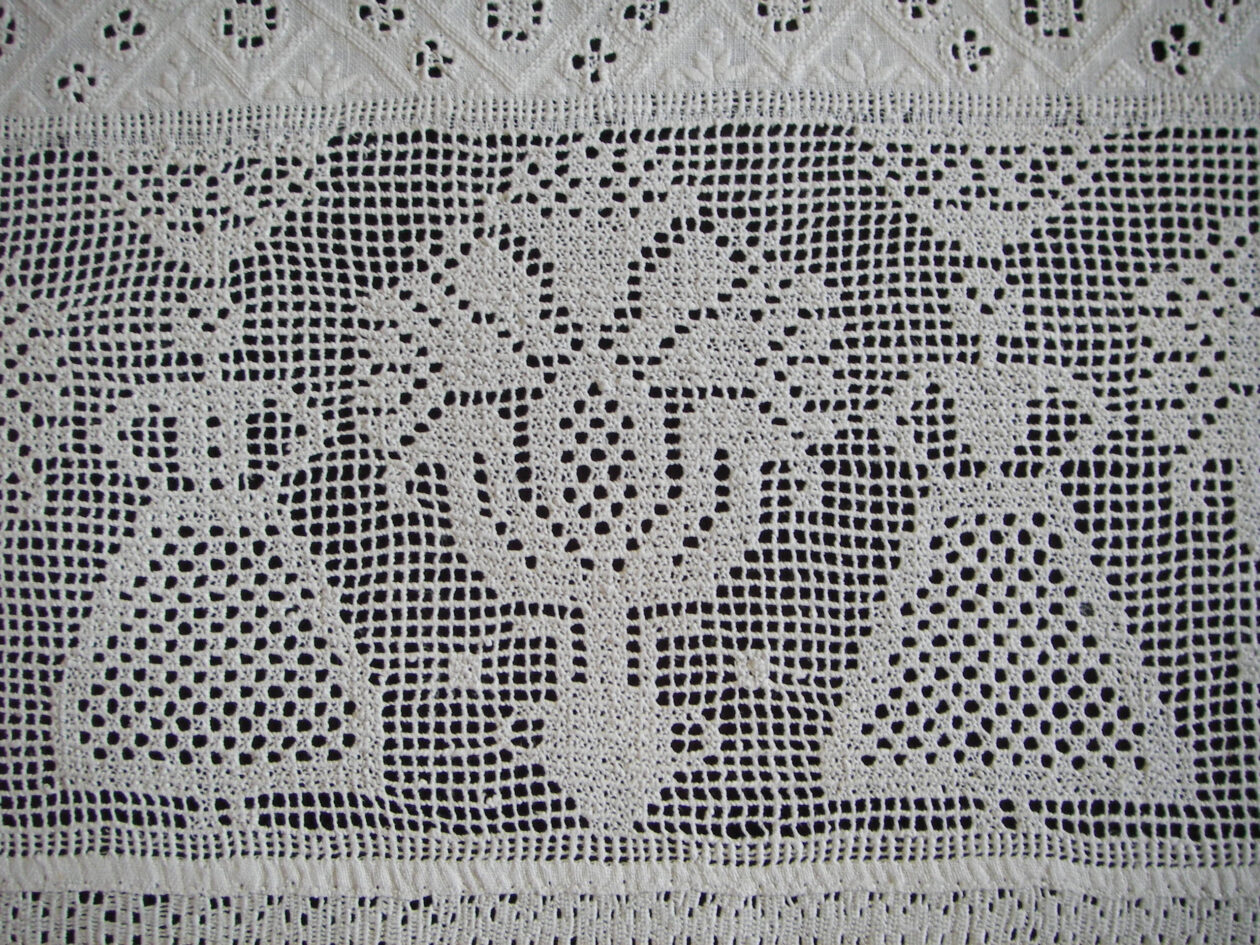
Materials: The farmers in the Heden grew, harvested, combed, and spun flax to create the white linen tabby cloth (or plain weave) and white linen thread feature in Hedebo.
Techniques and Stitches: Hedebo is a form of whitework embroidery, and similar to reticella. Hedebo uses 7 distinct techniques, which evolved over the course of Hedebo’s popularity in Denmark. Hedebo pieces would often feature multiple techniques as each new style was developed.
- Tællesyning – circa 1700 – Also known as counted thread work, Tællesyning features geometric patterns worked in satin stitch over a set number of ground cloth threads. Tællesyning motifs include stars, triangles, squares, crosses, and stylized trees, animals, and flowers.
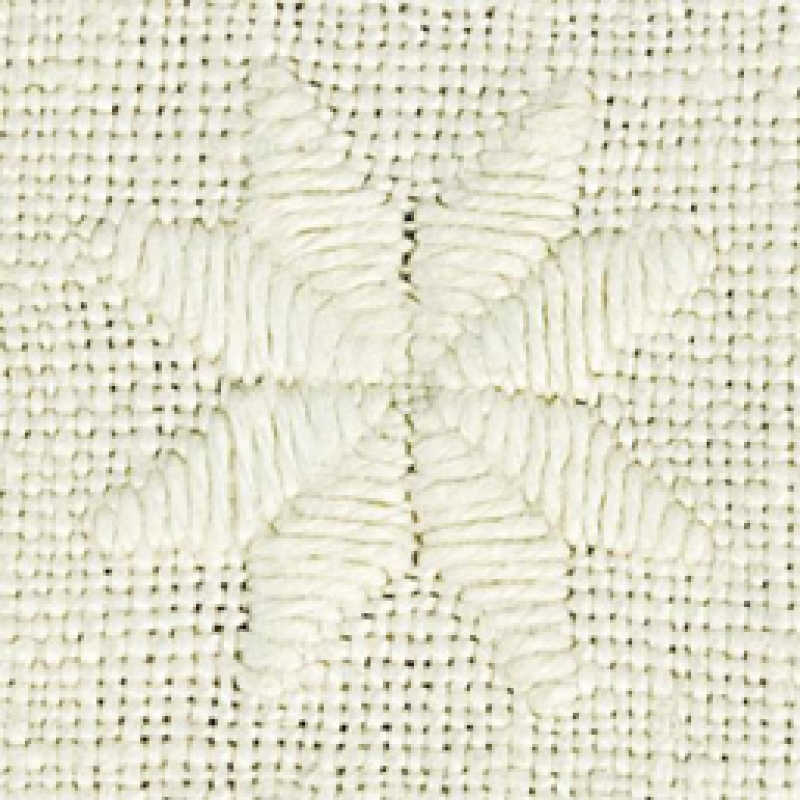
Tællesyning Star. © TRC Leiden - Syede Hedeboblonder – circa 1700 – Also known as Hedebo edges, Syede Hedeboblonder is a decorative edging technique often used for shift and shirt collars, cuffs, and in household linens. Syede Hedeboblonder features geometric as well as floral embroidered lace motifs, often with scalloped or pointed edges.
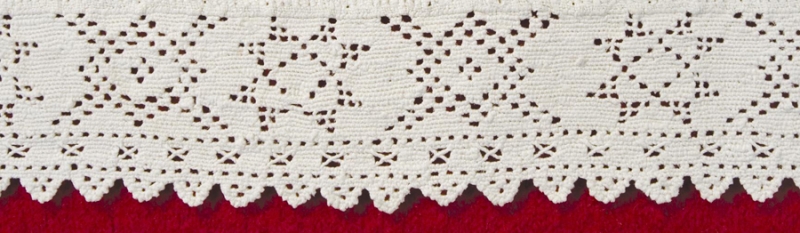
Syede Hedeboblonder example. © TRC Leiden - Dragværk – circa 1750-1840 – Also known as drawn thread work, Dragværk, like other drawn thread techniques, pulled thread from the ground fabric to sew motifs around the remaining thread, creating a lacy design, usually with buttonhole stitches.
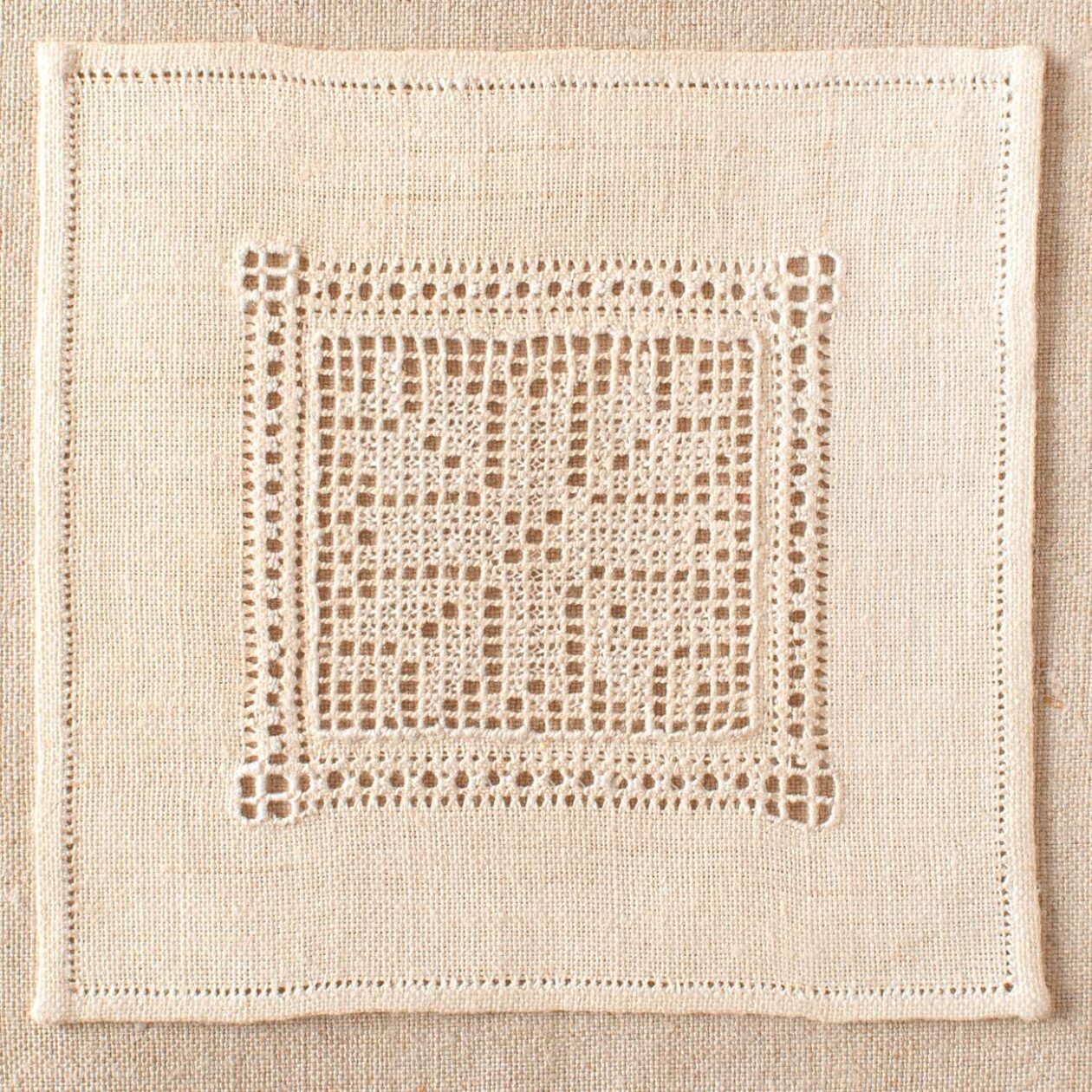
Dragvaerk example. © Broderi håndbogen - Rudesyning – circa 1805-1840 – Also known as square cutwork, Rudesyning creates a less open lace than drawn thread work, with small squares cut in the ground fabric with threads left between the squares to be darned over and then stitched with figures, geometric shapes, animals, and floral designs. Rudesyning was used as a monogram technique and to decorate towels.
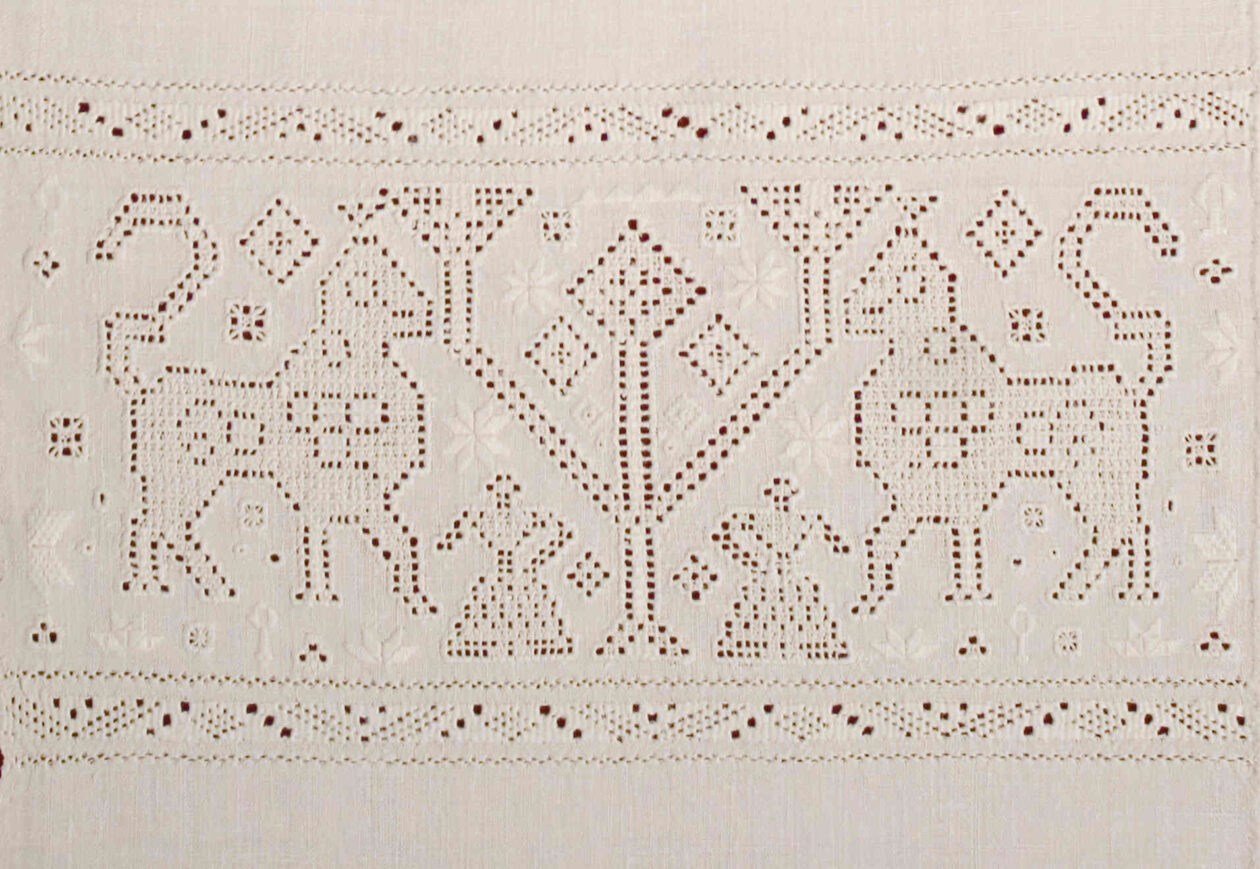
Edge of a towel showing the Rudesyning technique. © Greve Museum - Hvidsøm – circa 1820-1840 – Also known as square cutwork, Hvidsøm combines drawn thread and cutwork techniques to create a unique style of embroidered lace. Hvidsøm usually features two rows of chain stitches framing a central motif, with striped or checked filling patterns stitched in the open areas.
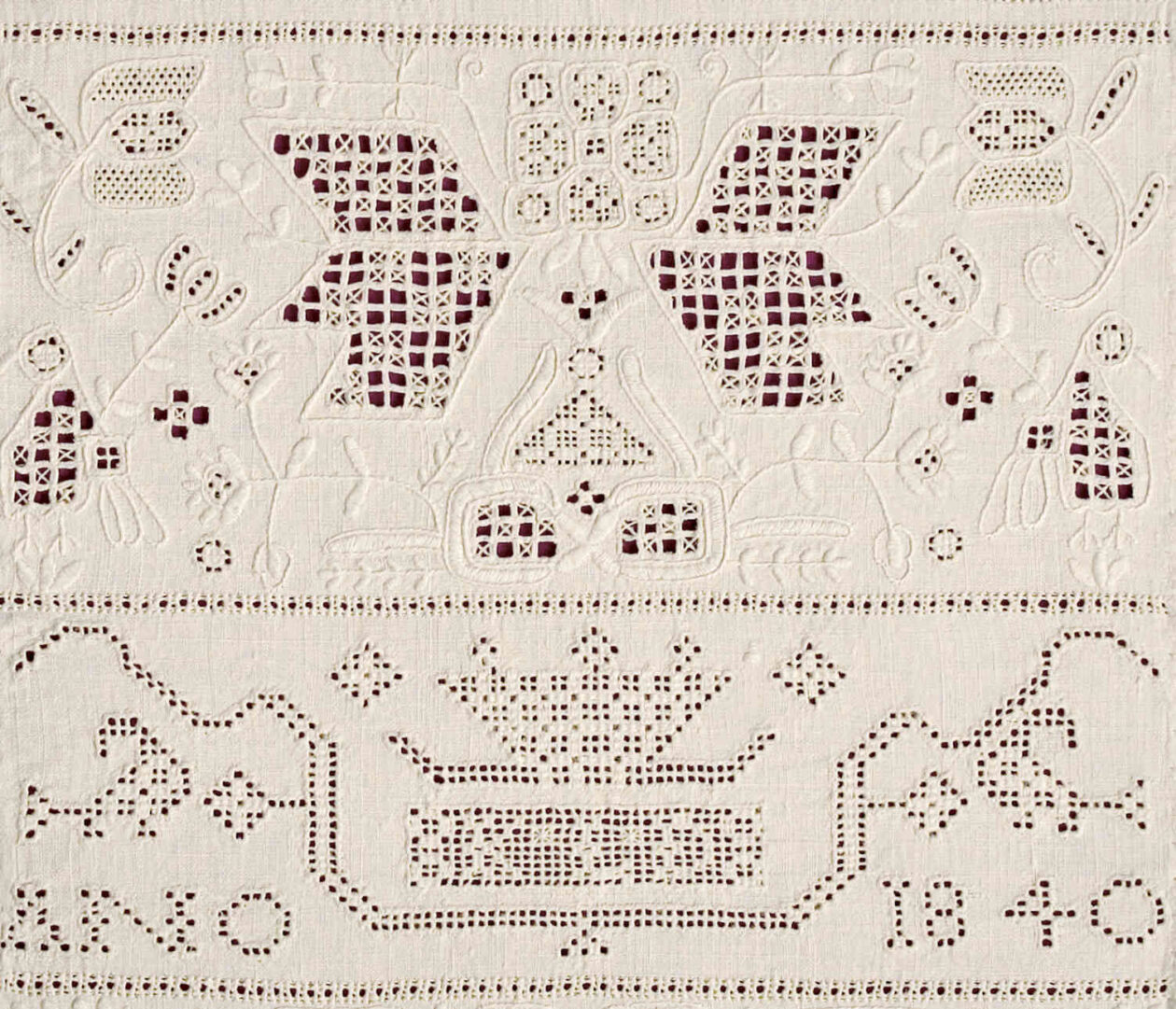
A decorative towel using Hvidsøm (top), Rudesyning, and Baldyring techniques. © Greve Museum - Baldyring – circa 1835-1855 – Considered an evolution of the Hvidsøm technique, and perhaps closest, stylistically, to Italian reticella, Baldyring uses drawn thread and counted thread techniques. Threads are drawn from the ground cloth, with the edges secured with an overcast stitch, and buttonhole stitches are used to fill in the open spaces. Satin stitch and outline stitch are also used to stitch floral or geometric patterns around motifs.
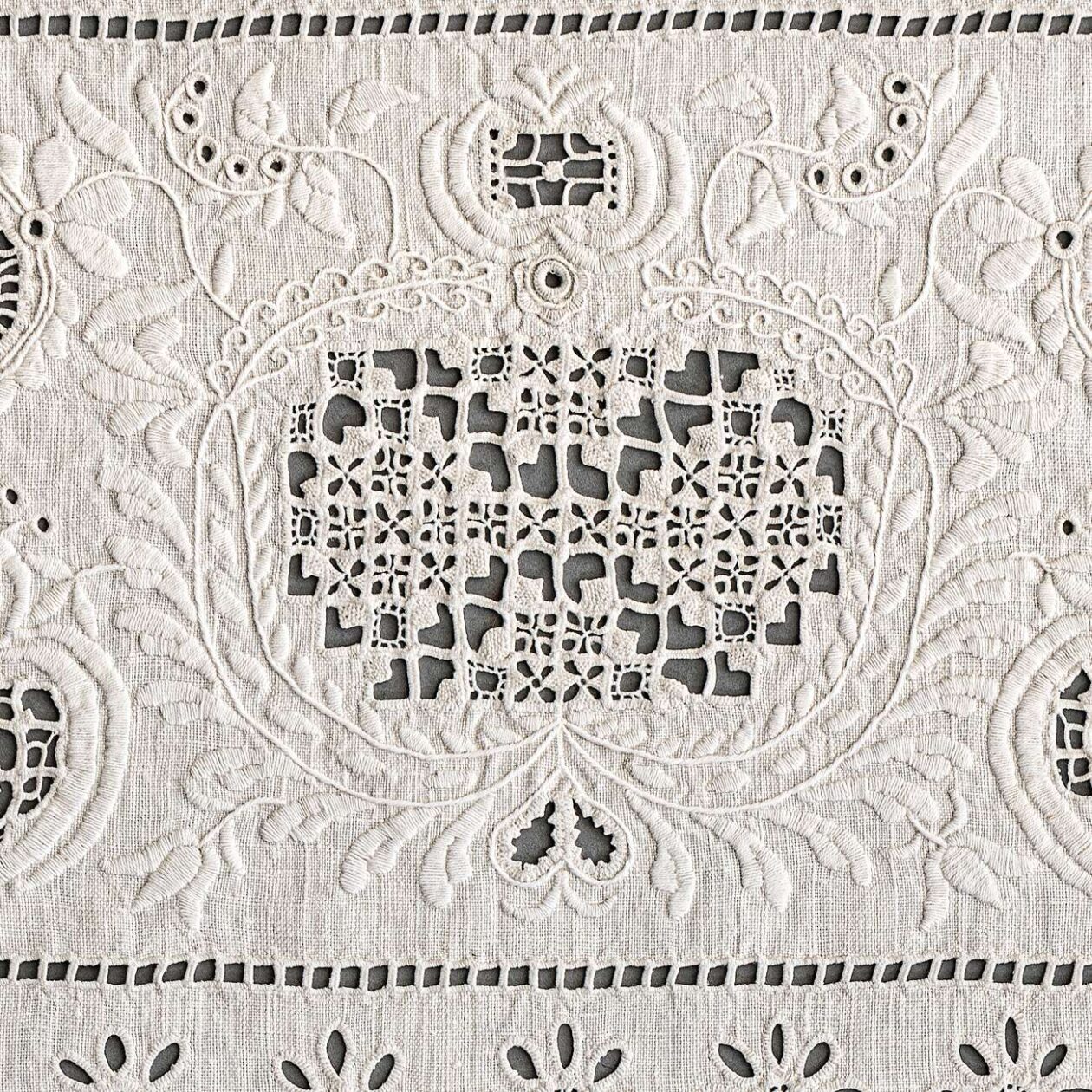
An example showcasing the Baldyring technique. © Broderi håndbogen - Udklipshedebo – 1855-1870 – Udklipshedebo is a freestyle technique that combines cutwork and embroidered lace. This final Hedebo technique arose when Danish embroiderers began filling their traditional patterns with scallop stitch, satin stitch, and buttonhole stitch. Hedebo rings, points, and curves fill Udklipshedebo patterns, often surrounded by leaves and other floral motifs worked in satin stitch.
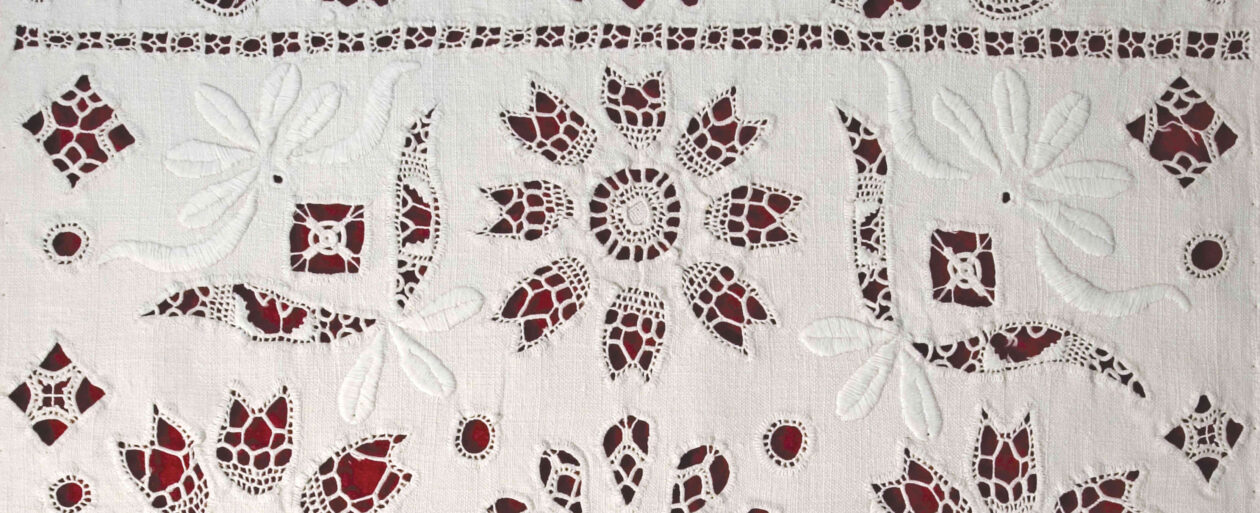
Example of Udklipshedebo technique. © Greve Museum.
Sources
Hedebo embroidery. (2024, January 5). In Wikipedia. https://en.wikipedia.org/wiki/Hedebo_embroidery
Textile Research Centre (2017, May 10). Hedebo Embroidery. An Introduction (Denmark). TRC Leiden. Retrieved October 5, 2026, from https://trc-leiden.nl/trc-needles/regional-traditions/europe-and-north-america/embroideries/hedebo-embroidery-an-introduction-denmark
Textile Research Centre (2017, May 10). Hedebo Embroidery. The Different Styles (Denmark). TRC Leiden. Retrieved October 5, 2026, from https://trc-leiden.nl/trc-needles/regional-traditions/europe-and-north-america/embroideries/hedebo-embroidery-the-different-styles-denmark
Textile Research Centre (2017, May 10). Tællesyning (Denmark). TRC Leiden. Retrieved October 5, 2026, from https://trc-leiden.nl/trc-needles/regional-traditions/europe-and-north-america/embroideries/tallesyning-denmark
Textile Research Centre (2017, May 10). Syede Hedeboblonder (Denmark). TRC Leiden. Retrieved October 5, 2026, from https://trc-leiden.nl/trc-needles/regional-traditions/europe-and-north-america/embroideries/syede-hedeboblonder-denmark
Textile Research Centre (2017, May 10). Rudesyning (Denmark). TRC Leiden. Retrieved October 5, 2026, from https://trc-leiden.nl/trc-needles/regional-traditions/europe-and-north-america/embroideries/rudesyning-denmark
Textile Research Centre (2017, May 10). Hvidsøm (Denmark). TRC Leiden. Retrieved October 5, 2026, from https://trc-leiden.nl/trc-needles/regional-traditions/europe-and-north-america/embroideries/hvidsom-denmark
Textile Research Centre (2017, May 10). Baldyring (Denmark). TRC Leiden. Retrieved October 5, 2026, from https://trc-leiden.nl/trc-needles/regional-traditions/europe-and-north-america/embroideries/baldyring-denmark
Textile Research Centre (2017, May 10). Udklipshedebo (Denmark). TRC Leiden. Retrieved October 5, 2026, from https://trc-leiden.nl/trc-needles/regional-traditions/europe-and-north-america/embroideries/udklipshedebo-denmark
(n.d.). Baldyring. BroderihåNdbogen. Retrieved October 5, 2026, from https://www.broderihaandbogen.dk/broderiteknik/baldyring
(n.d.). Hedebosyning. BroderihåNdbogen. Retrieved October 5, 2026, from https://www.broderihaandbogen.dk/broderiteknik/hedebosyning
(n.d.). Dragværk. BroderihåNdbogen. Retrieved October 5, 2026, from https://www.broderihaandbogen.dk/broderiteknik/dragvaerk
(n.d.). Tællesyning. BroderihåNdbogen. Retrieved October 5, 2026, from https://www.broderihaandbogen.dk/broderiteknik/taellesyning
(n.d.). Rudesyning. Greve Museum. Retrieved October 5, 2026, from https://grevemuseum.dk/arkiv-og-samling/hedebosyning/tekstilerne/rudesyning
(n.d.). Hedebo Embroidery in Denmark. Greve Museum. Retrieved October 5, 2026, from https://grevemuseum.dk/arkiv-og-samling/hedebo-embroidery/cultural-history/hedebo-embroidery-in-denmark
(n.d.). Udklipshedebo. Greve Museum. Retrieved October 5, 2026, from https://grevemuseum.dk/arkiv-og-samling/hedebosyning/tekstilerne/udklipshedebo
(n.d.). Hedebo in Variations. Greve Museum. Retrieved October 5, 2026, from https://grevemuseum.dk/arkiv-og-samling/hedebo-embroidery/about-hedebo-embroidery/hedebo-embroidery-in-variations
(n.d.). Hvidsøm. Greve Museum. Retrieved October 5, 2026, from https://grevemuseum.dk/arkiv-og-samling/hedebo-embroidery/textiles/hvidsoem