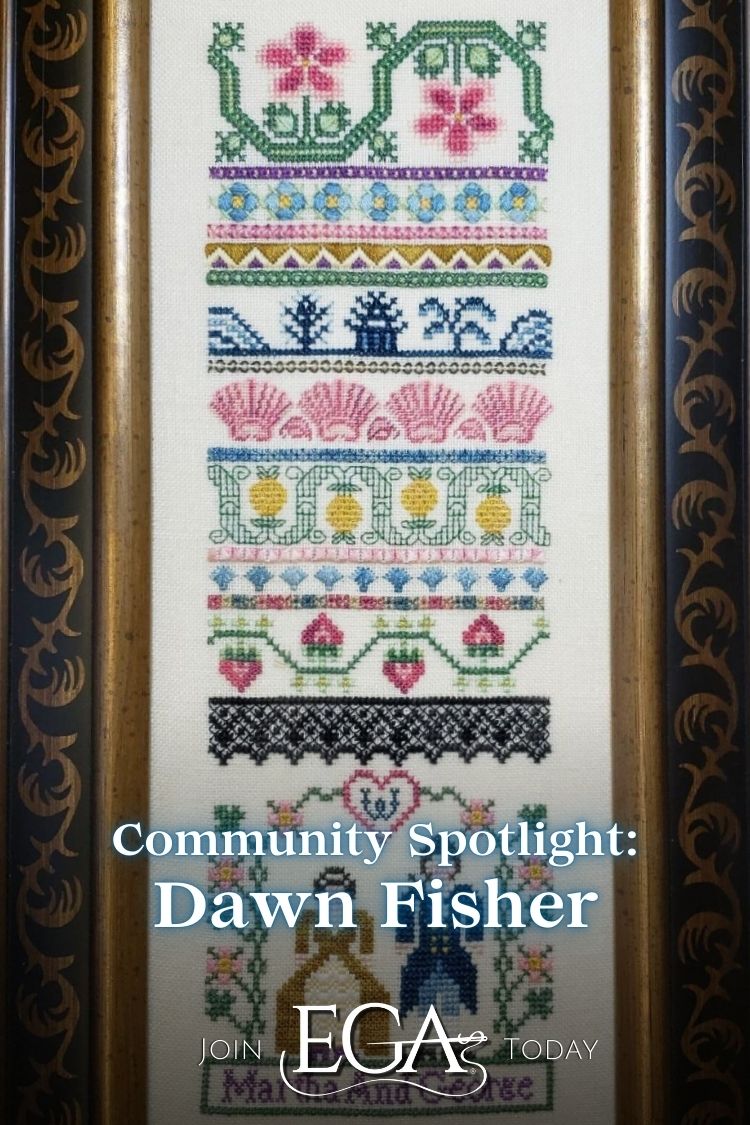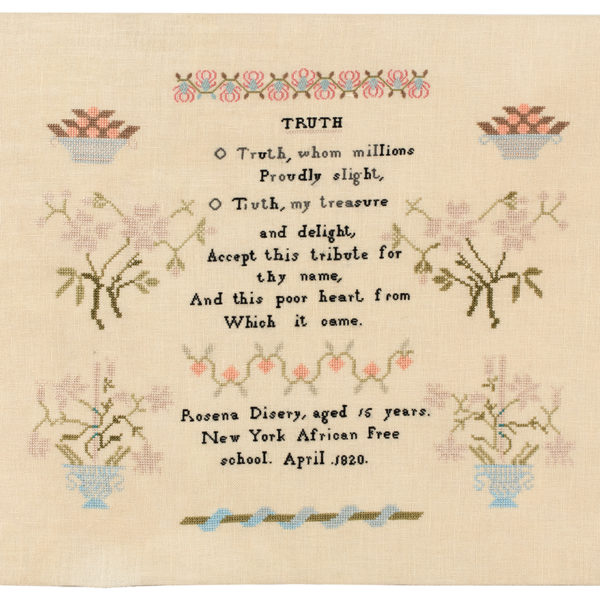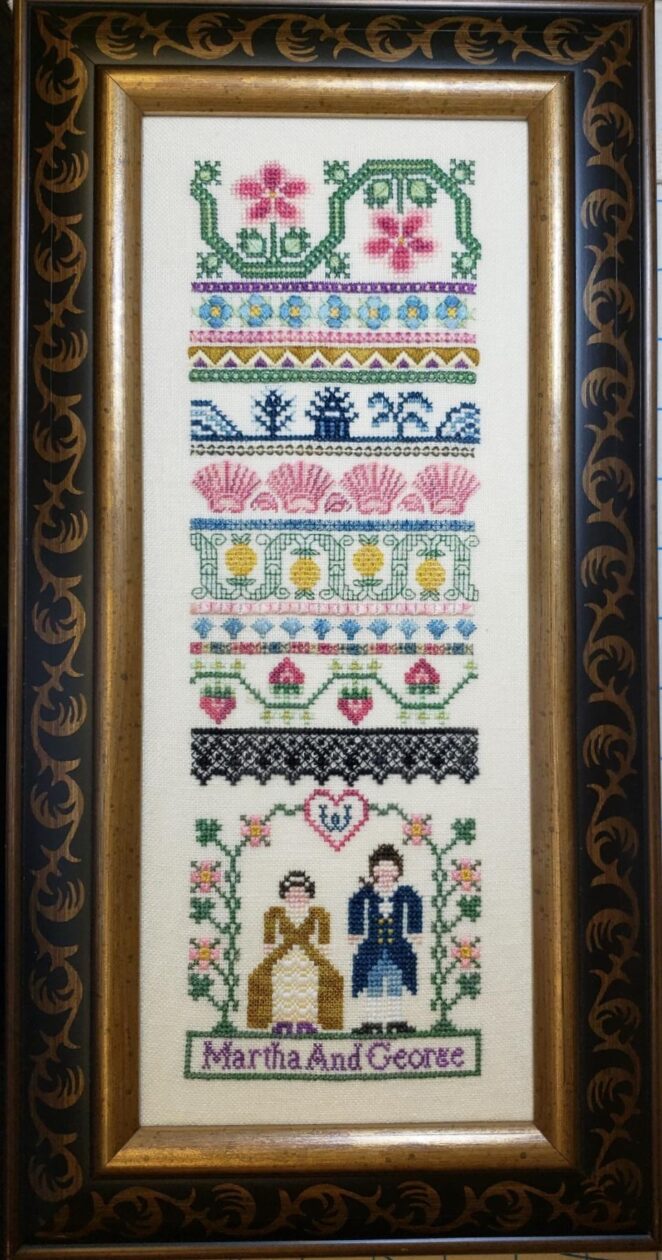
Class registrations for EGA National Seminar 2026: Wish Upon a Stitch are now open! There are so many wonderful needlework teachers, techniques, and classes to explore this fall. We talked with Dawn Fisher, who is teaching Class 2106 Lady Washington (shown above), a sampler showcasing bands that represent the life of Martha Dandridge Custis Washington. The sampler begins with the Martha Washington Geranium and concludes with Martha and George in their wedding finery. In addition to learning numerous stitches, students will learn Martha’s captivating life story including her upbringing, first marriage, the births and deaths of her children, her life with George especially during the Revolutionary War, her life as the first “First Lady” and her life after the death of her beloved husband, George. Stitchers can trust in the veracity of the motifs and themes represented in Lady Washington—reproduction and historical samplers are Dawn’s passion, and she takes very seriously the art of accurate reproduction. Keep reading to learn more about the many steps Dawn takes to create faithful reproduction samplers.
What were your first experiences with needlework and embroidery?
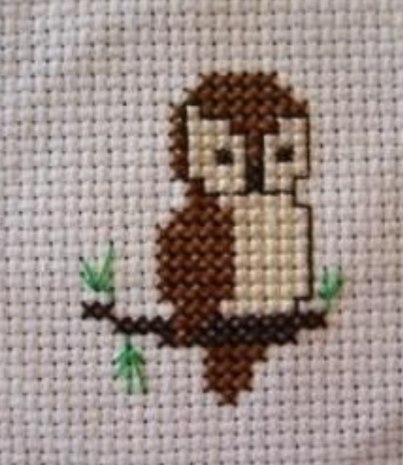
In 1980, I went with my mom to a tiny needlework shop, which was mostly a yarn shop but she had some stitching supplies. On the wall was a cross stitch picture of the Norman Rockwell painting of a boy with a fishing rod. I was fascinated and when asked if there was anything I wanted at the shop, I said I want to learn to do that, pointing at the picture. She pulled out the little DMC owl kit that many of us started with, and I was hooked!
Luckily there was another store in town, the Singer Sewing Center, which also carried some stitching supplies and offered a few beginner classes on needlework, such as cross stitch and chicken scratch etc. The woman teaching told me about the Embroiderers Guild of America which had meetings in a nearby town. I attended a meeting and immediately joined. These EGA meetings expanded my knowledge and love of stitching.
What sparked your interest in antique samplers?
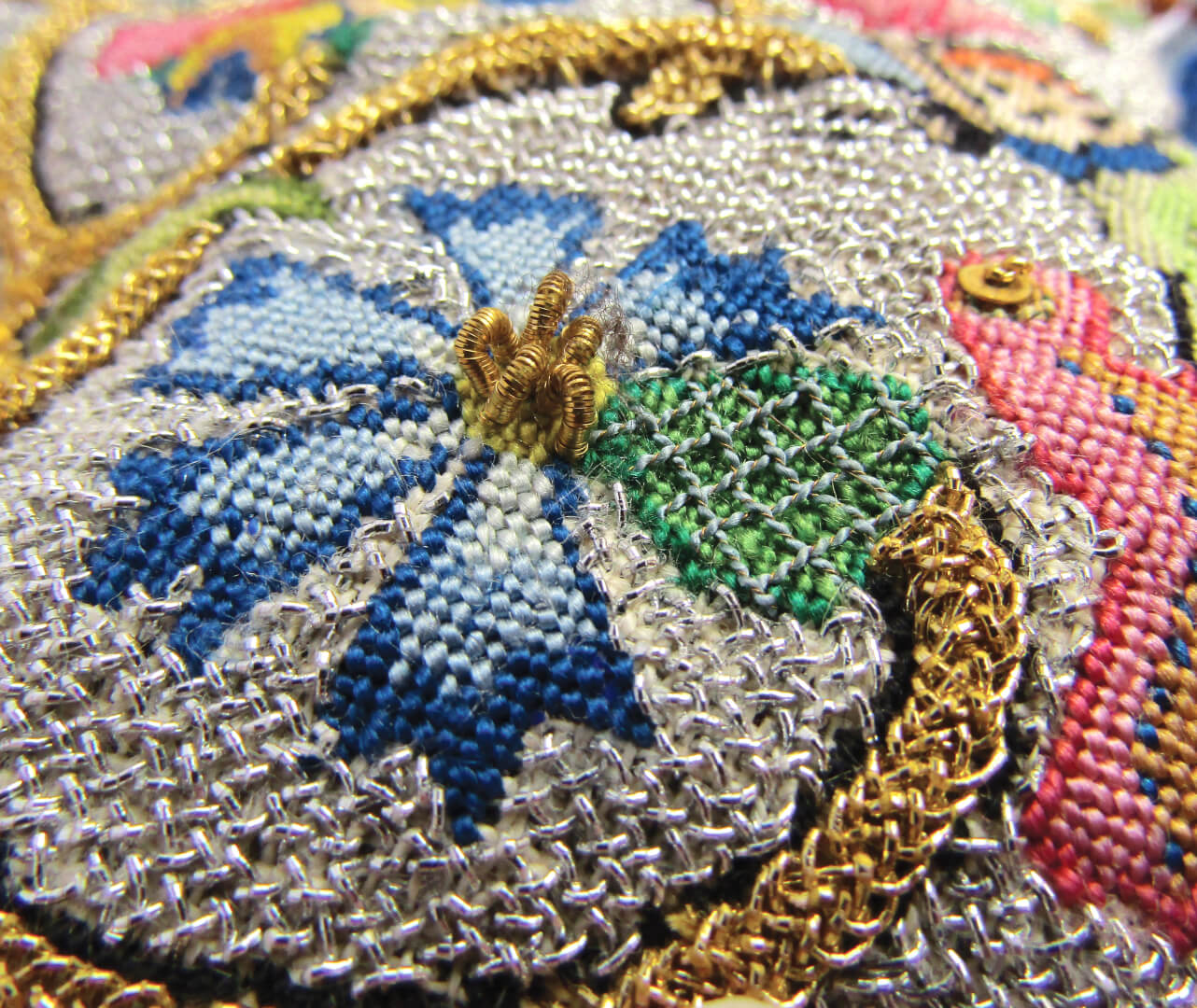
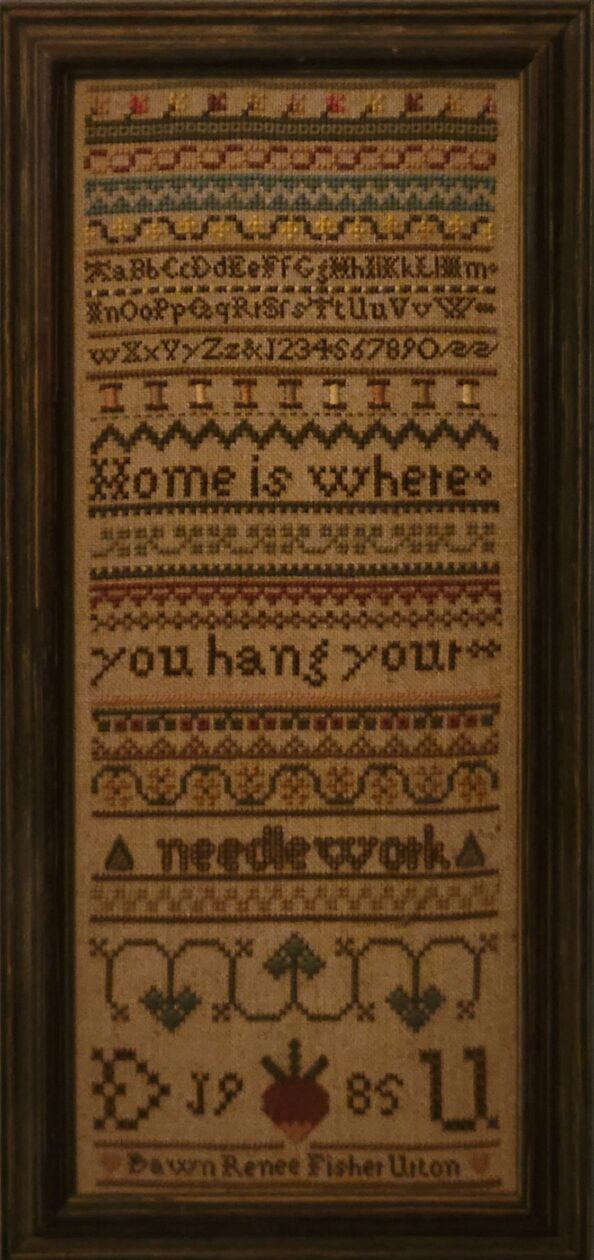
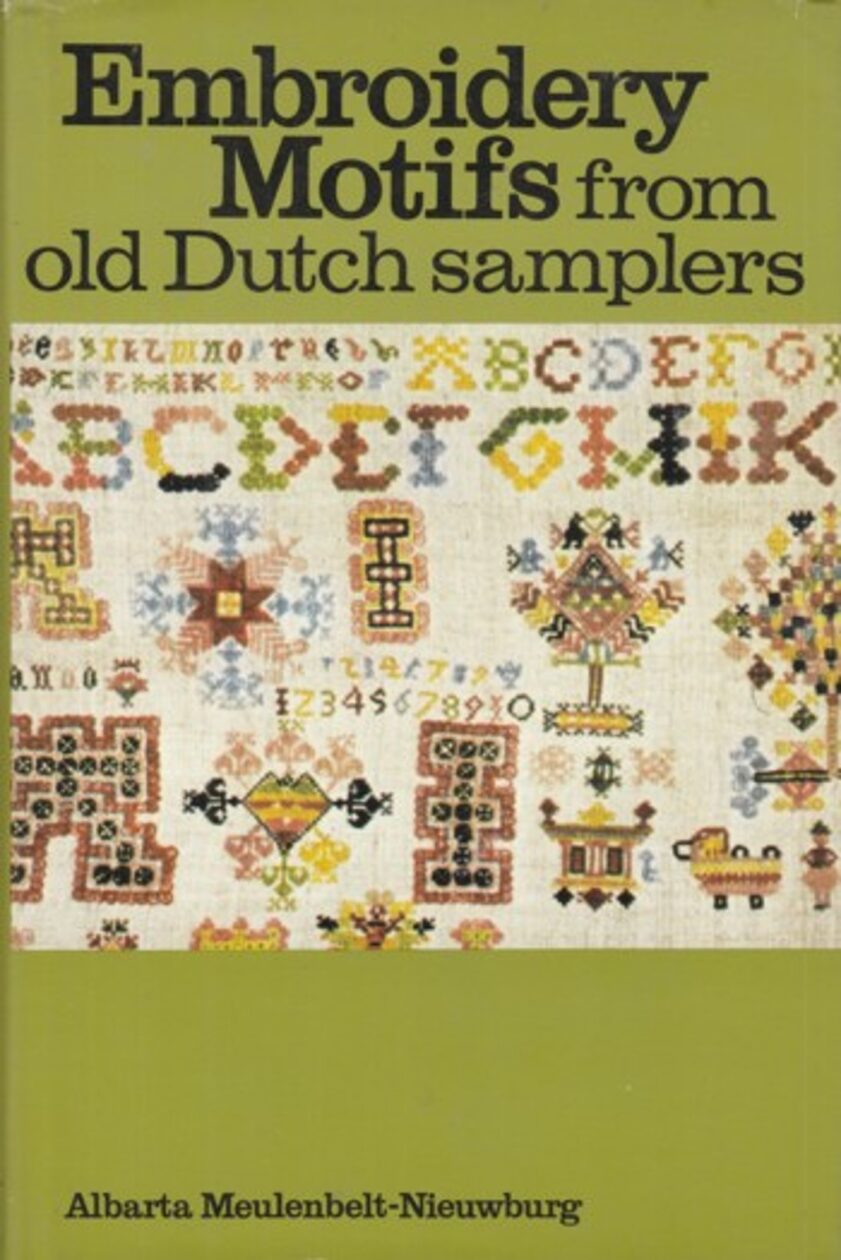
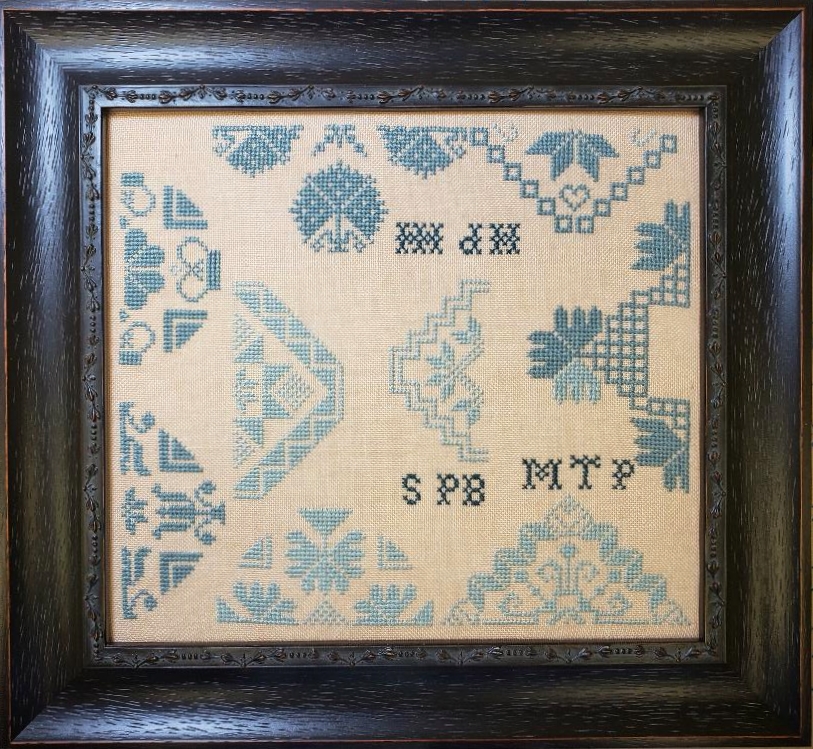
Our local EGA group was lucky to have a nearby shop that was owned by Eileen Bennett, who many of you may know and have taken classes from. She taught our group, what I believe may have been one of her first classes, Home is Where You Hang Your Needlework. She talked about samplers and their history during the class. She taught us how to stitch on linen and many specialty stitches. I fell down the rabbit hole on samplers! I purchased many of Eileen’s patterns and started to change the colors on them because I preferred brighter colors. I also purchased a book on Embroidery Motifs from Old Dutch Samplers (shown below), which inspired me to begin designing my own samplers.
Do you have a favorite antique sampler? Why is it your favorite?
I have many “favorite” samplers! My pride and joy is a sampler stitched by Sary Outfil in 1709. This is a wonderful band sampler I purchased from a dealer in England. I have not been able to find any information on Sary other than her name was probably Sara Outfield and she was a wonderful stitcher! Some sections of the sampler are stitched over 3 threads, which was common for samplers stitched during that time, and other sections are stitched over 4 threads.
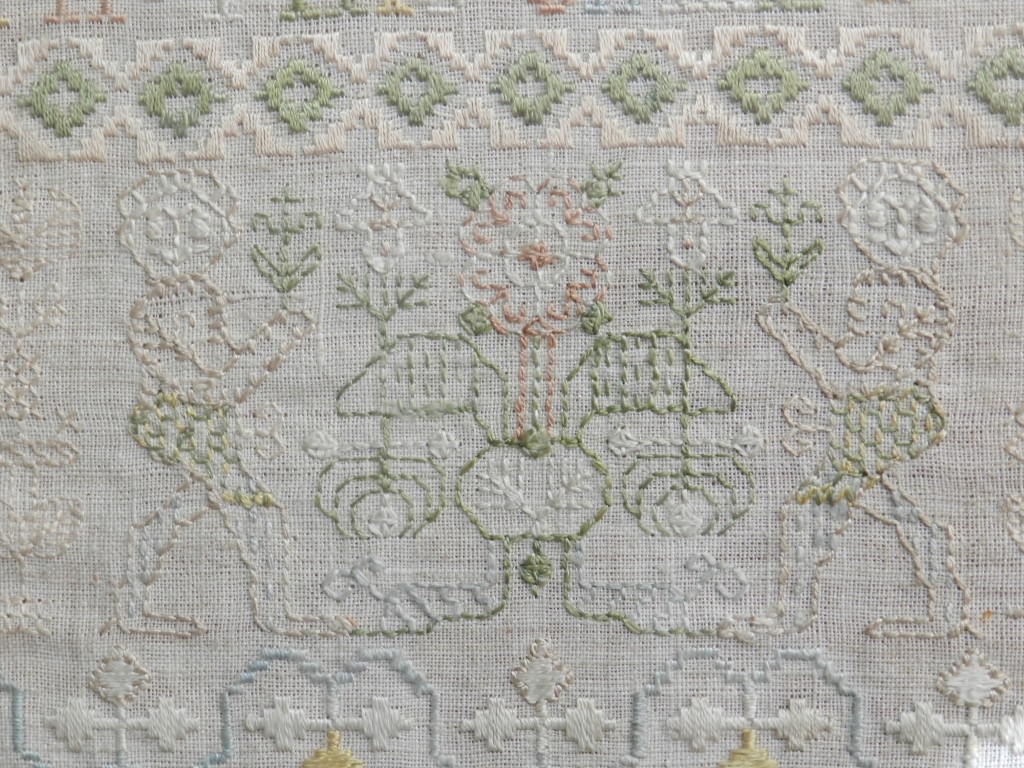
Because of this, it was very challenging to reproduce Sary using typical charting methods. I am happy to say, I have reproduced the sampler and stitched the reproduction but have not released the pattern yet. I am hoping to release the chart soon.
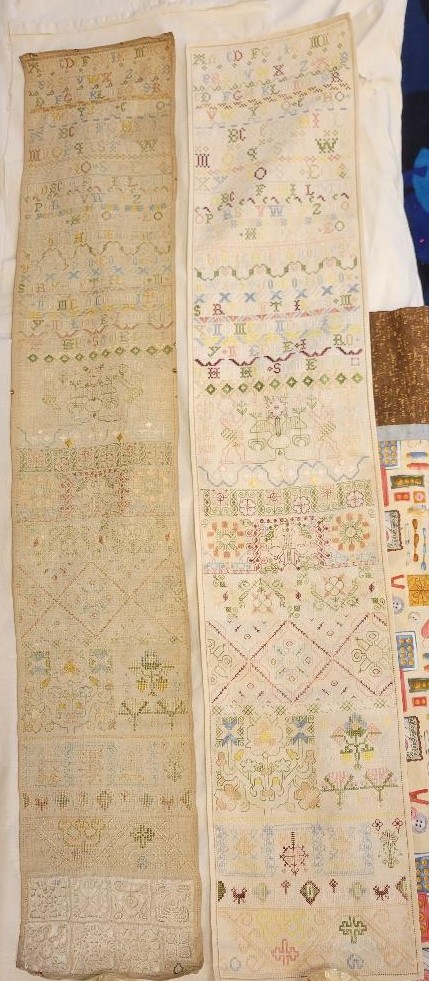
You often perform research on antique samplers before you reproduce them. What does that research look like? What does your design process look like?
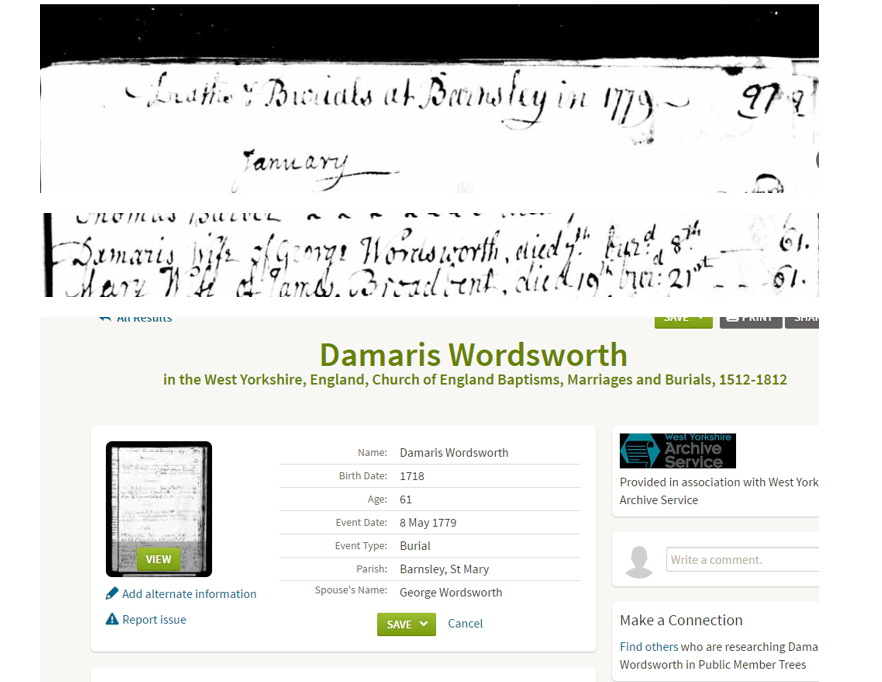
I usually start with the name to see if I can find the stitcher in genealogy websites such as FamilySearch.org, which is a wonderful free platform where you can explore genealogical records. Some of my antique samplers list siblings and/or parent names, which helps with research. Most do not, so I look through my large collection of books to find similar samplers or motifs.
I also use Google to search for verses used on the sampler. I have been able to date some of my samplers from the verses. It is so much easier now to research samplers! When I started there was no internet, so I purchased every book I could find on samplers and needlework.
When reproducing a sampler, what aspects of the original sampler do you consider during the process of updating and translating the work for contemporary stitchers? What details do you aim to preserve?
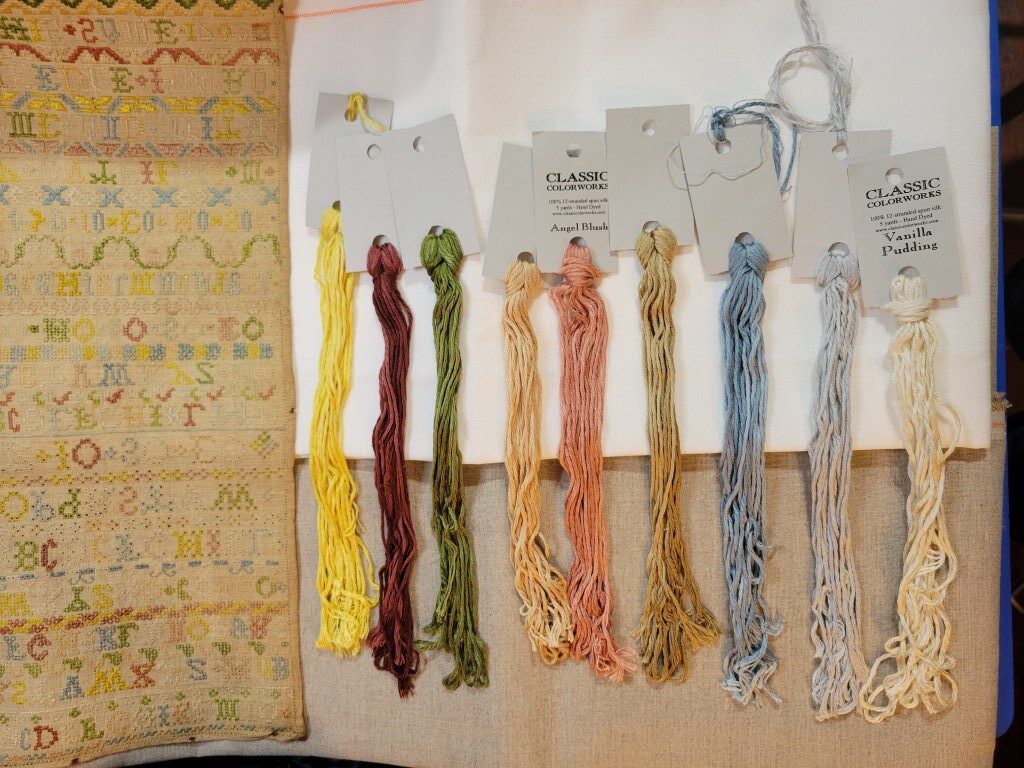
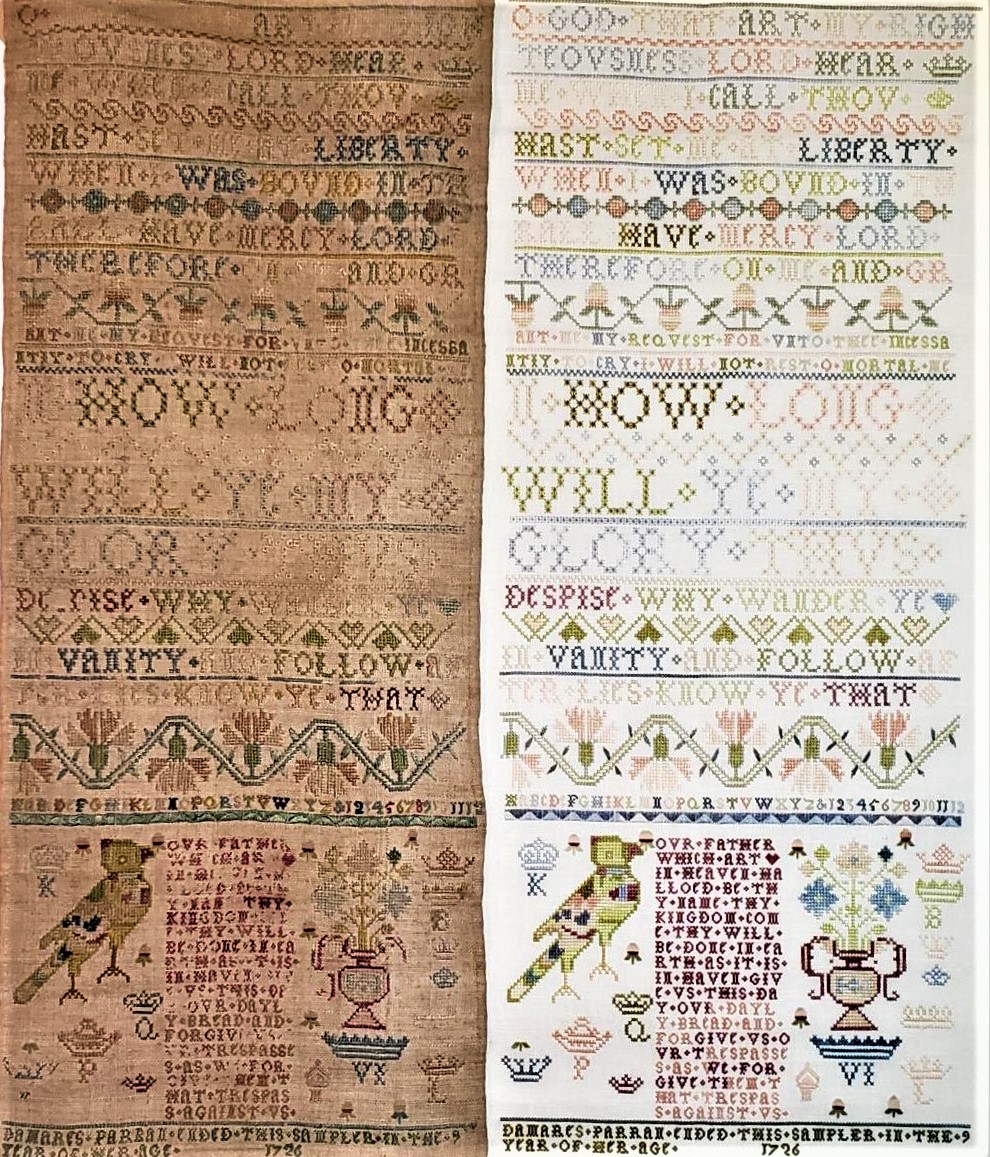
If possible, I try to use a similar color and thread count of linen. If the sampler is not framed, I study the unfaded colors on the back to recreate the sampler as it was originally stitched. I spend a lot of time, using my strongest magnifiers, to reproduce the exact stitches used on the sampler.
I use different computer programs to create the charts and stitch diagrams so the reproduction will be as close to the original as possible. Making sure the stitch diagrams are easy to see and follow is very important to me. I know how frustrating it can be to use a diagram that is hard to follow.
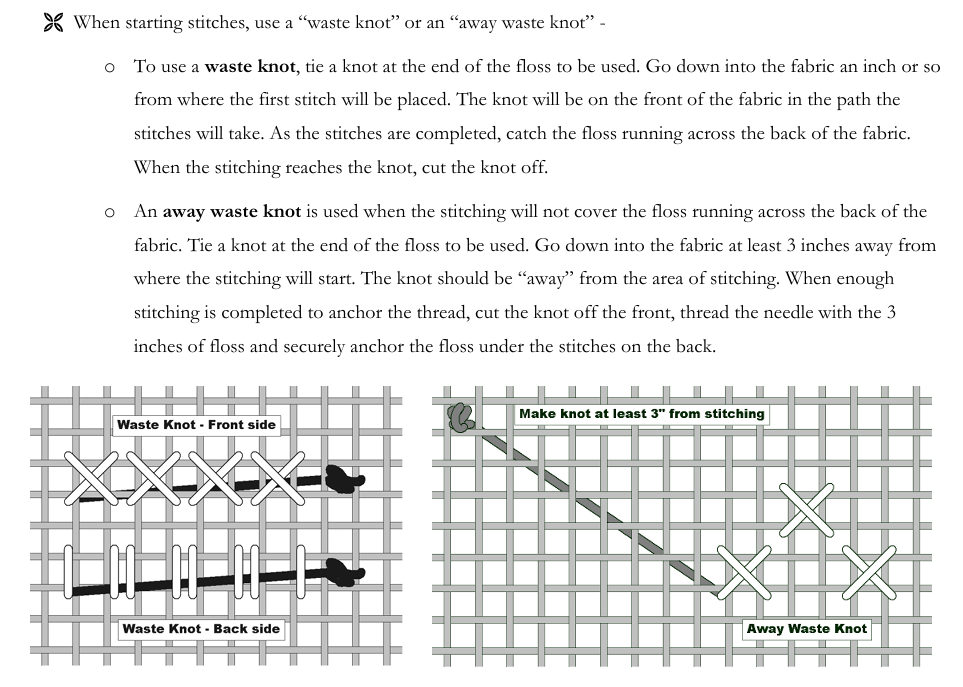
Not being a fan of pencil and graph paper, I started using computer programs very early in my designing. I purchased my first cross stitch design computer program in the mid 1980s! I have upgraded many times since then but still use my computer for everything.
You’re teaching a sampler class at EGA National Seminar 2026: Wish Upon a Stitch called Lady Washington. Each band on the sampler depicts a highlight from the life of Martha Washington. Can you talk about what drew your interest to Martha Washington, and what details you considered when designing this sampler?
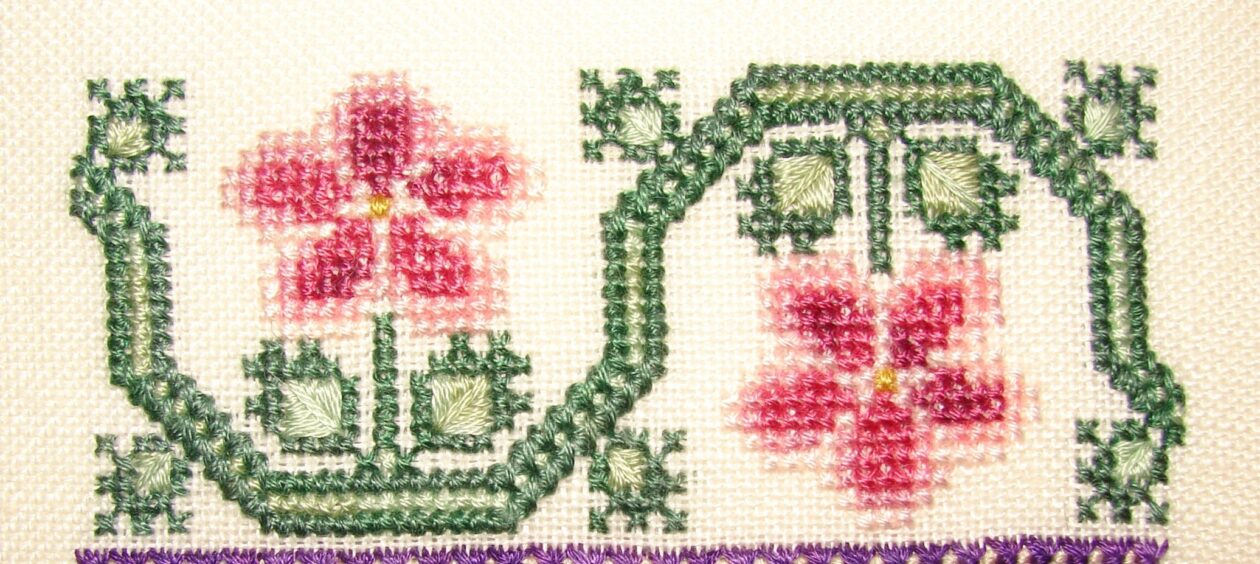
I was originally thinking about making a sampler for Betsy Ross, but I stumbled on a book about Martha Washington, and that moved me to start creating a new class design. As I read the book, I started to visualize the stories each band of the sampler would represent along with stitches for these bands. I love history and wanted to share Martha’s life with other stitchers, especially since she was also an avid stitcher!
Do you have any favorite resources to share with needleworkers interested in learning more about antique samplers?
I have numerous books on samplers and stitches that I pull out when I want to be inspired. Most of them are older and out of print but you can still find used copies on eBay and Amazon. I follow many groups on Facebook that feature samplers and collectors. Whenever someone mentions a book, I start searching for it online, if I don’t already have it! I also visit websites that are recommended by other members.
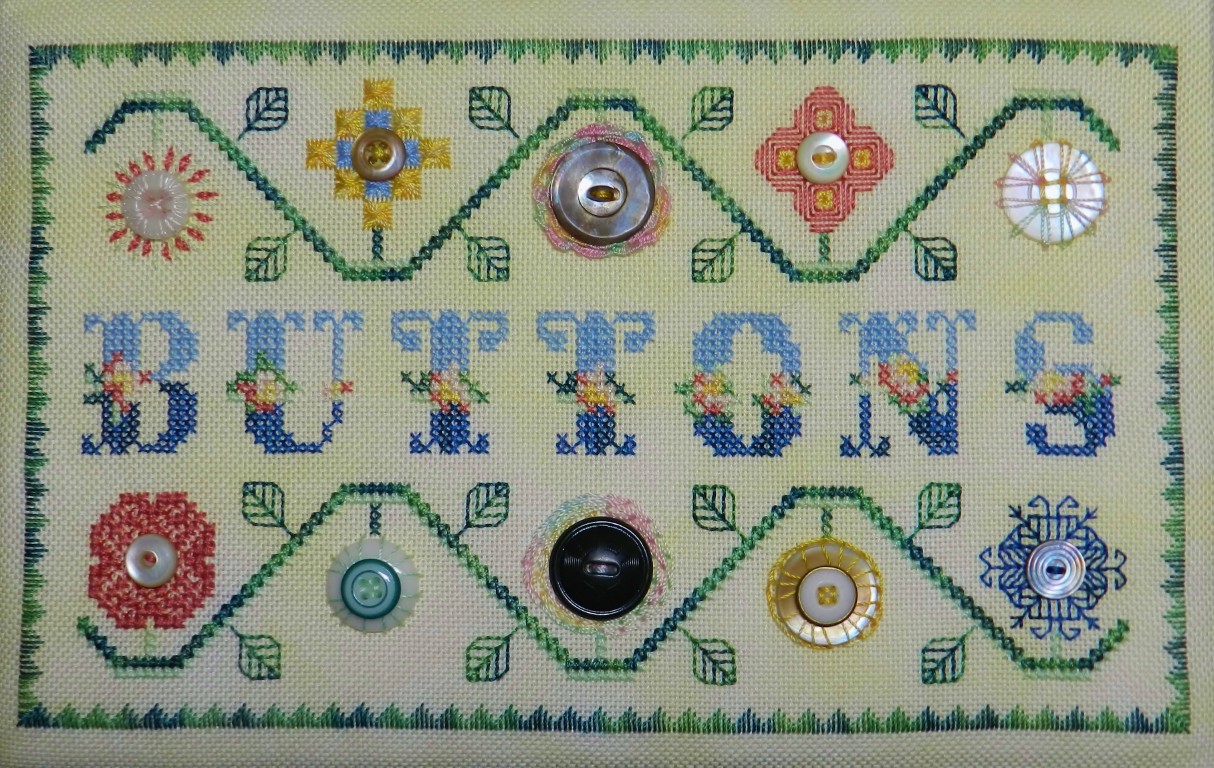
Where can interested needleworkers learn more about your and your work?
I have a Facebook page for Morning Glory Needleworks, my business name, where I post about new designs and upcoming classes. I also have an Instagram account – @mgneedleworks, which I also post about new designs and upcoming classes.
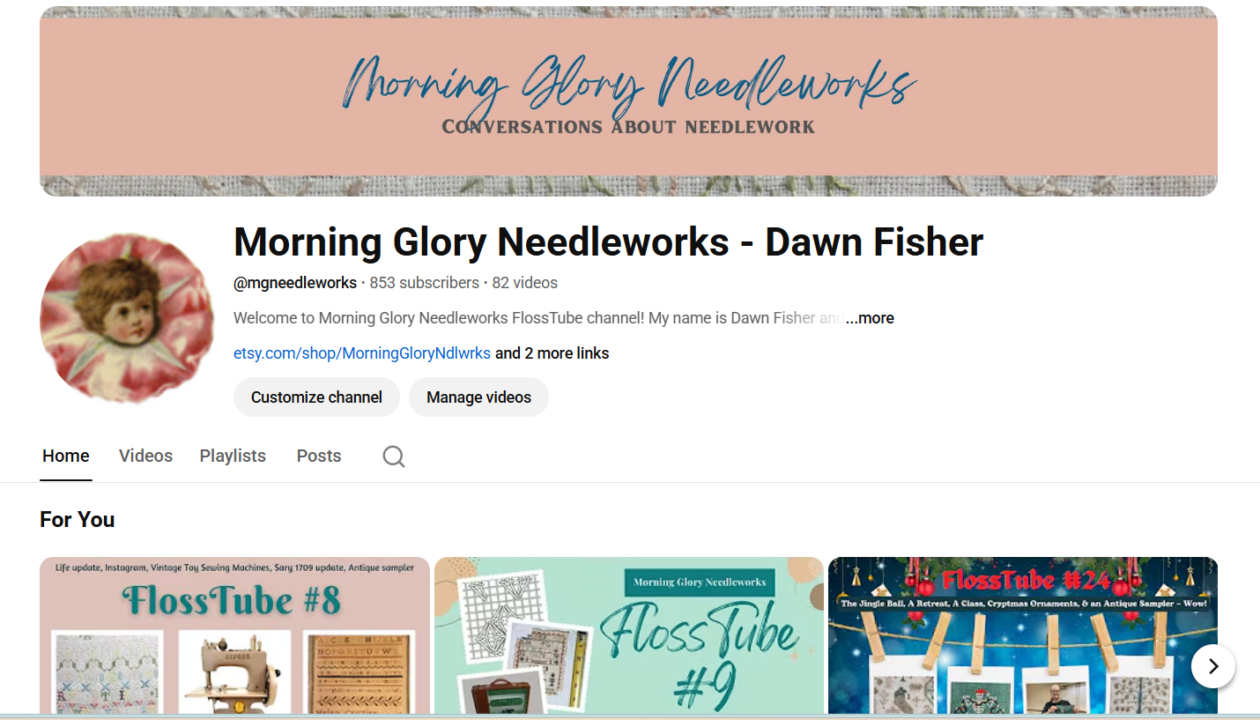
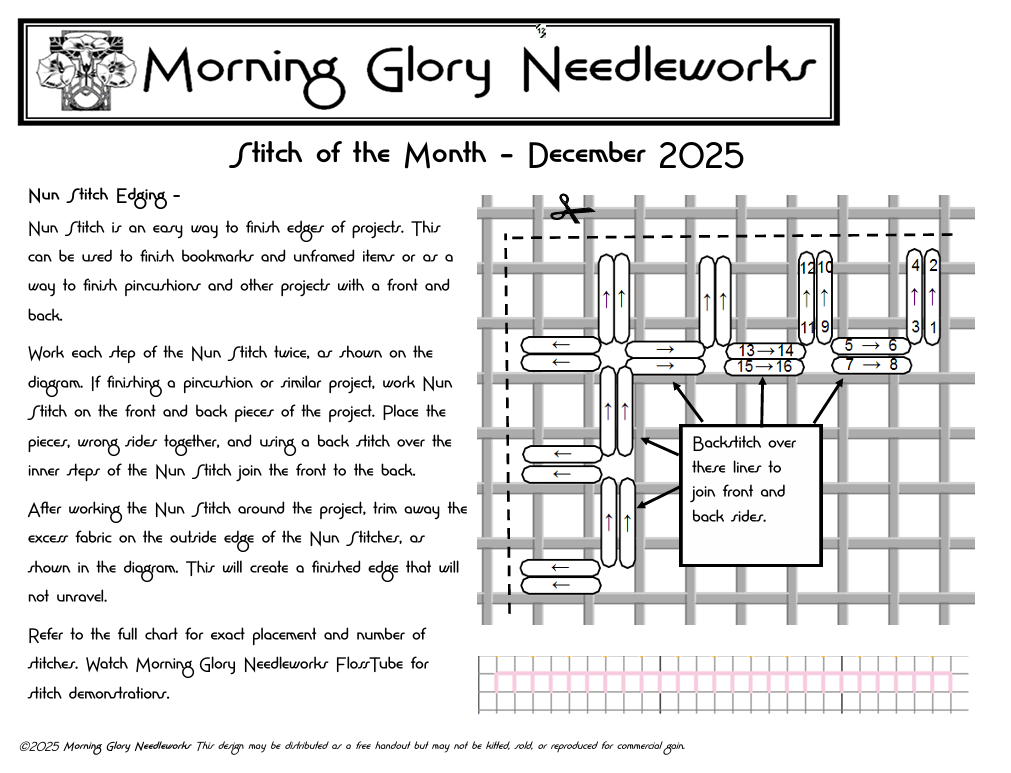
For several years, I posted 2 FlossTube videos each month as Morning Glory Needleworks where I talk about books, needlework, and sewing tools in my collection. The video posted the first of each month and included a new Stitch of the Month, which I discuss and demonstrate. A pdf of the stitch diagram and instructions was then posted in the Stitch of the Month Facebook group. I want to share my love of stitching and stitches with everyone!