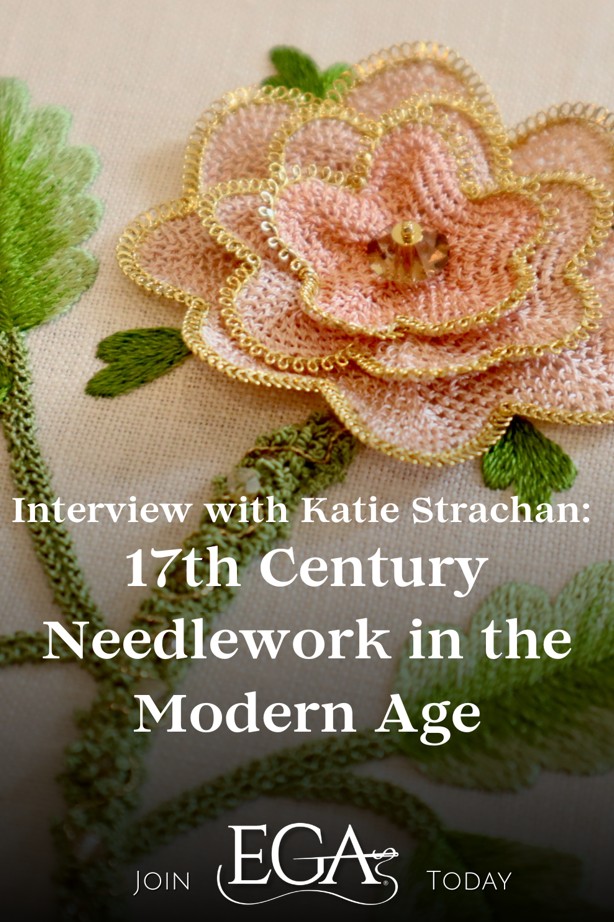
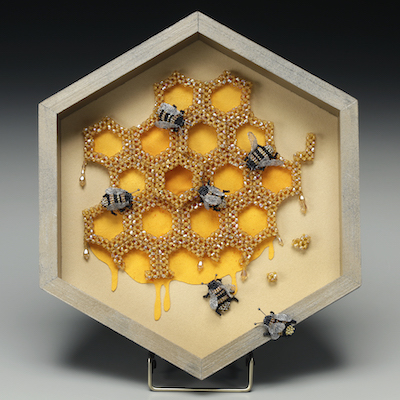
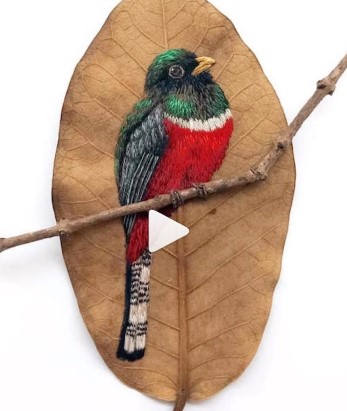
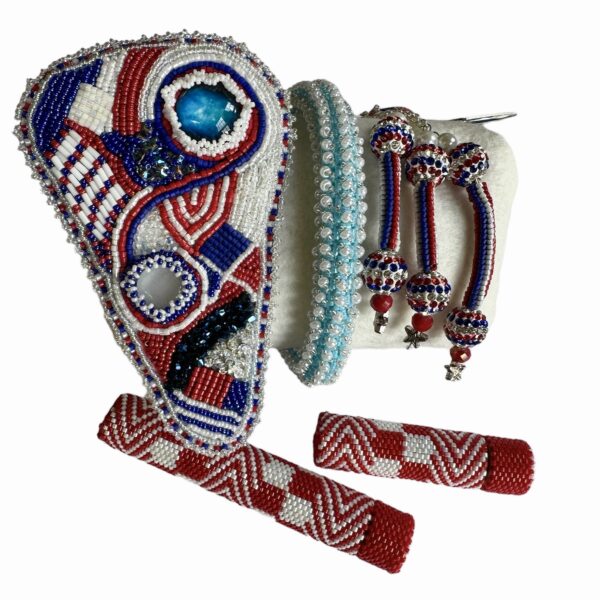
As needleworkers, we practice an art form that has existed for hundreds, if not thousands of years. The stitchers who came before us, and the techniques they developed and mastered, have informed our own efforts and guided our innovations. Katie Strachan sees this deep, abiding history as an inspiration for her own work—a lodestar for navigating her contemporary interpretations, which aim to best express the original intention of the needlework. We talked with Katie ahead of her virtual lecture Caskets and 17th Century Needlework Education to learn more about her work and what she hopes stitchers will take from her upcoming virtual lecture.
What drew you to the needlework of girls in 17th century England?
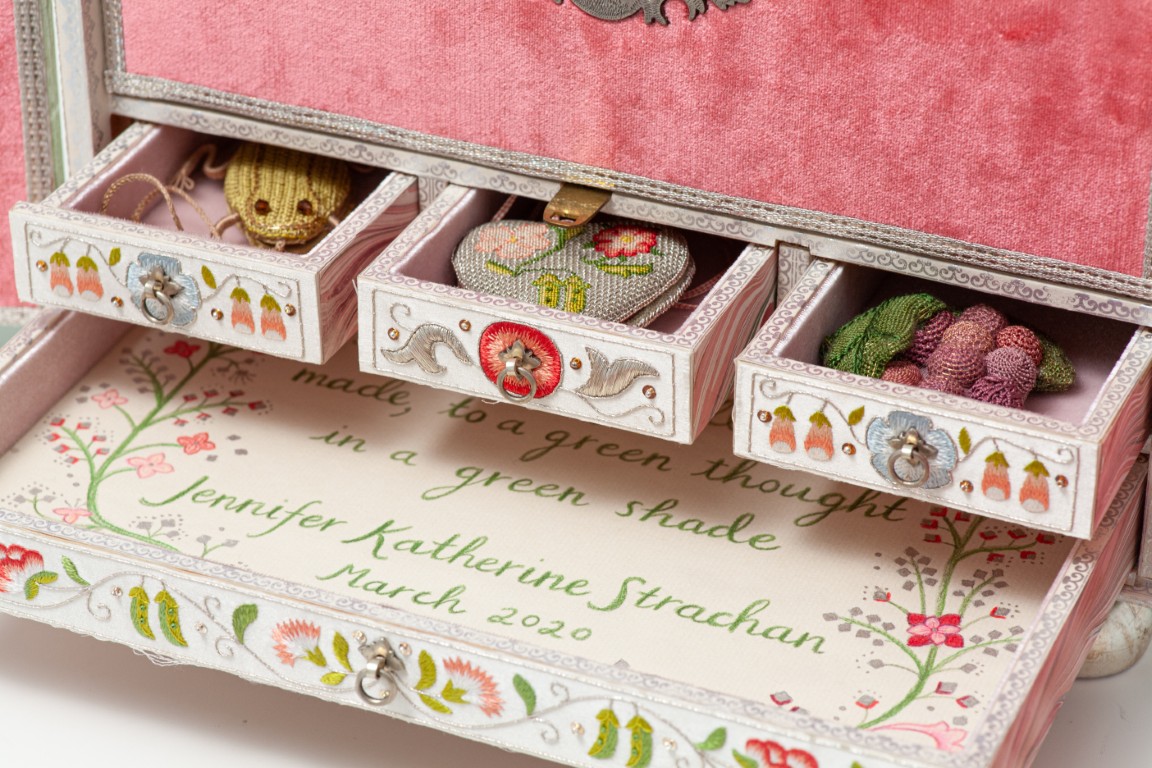
I had stumbled across the magnificent embroidered caskets of this period on the internet, and was fascinated by the possibilities of the form—the exterior gives scope to really tell a story, and then you have the interiority of the casket as well, which effectively doubles your design space. A casket can hold secrets, puzzles—it has infinite possibilities.
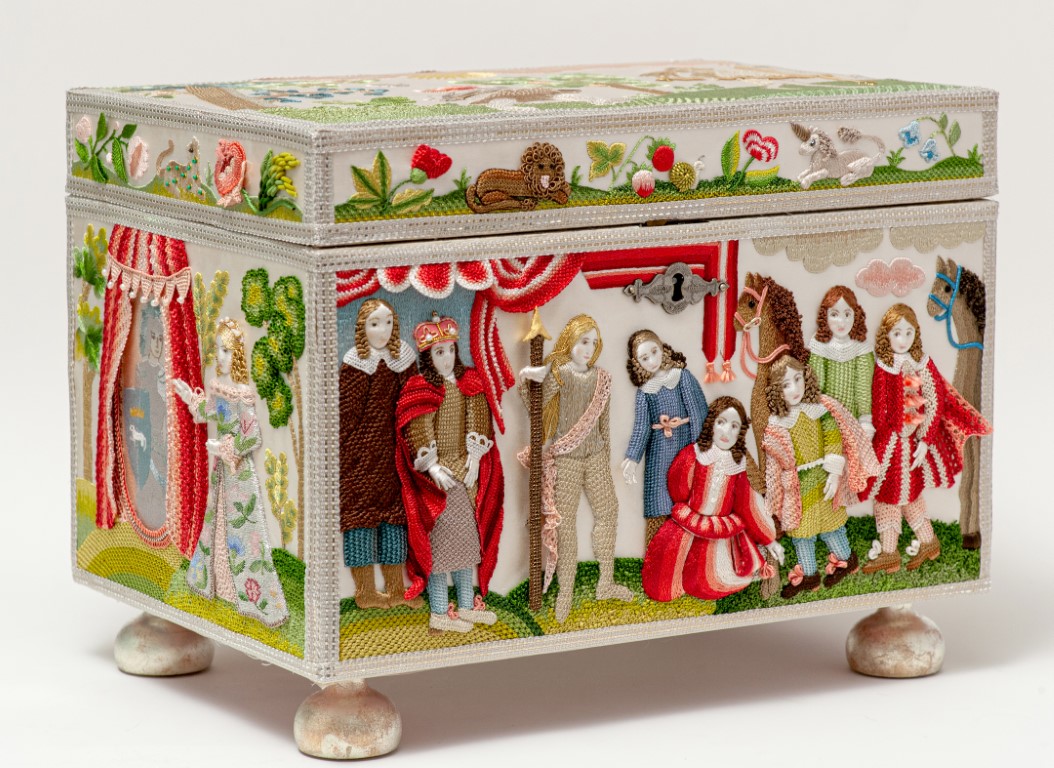
The embroidery on the exterior of the original 17th century caskets didn’t originally appeal to me – it was more the wonder of this elaborate puzzle box – but close study of those pieces really gave me an appreciation for it, and from there I just tumbled into the rabbit hole of all the other amazing kinds of pieces worked by schoolgirls in this period.
Your website says, “My work focuses on large scale, dimensional pieces that bring together a range of techniques from various centuries and disciplines to attempt to create a new approach to this historic art.” Which techniques and time periods are you most interested in?
I most often reference the 17th century—both amateur and professional embroidery in England and the Netherlands in particular—but I find a great deal of inspiration in fashion embroidery from all periods. 18th century French waistcoat designs, couture embroidery in the contemporary French ateliers, the costume work of Michele Carragher, Hannah Mansfield’s dimensional goldwork—there’s inspiration to be found everywhere.
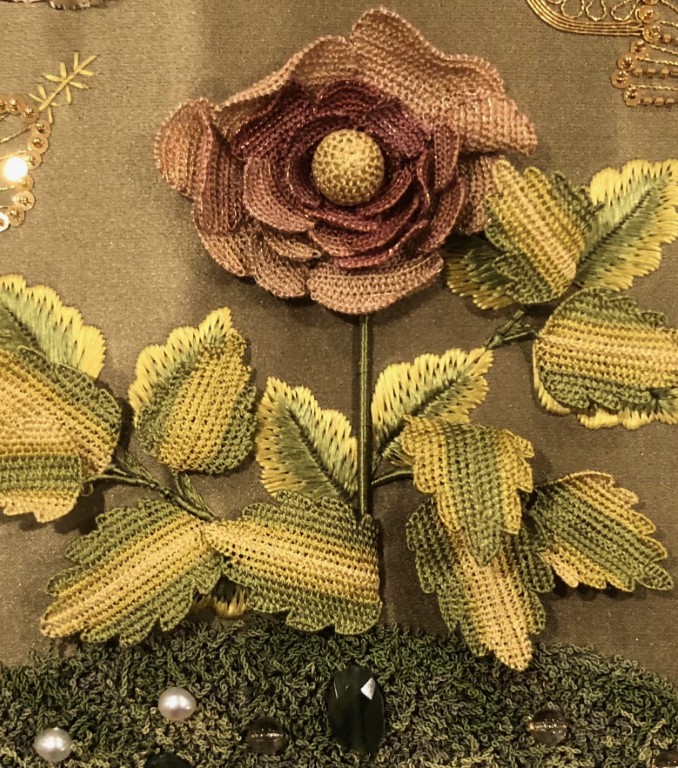
Do you have a favorite design? Why is it your favorite?
The next design is always my favorite design—to each new project I bring everything I’ve learned along the way, and all things feel possible. I’m very much a process stitcher, and making is my favorite part—problem solving and bringing a design to life under my hands. The infinite sense of possibility that comes with each new project is a magical feeling.
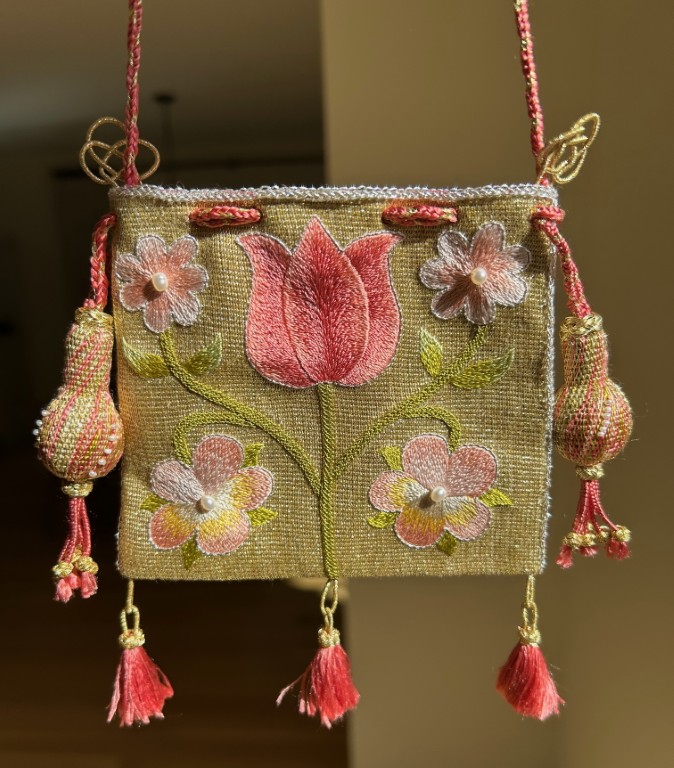
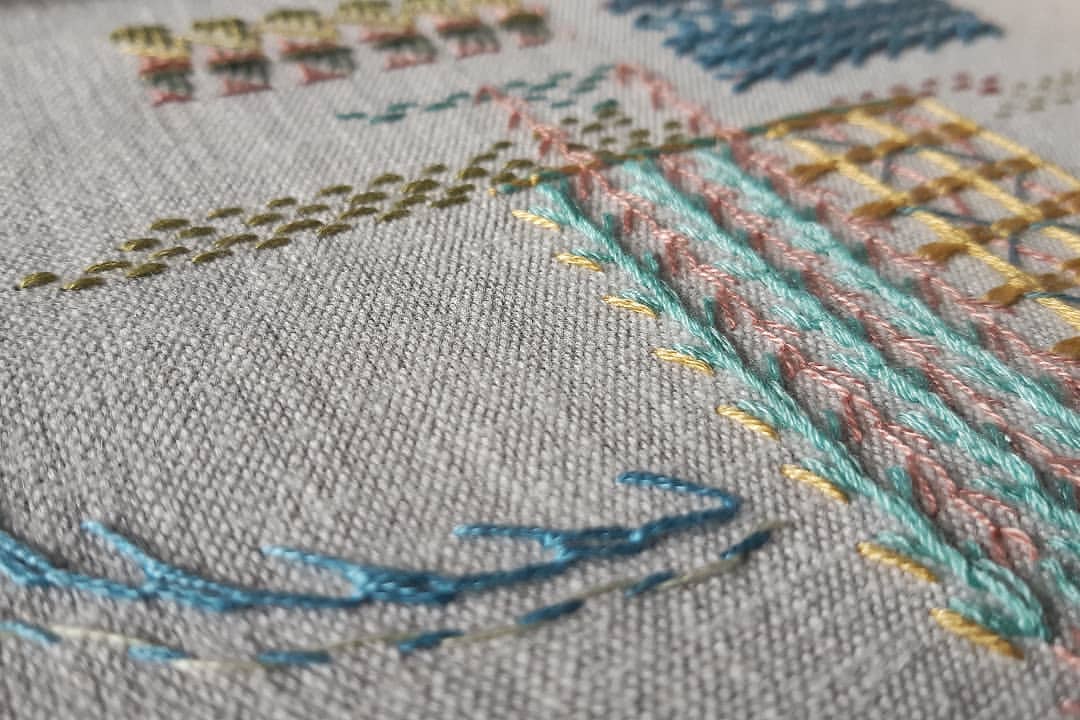
Exploring color and “achieving the most range, depth, and texture out of a limited color palette” is an ongoing focus for you. Why do you focus on using a limited color palette? How do you approach stretching a limited color palette to expand its range?
Embroidery is always a matter of wrestling with a limited color palette because you’re always bound by the materials that exist. It’s not paint, where if you don’t love your green as mixed, you can add in a little yellow, tone it down with a touch of brown, and tweak it to your satisfaction. At first, having my colors chosen for me—because there are a lot of shades available between all the different thread lines, but somehow I’m always missing the exact color I’m picturing—was one of the enormous frustrations of embroidery.
But it can also focus your work, so I decided to embrace that limitation by deliberately working within a very focused shade range. I’m drawn to certain shades, and trying to get the most out of them provides a satisfying creative challenge.
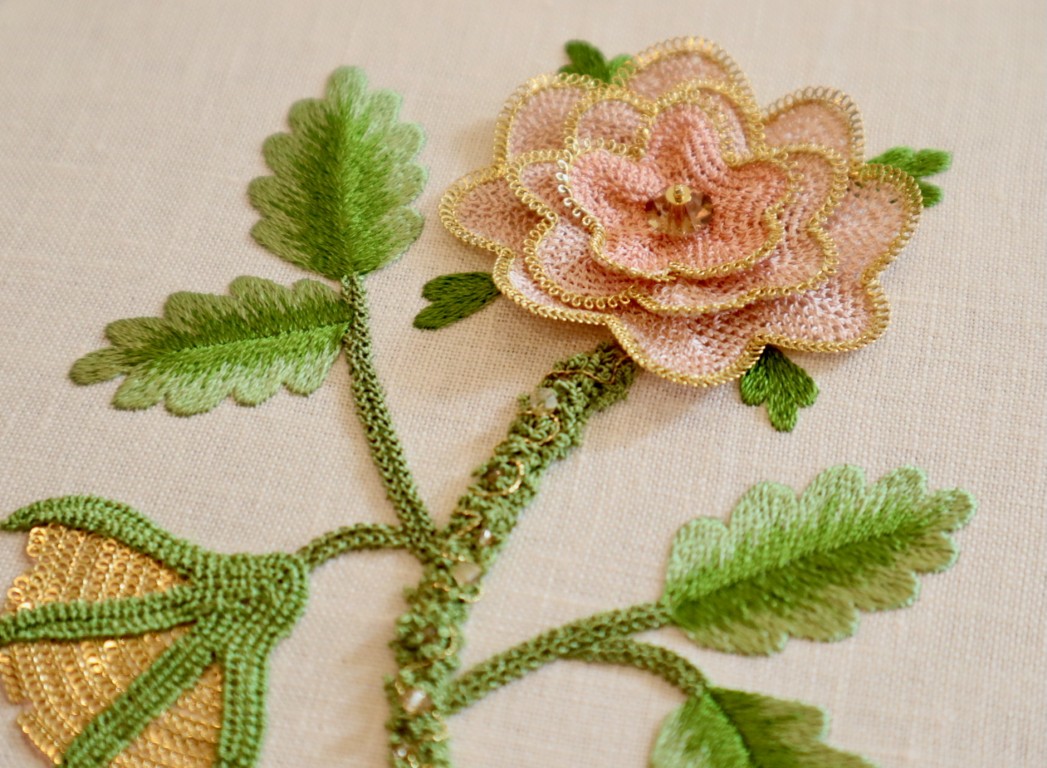
Stretching the palette is always an area where I’m trying to do more, and it’s something that always pushes me forward in my stitching. How to make the threads that exist match the vision in my head is an engaging challenge and one that I’ve found I thrive on. The most important element is always light. I generally work with threads that reflect a lot of light: silk and metal, and that can be used to shift your perception of a color, by choosing a stitch or angle that maximizes light reflection to lighten a color, or darken it by doing the opposite.
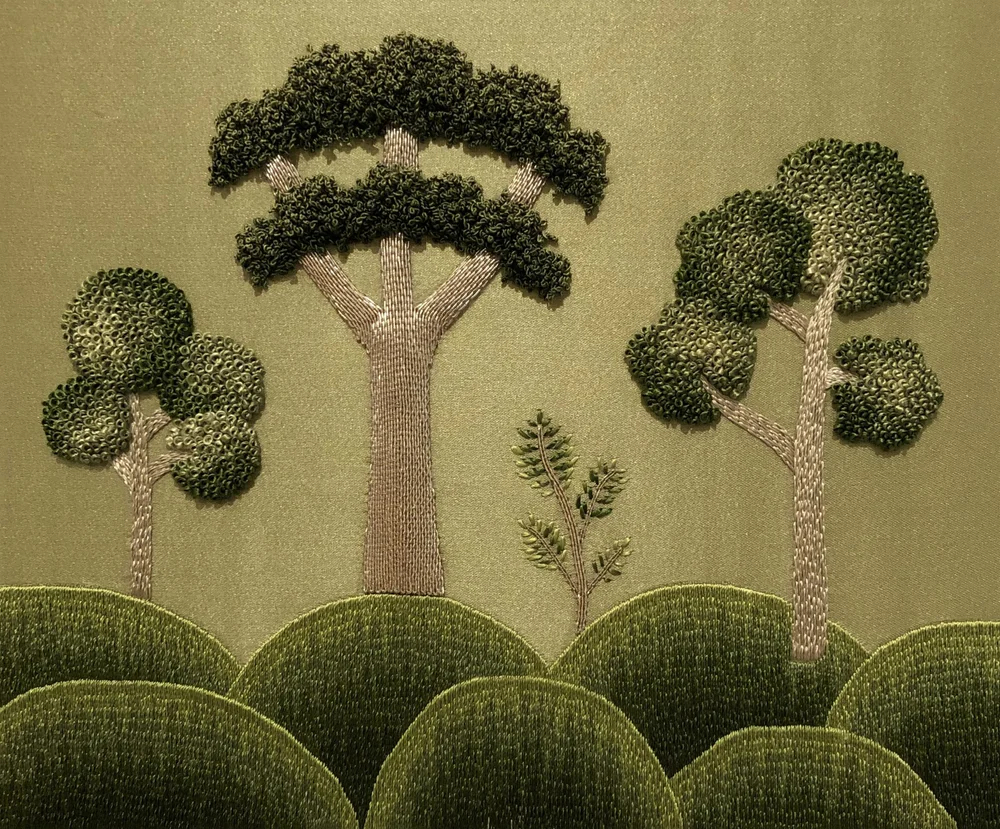
You say your contemporary work has been informed by the needlework of 17th century girls in England. Can you talk a little bit about how you interpret historic techniques for a contemporary audience? How has learning about and exploring the historic context of those works informed you as an artist?
The past is an endless source of inspiration, but I don’t feel limited by it. That something wasn’t done in the 17th century doesn’t stop me from doing it today, so drawing on what I find inspiring, but developing my own wrinkles of technique or design is a frequent thread in my work.
The question of interpreting historic techniques for a contemporary audience is an interesting one, because what is ‘contemporary’ in this context? Embroiderers working today are producing an immense range of art, some of which skews more obviously historic, and some truly modern. For myself, contemporary is that I’m working in the present day, having learned most of my craft online, using a range of threads that are newly in production after being extinct for hundreds of years—all circumstances that are the product of the time we’re living in.
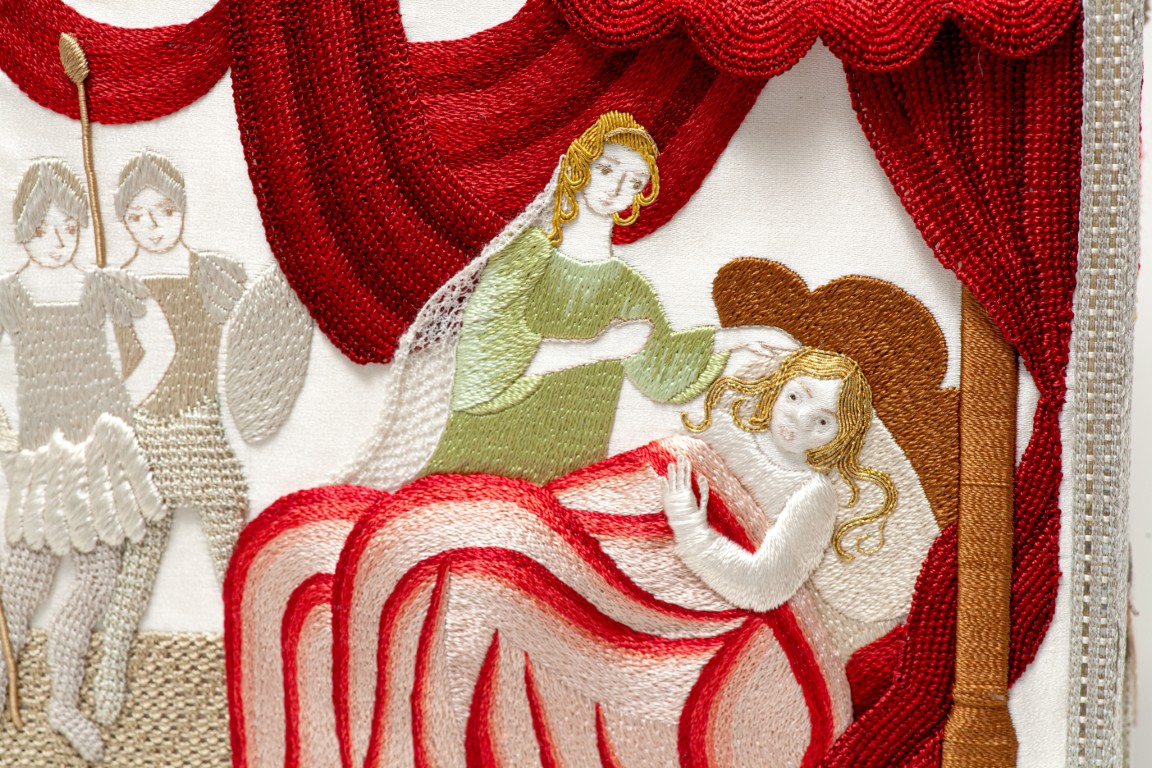
I focus more on granular technical interpretation—how can I take the idea of a dimensional stumpwork face, and have the result better express what I’m trying to achieve? Or, since I prefer a more defined edge on needlelace, how do I attack some of the technical challenges to achieve the desired look?
What do you hope needleworkers take from your virtual lecture, Caskets and 17th Century Needlework Education with Katie Strachan?
That all things are possible. When I started my first embroidered casket, I had no idea what I was doing. I was a novice embroiderer, and I think if I truly understood anything about the magnitude of what I had undertaken, I wouldn’t have done it. As adults, we are too often held back by doubts, by the desire for perfection, and by our own fears.
So I blundered into this huge thing, and just kept going because I loved it. I made a lot of mistakes, but I also learned a great deal from them. My growth as an embroiderer directly follows my own exploration of 17th century needlework. I’ll be speaking about some of the mistakes I made, some of the facepalm moments I had—and they were legion, like the time I found I had completed the front doors of my casket, glued them to backing paper, and they weren’t the right size—but I kept going, and grew into the project. If I had waited to start until I had the ‘right’ level of skill and experience, I don’t think I would have ever started a casket, let alone completed one—and I now have two finished caskets, with a third about 40% complete.
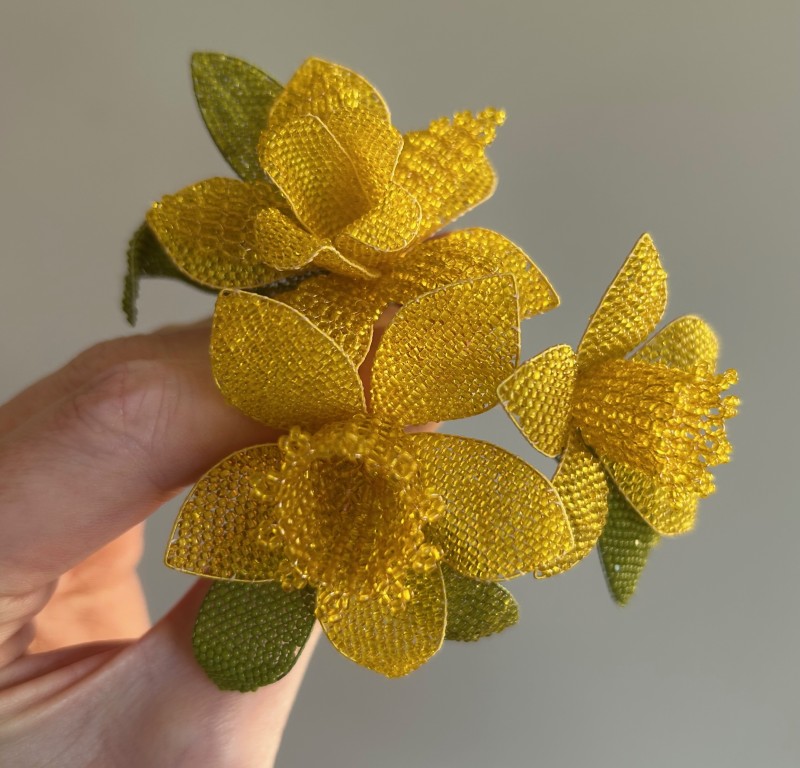
It’s been a long and winding road that has taken me through most of the projects that 17th century English schoolgirls undertook—a sweet bag, a polychrome band sampler, a beaded basket, small toys and accessories, a stumpwork mirror, caskets, and more—and it’s still a journey of growth and development that continues today. I learned through doing, and sometimes through failing. I hope that in following my journey, other embroiderers will be inspired and start the projects that they dream of, without being held back by fears or doubts.
Are you working on anything fun and exciting in the new year?
A great deal! I have research trips planned to study some fascinating pieces, and I’m hoping to finish my third embroidered casket in 2026. I have a design for a new sweet bag in my sketchbook, and I’m developing some really exciting classes. A large, full scale beaded basket is also in the works, and I’m hoping to give some more time to that in the new year. My ideas and plans invariably outrun the available hours in the day, but it should be a year of fascinating projects and research.
Where can interested needleworkers follow you, or learn more about you?
My website, katie-strachan.com, has the most information, with photographs of major pieces, and information and registration for my classes—I have a new stumpwork class beginning this spring.
I’m also on social media: @kstrachanembroidery on Instagram, and I have a YouTube channel, Katie Strachan Embroidery, although this focuses more on counted work than surface embroidery.