Technique: Zardozi
Place of Origin: Persia (Iran)
Earliest known date: 14th century
History: Zardozi originated in Persia, or modern day Iran, in the 14th century. Some believe Zardozi emerged even earlier, but the specific modern style of Zardozi practiced today likely emerged in the 14th century.
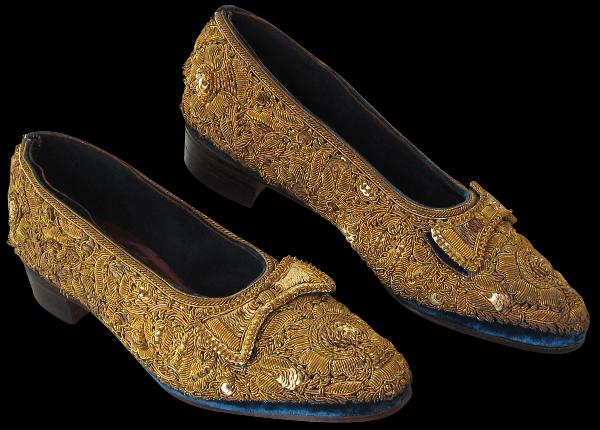
The word “zardozi” translates to “gold embroidery”—zar or zari meaning gold, and dozi meaning sewing, in Persian. Zardozi made its way to the Indian subcontinent in the 17th century. The style and technical practice of modern day Zardozi rose to prominence during this period due to the influence and support of the Mughal empire.
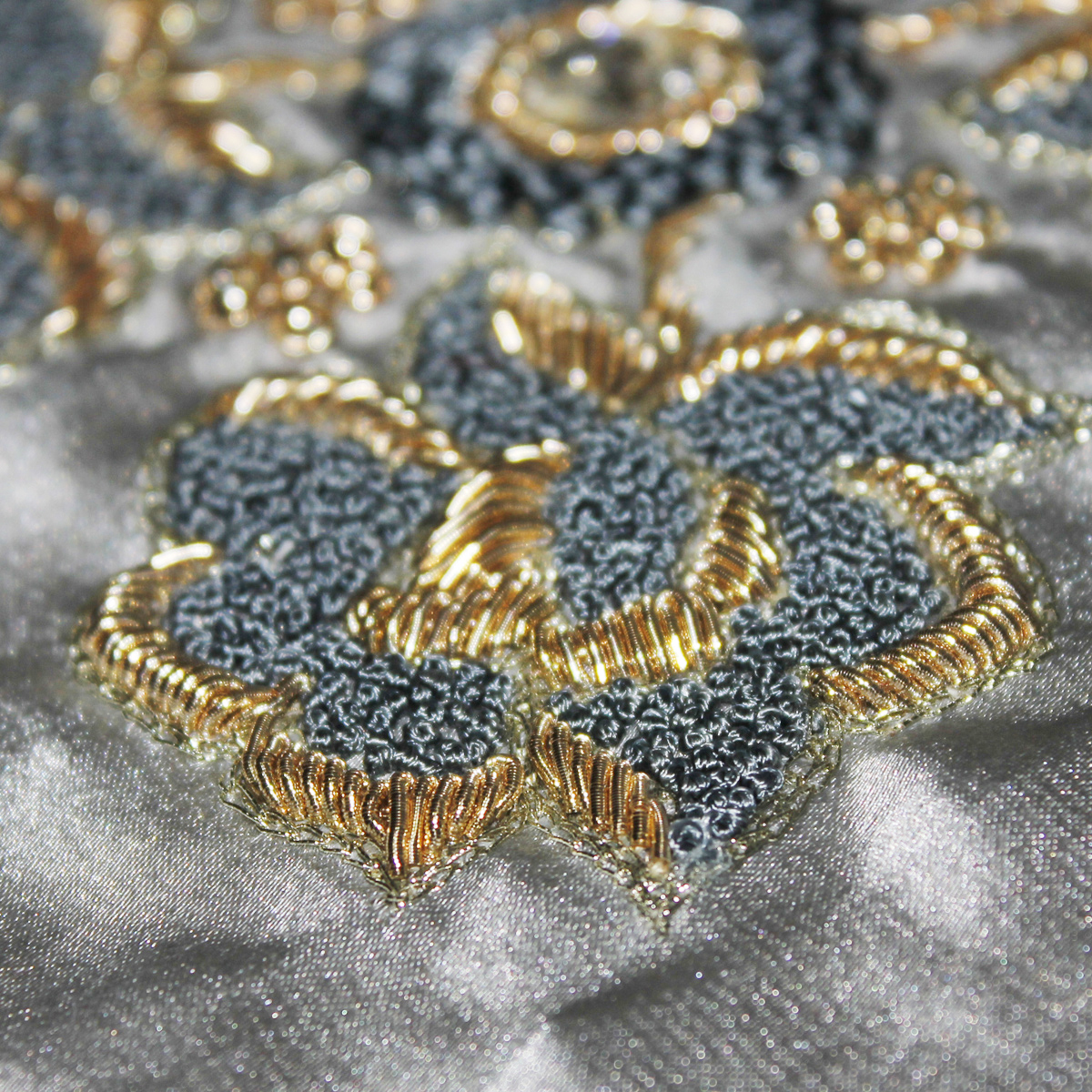
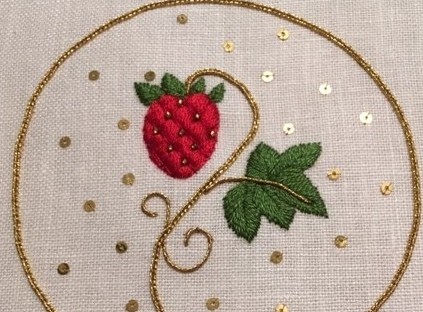
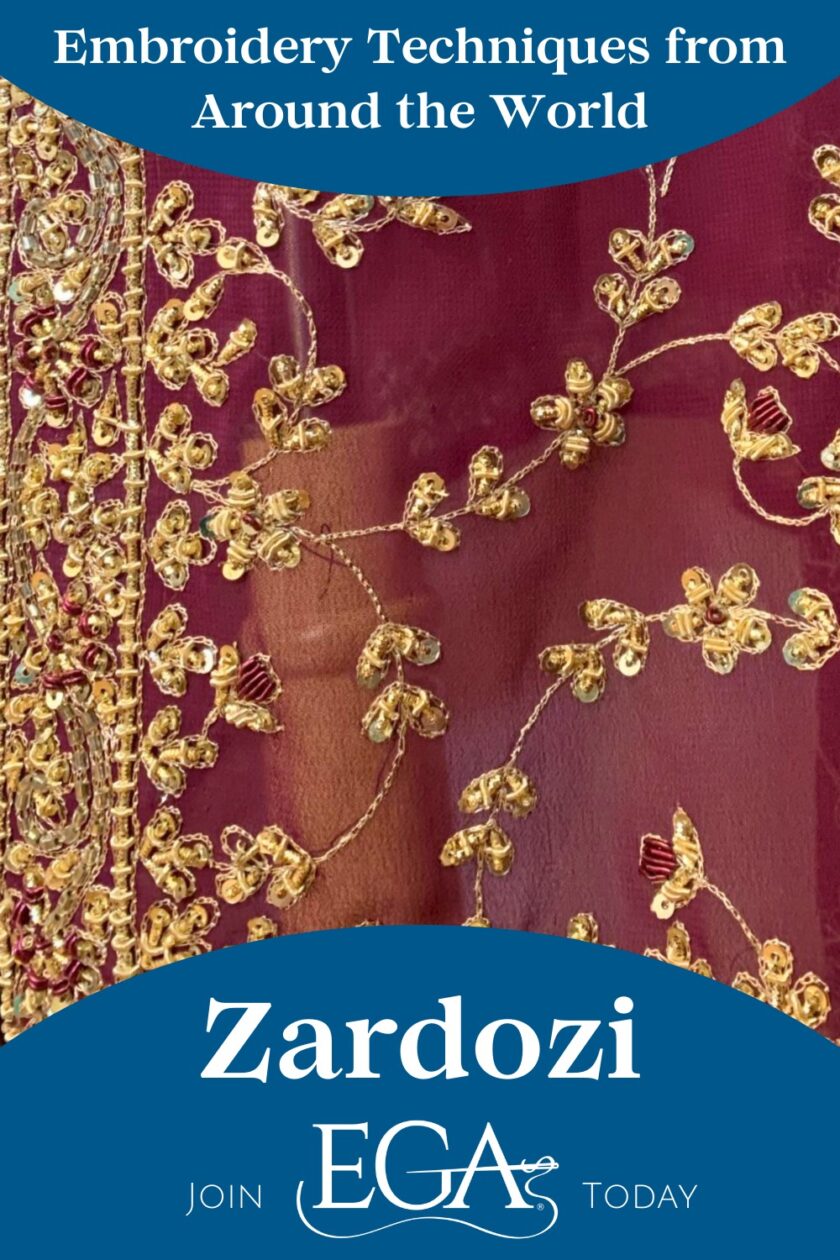
The name Zardozi is fitting, as the technique featured gold leaf and gold, silver, and other metallic threads to stitch dense, elaborate designs. Symbolic of luxury and opulence, Zardozi featured heavily among the nobility and in royal courts, used to adorn clothes, ceremonial garments, wall hangings, tapestries, and other textiles. Zardozi creates a heavy fabric as the metal threads and other embellishments create a three-dimensional fabric with raised goldwork.
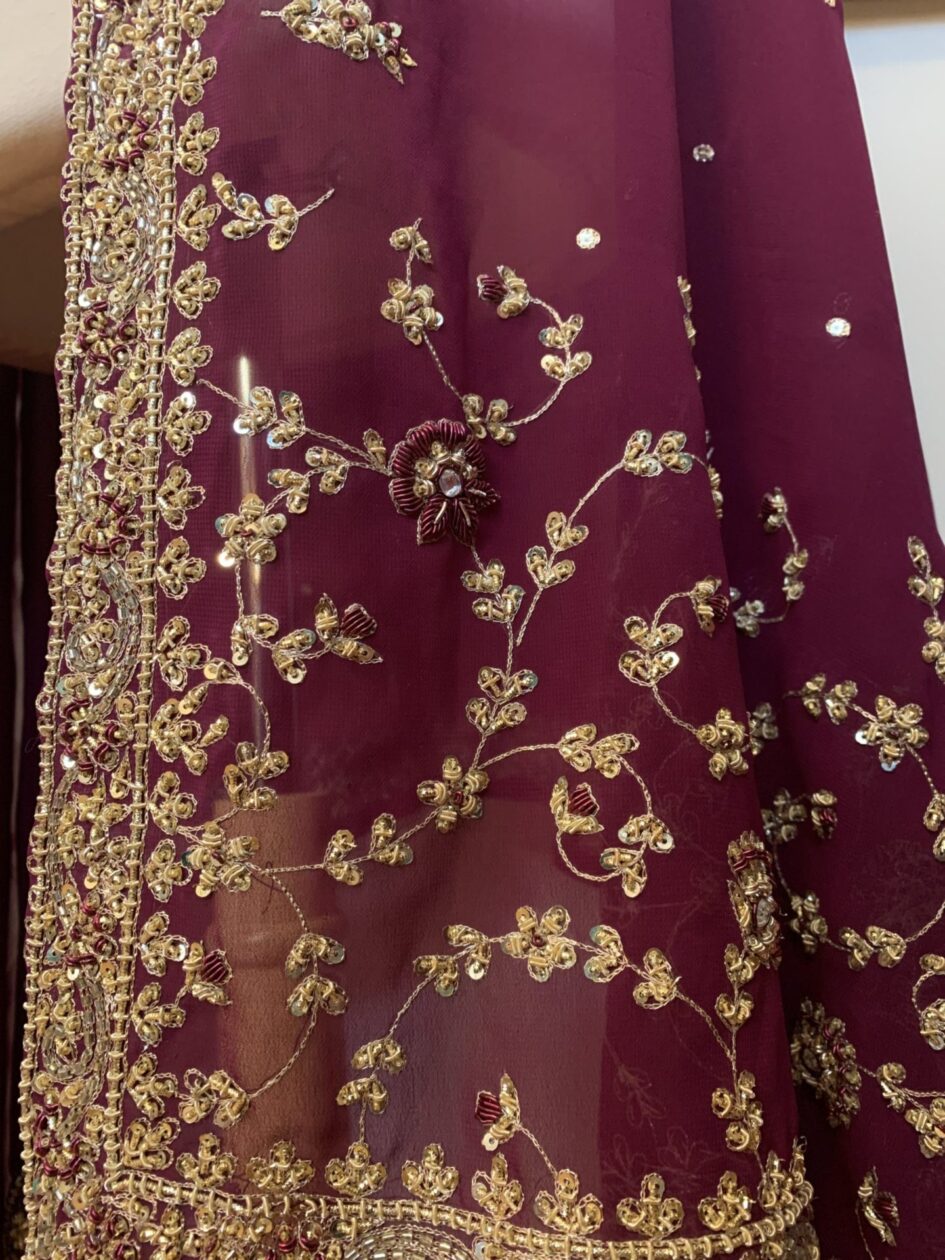
Zardozi lost its royal patronage and began to decline under British occupation and the industrialization that came with it. After independence, when the art of traditional handicrafts enjoyed a resurgence, Zardozi became popular once again in India and Pakistan. It now features prominently in formal wear and wedding garments.
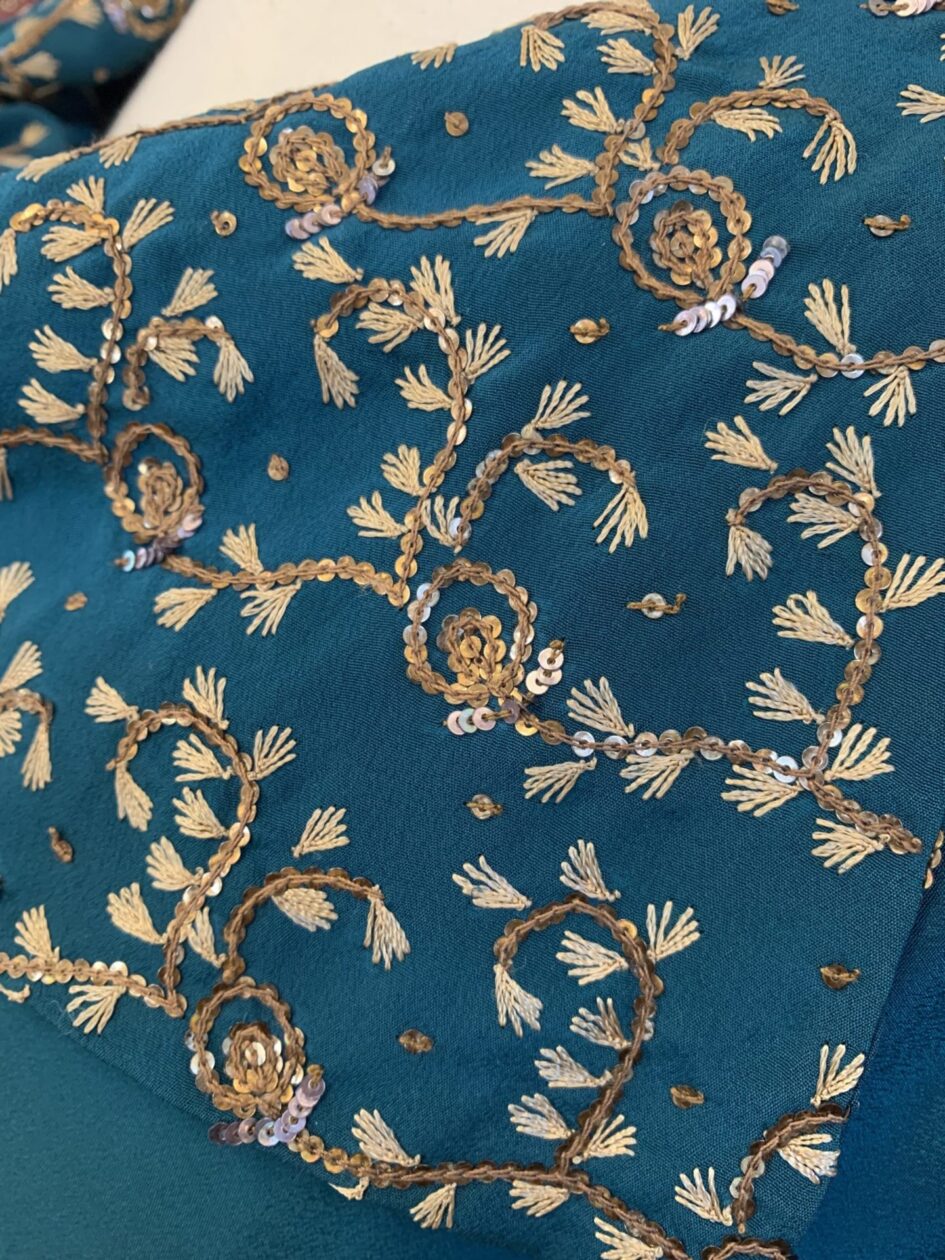
Materials, Techniques, and Stitches: In addition to gold, silver and copper threads, bullion threads, and metallic threads, Zardozi also features embellishments like spangles, sequins, beads, pearls, and faux and real gemstones. Spangles, sequins, and crystals are sometimes added with adhesive, instead of thread.
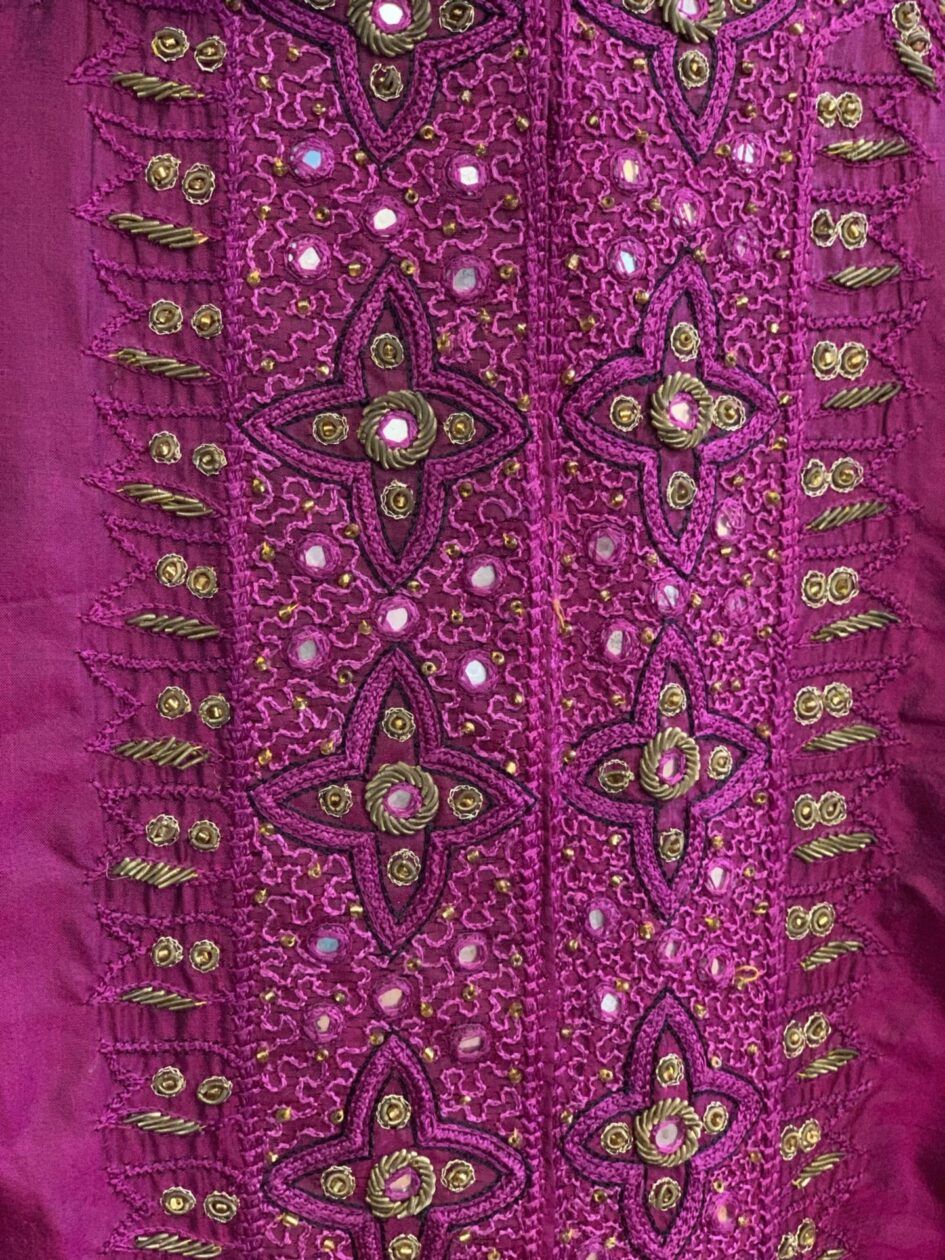
Zardozi is worked on a variety of materials, from silks to satins, organza, cottons, and chiffon, as well as heavier materials like velvet and brocade, which allow for more dense design work.
The fabric is fixed and stretched taut across a long, wooden frame, called an Adda. The frame was modeled on bed frames, and is still used today. Artisans sit around the Adda on the floor to work on the Zardozi design. There is usually enough room around an Adda to seat multiple artisans, who can all work on the design together.
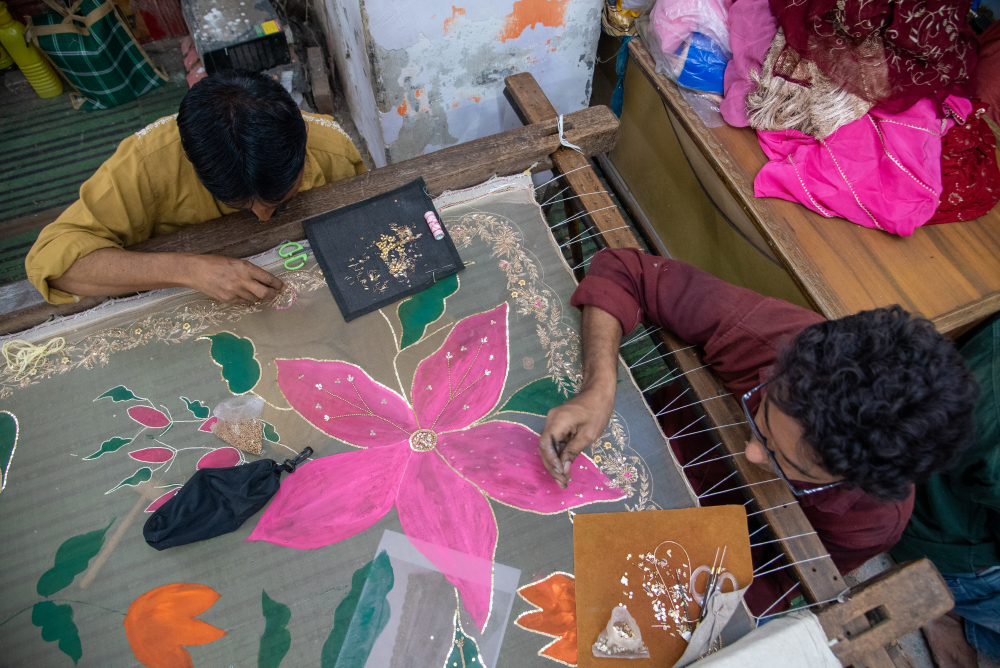
Zardozi artisans use a specific tool called an Aari needle, which is an awl with a hook on the end, a bit like a crochet hook. The Aari needle makes it much easier to work both sides of the fabric at the same time. One hand holds the Aari needle, while the other manipulates the thread, as shown below:
Designs are first sketched on thin paper. The paper is then held over the fabric and the pattern traced onto the fabric by piercing with a thin needle, following the lines of the design. Powder is rubbed along the paper stencil on the fabric, impressing the design on the fabric.
Motifs: Nature is a common theme in Zardozi embroidery, with flowers, leaves, vines, animals, fruits, and birds featured throughout. Paisleys are also popular—a nod to Zardozi’s Persian roots—as well as geometric patterns.
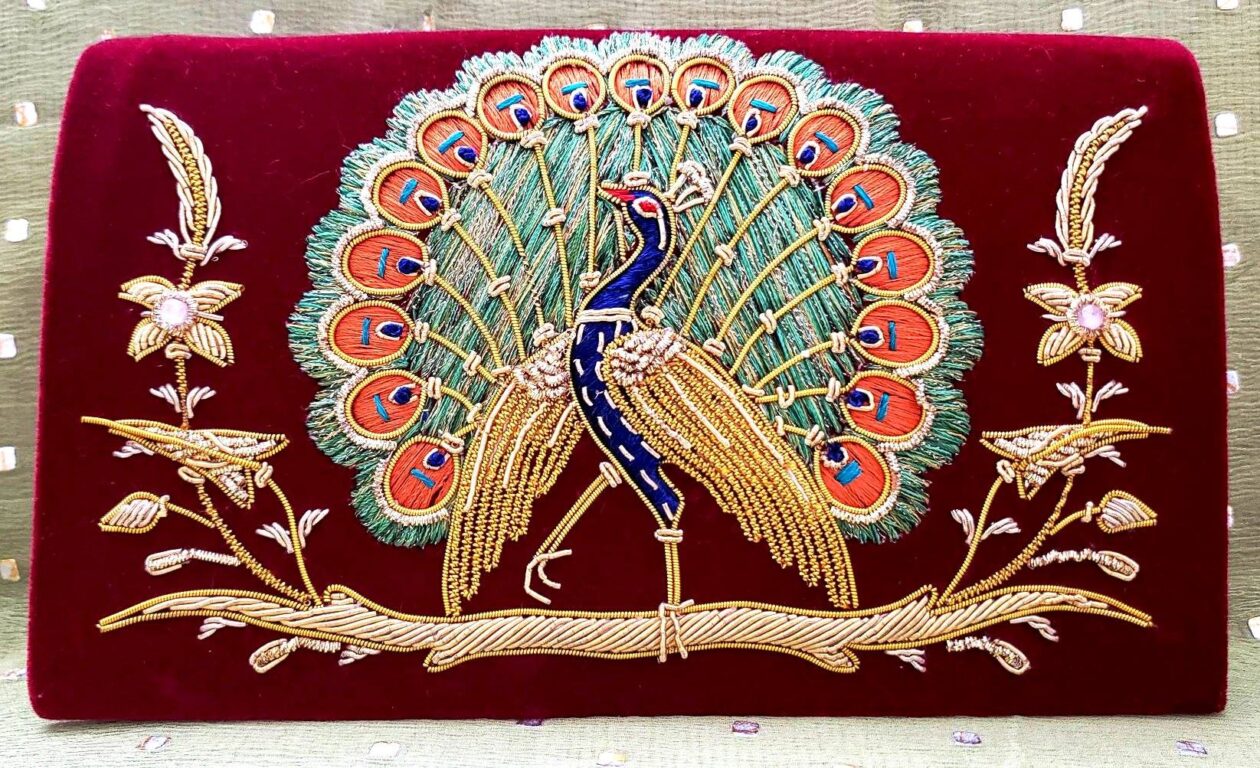
Explore more examples of Zardozi embroidery in the EGA Asian Fusion Exhibit online gallery.
Sources
Zardozi. In Wikipedia. https://en.wikipedia.org/wiki/Zardozi
(2024, September 5). Zardozi, embroidery of the royals. Me Meraki. Retrieved November 25, 2025, from https://www.memeraki.com/blogs/posts/zardozi-embroidery-of-the-royals
(n.d.). Zari Zardozi. Google Arts & Culture. Retrieved November 25, 2025, from https://artsandculture.google.com/story/zari-zardozi-dastkari-haat-samiti/fgWBrx-kemIoKw?hl=en
(2025, April 15). Zardozi Art: A Rich Embroidery Tradition of Luxury and Craftsmanship. Zardouzee. Retrieved November 25, 2025, from https://zardouzee.com/zardozi-art-a-rich-embroidery-tradition-of-luxury-and-craftsmanship/
(2025, June 1). The Glorious History of Zardozi: From Royal Courts to Modern Fashion. Mon Ami Foundation. Retrieved November 25, 2025, from https://www.monamifoundation.com/blogs/post/the-glorious-history-of-zardozi-from-royal-courts-to-modern-fashion
(2025, March 15). Zardozi Embroidery: A Brief History and Technique. Zarikali. Retrieved November 25, 2025, from https://zarikali.com/blogs/news/zardozi-embroidery-history-and-technique
(2023, August 18). Embroidered elegance: Tracing the journey of Zardozi through Time. Times of India. Retrieved November 25, 2025, from https://timesofindia.indiatimes.com/life-style/fashion/buzz/embroidered-elegance-tracing-the-journey-of-zardozi-through-time/articleshow/102801253.cms
(n.d.). From Royal Courts to Modern Runways. Sahapedia. Retrieved November 25, 2025, from https://www.sahapedia.org/royal-courts-modern-runways