Technique: Fez, Fes, or Fesi Embroidery
Place of Origin: Morocco
Earliest known date: circa 10th or 15th century
History: Fez embroidery is known by a few names: Fez, Fes, Fesi and Tarz El Fesi. All monikers point to Fez embroidery’s origins in the Moroccan city of Fez. Once the political capital of Morocco, Fez remains one of the largest cities in Morocco and is often considered the cultural and spiritual epicenter of Morocco.
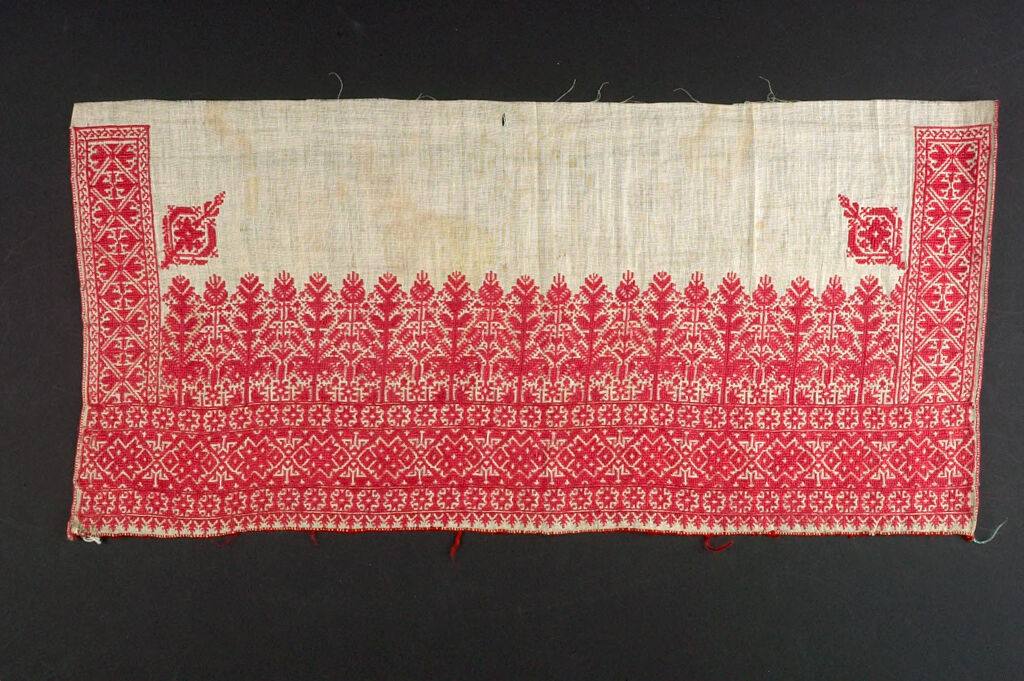
The French are credited with reviving interest in Fez embroidery in the 18th century; however, Fez embroidery is centuries old, with sources fixing its origins in either the 10th century or 15th centuries. Skilled artisans stitched Fez embroidery and passed down techniques and skills to the next generation. Crafting Fez embroidery was intricate, labor-intensive, and time-consuming work, so it was mostly enjoyed by the upper classes. Fez embroidery adorned bridal and ceremonial garments, kaftans, and household linens. Today, Fez embroidery embellishes clothing, pillows, curtains, tablecloths, napkins, and other textiles.
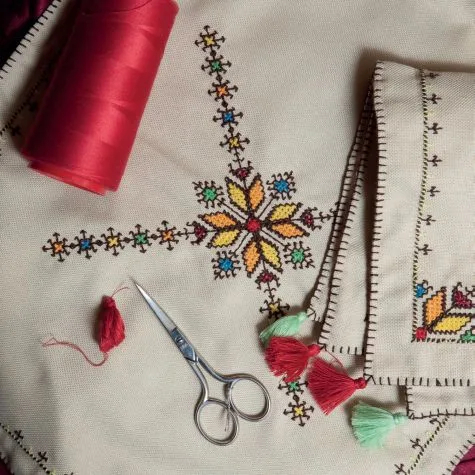
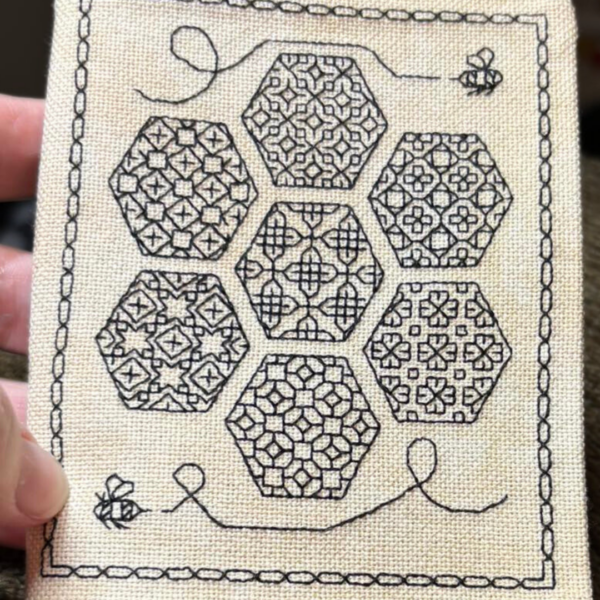
Materials, Techniques, and Stitches: Fez embroidery is a counted thread technique, similar to cross stitch and blackwork. Like blackwork in particular, Fez embroidery is stitched to be reversible, with both the front and back showing the same design. Fez embroiderers achieve this effect with a double running stitch, or Holbein stitch. Back stitch, running stitch, satin stitch, and chain stitch are also used in Fez embroidery.
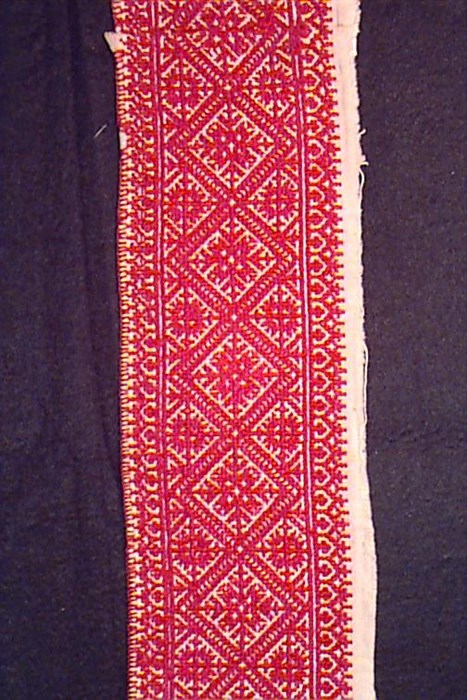
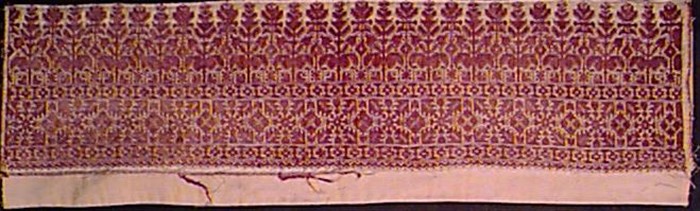
Fez embroidery is usually stitched with silk or cotton threads on silk, linen, or cotton fabric. Traditionally, fez was worked in monochrome colors—black, blue, gold, red, or green. Today, embroiderers use many colors in fez embroidery.
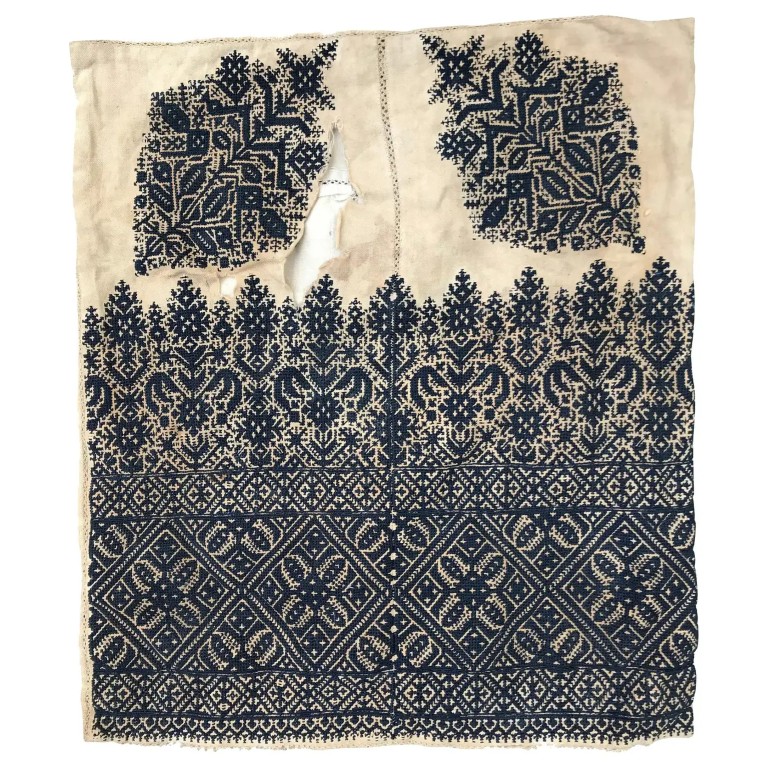
Fez designs feature precise symmetry and geometric and floral patterns. Lilies, roses, and the tree of life can be found in many Fez embroideries Some Fez embroidery patterns were regional or familial, distinct to an artisan’s family and passed down stitcher to stitcher. Islamic designs and Arabic script also featured in Fez embroidery, particularly ceremonial garments, and reflected the religious and cultural history of the region.
Sources
Fez, Morocco. In Wikipedia. https://en.wikipedia.org/wiki/Fez%2C_Morocco
(n.d.). Exquisite Moroccan Traditional Embroidery and Tarz El Fesi. Sahara Golden Desert. https://saharagoldendesert.com/moroccan-traditional-embroidery-tarz-elfesi/
(n.d.). Fes Style Embroidery (Morocco). TRC Leiden. https://trc-leiden.nl/trc-needles/regional-traditions/middle-east-and-north-africa/pre-modern-middle-east-and-north-africa/fes-style-embroidery-morocco
(n.d.). Moroccan Embroidery. TRC Leiden. https://trc-leiden.nl/trc-needles/regional-traditions/middle-east-and-north-africa/pre-modern-middle-east-and-north-africa/moroccan-embroidery
(n.d.). Fez Embroidery: A Rich Tapestry of Tradition and Art. The Zay Initiative The Art of Arab Dress. https://thezay.org/40580
(n.d.). Fesi Embroidery and Tarz el Ghorza: Two Traditional Moroccan Embroidery Styles. Moroccantastics. https://www.moroccantastics.com/blogs/news/fesi-embroidery-and-tarz-el-ghorza-two-traditional-moroccan-embroidery-styles
(n.d.). Why Are Moroccan Kaftans So Expensive? It’s the Embroidery! The Heritage Handmade. https://www.theheritagehandmade.com/blogs/moroccan-crafts/why-are-moroccan-kaftans-so-expensive-its-the-embroidery
(n.d.). Traditional Moroccan Embroidery: Tarz el Ghorza and Fesi Embroidery. Moroccan Craftsmanship. https://www.moroccancraftsmanship.com/2023/10/traditional-moroccan-embroidery-tarz-el.html